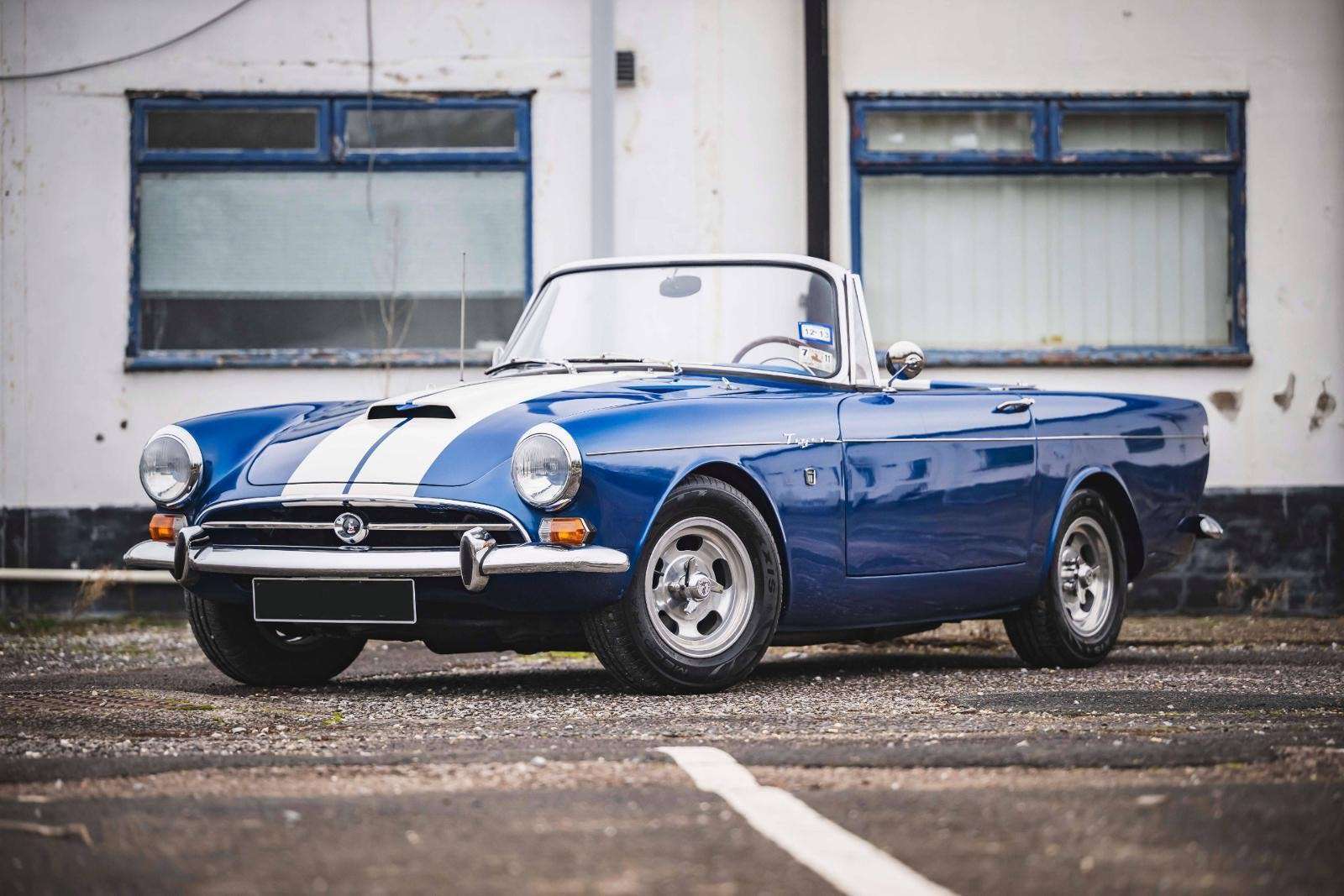
The first Sunbeam Alpine was a hand-finished 2.3-litre sports roadster derived from the Sunbeam-Talbot 90, not the smaller finned Alpine introduced in 1959. Produced from 1953 to 1955 as the Mk I and Mk III—there was no Mk II—it combined traditional Rootes engineering, Mulliners coachwork and serious works-rally pedigree.

Why the original Alpine matters
The model grew from a competition-minded Sunbeam-Talbot 90 modified by Bournemouth dealer George Hartwell. Rootes recognised the appeal of a lighter two-seat roadster and launched the Alpine in March 1953. Bodies were based on the 90 drophead shell, then fabricated and finished by Mulliners of Birmingham with a low windscreen, detachable side screens, a fully stowing hood and a close-coupled cockpit.
Its name referenced the Alpine Rally, where Sunbeam-Talbots had built a formidable reputation. Works drivers including Stirling Moss, Sheila van Damm and Peter Collins demonstrated that the new model was more than an elegant boulevard car. Specially prepared examples also exceeded 120mph during high-speed runs at Jabbeke in Belgium.
Mk I and Mk III specifications
| Version | Production | Engine | Output |
|---|---|---|---|
| Alpine Mk I | 1953–54 | 2,267cc OHV four | About 80bhp |
| Alpine Mk III | 1954–55 | 2,267cc OHV four | Revised specification |
The long-stroke four-cylinder engine used a high-compression cylinder head and revised manifolding. Drive went through a four-speed gearbox, with Laycock de Normanville overdrive available and commonly fitted to export cars. Independent coil-sprung front suspension, a live rear axle on semi-elliptic springs and large hydraulic drum brakes reflected the Sunbeam-Talbot 90 beneath the body.
The Mk III arrived in late 1954 with the updates applied to the related saloon and drophead range. Production was very limited: marque sources record roughly 1,200 Mk I cars and about 300 Mk IIIs, with many built for export. Surviving right-hand-drive cars are particularly scarce.
How it differs from the 1959 Alpine
The 1953–55 Alpine is larger, heavier and more traditional than the later Series I–V roadster. It has a separate chassis, 2.3-litre engine and substantial coachbuilt body. The 1959 car is a compact unitary-construction sports car using smaller Rootes engines. Parts, identification and values are therefore entirely different.
Original Alpine buying guide
Chassis and body
Inspect the separate chassis for corrosion, cracking and old accident repair, paying close attention to the outriggers, suspension mounts, crossmembers and body attachment points. The hand-finished body can hide extensive deterioration in the floors, sills, door structures, scuttle, rear quarters and spare-wheel area. Poor door fit may indicate structural weakness or an incorrectly aligned restoration.
Engine and cooling
Check oil pressure from cold and fully hot, listen for bottom-end rumble and valve-gear noise, and look for coolant leaks or evidence of overheating. The heavy iron engine is durable when maintained but an overhaul is specialist and expensive. Confirm that the carburettor, manifolds and cylinder-head specification are appropriate for an Alpine rather than a standard saloon.
Gearbox, overdrive and brakes
The gearbox should select cleanly without jumping out of gear. Test the overdrive repeatedly when warm. Drum brakes must pull up straight; contamination, seized cylinders and worn drums are common on little-used cars. Steering wear and tired suspension bushes can make a superficially restored car feel vague.
Completeness and authenticity
Correct windscreens, hood frames, side screens, instruments, badges, seats and brightwork are difficult to replace. Verify chassis, body and engine numbers with the Sunbeam-Talbot Alpine Register before paying a premium. Historic competition claims require documentary evidence.
Frequently asked questions
Why was there no Alpine Mk II?
Rootes aligned the roadster’s designation with the contemporary Sunbeam-Talbot range, so the updated car became Mk III.
Was it sold in Britain?
Yes, although export demand was central to the programme and many examples were built in left-hand drive.
Is it related to the Sunbeam-Talbot 90?
Very closely. The chassis, engine and much of the engineering came from the 90, with the roadster body and sporting tune creating the Alpine.