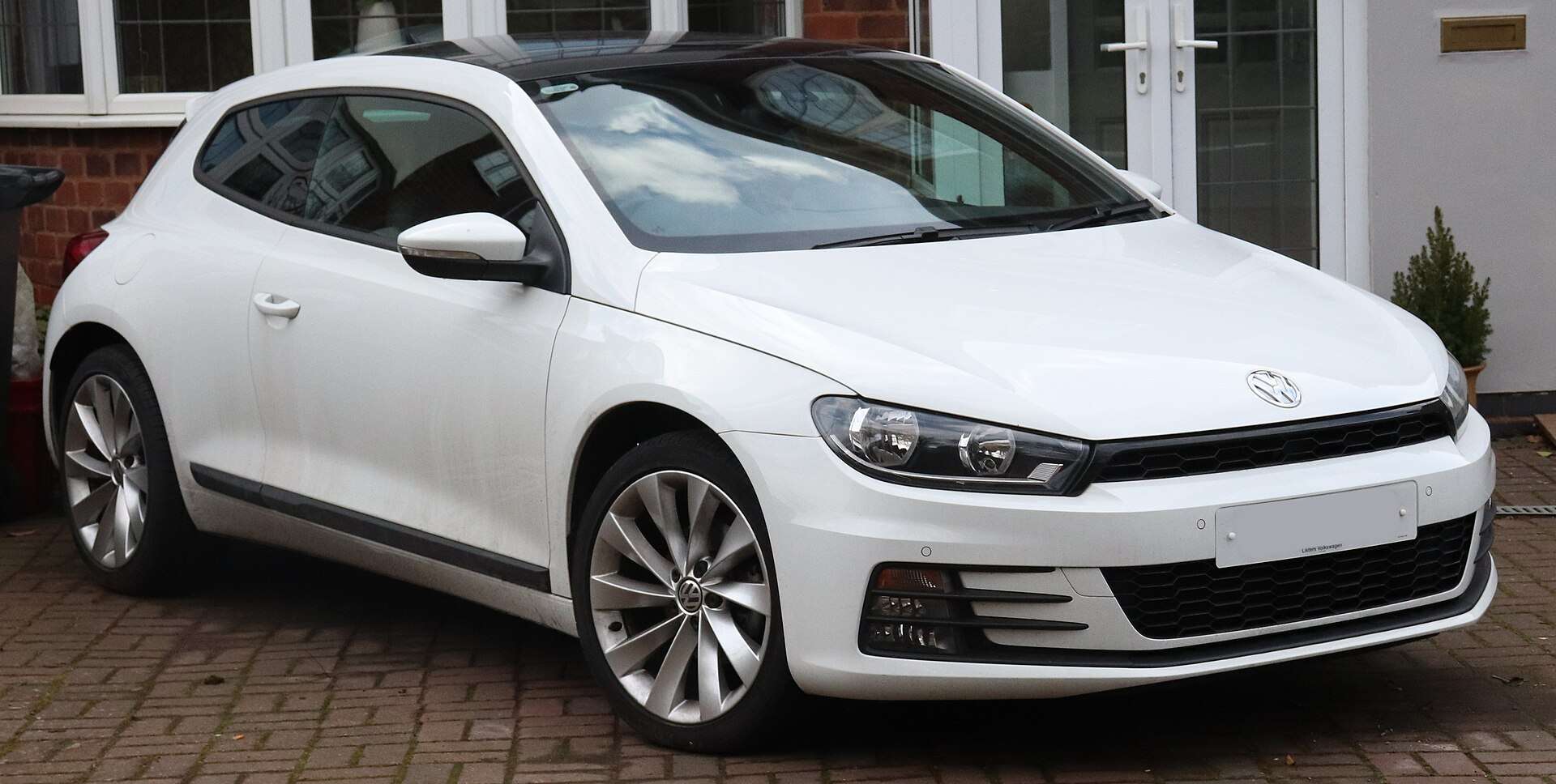
The third-generation Volkswagen Scirocco offers coupé styling with a useful hatchback boot and a wide range of petrol and diesel engines. That range is also the main buying trap: a guide that treats every 1.4 TSI, 2.0 TSI or DSG as the same mechanical package can give expensive advice. This UK guide covers the 2008–2017 Mk3, including the facelift, with an emphasis on establishing exactly what you are buying before judging its history or ordering parts.
Our buying verdict
Our starting choice for a mixed-use petrol buyer is a well-documented facelift 2.0 TSI, assessed by engine code and condition. A TDI suits regular longer journeys; an R suits someone prepared for its tyres, brakes and specialist upkeep. An early car can still be worth buying, but unresolved cold-start noise, oil use, cooling problems or DSG faults need diagnosis before money changes hands. R-Line styling alone does not make a car an R.

Scirocco Mk3 engines and versions explained
The UK Mk3 arrived in 2008 and was substantially revised in 2014. Volkswagen’s later press kit records the transition from the earlier 1.4 TSI 122/160 PS and 2.0 TSI 200/210 PS range to a 1.4 TSI 125 PS and 2.0 TSI 180/220 PS range, with the R at 280 PS. Diesel choices also changed, from earlier 140/177 PS descriptions to 150/184 PS. Those figures are model-range identifiers, not proof of the output of a modified car.
| Version | Why consider it | What must be checked |
|---|---|---|
| Earlier 1.4 TSI | Lower purchase price and accessible performance | Exact engine code and whether turbo-only or twincharged; timing, running quality and repair history |
| Facelift 1.4 TSI 125 PS | A more modest petrol option | Correct engine family and service plan; do not apply early 1.4 advice automatically |
| Earlier 2.0 TSI | Strong performance with plentiful used examples | Engine generation, timing-system work, oil consumption and cooling history |
| Facelift 2.0 TSI 180/220 PS | Our initial petrol shortlist | Build-specific equipment, cooling condition, servicing and transmission history |
| 2.0 TDI | Potentially appropriate for regular longer journeys | DPF/EGR condition, timing schedule and whether your use suits a diesel |
| Scirocco R | Performance and dedicated equipment | Authenticity, larger brakes, DCC and a realistic running-cost budget |
GT, R-Line, GTS and R describe different combinations of equipment and power. In the later UK range, R-Line was offered with a 180 PS petrol and diesel engines, while the GTS used the 220 PS petrol. The R used the 280 PS petrol and dedicated equipment. Establish the build record before paying for a rare specification or assuming a body kit establishes identity.
The road-going Scirocco R is front-wheel drive. Do not order a Haldex service as though it were a Golf R. Likewise, XDS is electronic traction management, not proof that an aftermarket mechanical limited-slip differential has been installed. If a seller claims one, ask for the invoice and exact differential model.
Which engine is best for your use?
A petrol is usually the more straightforward starting point for short or mixed journeys. A diesel may suit substantial regular mileage, but fuel savings must be weighed against the condition of emissions equipment and your actual driving pattern. Buying a diesel only because its advertised consumption is attractive can be false economy if it spends its life on short cold trips.
Our preference for a documented facelift 2.0 TSI is an editorial judgement about the overall package, not a measured reliability ranking. A neglected facelift car can be a worse purchase than a carefully maintained earlier one. Compare the inspection findings and upcoming work, rather than assuming a certain registration year makes a car safe.
Manual or DSG?
Volkswagen’s later UK kit lists a six-speed manual on the 1.4 125 PS, and six-speed manual or six-speed DSG choices on the 2.0 engines. Earlier combinations need their own verification. DSG is a family of transmissions: dry-clutch seven-speed and wet-clutch six-speed systems have different service requirements and repair concerns. Identify the installed gearbox code before applying an interval or ordering a filter kit.
Scirocco prices and asking-market evidence
The Car & Classic page checked on 4 November 2026 mixed Mk1, Mk2 and Mk3 stock. Among the UK Mk3 advertisements were a 2012 2.0 petrol GT automatic at 97,988 miles asking £5,790, and a 1.4 TSI 160 advertised with 8,470 miles at £11,495. The latter was presented as a low-mileage specialist-retail example. These two cars are not like-for-like comparators.
These are advertised figures, not achieved prices or independently inspected cars. The page’s all-Scirocco average includes older generations, so it would be misleading to present it as the value of a Mk3. This small sample also cannot establish a reliable premium for DSG, facelift or R specification.
Compare a car against the same engine generation, gearbox and body condition. A cheaper early TSI with unproven timing work or oil consumption may need a larger reserve than a more expensive car with invoices. A high retail price and low mileage still require checks for calendar-based work, tyres, cooling, seals and storage-related deterioration.
Before negotiating, turn the inspection into an itemised first-year budget. Include tax and insurance quotes for the exact registration, immediate safety work, overdue servicing and the next scheduled major job. Keep a contingency available after purchase. An attractive body shape does not make deferred mechanical work disappear.

Bodywork, water ingress and accident checks
Match VIN and registration documents, confirm ownership, review MOT mileage and advisories and obtain a provenance check for finance, theft and insurance history. Ask directly about accident repair and modifications. A clean MOT is useful evidence about a test, not a guarantee that a repaired structure is correct.
Inspect the sills, jacking areas, floor, rear underbody, brake pipes and suspension mounting areas on a lift. Look for corrosion, lifting damage, scraping and coatings that hide the metal. Low suspension and cosmetic skirts can restrict a driveway inspection. Budget for proper access before declaring an underside sound.
Check panel gaps and paint across the broad rear quarters, doors and front wings. Look for overspray on seals, disturbed fasteners and changes in paint texture. Inspect the bumper mounts and headlamp brackets, and compare tyre wear side to side. A steering wheel that is not centred or a car that pulls requires investigation of tyres, geometry and repairs.
Frameless doors and panoramic roof
Operate the frameless windows repeatedly. The glass should perform its normal indexing movement when the door opens and closes, seal correctly and run without struggling. Check the seals for damage, wind noise on the drive and water staining inside. A regulator, switch, latch signal and alignment problem are different diagnoses.
The optional panoramic roof is a tilting design; do not force it to slide open. Inspect the glass, seal, operating mechanism, headlining and floor for damage or damp. Trace leaks before assuming a drain clean will solve them. Ask for a specialist quote covering access, replacement parts and any interior drying or electrical work.
Check the tailgate release, rear wiper, boot seals and load area. The high load opening and rear-seat access should be tried with the people and luggage you expect to carry. It is a four-seat coupé-shaped car; your own practical test matters more than a brochure’s reassurance about adult space.
TSI engine problems: inspect the right generation
Timing chain or belt: establish the engine code first
The Mk3 range spans different timing systems and engine families. Early EA111 1.4 TSI and early EA888 2.0 TSI chain concerns are not a universal description of every later 1.4 or every R. Ask a VAG specialist to identify the engine and applicable timing system from the VIN and engine code, then assess its maintenance evidence.
VWG Specialists describes chain stretch on EA111 engines and tensioner concerns on early EA888 generations in its workshop guidance. That supports checking for cold-start rattle, correlation faults and documented kit specification on relevant engines. It does not establish that every car fails at a particular mileage or that a single revised component makes all future problems impossible.
Where belt replacement is scheduled, obtain a dated invoice showing mileage, kit contents and associated work, then confirm the applicable calendar and mileage interval. Where chain work has been performed, establish whether the chain, guides, tensioner, seals and other required parts were included. A vague “timing done” note is not enough to judge the repair.
Early 1.4 TSI and running quality
Do not treat the lower-output turbo-only and higher-output twincharged early 1.4 engines as identical. Confirm the actual installation, look for complete maintenance and repair documentation and assess cold starting, idle, smoke and power delivery. A misfire, hesitation or oil-use complaint deserves proper testing rather than reassurance that it needs only plugs.
Ask the inspecting specialist whether compression or leak-down testing is justified by the symptoms and history. Interpret the results with the test method and conditions. A short fault-free drive is not evidence about oil consumption over many miles, and a recently cleared engine light does not prove the cause has been repaired.
2.0 TSI: oil, cooling and intake
Review oil-change dates and the approval used. Ask how much oil the owner adds and over what distance; obtain evidence where oil-use work is claimed. Inspect for leaks around the engine, oil-filter area and underneath after a drive. A newly cleaned engine needs another look when warm.
Check coolant level cold, inspect for dried traces and ask about water-pump or thermostat work. VWG Specialists lists coolant-loss diagnosis and pump/thermostat repairs among its VAG engine services. Do not accept recurring loss as normal or assume a recently fitted pump proves the rest of the cooling system is sound. An overheating history needs an explanation and appropriate follow-up checks.
For poor running, ignition, intake leaks, fuel delivery, control systems and deposits may all enter the diagnostic process. A general “carbon clean” should not be the automatic answer to every hesitation. Establish the engine configuration and evidence before specifying work. Turbo or software changes make the installed calibration and supporting hardware part of the assessment.
TDI: DPF, EGR and suitability
Check for warning lights, repeated regeneration complaints, oil-level concerns and records of emissions-system repairs. Have a suitable scan interpret relevant data and stored faults. A removed or disabled emissions system is not a cheap maintenance solution for a normal road-car buyer. Confirm compliance and the cost to restore the correct configuration before proceeding.
Use the actual registration to check any access-charge requirements for your routes. Do not assume all pre-facelift and facelift diesels have the same emissions status, or that a badge alone settles eligibility. Investigate smoke, poor starting and inconsistent boost as faults with several possible causes.

DSG, clutch, suspension and brakes
Test DSG from cold and fully warm: reverse, drive engagement, parking manoeuvres, gentle changes and normal acceleration. Judder, slipping, flashing gear indications or loss of drive need diagnosis. VWG’s repair guidance distinguishes clutch, flywheel, bearing, seal and mechatronic work; a fluid change or adaptation is not a universal repair for all of them.
A manual needs a clutch, flywheel and gear-selection assessment too. Listen for noises that change with clutch position and check take-up without abusive tests. On either gearbox, inspect leaks, mounts and service evidence. A remap can change the torque the drivetrain has been asked to handle, so ask for the software history.
Check DCC operation if fitted and identify the installed dampers. Leaking adaptive units, damaged springs, worn bushes and links need to be priced for the actual specification. Inspect inner wheel faces and tyres. On an R, verify brake dimensions and component condition rather than ordering ordinary Scirocco parts because a search result claims broad compatibility.
Interior, electrical checks and everyday use
Test climate control, fan speeds, heated seats where fitted, mirrors, windows, parking sensors, lights, wipers and every infotainment function. Check the navigation and phone connection with your own device. Older equipment may function correctly yet still need an upgrade for your use; include that in the budget rather than discovering it after purchase.
Inspect the seat bolsters and the tip/slide mechanisms used for rear access. Check that seats lock securely and that belts and warning lights behave normally. Water damage, aftermarket wiring and replacement screens should be assessed for installation quality, not only appearance.
Have the battery and charging system tested where electrical symptoms occur. Start/stop-equipped cars need the correct battery and charging components. An alternator listing must match the installed engine and electrical specification; a weak battery, cable fault or control issue may produce symptoms that do not require a replacement alternator.

Maintenance costs and useful parts
Affiliate disclosure: The eBay links below use our campaign 5339238906. We may earn a commission on qualifying purchases. They open vehicle-specific searches, not vetted products or guaranteed-fitment recommendations. Check VIN, engine, build date, component numbers, seller terms and the workshop’s requirements before ordering.
Volkswagen’s cited late-range material describes a fixed engine-service regime of 10,000 miles or 12 months for the usage patterns it specifies, alongside a flexible regime. Confirm the plan applicable to the actual engine, year and use. Gearbox work needs separate checking: the old press kit contains broad “lifetime oil” wording, while current specialist guidance explicitly identifies scheduled oil/filter work on relevant wet-clutch DSG units. Use the gearbox code and current applicable service information.
ClickMechanic’s dated timing belt/chain page illustrates the limits of a generic estimate: its 2013 1.4 row spans £359–£848 for an independent garage, combining different possible parts and labour. It is an informational estimate, not a quote or a diagnosis, and the page does not establish one engine-code-specific scope or clear VAT detail. Obtain a VIN-specific written price. Compare Scirocco timing kits only after identifying the required system.
| Item | What to establish | Compare availability |
|---|---|---|
| Timing belt or chain components | Identify engine code and required system; kit contents and labour differ | Timing belt or chain components on eBay |
| Oil and filters | Correct VW approval, service regime and engine-specific quantity | Oil and filters on eBay |
| Water pump and thermostat | Trace coolant loss; match engine and include coolant/testing | Water pump and thermostat on eBay |
| Plugs and coils | Petrol engine-specific parts after diagnosis | Plugs and coils on eBay |
| Alternator and battery | Match output, pulley and start/stop configuration; test before ordering | Alternator and battery on eBay |
| DSG service kit | Exact gearbox code, correct fluid/filter and level procedure | DSG service kit on eBay |
| Manual clutch and flywheel | Identify gearbox and obtain fitted scope | Manual clutch and flywheel on eBay |
| Brakes | Match engine, PR codes and actual caliper/disc specification | Brakes on eBay |
| DCC or standard suspension | Identify the installed dampers; include geometry work | DCC or standard suspension on eBay |
| Window and roof parts | Diagnose indexing, regulator, seal or roof fault first | Window and roof parts on eBay |
Obtain written estimates which separate diagnosis, parts, labour, fluids, tax and delivery. A parts price is not a fitted repair bill. Agree how additional work discovered during dismantling will be authorised, and retain invoices showing date, mileage and the actual specification used.
At purchase, prioritise structure, tyres, brakes, leaks and overdue maintenance before cosmetic or performance upgrades. Where servicing is unproven, budget for a baseline inspection and the work it identifies. Confirm manufacturer requirements for the exact vehicle rather than relying on a timetable borrowed from a related model.
Hidden ownership costs
The asking price is only the beginning. Include these less obvious expenses when deciding which example offers value.
- Wrong-engine maintenance,A timing kit bought for a similar badge can be unusable. Pay to establish the code and system before ordering.
- DSG repair beyond servicing,Fluid and filter work cannot be budgeted as the cure for every clutch, flywheel or mechatronic fault.
- Adaptive dampers and large wheels,DCC components, wheel repairs and matched tyres can dominate the first-year bill.
- Roof and frameless windows,Leak tracing, alignment, regulators and drying work can be more expensive than a visible seal.
- Diesel emissions equipment,Fuel savings must be weighed against DPF/EGR condition and your journey pattern.
- Returning a tuned car to your use,Exhaust, software and suspension changes can involve insurance, compliance and several replacement parts.
Get an insurance quote for the actual specification before committing, including modifications. Check current vehicle tax against the exact registration, and allow for inspection, recovery or collection, secure storage and the first year’s due work. Long periods of storage do not stop tyres, fluids, seals or corrosion ageing.
Viewing checklist: from first enquiry to decision
Before travelling, request the registration and VIN, service invoices, MOT chronology, modification list and confirmation that a cold start and independent inspection are welcome.
- Obtain VIN, engine code, gearbox code, service invoices, modification history and an agreed cold start.
- Verify ownership, provenance, MOT mileage and whether the trim and R claims match build evidence.
- Inspect underbody, lifting points, accident repairs, tyres and inner wheels on a lift.
- Assess cold-start noise, running quality, smoke, leaks and cooling. Investigate timing or oil-use concerns before purchase.
- For TDI, check emissions-system condition and suitability for your journeys; confirm relevant access-charge status by registration.
- Test manual or DSG cold and hot, including reverse and manoeuvres. Resolve warnings or slip with a specialist.
- Check suspension, DCC where fitted, brakes, frameless-window indexing and roof operation without forcing it.
- Test all cabin functions and obtain itemised quotations before comparing the total with another car.
Proceed when identity, condition and records agree. Investigate unexplained noises, warning lamps, leaks and gaps before paying. Walk away from concealed identity, serious unresolved structural concerns or refusal of an appropriate inspection. A discount does not define the upper limit of an unknown repair.
Buying questions answered
Which Scirocco Mk3 would you buy first?
For a mixed-use petrol buyer, we would start with a documented facelift 2.0 TSI, while judging the individual inspection. A TDI is more appropriate for regular longer journeys and the R needs a larger running-cost budget.
Is a Scirocco R four-wheel drive?
The road-going Mk3 Scirocco R is front-wheel drive. Do not transfer Golf R Haldex service advice to it.
Is R-Line the same as R?
No. R-Line is a trim/equipment designation offered with different engines. Verify the VIN and original specification before paying an R premium.
Does every Scirocco need the same timing kit?
No. The range spans different engines and timing systems. Identify the engine code, confirm whether belt or chain work applies and obtain the correct schedule and parts.
Does a DSG service fix judder?
Not necessarily. Diagnose the installed transmission and symptoms. Clutch, flywheel, hydraulic, mechatronic and bearing problems require different work; servicing is not a universal cure.
Sources and research method
Researched on 4 November 2026 using the manufacturer, workshop, supplier and market pages listed below. Manufacturer material establishes specification; workshop accounts inform inspection priorities; supplier listings show dated costs and availability. Advertised prices are asking prices, not sold values or independent condition reports.
- Volkswagen UK: Scirocco 2014–2017 press kit — Primary range and equipment evidence. Broad historic maintenance wording is checked against gearbox-specific advice; isolated internal inconsistencies are not used as fitment instructions.
- VWG Specialists: timing-chain work — Workshop evidence for engine-family-specific checks, not population failure rates.
- VWG Specialists: common DSG repairs — Distinguishes gearbox families and repair categories.
- VWG Specialists: DSG servicing — Service scope and the need to identify the unit and schedule.
- ClickMechanic: Scirocco timing-work estimates — Broad informational ranges; not a vehicle-specific quotation.
- Car & Classic: Scirocco advertisements — Dated individual Mk3 asking examples; older-generation market averages excluded.
Also use the GOV.UK used-car checks and MOT history service. Verify current recall completion with the manufacturer against the VIN. These checks cannot certify the condition of an individual vehicle.
This is a research-based buying guide, not a report of a first-hand test of the cars advertised. Prices, parts and availability change; confirm quotes and fitment. An independent inspection should resolve vehicle-specific concerns before purchase.