The first MR2 still offers something unusually appealing: compact dimensions, a mid-mounted twin-cam engine, rear-wheel drive and sharp-edged 1980s design. Buying one now means assessing a decades-old structure and cooling system as carefully as the engine. A strong-running car can still need major metalwork, and a low-mileage advert can conceal an unfinished restoration. This guide covers the first-generation AW11, with clear distinctions between early/later cars, naturally aspirated and supercharged versions.
Our buying verdict
Our starting recommendation is a sound naturally aspirated manual with documented structural condition, cooling care and timing-belt work. A later Mk1b is a practical place to begin the search, but a well-restored early car can be better than a neglected late one. Buy a supercharged import for its verified specification and condition, with an appropriate maintenance budget rather than a badge-led assumption of value.

Mk1a, Mk1b, 4A-GE and supercharged MR2s
Toyota’s UK archive identifies the first-generation MR2 as a mid-engined rear-drive two-seater with a 122bhp 1.6-litre 16-valve engine, on sale here from 1985 to 1990. Production and registration dates are not the same thing, so a late registration does not by itself identify the generation. Read chassis, engine and import documents rather than choosing from year alone.
| Version / feature | Buying implications |
|---|---|
| Naturally aspirated AW11 | The familiar UK 4A-GE 1.6 proposition. This is our starting choice for straightforward classic use, provided structure and maintenance are sound. |
| Early Mk1a | Distinct period appearance and equipment. Check actual build and fitted parts; cosmetic details can be swapped. |
| Later Mk1b | Revisions include mechanical/chassis differences. Do not assume every early/later suspension or transmission component interchanges. |
| Supercharged 4A-GZE | Often an import in the UK. Verify genuine factory specification versus conversion, drivetrain, cooling, belt/pulley setup and service support. |
| Sunroof / T-bar | Check seals, drains, latches, glass and any storage panels/bags. Roof choice adds ownership details, not protection from corrosion. |
| Engine conversions | Identify the actual engine and installation. Original 16-valve belt/ignition advice may not apply to a 20-valve or other conversion. |
The familiar early/later visual clues are useful prompts, but engine covers, wheels, trim and bumpers can change over many owners. A competent inspector should identify the installed gearbox and relevant chassis parts before ordering. A car spanning a production change needs particular care; a seller’s description of “all Mk1 parts fit” is not adequate.
We favour the naturally aspirated manual for a first AW11 purchase because it provides the central experience with fewer specification complications. A supercharged car can be very appealing, but its originality, imported history and extra hardware deserve explicit evidence. A conversion may be well engineered; it should still be represented and priced as the car it actually is.
Try headroom, seat position, entry and luggage space before deciding it will suit regular use. Check roof panels and storage arrangements if you want open-air driving. The right purchase is one you can use, maintain and store comfortably, not simply the highest specification you can squeeze into the initial budget.

MR2 Mk1 prices: look past mileage and headline asks
We checked direct Car & Classic advert pages on 4 November 2026. The examples below are asking prices with unverified seller claims, not achieved sale results. They show why a price table needs condition context. Other search results included later MR2s, an overseas auction bid and inconsistent engine-size fields, which were not treated as equivalent comparisons.
| Directly checked advert | Displayed ask | What matters |
|---|---|---|
| Nottingham Mk1, 54,000 miles, advert C2205546 | £7,500 | Seller says it runs but also says the old sills have been cut out and new ones are needed. This is an unfinished repair project. |
| Craner Classics, Ruddington, advertised 1990 1.6 manual, 106,000 miles, C2187957 | £10,995 | Dealer claims long ownership, extensive history, refreshed wheels/tyres and good condition. Those claims require inspection and document checks. |
The Nottingham listing’s 1800cc field is inconsistent with a standard AW11 1.6 description. Combined with the declared sill work, that calls for identity and repair verification, not repetition of its fields as factory specification. We have not priced the required metalwork. A statement that similar-mileage cars sold for more is a seller claim, not independently checked sale evidence.
The Ruddington car’s higher mileage does not automatically make it worse value. What matters is whether its structure, mechanical condition and history support the description. Inspect both the car and the invoices, including what was actually repaired and when. A lower-mileage engine does not reduce the labour needed to rebuild a corroded sill.
Two asks cannot establish a national valuation curve. Compare verified cars of the same engine type, roof, originality and condition, keeping supercharged imports and projects separate. Add inspection, transport, immediate servicing and the work found. A restoration premium is easier to understand when photographs and invoices show the quality of the work rather than just its final paint finish.
Ask for current underside images, MOT chronology, engine/gearbox identity and a list of known faults before travelling. A car stored for years may need tyres, fluids, brake and fuel-system work even if it starts. Treat a project as a complete recommissioning/repair calculation, not a weekend estimate borrowed from an enthusiastic advert.
Rust is the first inspection, not the last paragraph
Examine outer and inner rear arches, sill areas behind accessible plastic covers, return sections and jacking points. Check the lower A- and B-post areas and the shell around suspension attachments on a suitable lift. Bubbling is often evidence to investigate further, not a complete measure of the affected metal.
Inspect the front luggage compartment, slam-panel/crash-bar areas, corners, seams and space beneath the spare and liners where accessible. Check floor sections, underbody pipes/supports and the rear luggage area. An MR2 has more places to hide deterioration than the visible rear arch lips. A clean engine and shiny bonnet do not establish structural health.
Ask for dated repair photographs before paint and coating, with a scope explaining what metal was removed and replaced. A panel patch and a correctly reconstructed sill are different propositions. Fresh underseal without preparation evidence should not replace access to the structure. Do not push tools through a seller’s car; use a qualified inspector and permission for trim removal or cavity assessment.
Check windscreen surrounds, roof apertures, drains, seals and wet insulation. T-bar leakage can damage the interior and contribute to corrosion. Water entry needs its source located and damage assessed, not simply a smear of sealant. Missing glass, latches or trim can be harder to source than routine engine consumables.
Verify VIN, documents, ownership entitlement, mileage chronology and provenance. Inspect accident-repair quality in panel gaps, inner panels, fasteners and paint. A registration-year or database error is not automatically evidence of wrongdoing, but it must be resolved before buying a car whose identity or specification is uncertain.
Do not assume factory body panels remain readily available because an older buying guide said so. Confirm actual stock, lead time, shipping and repairer capability before committing to restoration. A catalogue description or an old forum recommendation is not proof that the exact panel can be bought today.
4A-GE engine and mid-engine cooling checks
Timing belts and maintenance evidence
Read dated invoices for the timing belt and associated work. The period Toyota Owners Club discussion and Hagerty guide both flag the importance of belt maintenance; Hagerty quotes 60,000 miles/six years. Confirm the current age/mileage requirement and appropriate scope for the actual engine with a specialist and workshop information, particularly after a swap or rebuild.
Establish whether the belt, tensioning components, seals or water-pump work were included as appropriate. A bare belt price is not a complete service. If history is absent or overdue, agree the work before regular use rather than relying on the seller’s assurance that the belt looks fine. Appearance cannot establish the full history of an ageing timing system.
Check oil level, leaks, sump condition, cold starting and progressive warm running. Ask about measured oil consumption, compression or rebuild history where relevant. Persistent tapping or other mechanical noise deserves proper diagnosis and checks against the engine’s valve-clearance requirements, rather than a blanket explanation that all old twin-cams sound like that.
Distributor/ignition components, intake leaks and fuel-system condition can affect running. Read faults using equipment/procedures appropriate to the actual car; a modern generic scan is not a complete pre-purchase inspection. A recently replaced ignition part cannot establish healthy compression or correct mechanical timing.
Cooling: front radiator, rear engine, long circuit
The mid-engine layout places the radiator at the front and the engine behind the cabin, with coolant routes between them. Inspect accessible pipes, hoses, connections, radiator, cap and thermostat areas, including underbody condition and evidence of previous leaks. Correct filling and bleeding require the proper vehicle-specific procedure, not a generic quick top-up.
Ask what coolant is installed and when the circuit was serviced. Choose by the correct specification and compatibility rather than colour alone; different products can share a colour. Where history is uncertain, obtain a specialist plan for inspection and appropriate renewal. Do not mix products on the assumption that every red or pink fluid is equivalent.
Witness a full progressive warm-up and check heater behaviour, temperature stability and visible leaks afterward. Never open a hot pressurised system. An unstable idle can have several causes, including cooling-related issues in historical technical accounts, but air in the circuit should not be assumed without diagnosis. Persistent coolant loss or overheating needs investigation for both the cause and possible engine damage.
A car with a new radiator can still have old pipes, degraded hoses or poor bleeding. Conversely, a complete documented refresh is more useful than a shiny aluminium component with no fitting history. Ask the workshop to explain what it tested and whether previous overheating prompted further checks.

Supercharged cars and conversions
Check the installed 4A-GZE equipment, pulley and belt arrangement, intake/intercooling, wiring and maintenance. A smaller pulley or engine conversion may change requirements, so obtain invoices and a coherent setup description. A generic 4A-GE parts search should not be assumed to cover every supercharged or swapped component.
Confirm imported documents, original specification and what work was done after arrival in the UK. A car described as a factory supercharger model needs evidence beyond decals. Ask the intended specialist whether it supports that exact setup and can source parts. The premium should buy a verified, healthy car rather than a difficult identification exercise.
Gearbox: fifth gear and synchro checks
Test the manual from cold and warm, including ordinary running in fifth under safe conditions. Hagerty flags jumping out of fifth, particularly on earlier gearboxes, and weakening first/second synchro. Later hardware does not eliminate the need to test. Do not hold the lever in gear to conceal a problem or force shifts during the demonstration.
Listen for bearing or differential noises and assess clutch take-up, disengagement and leaks. Linkage, hydraulics, clutch wear and internal gearbox faults can overlap; get a diagnosis if behaviour is doubtful. A claimed rebuild needs a scope and invoice showing what was inspected or replaced, not just a receipt for a used transmission.
Check the identity and maintenance of an automatic separately if considering one. It offers a different driving experience and may be an imported specification. Do not use manual gearbox advice or a manual car’s valuation as a direct substitute. Match any replacement drivetrain component to what is actually fitted.
Chassis, brakes and tyres
Inspect dampers, springs, mounts, bushes, joints and wheel bearings. Early/later suspension differences make fitment important. A geometry session should follow necessary repairs, and a car that feels loose needs diagnosis rather than a more aggressive setting. Verify that aftermarket wheels, spacers or suspension have suitable clearance and fasteners.
Assess brakes, hoses, lines, calipers and handbrake function, including evidence of binding after storage. A long pedal or poor holding performance is a fault to diagnose. Check tyre age, damage, size and ratings against the actual wheel and vehicle specification. Avoid selecting tyres solely for period appearance if their suitability is doubtful.
A mid-engined classic rewards smooth, progressive driving and sound tyres. A purchase test is not the place to explore its handling limits. Establish steering, braking and ordinary-road behaviour on a properly insured route, stopping if a serious fault emerges. Condition and maintenance matter more than repeating folklore about one generation being impossible to spin.
Roof leaks, trim and electrical equipment
Inspect the seats, dashboard, carpets and trim for sun damage, wear and water entry. Correct original fabrics and plastic pieces may be difficult to replace, so verify availability before assuming a tatty interior is a cheap cosmetic job. Check roof glass, latches, seals and removable-panel storage where fitted. Do not force a reluctant latch or mechanism.
Cycle pop-up headlights and test lamps, windows, mirrors, heater fan, demisting, locks and any fitted air-conditioning. A failure may have several causes; obtain diagnosis rather than assigning every heater problem to a resistor or every lamp fault to a motor. Aftermarket stereos, alarms and engine wiring deserve a close look for competent installation.
Try seating position and all included keys. Check tools, spare/inflation equipment, roof accessories and original parts promised with the car. A complete set of trim and functioning equipment can make an older MR2 far more usable, even where structure and engine health rightly come first.

Maintenance costs and model-specific parts
Fensport’s 4AGE 16V cambelt page checked on 4 November 2026 displayed £35.94 (£29.95 ex VAT) and listed both early/later AW11 and supercharger applications. It was marked not in stock with an estimated 3–5-day preparation period. This is a belt-only parts anchor, not a timing-kit or fitted-service price. Compare AW11 4A-GE timing-belt kit options after checking engine identity, contents and current availability.
Affiliate disclosure: Our eBay parts links use campaign 5339238906. We may earn a commission if you buy, at no extra cost to you. Links open searches rather than a verified product. Results may include unsuitable parts; confirm engine, build date, part number, condition and returns before ordering.
| Maintenance item | What to establish | Relevant eBay search |
|---|---|---|
| Timing belt and related parts | 16-valve engine identity, tensioner/idlers and appropriate associated work; do not confuse with a swapped 20-valve engine. | AW11 4A-GE belts and tensioners |
| Alternator | Actual unit/output/connectors and installed engine/accessories; diagnose charging first. | AW11 alternators |
| Water pump / cooling | Early/later and supercharger configuration, pipes/hoses, coolant specification and correct bleeding. | AW11 cooling-system parts |
| Service and ignition | Correct filters, plugs, distributor/lead configuration and engine oil. | AW11 4A-GE service kits |
| Clutch / transmission | Installed gearbox, fault, release/hydraulic components and fitting/warranty scope. | AW11 clutch kits |
| Brakes / handbrake | Actual build, calipers, cables and disc specification; match early/later applications. | AW11 brake and handbrake parts |
| Suspension / trim | Check early/later differences and real stock before dismantling or buying a project. | AW11 suspension bushes |
Obtain written fitted quotes from the specialist who will work on the car. Include inspection, access, fluids, seized fixings and geometry as appropriate. A cheap timing belt does not mean a complete recommissioning is inexpensive, and no service-parts calculation can predict hidden structural repair. Ask how additional findings will be agreed and funded.
Plan the first year in stages: structural/safety assessment, overdue belt and cooling work, baseline fluids/ignition, then chassis and trim needs. Keep a separate reserve and retain all dated invoices and photographs. If the purchase requires restoration, confirm space, transport, parts and the repairer’s capacity before paying a deposit.
Hidden ownership costs
Plan the first year before agreeing the purchase price. Add inspection, collection, immediate servicing, diagnosed repairs, tyres, insurance, storage and a contingency for unresolved work. Use a written estimate for the actual car rather than assuming that spending a fixed percentage of its price will cover everything.
- A car with cut-out sills or unfinished welding needs a full structural scope, not a mileage-based bargain calculation. Collection and storage may also be required.
- Cooling work can involve long pipes and difficult access as well as the radiator. Budget for correct diagnosis, filling/bleeding and any consequences of overheating.
- T-bar seals, glass, original fabrics and body-specific trim can be harder to source than ordinary mechanical consumables. Confirm stock before committing to a restoration.
- Gearbox repair, engine conversion rectification and supercharger-specific parts can add downtime. A running demonstration does not price those obligations.
- Labour and associated work: diagnosis, access, fluids, alignment, seized fixings and tax can change the bill. Confirm what the quotation includes and how additional work will be agreed.
- Exchange components: rebuilt alternators or starters may require a returnable old unit. Compare the surcharge, return deadline, postage and warranty as well as the headline price.
- Downtime: allow for recovery and alternative transport if a rare component or specialist appointment is needed. A catalogue entry does not prove that a part is on the shelf.
Viewing and test-drive checklist
Before travelling
- Confirm registration, exact specification, seller identity and ownership history. Ask about accidents, insurance losses, modifications and engine replacements.
- Read the MOT chronology and request dated invoices. Arrange a genuinely cold start, inspection access and a properly insured road test.
- Request current underside photographs and a written list of known faults, included keys and spare or original parts.
At the car
- □ Verify AW11 identity, early/later build, roof, engine and actual gearbox, including import or swap records.
- □ Inspect rear arches, inner/outer sills, jacking points, lower pillars, front luggage/crash-bar areas and suspension mounts on a lift.
- □ Read structural repair photographs and invoices before accepting fresh paint or underseal as reassurance.
- □ Check cold start, consumption/leaks, timing-belt evidence, full cooling history and stable warm operation.
- □ Test fifth-gear retention, other shifts, clutch, brakes, handbrake, steering and suitable tyres without abusive driving.
- □ Check roof seals/drains, damp insulation, pop-up lights, heater/windows, trim availability and included accessories.
- □ Inspect accessible structure on a suitable lift. Never go under a vehicle supported only by a jack.
- □ Try all fitted equipment, check warning-lamp behaviour and assess tyres for age, damage and specification as well as tread.
- □ Test progressively from cold to fully warm, then recheck starting and visible leaks. Stop if a serious fault develops.
Proceed when the description, identity, condition and records agree. Investigate a plausible but undiagnosed fault before negotiating. Walk away if crucial inspection is refused or the budget depends on a serious problem proving cheap. Put inspection conditions and deposit terms in writing.
Buying questions answered
Which MR2 Mk1 should I buy?
A sound naturally aspirated manual is our starting recommendation. Later Mk1b cars are a useful search starting point, but documented condition outweighs age or nominal specification.
Is a supercharged AW11 worth the extra?
It may be if you specifically want it and the identity, engine condition, installation and history are convincing. Keep imports and conversions in separate comparisons.
What is the biggest buying risk?
Hidden corrosion and incomplete structural repair can dominate the budget. Assess the whole shell before focusing on low mileage or a healthy-sounding engine.
Does it need timing-belt maintenance?
Yes. Obtain dated evidence and confirm the correct interval and associated work for the installed engine. A belt-only price is not a full service quotation.
Are T-bar cars best avoided?
Not automatically. Check glass, latches, seals, drainage and water damage, and confirm parts availability. Buy the roof configuration you want in sound condition.
Sources and research method
Independently written desk research by Unusual Cars UK, checked on 4 November 2026. We have not inspected or road-tested the illustrated cars or independently authenticated sellers’ claims. Inspection priorities and recommendations are our editorial assessment. Historical guides inform technical context; their old prices are not current valuations. Confirm service requirements against the actual vehicle and appropriate workshop information.
- Toyota UK first-generation MR2 archive — Primary manufacturer context for UK dates, 1.6 engine, output and layout.
- Toyota Owners Club Mk1 discussion — Primary historical owner experience on arches, belts, brakes, roof leaks and cabin fit. Old prices and informal guarantees not adopted.
- Hagerty AW11 guide, February 2022 — Secondary early/later, structural, cooling and gearbox inspection context; old values, availability claims and disputed equipment details not treated as current facts.
- Fensport 4AGE 16V cambelt — Primary fitment, belt-only price and stock status checked 4 November 2026.
- Car & Classic Nottingham Mk1 advert — Directly checked £7,500 ask with seller-declared cut-out sills; inconsistent capacity field requires verification.
- Car & Classic Ruddington 1.6 advert — Directly checked £10,995 ask and seller’s maintenance claims; no condition or sale result independently verified.
- GOV.UK used-car checks and MOT history — identity, document and test-history checks.
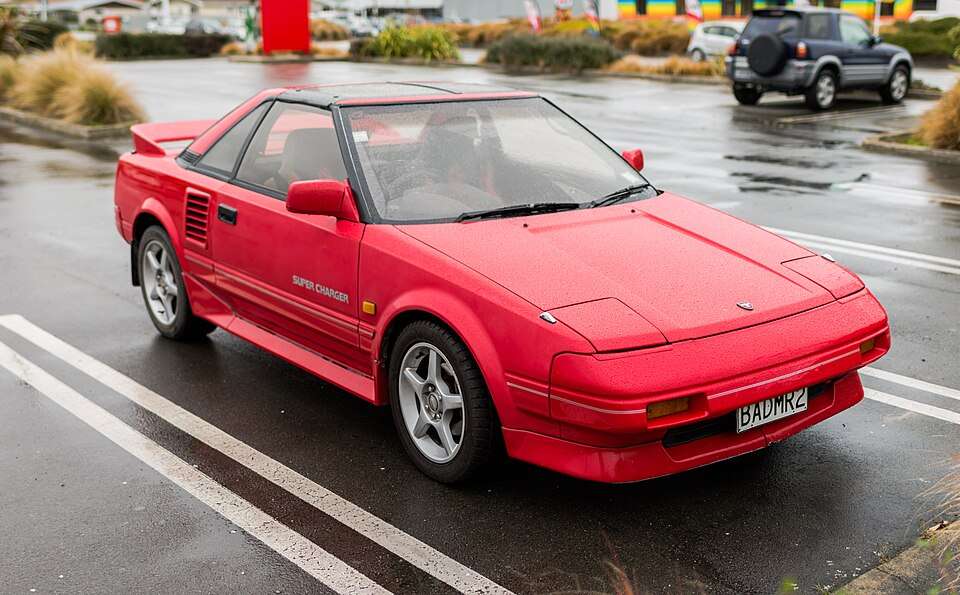
Images illustrate versions and inspection themes; they are not photographs of the advertised examples discussed above. Credits and licence links accompany each image. No endorsement by photographers, owners, specialists or suppliers is implied. Prices and availability can change.