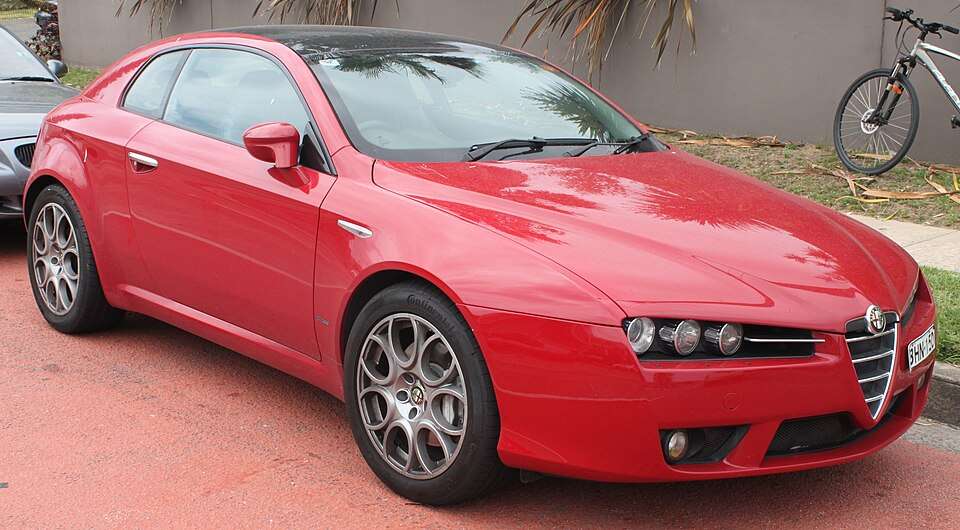
The Alfa Romeo Brera offers dramatic coupe styling, a distinctive cabin and a choice of petrol and diesel engines that create very different ownership propositions. Its low used price can disguise the cost of a timing-chain repair, corroded subframe or tired suspension. This guide explains the 2.2 JTS, 3.2 V6, 1750 TBi and diesel choices, with model-specific maintenance checks, dated asking-price evidence and a practical plan for the costs after purchase.
Our buying verdict
Choose the engine for your real use, then buy on underside condition and documented maintenance. A sound 2.2 can make an appealing occasional-use coupe; a diesel needs a usage pattern suitable for its emissions equipment. A 1750 TBi or authenticated Prodrive S may justify a premium, but neither removes the need for chain/belt, gearbox and suspension checks.

Which Brera engine should you buy?
The production Brera is a front-engined coupe related to the Alfa 159, with a range extending from naturally aspirated petrols to turbocharged petrol and diesel engines. It is not simply a rebodied 916 GTV. Its 3.2 JTS V6 is also distinct from the older Busso V6: the name Alfa Romeo does not make their parts or timing-drive arrangements interchangeable.
| Version | Ownership character | Key inspection priorities |
|---|---|---|
| 2.2 JTS petrol | Naturally aspirated four-cylinder; accessible entry point | Timing-chain evidence, running quality and gearbox identification. |
| 3.2 JTS V6 | Naturally aspirated V6; Q4 and some front-drive versions | Chain condition, full servicing, cooling, drivetrain and running costs. |
| 1750 TBi petrol | Later turbocharged four-cylinder | Belt/water-pump history, turbo and oil-service evidence; different from JTS chains. |
| 2.4 JTDM diesel | Five-cylinder turbo diesel; strong touring character | Belt/pump evidence, intake/EGR/DPF diagnosis and suitable use. |
| 2.0 JTDM diesel | Later four-cylinder diesel in relevant markets | Exact specification, belt history, emissions equipment and usage. |
| Prodrive S | UK special version based on 2.2 and 3.2 petrol cars | Authenticate the car and assess its specific suspension, wheels and trim. |
The 3.2 Q4 adds four-wheel-drive hardware and weight. Front-drive V6 versions and the Prodrive S offer different experiences, so confirm what the advert actually describes. Do not infer drivetrain from an exterior badge, a seller’s use of S or a familiar wheel design.
The 2.2 suits buyers who value the shape and cabin more than outright acceleration. The V6 adds character and a larger running-cost commitment. The 1750 TBi has particular appeal as a later turbo petrol, but its belt drive means advice saying all petrol Breras have chains is wrong.
Diesels may suit longer journeys, but purchase price and economy should be considered alongside emissions-system condition, access restrictions and your own travel pattern. A car used mainly for short trips can need a different assessment from a well-maintained long-distance example. Check current rules for the places you will drive using the actual registration.
Try the seat position, headroom and rear-seat access. The exterior suggests a spacious grand tourer more readily than the back seats deliver. Test luggage access and the glass-roof blind where fitted; the presence of panoramic glass and the interior treatment vary, particularly on special versions.
Our preferred approach is to shortlist by use before engine prestige. A carefully maintained ordinary car can be a better purchase than a desirable version with chain warnings, worn tyres and a rusty underside. If an S or rare specification is the attraction, obtain independent authentication and price its correct replacement parts before paying the premium.
Brera prices: current asking examples
Car & Classic adverts checked on 3 November 2026 included a 2009 2.4-litre diesel automatic advertised with 122,705 miles at £5,950, a 2008 2.2 JTS described as a Prodrive S with 64,800 miles at £9,950, and a 2009 V6 Prodrive S with 107,000 miles at £7,995. Another 2008 Prodrive S advert with 69,300 miles carried a £5,250 asking price.
These are seller asking prices and descriptions, not verified sale results or authenticated special editions. The spread shows why the S label alone does not establish value. Exact specification, condition, history and presentation need to be compared. No inference about a cheap advert’s quality should be made without inspection.
Ask for chain or belt invoices, underside photographs and a list of current faults before travelling. Compare the same engine, drivetrain, gearbox and provenance. A higher asking price does not remove maintenance risk, while a low price may be reasonable only after repair estimates are added.
Calculate the purchase plus immediate work. Tyres, upper arms, a gearbox repair, timing work and subframe restoration can quickly become a substantial part of an ordinary Brera’s value. A documented repair can be an advantage when its scope and quality are clear; a vague claim of a recent service tells you much less.

Subframes, underside and body inspection
Inspect the front subframe carefully, including seams, mounting areas and places where dirt or moisture collects. Corrosion can be much more serious than the outer body suggests. A lift inspection should establish whether it is surface deterioration, repairable damage or a replacement requirement.
Check the rear subframe and suspension mounting areas, floor, sills and jacking points. Do not let attractive paint distract from underside condition. Fresh coating should be supported by photographs of preparation or repair. Covering rusty metal is not evidence that its strength has been restored.
Inspect wheelarch liners and undertrays for damage or missing sections. These can affect protection and may be awkward to replace correctly. Ask about previous underside work and whether all fixings were refitted. A car that has repeatedly grounded because of lowering needs more than a cosmetic check.
Look for accident repairs through panel gaps, paint differences, fasteners, overspray and geometry. Check doors, hatch, glass and seals for correct fit. A history check is useful but cannot establish the quality of every repair or whether an unrecorded incident occurred.
Match VIN, registration, engine and service history. For imports, confirm market specification and mileage units. For a special edition, verify build and provenance with credible records or knowledgeable specialists. Cosmetic alterations can be attractive, but they should not be mistaken for factory or Prodrive authenticity.
Brera engine problems: chains are not universal
2.2 JTS timing chains
Alfa Workshop identifies stretched timing chains as a concern on the 2.2 JTS. Ask for evidence of any replacement, including chains, guides, tensioners and associated work. A dashboard warning, rough running or abnormal noise should prompt appropriate fault-code and mechanical diagnosis; do not buy on a promise that a sensor will cure everything.
The absence of a routine replacement interval does not mean a chain lasts indefinitely. Equally, mileage alone does not diagnose a failed chain. Oil-service evidence and the actual running condition matter. Obtain a specialist’s assessment rather than relying on a generic internet threshold.
Where a chain job is claimed, establish whether the related balance-chain system was included and which parts were used. A receipt for one component is not necessarily the same as a complete repair. Retain the exact scope in your ownership records so future work can be planned sensibly.
3.2 JTS V6
The 3.2 JTS also uses chains and is not the older belt-driven Busso engine. It has its own timing, servicing and access requirements. Check chain history, cold/hot running, coolant condition and evidence that the full service was completed rather than only the easily reached components.
Investigate misfires, smoke, excessive oil use and cooling problems before assuming a simple plug or coil replacement. A specialist can use diagnostic readings and appropriate mechanical tests to distinguish likely causes. A recent oil change does not establish that every internal or fuelling concern has been resolved.
On Q4 cars, assess the complete drivetrain for leaks, noises and correct operation, and verify suitable tyre matching. The additional hardware creates additional inspection and maintenance requirements. A front-drive V6 requires its own identification and should not be valued or serviced from Q4 assumptions.
1750 TBi: belt-driven turbo petrol
The 1750 TBi uses a timing belt, so it needs separate belt evidence and servicing advice from the 2.2/3.2 JTS engines. Confirm the exact age/mileage schedule with suitable Alfa information for the build and use, then inspect invoices for tensioners, idlers and water-pump assessment.
Check oil-service history, turbo response, intake/boost plumbing and signs of leaks. A tuned car needs invoices for hardware and calibration, along with the specified fuel and insurance declarations. Do not assume a desirable late engine is immune to the consequences of neglect.
Diesel belts, pumps, intake and emissions systems
On the 2.4 JTDM, Alfa Workshop’s buying advice recommends changing belt and water pump earlier than the original long mileage interval because pump seizure can threaten the timing drive. Its dedicated service page lists 90,000 miles or five years for the 2.4, while its buying guide recommends 60,000-mile belt/pump work. Discuss this difference with your chosen specialist and agree a conservative plan for the individual car; do not treat the longer figure as a guarantee.
For 2.0 diesels, confirm the exact applicable schedule and components rather than borrowing the 2.4 interval. Where evidence is missing, plan the correct work before normal use. Age remains relevant even when annual mileage is low.
Check EGR operation, intake-manifold/swirl-flap condition and DPF behaviour through proper diagnosis. Lack of power, warning lights, repeated regeneration complaints or poor running can have several causes. Replacing or cleaning one component without identifying the underlying fault may produce only a temporary improvement.
Ask about typical journeys and whether emissions equipment remains present and functional. A deleted DPF or improvised software change should not be treated as a maintenance upgrade for a road car. Confirm lawful road use and current local access rules for the actual registration. A diesel that is cheap to buy may be unsuitable for your regular journeys.
Cooling, gearbox and chassis
Inspect radiator, hoses, coolant evidence, thermostat behaviour and fan operation. Drive until fully warm and investigate repeated topping up, temperature instability or contamination. A car that overheats only in traffic still needs diagnosis. Stop the test if a serious problem develops.
Identify the gearbox fitted to the exact version. M32-equipped cars deserve attention to bearing whine and shift behaviour, but not every Brera uses the same transmission. Test all gears cold and hot, listen under acceleration and overrun, and investigate lever movement, crunching or difficult selection.
If a rebuild is claimed, obtain the invoice, parts scope and warranty. A replacement used gearbox can have uncertain condition. For automatics or other transmission types, use the appropriate checks and service requirements rather than a manual-only checklist. Clutch slip, judder or flywheel noise needs its own assessment.
Alfa Workshop highlights front upper-arm inner-bush knocks, rear lower hub-bush wear, steering-rack/track-rod wear and geometry-related tyre wear. Inspect springs, dampers, arms, joints and wheel bearings. One knock may not be one component, and a recent alignment cannot compensate for worn joints.
Check inner tyre edges as well as visible tread, wheel damage and appropriate tyre specification. Include a geometry check after relevant suspension work. On an S, verify the correct suspension components and assess their condition before assuming replacements will cost the same as ordinary-car parts.
Inspect brake discs, pads, calipers, hoses and lines. Braking vibration, squeal or imbalance deserves diagnosis, not an arbitrary mileage-based replacement promise. Establish fitted hardware before ordering because engine and special-version specifications can differ.

Windows, roof blind and cabin electronics
Test frameless-window movement and sealing, including the automatic drop where applicable. A reset may resolve some behaviour, but damaged mechanisms, switches or seals need separate diagnosis. Do not force a reluctant window or assume every fault is merely lost calibration.
Operate the panoramic-roof blind where fitted, climate control, fan speeds, air conditioning, mirrors, locks, lights, wipers and infotainment. Check warning lamps during start-up and investigate those that do not illuminate as well as those that stay on. Electrical repairs should follow a diagnosis rather than a list of guessed replacement modules.
Inspect leather bolsters, door trim, dashboard, headlining and carpets. Correct replacement trim and some switches can be scarce, so price visible damage before buying. Check under accessible carpet edges for damp and inspect hatch seals and luggage areas.
Confirm both keys and security information. Try the car on the kind of journey you expect to make: seat comfort, rear visibility, ride quality and parking access may matter more in ownership than a short impressive test drive. If you actually want the related Spider, commission an additional roof-system inspection; its mechanism is outside this coupe guide.
Brera maintenance costs and useful parts
Affiliate disclosure: eBay parts links below are affiliate links using our campaign. We may earn a commission if you buy, at no extra cost to you. Links open search results rather than a verified individual product. Check engine, year, part number, seller, condition and returns; search results can contain incompatible items.
As examples checked on 3 November 2026, Alfa Workshop’s dedicated timing page advertised a 2.2 JTS chain service at £999 including VAT, including the balance-chain system and oil/filter change. It listed 3.2 JTS chains, guides, tensioners and gaskets with oil/filter at £2,726.66 including VAT, and a 2.4 diesel belt, tensioner, idler and water-pump service at £525 including VAT. These are one specialist’s advertised scopes, subject to confirmation for the actual car.
Compare Brera 2.2 JTS timing-chain kits or Brera 2.4 JTDM belt and water-pump kits only after the workshop identifies the correct parts. A kit price is not an installed quotation and cannot establish whether a warning light is caused by the timing drive.
| Item | Useful parts search | Check before purchase |
|---|---|---|
| 1750 timing drive | Brera 1750 TBi belt kits | Exact build, tensioners/idlers, pump scope and schedule. |
| Alternator | Brera alternators | Engine, output, mounting and exchange requirements. |
| Routine service | Brera service kits | Petrol/diesel and engine-specific contents and oil specification. |
| Front suspension | Brera upper arms | Quality, side, fixings and geometry after repair. |
| Rear suspension | Brera rear hub bushes | Diagnose wear and confirm installation requirements. |
| Diesel intake | 2.4 JTDM EGR parts | Fault-code/live-data diagnosis and exact engine fitment. |
| Cooling | Brera cooling parts | Engine, fittings and full labour/coolant scope. |
Hidden ownership costs
Set a first-year budget before making an offer. Add the purchase price, fees and collection, independent inspection, immediate servicing, diagnosed repairs, insurance, storage and a reserve for unresolved work. Use quotations for the car in front of you; a percentage of the purchase price is a poor substitute for knowing what needs doing.
- Subframe repair. Inspection, removal, preparation or replacement, fixings and alignment can exceed a simple coating allowance.
- Timing work. JTS chains, TBi belts and diesel belt/pump services are different jobs. Budget from the correct engine-specific scope.
- Tax, fuel and access. Check current charges and restrictions for the actual registration and your regular destinations; historical guide figures become outdated.
- Special-version components. Correct S suspension, trim and wheels can carry different costs and availability from ordinary parts.
- Parts are only part of the bill. Access, diagnosis, fluids, alignment, seized fasteners and VAT can change the total. Ask the workshop what its quotation includes and how additional work will be agreed.
- Exchange units and delivery. Alternators, starters and other rebuilt components can require a returnable old unit. Compare the surcharge, return postage, deadline and warranty before choosing a supplier.
- Insurance and downtime. Obtain a quote for the actual specification and declared modifications. Allow for recovery and alternative transport if this will be your only car.

Viewing and test-drive checklist
Before travelling
- Confirm registration, exact version, seller identity and ownership history. Ask about accidents, insurance write-offs, engine changes and modifications.
- Read the MOT chronology and request invoices, not just a stamped service book. Agree a cold start, inspection access and a properly insured test drive.
- Get a written list of included keys, original parts and any outstanding faults. For a distant car, request current underside and engine-bay photographs.
At the car
- □ Identify engine, gearbox, Q4/front-drive layout and any Prodrive S claim.
- □ Inspect front/rear subframes, mountings, sills, floors and undertray condition.
- □ Review JTS chain or TBi/diesel belt invoices with complete scope.
- □ On diesels, assess intake/EGR/DPF condition and suitability for your journeys.
- □ Test cold/hot running, cooling, every gear and any bearing whine.
- □ Check suspension knocks, inner tyre wear, brakes and alignment evidence.
- □ Operate windows, roof blind, climate control, warning lamps and both keys.
- □ Compare identification with documents, check panel alignment and inspect accessible structure on a lift. Never go beneath a car supported only by a jack.
- □ Try lights, wipers, washers, heater, locks and warning lamps. Inspect tyres for age and damage as well as tread.
- □ Drive from cold to fully warm, using gears and brakes progressively. Note smoke, overheating, vibration, warning lights or hesitant acceleration; stop if a serious fault develops.
- □ Recheck hot starting and visible leaks afterwards. Record unresolved faults and obtain specialist estimates before paying a deposit.
Proceed when identity, structure and maintenance evidence fit the description. Investigate when a fault has a plausible cause but no diagnosis. Walk away when crucial inspection is refused, identity remains uncertain or the budget depends on a serious fault being cheap. Put any inspection condition and deposit terms in writing.
Buying questions answered
Which Brera engine is best?
Choose by use and condition. A 2.2 can suit occasional petrol-car use, the V6 brings a larger running-cost commitment, the TBi offers a later turbo-petrol option, and diesels need appropriate journeys and healthy emissions equipment.
Do all petrol Breras have timing chains?
No. The 2.2 and 3.2 JTS engines use chains, while the 1750 TBi uses a belt. Identify the engine before applying maintenance advice or buying parts.
Is the Brera 3.2 a Busso V6?
No. The 3.2 JTS is a different engine from the older Busso family. Timing-drive and parts advice for a GTV V6 should not be applied to it.
Does every Brera have the M32 gearbox?
No. Identify the fitted transmission by exact version. Bearing whine and shift problems need diagnosis, but one gearbox warning should not be applied indiscriminately to every model.
What is the most important rust check?
The front subframe is a major priority, along with the rear subframe, floors, sills and mounting areas. A lift inspection is more informative than exterior paint condition.
Sources and research method
Independently written desk research by Unusual Cars UK, checked on 3 November 2026. We have not road-tested or inspected the illustrated cars or independently authenticated sellers’ claims. Buying recommendations and inspection priorities are our editorial assessment. Historical guides inform technical context; their old price bands are not current valuations. Confirm service requirements against the actual vehicle and suitable workshop information.
- Alfa Workshop: Brera buyers guide — Primary specialist evidence on chains, diesel pumps, intake faults, suspension and geometry; historical reliability statements are not current condition guarantees.
- Alfa Workshop: timing services — Engine-specific advertised scopes, prices and contrasting diesel interval advice checked 3 November 2026.
- Classic & Sports Car: Brera/Spider guide — Gearbox, corrosion, parts and version context; TBi belt distinction retained and historical prices excluded.
- Car & Classic: Brera adverts — Dated asking examples; special-version descriptions remain unverified seller claims.
- GOV.UK used-car checks and MOT history — document and test-history checks.
Images are illustrative surviving vehicles, not the advertised cars discussed in the market section. Individual credits and licence links accompany each photograph. No endorsement by a photographer, club, supplier or seller is implied. Prices and availability can change.