A Porsche Boxster 986 can put mid-engined balance, a naturally aspirated flat-six and a proper open-air sports-car experience within surprisingly ordinary used-car money. The purchase price is only the opening calculation. This guide explains 2.5, 2.7 and 3.2 S versions, IMS questions, cooling and roof checks, service evidence and the ownership costs that matter before you make an offer.
Our buying verdict
A sound 2.7 with complete invoices is our balanced starting point; buy an S for its extra performance only when the condition and budget support it. Commission a Porsche specialist inspection, including diagnostic and engine checks appropriate to the car. An IMS invoice is useful evidence, but it cannot certify the rest of the engine, suspension, cooling system or body.

Boxster 986 versions: 2.5, 2.7 and 3.2 S
The first Boxster reached UK buyers in 1997. Porsche combined a water-cooled flat-six with a mid-engined layout and useful luggage compartments at both ends. The 986 continued until the substantially revised 987 arrived for the 2005 model year. Registration date alone can obscure the build specification; Porsche model years can begin during the preceding calendar year.
| Version | Key specification | Who it suits |
|---|---|---|
| 2.5 | 204bhp; five-speed manual or five-speed Tiptronic | Buyers who value the original experience and find a particularly good early car. |
| 2.7, from 2000 model year | Initially 220bhp; electronic throttle; five-speed manual or Tiptronic | A balanced road car where condition is strong and equipment suits your needs. |
| 3.2 S, from 2000 model year | Initially 252bhp; six-speed manual available; upgraded performance package | Drivers who want more pace and can fund its consumables and maintenance. |
| 2003-model-year facelift | 2.7 around 228bhp; S around 260bhp; factory glass rear window | Worth seeking for the roof improvement, but inspect against other cars on condition. |
| 2004 550 Spyder anniversary | Special S with 266bhp and distinctive specification | Verify authenticity and the premium against documentation. |
Tiptronic is a conventional five-speed automatic with manual selection, not the later PDK dual-clutch transmission. The Tiptronic S name does not mean a 3.2 S engine. This distinction matters in adverts and parts orders. A base car with an automatic gearbox can be an appealing relaxed roadster; test it properly rather than treating every non-manual example as inferior.
A later factory glass rear window is convenient, but replacement roofs and glass-window conversions are common. Establish what is fitted and whether it restricts service access. Check the option sticker and records where available. Heated seats, air conditioning and a hardtop can improve everyday usability; assume nothing from the exterior badge.
Try different wheel sizes and driving positions if possible. Large wheels may look desirable but change ride quality and tyre costs. A modestly equipped car with fresh suspension and good tyres can be more enjoyable than a highly optioned example with years of deferred work. Our preference is the best documented car within a budget that leaves room for initial repairs.
Boxster 986 prices and market evidence
On 3 November 2026, the Porsche Club Great Britain buying-guide page displayed linked sale adverts for a 986 2.7 at £9,750 and two 986 S examples at £11,250 and £8,600. These are individual asking prices visible on the day, not confirmed sale results, inspected cars or a comprehensive valuation sample. Follow the adverts and confirm availability before relying on them.
Use the examples to begin a comparison, not to declare every 986 worth a particular figure. Body condition, gearbox, roof, suspension renewal and engine history can justify substantial differences. A lower-mileage example may still need age-related replacement of rubber, cooling components and tyres. Conversely, a higher-mileage car with detailed recent work can be easier to budget for.
Calculate the purchase plus known work before making an offer. Itemise overdue servicing, tyres, suspension, air conditioning, roof repairs and any engine investigation. Avoid adding the full face value of every historical invoice to the market price: past expenditure is valuable chiefly because it establishes condition and reduces uncertainty. Major work should identify the workshop, mileage, parts and warranty terms.

Bodywork, underside and identity checks
A shiny 986 can conceal accident repair, corroded fixings and neglected underside components. Inspect panel gaps, paint match, overspray and evidence of disturbed fasteners. Stone-chip repairs are common, but a fresh front end deserves an explanation and photographs where available. Check the structure and suspension mounting areas on a lift rather than relying on the finish of the outer panels.
Inspect sills, jacking points, floor areas, brake lines, subframes and exhaust hardware. Age and UK road use matter even where the body originally resisted corrosion well. A historical guide saying rust is unusual should never overrule what is visible on a thirty-year-old car. Damp can also arise from drains and seals rather than obvious perforation.
Open both luggage compartments, inspect beneath accessible carpets and ask about water ingress. Confirm that releases work and that the owner has a practical plan for access if the battery goes flat. Check the windscreen frame, lamp condition and bumper ducts. Debris in the front intakes can hide cooling-system deterioration, while missing undertrays or damaged fixings may reveal careless previous work.
Match VIN, registration and service records. Confirm the engine type and investigate replacements or rebuilds. Finnish production is not inherently a problem: Porsche Club GB notes that a U in the relevant VIN position identifies Valmet production rather than Stuttgart’s S. Assess the workmanship and history of the individual car.
Engine checks: IMS, bore condition and oil leaks
Put IMS risk in context
The intermediate shaft bearing is a genuine potential failure point, and failure can cause extensive engine damage. Different bearing arrangements were fitted during production. Early dual-row and later single-row configurations do not have identical risk profiles, and an engine replacement can complicate assumptions based on registration year. We do not assign a universal failure percentage or declare a car safe because it has passed an arbitrary mileage.
If an upgrade is claimed, obtain the invoice and identify the bearing or solution, installation date, mileage and any maintenance requirements. A specialist can advise whether the evidence applies to the engine currently installed. Some retrofit products have their own replacement or inspection requirements, so the phrase “IMS done” is incomplete on its own.
Clutch replacement can provide an opportunity to address related work because access overlaps, but the right plan depends on condition and the chosen solution. Do not buy an unverified kit solely because it appears in a search result. Discuss suitability, installation method and warranty with the workshop. A preventative bearing replacement is not a guarantee against unrelated engine faults.
Bore and internal engine condition
Revolution Porsche identifies bore-liner problems, particularly on early examples, as a separate inspection concern. Oil/coolant contamination, overheating, persistent smoke or unexplained mechanical noise should prompt investigation. These symptoms have multiple possible causes; one viewing observation cannot establish a precise diagnosis.
Discuss borescope inspection with the specialist, along with diagnostic readings, oil/filter evidence and any compression or leak-down testing that is appropriate. A clean-looking accessible oil cap is not proof of healthy bores. Nor should late-model 911 internet discussions be transferred wholesale to every 986 engine without considering its actual design and history.
Start from cold and let the car reach proper operating temperature during a legally insured test drive. Note warning lights, misfires, smoke and abnormal rattles. Short-lived start-up behaviour needs interpretation in context; persistent or recurring symptoms deserve a written diagnosis before purchase. Review oil-change history and ask the seller how much oil it uses over a measured distance.
RMS, air-oil separator and ignition
A rear main seal leak is different from an IMS bearing failure. Access can make an inexpensive seal costly to replace, and minor seepage may be assessed alongside a future clutch job. First establish where the oil originates and whether it is a minor leak or something more serious. “They all do that” is not a diagnosis.
Check crankcase ventilation and the air-oil separator if smoke or running symptoms suggest a problem. Ignition coils can crack with heat and age, producing misfires. MAF sensors and intake leaks can also cause hesitant running. Have fault codes and live data interpreted rather than replacing a sequence of parts on the strength of a forum description.
The flat-six uses timing chains, not a routine replacement cambelt. Chain guides and tensioners have their own age and wear considerations; Revolution highlights VarioCam guide deterioration on earlier engines. An inspection of oil/filter debris and specialist diagnosis may be relevant. Do not confuse the auxiliary poly-rib belt with the internal timing drive.
Cooling, gearbox and chassis
Inspect front radiators and air-conditioning condensers for debris and corrosion. Leaves collect between components, and cleaning the visible grille alone may not remove trapped material. Ask whether bumper removal and proper cleaning have been carried out. Check coolant level, hoses, water-pump evidence and signs of previous overheating. An air-conditioning recharge is not a repair for a leaking condenser.
Test manual selection cold and warm, clutch weight, bite and any slip or driveline vibration. Check the Tiptronic in forward, reverse and manual modes, with smooth engagement and evidence of fluid/filter attention. Worn mounts or other components can imitate gearbox trouble, so investigate noises rather than assuming a complete transmission is needed.
Listen for suspension squeaks and knocks, inspect springs and dampers, and examine control arms, bushes and joints. Check tyre wear on inner edges, wheel condition and alignment records. Replacement suspension parts often need a proper alignment afterwards. A car can pass an MOT yet feel substantially less precise than a refreshed example.
Assess brake discs on both faces where accessible, pads, hoses, lines and caliper condition. Base and S specifications differ; order by the actual fitted system and confirm with the supplier. Use a safe, progressive brake test during the drive. Old tyres with ample tread still deserve age and condition assessment.

Roof drains, cabin and electrics
Blocked rear roof drains can allow water into the cabin and threaten electronic components in the seat area. Inspect for damp beneath accessible carpet edges, stains, corrosion and evidence of drying or replacement modules. Ask when drains were last checked and how water ingress was resolved. Clearing a blockage after electronics have been soaked does not undo the resulting damage.
Operate the roof through a complete cycle without forcing it. Check symmetry, linkage behaviour, fabric, seals and rear-window condition. Early plastic windows can split or crease, particularly in cold conditions; follow the appropriate roof guidance. A glass conversion needs its own installation and clearance assessment. Check that the front latch and window behaviour work correctly.
Test both keys, remote locking, windows, mirrors, heater, fan speeds, air conditioning, instruments and warning lamps. Confirm that lamps illuminate during the start-up check. Check seat adjustment and heating where fitted. Interior wear should fit the broader history, while missing trim and obsolete audio equipment can be surprisingly expensive to rectify neatly.
Maintenance costs and parts to budget for
Affiliate disclosure: eBay parts links below are affiliate links using our campaign. We may earn a commission if you buy, at no extra cost to you. Links open search results rather than a verified individual product. Check engine, year, part number, seller, condition and returns; search results can contain incompatible items.
Porsche Club GB describes annual or 12,000-mile servicing for the 986, whichever comes first. Confirm the schedule against the actual model, usage and workshop information, and track additional items separately: brake fluid, plugs, drive belt, gearbox fluids and filters are not automatically included in every basic service.
As a supplier-specific example checked on 3 November 2026, Revolution Porsche’s base-model 986 page advertised minor servicing from £225 plus VAT and major servicing from £315 plus VAT. It separately listed brake-fluid changes from £80 plus VAT, manual transmission fluid from £99 plus VAT, and Tiptronic fluid/filter work from £199 plus VAT. These are advertised starting prices, not quotations for your car; confirm scope and current availability. The primary page is cited below.
| Item | Useful parts search | Compatibility and labour |
|---|---|---|
| Oil and filtration | 986 service kits | Correct oil specification, engine capacity and kit contents. |
| Alternator | 986 alternators | Output, connections and exchange surcharge; access adds labour. |
| Auxiliary belt | 986 auxiliary belts | This is not a timing belt; inspect tensioners and pulleys. |
| Cooling | 986 water pumps and thermostats | Quality, engine fitment and coolant/bleeding procedure. |
| Air conditioning | 986 condensers | Side, drier/seals, leak diagnosis and professional recharge. |
| Ignition | 986 ignition coils | Match the engine and part revision; diagnose misfires first. |
| Crankcase ventilation | 986 air-oil separators | Confirm design and associated hoses. |
| Suspension | 986 control arms | Position, quality and alignment after fitting. |
For an IMS retrofit, obtain a specialist’s proposed product and full installed quotation before sourcing anything yourself. Treat a clutch, flywheel, RMS and IMS proposal as related but distinct tasks. Ask which items are necessary now, which merely share access, and what warranty and future service requirements accompany the chosen solution.
Hidden ownership costs
Set a first-year budget before making an offer. Add the purchase price, fees and collection, independent inspection, immediate servicing, diagnosed repairs, insurance, storage and a reserve for unresolved work. Use quotations for the car in front of you; a percentage of the purchase price is a poor substitute for knowing what needs doing.
- Cooling and air conditioning. Radiators, condensers, hoses and seized fixings can combine into a much larger bill than a simple regas.
- Water-damaged electronics. Drain maintenance is inexpensive compared with replacing and coding affected components. Check both the cause and consequences of leaks.
- Suspension and tyres. Several worn arms, dampers, springs, alignment and a suitable tyre set can absorb the apparent saving on a cheaper car.
- Engine contingency. Obtain realistic specialist advice about major repair exposure. A low purchase price does not reduce the labour or parts needed for an internal engine rebuild.
- Parts are only part of the bill. Access, diagnosis, fluids, alignment, seized fasteners and VAT can change the total. Ask the workshop what its quotation includes and how additional work will be agreed.
- Exchange units and delivery. Alternators, starters and other rebuilt components can require a returnable old unit. Compare the surcharge, return postage, deadline and warranty before choosing a supplier.
- Insurance and downtime. Obtain a quote for the actual specification and declared modifications. Allow for recovery and alternative transport if this will be your only car.

Viewing and test-drive checklist
Before travelling
- Confirm registration, exact version, seller identity and ownership history. Ask about accidents, insurance write-offs, engine changes and modifications.
- Read the MOT chronology and request invoices, not just a stamped service book. Agree a cold start, inspection access and a properly insured test drive.
- Get a written list of included keys, original parts and any outstanding faults. For a distant car, request current underside and engine-bay photographs.
At the car
- □ Verify 2.5, 2.7 or 3.2 S, model year, gearbox and any replacement engine.
- □ Read the precise IMS invoice and discuss the bearing arrangement with the inspecting specialist.
- □ Agree appropriate engine diagnostics and whether a borescope inspection is warranted.
- □ Inspect cooling ducts, radiators, condensers, coolant history and hot running.
- □ Check roof movement, drains, carpet dampness and electrical function.
- □ Assess suspension arms, springs, inner tyre wear and brake condition on a lift.
- □ Test manual or Tiptronic operation cold and warm, then recheck leaks.
- □ Compare identification with documents, check panel alignment and inspect accessible structure on a lift. Never go beneath a car supported only by a jack.
- □ Try lights, wipers, washers, heater, locks and warning lamps. Inspect tyres for age and damage as well as tread.
- □ Drive from cold to fully warm, using gears and brakes progressively. Note smoke, overheating, vibration, warning lights or hesitant acceleration; stop if a serious fault develops.
- □ Recheck hot starting and visible leaks afterwards. Record unresolved faults and obtain specialist estimates before paying a deposit.
Proceed when identity, structure and maintenance evidence fit the description. Investigate when a fault has a plausible cause but no diagnosis. Walk away when crucial inspection is refused, identity remains uncertain or the budget depends on a serious fault being cheap. Put any inspection condition and deposit terms in writing.
Buying questions answered
Which Boxster 986 should I buy?
A well-maintained 2.7 is a balanced starting point. A good 2.5 or S can be a better purchase than a neglected 2.7. Let inspection evidence, budget and the driving experience decide.
Does every 986 need an IMS replacement?
There is no responsible universal answer from registration year alone. Bearing arrangements and replacement engines complicate identification. Ask a specialist to assess the actual engine, existing work and suitable preventative options.
Does the Boxster 986 have a cambelt?
No. The engine uses timing chains. The external poly-rib belt is a separate maintenance item, and chain guides or tensioners require their own diagnosis.
Why are wet carpets a serious warning?
Blocked roof drains can allow water to reach electronic components. Inspect beneath accessible carpets and establish whether affected modules and wiring were checked, not simply whether the cabin was dried.
Is a Boxster with an engine rebuild worth considering?
Yes, if the workshop, scope, components, mileage and subsequent history are clear. A documented quality repair can be useful evidence; the word rebuilt alone says very little.
Sources and research method
Independently written desk research by Unusual Cars UK, checked on 3 November 2026. We have not road-tested or inspected the illustrated cars or independently authenticated sellers’ claims. Buying recommendations and inspection priorities are our editorial assessment. Historical guides inform technical context; their old price bands are not current valuations. Confirm service requirements against the actual vehicle and suitable workshop information.
- Porsche Club GB: 986 buyers guide — Model chronology, ownership context and linked sale adverts read 3 November 2026; historical repair figures not used as current quotes.
- Revolution Porsche: 986 buying guide — Primary specialist inspection advice covering engines, roof drains, cooling and suspension.
- Revolution Porsche: base-model 986 servicing — Advertised starting prices and service inclusions checked 3 November 2026; confirm directly before booking.
- GOV.UK used-car checks and MOT history — document and test-history checks.
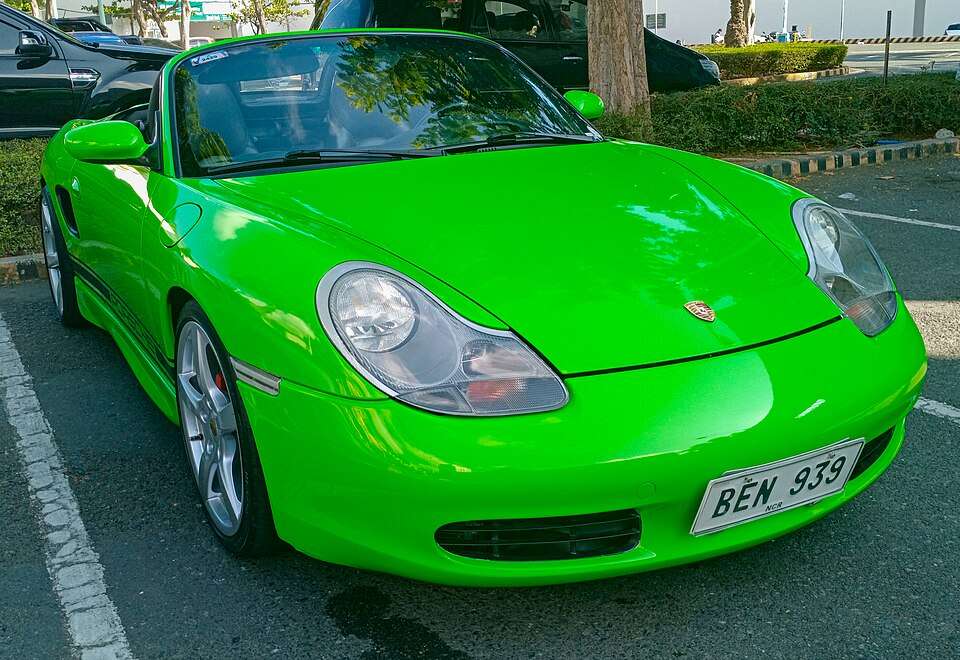
Images are illustrative surviving vehicles, not the advertised cars discussed in the market section. Individual credits and licence links accompany each photograph. No endorsement by a photographer, club, supplier or seller is implied. Prices and availability can change.