The Porsche Boxster 987 offers a flat-six engine, a usable front and rear boot and steering that makes an ordinary road feel worth taking the long way home. Buying one successfully means separating the affordable purchase price from the cost of maintaining a complex, ageing sports car. This UK guide covers the standard 987.1 and 987.2 Boxster and Boxster S, with the inspection questions that matter before a deposit changes hands.
Our buying verdict
For a first purchase, a documented, independently inspected 2.7 manual is an attractive way into the early 987; a sound 987.2 2.9 offers a different engine architecture and the option of PDK at a higher entry price. The S is worth considering for its extra performance, but choose on engine condition and the total repair exposure. A low-mileage badge, a claimed IMS upgrade or a recently stamped book cannot replace a detailed Porsche specialist inspection.

Which Porsche Boxster 987 should you buy?
The 987 arrived in 2004 for the following model year and remained in production until the next-generation 981 took over in 2012. Registration year alone is an unreliable way to identify a particular engine or model-year change. Confirm the VIN, engine identity, original specification and invoices before applying advice about a 987.1 or 987.2.
| Version | What distinguishes it | Buying priority |
|---|---|---|
| 987.1 2.7 | Early-generation flat-six; manual and Tiptronic examples | Engine history, exact IMS design, cooling and accumulated chassis work. |
| 987.1 S 3.2 / 3.4 | Early S used 3.2 litres; later S moved to 3.4 | Identify the actual engine and investigate bore condition, particularly on a 3.4. |
| 987.2 2.9, from 2009 | Revised engine architecture; manual or PDK | No intermediate shaft, but still needs a full engine, cooling and transmission assessment. |
| 987.2 S 3.4 | Direct injection and more performance; manual or PDK | Higher purchase and consumable costs; demand evidence of correct maintenance. |
Do not describe every facelift engine as direct injected: the 2.9 base model and the 3.4 S differ. Likewise, early Tiptronic is a conventional automatic; it is not the later dual-clutch PDK. Test each on its own merits rather than assuming all two-pedal Boxsters behave alike.
The RS 60 Spyder and other limited editions deserve specification checks and separate market comparisons. The later lightweight Boxster Spyder has its own roof arrangement and collector appeal, so it is not a fair benchmark for a standard roadster. Verify expensive options from the build record: coloured brake calipers, exhaust tips and replacement wheels are easy to change.
For road use, a modestly specified car on sensible wheels can be more comfortable and cheaper to refresh than one with every chassis option. PASM dampers, sports exhaust and upgraded seats can be appealing, but only pay extra when they work and suit how you will use the car. Try roof-up visibility, seat adjustment and luggage space before deciding that the specification is right.
UK prices: compare generations before comparing bargains
Research snapshot: 4 November 2026. PistonHeads displayed 75 Boxster 987 listings, including specialist versions. The following are individual advertised asking prices, not completed sales, valuations or evidence of the cars’ condition. Adverts can be changed or withdrawn; sponsored duplicates were not treated as independent market evidence.
| Advertised example | Mileage shown | Asking price |
|---|---|---|
| 2005 2.7 manual | 100,998 miles | £6,995 |
| 2006 2.7 manual | 68,000 miles | £7,995 |
| 2007 3.4 S | 70,000 miles | £11,995 |
| 2010 2.9 manual | 76,000 miles | £17,995 |
| 2009 2.9 Gen II manual | 50,000 miles | £19,490 |
| 2011 3.4 S Gen II PDK | 69,000 miles | £21,990 |
These examples show why a single “Boxster 987 price” is not useful. Generation, gearbox, mileage and evidence of major work change the proposition. A cheaper early S with unresolved engine questions may expose you to much more expenditure than a well-maintained 2.7; a facelift premium does not automatically buy a fault-free car.
Build a purchase comparison around the same version and transmission, then add immediate tyres, brakes, servicing and inspection findings to each asking price. Obtain written estimates for substantial faults before negotiating. If the seller will not allow a cold start and independent examination, the discount needs to be irrelevant: you cannot price an engine you have not been allowed to assess.
Body, underside and roof: inspect for expensive water and impact damage
Inspect panel gaps, paint texture, headlamp mountings, front boot structure and the rear boot floor for evidence of impact or poor repair. Low front bumpers and undertrays collect scrapes; broken fixings can hide incomplete repairs. Check jacking areas, suspension pick-up areas and the condition of exposed fasteners on a lift. A tidy upper body tells you little about seized underside hardware.
Look through the front intakes for leaves, road debris and corrosion around the radiators and air-conditioning condensers. Pressure-test suspected cooling leaks and confirm that the air conditioning actually cools. A fresh refrigerant charge is not proof that a leaking condenser has been repaired. Ask how debris has been removed during servicing rather than judging the system by a clean bumper opening.
Operate the roof through a complete cycle with the seller present, following the handbook. Watch for uneven movement, strained links, rubbing material, damaged seals and a clamshell that does not sit correctly. Check the small window drop when opening doors and ensure the glass seals properly once closed. A roof that “only needs adjustment” needs diagnosis, not an optimistic allowance.
Inspect carpets, behind the seats and the accessible lower cabin areas for dampness, staining, musty odours or disturbed wiring. Blocked drains and leaking seals can turn a roof problem into an electrical repair. Have drain routes checked and cleaned correctly; pushing an improvised tool into an unseen drain can cause more trouble. Inspect both luggage compartments for moisture and investigate the cause before accepting that recent cleaning explains it.

Engine, IMS, bore scoring and gearbox checks
Start with the engine genuinely cold, not warmed up before you arrive. Observe starting, idle quality, exhaust smoke and unusual noises, then inspect again when fully warm. Some observations require specialist interpretation: a brief puff after standing is not a diagnosis, and a quiet engine is not proof that its cylinder walls are healthy. Record oil use from the owner and ask for evidence, rather than treating “they all use oil” as a measurement.
IMS is an engine-identification question. LN Engineering distinguishes early 2005 Boxsters that may have an externally serviceable bearing from later 987.1 engines with a larger bearing that cannot be replaced without engine disassembly. The changeover makes registration-year shortcuts unsafe. A claim that the IMS has been “done” needs an invoice identifying the engine, work, components, date and mileage. A clutch invoice alone proves none of that.
The 987.2 engine dispensed with the intermediate shaft. That removes this particular concern, not the need to inspect the rest of the engine. Do not buy a generic online bearing kit on the assumption that every 987.1 accepts the same repair. Ask the inspecting specialist to explain the actual engine configuration and appropriate choices; the bearing seller’s technical advice also needs to be read in the context of its commercial interest.
Bore scoring is a separate issue. LN identifies the 987.1 3.4 as a particular concern, with the 2.7 and early 3.2 less prone rather than immune. Arrange a properly documented borescope inspection where the specialist considers it appropriate, especially on a 3.4. Ask what cylinders and surfaces were examined, request images and discuss the limitations. Oil analysis, filter inspection, compression or leak-down results may add context, but no single check guarantees future engine health.
Inspect the water pump, hoses, coolant joints, expansion system and evidence of overheating. Oil leaks need to be traced: the location of a drip does not by itself identify a rear main seal or another source. An air-oil separator fault can create symptoms that overlap with other problems; the repair should follow diagnosis. Do not drive away with unexplained coolant loss, persistent smoke or pressure warnings.
On a manual, test clean selection from cold, clutch engagement, slipping under sensible load and noises with the clutch depressed or released. A dual-mass flywheel can make a clutch job larger than the friction kit price. On Tiptronic and PDK cars, assess cold and hot operation, reverse engagement and low-speed manoeuvring; obtain a specialist diagnostic report and the correct transmission service history. A reset or cleared warning is not a repair record.
Have a Porsche specialist interpret stored faults and DME over-rev information in context, including operating hours and transmission type. Internet pass/fail rules for individual ranges are not a substitute for professional interpretation. The inspection should also cover suspension arms, bushes, dampers, springs, steering, wheel bearings, tyres and brakes. Clicking, wandering or uneven wear may reflect several worn parts rather than a single inexpensive alignment.
Cabin, electrical equipment and everyday usability
The 987 cabin is a significant part of the appeal, but years of sun, moisture and use still take their toll. Check seat bolsters, adjustment motors, heating if fitted, door membranes, window regulators, central locking and both keys. Inspect display readability and every switch. Worn controls are a cost consideration; inconsistent wear and mileage need a wider history investigation.
Check the original PCM or any aftermarket audio installation for correct operation, tidy wiring and battery-drain problems. Confirm that warning lamps illuminate at start-up and extinguish correctly. If the battery has recently been disconnected, ask why and ensure the diagnostic inspection includes relevant monitors and fault history. Do not accept a repeated flat battery as inevitable for a weekend car.
Road-test with the roof up as well as down. Listen for wheel-bearing noise, roof rattles and air leaks, assess heater and demisting performance and check whether you can comfortably use the pedals and seat position. Inspect both boots and the supplied tools, locking-wheel-bolt key and puncture equipment. Missing accessories can make routine maintenance inconvenient and add unexpected cost.

Maintenance costs and useful parts searches
The figures below are editorial planning allowances for parts only, unless a fitted service is explicitly identified. They are not live eBay quotes: brand, specification, availability, delivery and VAT treatment vary. Obtain a registration/VIN-matched written estimate before committing to a repair. Cheap search results can include incompatible parts, deposits or single components rather than a complete kit.
Affiliate disclosure: the parts searches below use our eBay affiliate campaign. We may earn a commission if you buy, at no additional cost to you. Search results are not a recommendation of every seller or product; verify fitment, maker, returns and warranty.
| Maintenance item | Parts allowance / search | What to check |
|---|---|---|
| Oil and filter service parts | £90–£160 | Use the correct Porsche-approved specification and quantity for the actual engine; labour and disposal extra. |
| Air and cabin filters | £30–£75 | Check generation and housing before ordering. |
| Spark plugs | £45–£100 | Six correct plugs; access and coil condition affect fitted cost. |
| Ignition coils | £150–£330 | Verify exact part number and whether price is one coil or a set. |
| Auxiliary belt | £20–£50 | The engine uses timing chains, not a scheduled timing belt; inspect pulleys and tensioning components. |
| Water pump and thermostat parts | £180–£380 | Confirm brand, engine and included seals; coolant and labour extra. |
| Alternator | £180–£380 | New/remanufactured pricing, output and exchange surcharge vary. |
| Front brake discs and pads | £200–£430 | Base and S brakes differ; inspect hoses, calipers and rear brakes too. |
| Front suspension arm parts | £150–£450 | Single arms and full sets are mixed in searches; alignment and seized bolts add cost. |
| Manual clutch kit | £250–£550 | Flywheel, seals, bolts and labour are not assumed included. |
For a real fitted-service comparison, Revolution Porsche’s 987 base-model page listed a minor service from £225 plus VAT and a major from £315 plus VAT when checked on 4 November 2026. Its listed extras included spark plugs from £95 plus VAT, brake fluid from £80 plus VAT and a poly-rib belt from £80 plus VAT, with different Gen 2 prices for some jobs. These are minimum published workshop prices for the stated scope, not quotes for every S, Spyder or individual car.
Read the service description carefully: inspecting a belt is not replacing it, and a major service does not necessarily include every age-related extra. Ask for a VIN-specific schedule covering time as well as mileage, including fluids, plugs and transmission requirements. With an infrequently used car, old tyres and overdue fluid changes still matter even when the odometer has barely moved.
Hidden ownership costs: the price of getting access
A Boxster bought cheaply still carries Porsche access, labour and parts costs. Front cooling components, roof mechanisms, corroded exhaust fixings and seized suspension bolts can turn a modest-looking defect into a larger job. Ask the workshop to separate diagnosis, parts, labour, fluids, alignment and tax so that a headline component price does not become your entire repair budget.
Do not mistake an engine-rebuild starting price for a repaired engine. Hartech’s published base rebuild description excludes the internal parts needed to repair engine damage. Its example packages also relate to particular engine configurations. A bare or assembly-only figure cannot be used as an all-in Boxster bore-scoring quote. Obtain a written estimate for the actual engine, including removal and refitting, machining, replacement internals, consumables, VAT, warranty and what happens if further damage is found.
Budget for matched quality tyres on the fitted wheel sizes and inspect their age, not just tread. Large wheels, PASM dampers and specialist brake options can increase replacement costs. Track use adds heat and consumable wear; a well-documented track car should be assessed honestly, while a road-only claim should be supported by condition. Warranty cover needs scrutiny for limits, exclusions and diagnostic approval before work starts.
Get an insurance quotation for the actual car and declared modifications before paying a deposit. Check its recorded CO₂, registration details and current tax band rather than applying one annual figure to all 987s. Factor in secure parking, a suitable battery-maintenance arrangement and occasional roof/drain attention if it lives outside. A reserve for unplanned repairs belongs alongside the purchase budget; spending every available pound on the car leaves no room for the inspection’s first findings.

Viewing checklist: eight questions before a deposit
- Confirm VIN, engine identity, 987.1/987.2 and transmission against the paperwork; verify advertised options.
- Read dated invoices alongside MOT history, mileage and evidence of earlier major repairs, not just service stamps.
- Arrange an untouched cold start and a fully warm road test; investigate smoke, oil use, leaks and coolant loss.
- Commission a Porsche specialist inspection with diagnostics and an engine-specific discussion of IMS and bore condition.
- Inspect front radiators, condensers, undertrays, suspension hardware, tyres and brakes on a lift.
- Cycle the roof and windows, then check cabin and luggage compartments for moisture and drain-related electrical damage.
- Test clutch/flywheel or automatic operation and review the correct gearbox maintenance evidence.
- Price the inspection findings in writing, check insurance and preserve a repair reserve before agreeing the final price.
Porsche Boxster 987 buying questions
Is the 987.2 the safer purchase?
Its engine design removes the intermediate shaft and its associated bearing concern, but condition, maintenance, cooling and gearbox health still matter. Pay for an inspection rather than assuming the facelift badge guarantees an inexpensive ownership experience.
Which Boxster 987 has a replaceable IMS bearing?
Some early 2005 engines may have the externally serviceable arrangement. Later 987.1 engines use a larger bearing that requires disassembly for replacement. Identify the actual engine and obtain specialist advice; registration year alone is insufficient.
Should I avoid every 3.4 Boxster S?
No. Buy with a clear understanding of its engine condition and financial exposure. A documented specialist inspection, appropriate borescope work and credible repair records are more useful than assuming every 3.4 has failed or every quiet engine is healthy.
Does a Porsche Boxster 987 need a timing-belt change?
The engines use timing chains. The external auxiliary/poly-rib belt is a separate maintenance item, with its own condition and replacement requirements. A belt invoice is not evidence of internal timing or IMS work.
Manual, Tiptronic or PDK?
Choose after driving the relevant gearbox. Manual clutch and flywheel condition matters; Tiptronic is a conventional automatic and PDK is the later dual-clutch system. Each requires the correct inspection and maintenance evidence, and their repair budgets differ.
Research, sources and image credits
Checked 4 November 2026. This is independently written buying advice based on the following primary material and observed advertisements; it is not a claim that we have inspected the advertised cars. Mechanical risks vary with the individual vehicle. Supplier and workshop material reflects their own commercial perspective.
- Porsche Newsroom: Boxster history and the 987 generation; used for generation context, not as an early-engine output table.
- LN Engineering: 987.1 model differences, IMS and bore-scoring considerations.
- Revolution Porsche: 987 base-model service scope and minimum workshop prices.
- Hartech: engine rebuild scopes, exclusions and configuration-specific examples.
- PistonHeads: Boxster 987 asking-price snapshot.
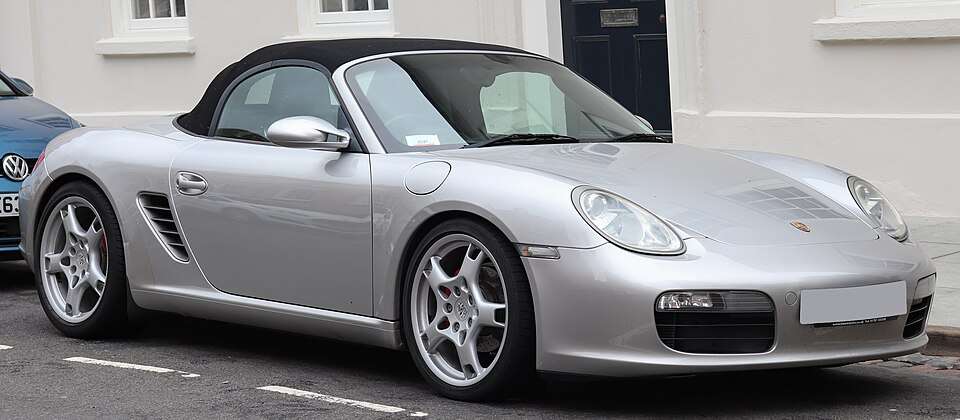
Photographs illustrate the generation and visible details; they do not show cars inspected by us or establish the condition of any advertised vehicle. Each photograph is credited beside the image with its original source and licence. Equipment and market specification can vary.