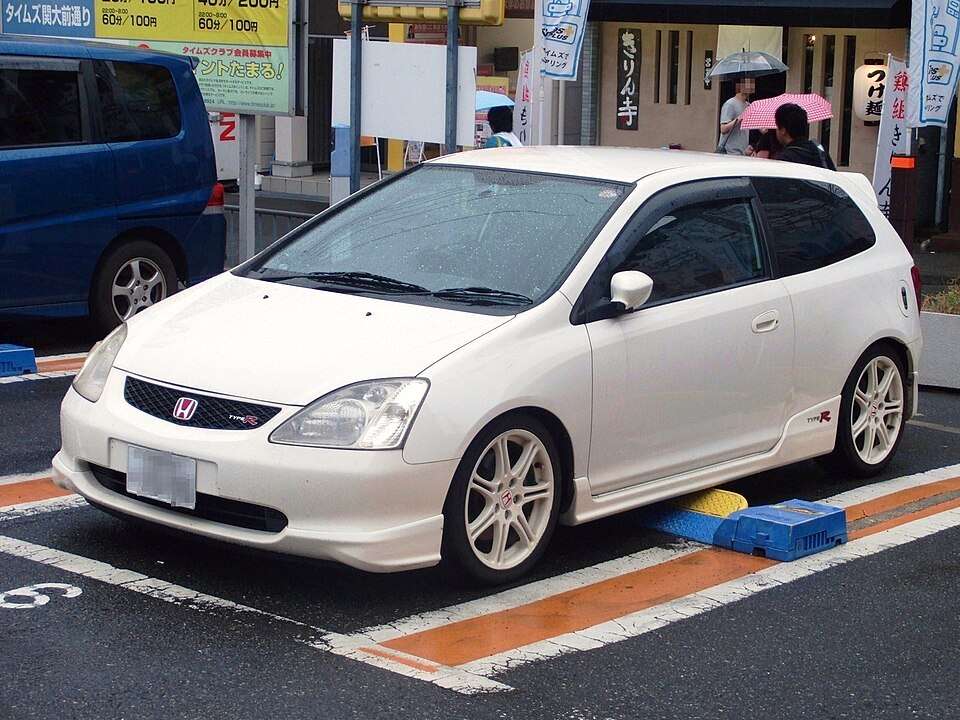
The EP3 Civic Type R puts a high-revving, naturally aspirated engine and an unusually close-to-hand six-speed gearshift inside a practical three-door hatchback. Buying one well means looking beyond red badges and a clean engine cover: structural corrosion, oil history, gearbox condition and the quality of modifications now matter more than a low odometer reading. This UK-focused guide covers the 2001–2005 EP3, including Japanese imports and Premier Editions.
Our buying verdict
Buy the strongest, most convincingly maintained shell you can afford, then choose specification. A standard UK car with good invoices is our default road-car recommendation. A genuine Japanese-market car can justify a premium for its different drivetrain and equipment, but verify the import history and fitted components. A noisy chain, crunching gearbox or concealed rust deserves diagnosis before negotiation.

EP3 versions: UK, facelift, Premier and JDM
The UK EP3 arrived in 2001 with the 1,998cc K20A2 engine, front-wheel drive and a six-speed manual gearbox. Its quoted 200PS is about 197bhp; adverts often interchange those units. It is not the later FN2, the earlier EK9 or a modern turbocharged Type R. Identify the generation before comparing prices or ordering parts.
| Version | What matters when buying |
|---|---|
| UK pre-facelift | Early appearance and interior details. Condition and oil history outweigh cosmetic preference. |
| UK facelift, from 2004 | Revised lights, bumpers and other detail changes. Verify production specification rather than treating registration year as definitive. |
| Premier Edition | Late special edition associated with red Recaro seats and Momo steering wheel. Confirm authenticity; seats and steering wheels can be transplanted. |
| Japanese-market EP3 | Different K20A specification, factory limited-slip differential and market-specific equipment. Import paperwork, engine/gearbox identity and accident history matter. |
Do not assume a UK car has a limited-slip differential because it carries a Type R badge. Many have gained aftermarket units, sometimes alongside a different final drive. Ask for the gearbox-build invoice and the manufacturer’s specification. Equally, a red rocker cover does not establish which K20 engine is underneath it.
For weekend road use, a largely original UK facelift is an accessible starting point. A Premier suits buyers who value its cabin, provided its extra cost reflects genuine equipment and condition. For track use, favour a documented build with sound cooling, brakes, geometry and oil management over a shopping list of branded parts. A cage, bucket seats and harnesses require an appropriate installation and may make a road car less useful.
EP3 prices: compare the actual specification
Market check: 3 November 2026. Car & Classic displayed a 2004 58,000-mile Type R at £14,990 and Japanese-import examples advertised at £21,985 and £24,985. Those are individual asking prices, not completed transactions or a representative market average. They demonstrate why low-mileage dealer stock should not set the budget for every EP3.
One inspected advert, C2105051, asked £13,500 for a claimed 62,000-mile Japanese import with aftermarket suspension, exhaust, wheels and brakes. The registration details in different parts of the advert did not agree. That is a prompt to clarify identity and documents, not evidence that the car is necessarily wrong. Never resolve an inconsistency by assuming the more attractive description is correct.
Build a shortlist of comparable UK cars or comparable imports, keeping those groups separate. Record rust repairs, mileage evidence, original equipment, modifications, chain work, clutch/gearbox history, seller type and any warranty. Track adverts over time and look for genuine sold results before deciding what is fair. Asking prices can remain visible after circumstances change; confirm availability directly.
We would pay for documented structural quality and a coherent service history before paying for fashionable wheels. A cheaper car needing welding, a gearbox rebuild and tyres can consume its apparent saving immediately. Conversely, a higher-mileage car with sound compression, good oil records and recent well-documented repairs may be a stronger ownership proposition than a low-mileage example with years of deferred work.
Rust, accident repairs and identity
Inspect rear wheelarches from both sides, the ends of the sills, jacking points and floor seams. Look behind accessible trim and around previous repair edges with the seller’s permission. A freshly painted arch can conceal a patch over weakened metal. Ask for photographs showing what was cut out, the condition of the inner structure and protection applied after welding.
On a lift, examine suspension mounting areas, subframes, brake/fuel lines and the underside of the boot. Inspect the spare-wheel well and cabin for moisture. Rust and dampness need a traced cause; new carpets or a thick underside coating are not proof of restoration. Get an independent estimate of the extent of corrosion before treating it as a cosmetic bargaining point.
Compare bonnet, door and tailgate gaps, headlamp mounts and paint finishes. Check for overspray on seals and awkward repairs around the front structure. Accident damage is not automatically disqualifying, but the quality and documentation of the repair must support the price. Have a specialist investigate any evidence of a displaced suspension mounting or distorted shell.
Check the VIN against the V5C, history report and import documents where applicable. Reconcile kilometre and mile records without simply adding incompatible numbers together. A conversion to a miles display should have a dated record. For an import, ask for the original export certificate and supporting history; a seller’s translated summary should not replace the underlying documents.

K20 engine, timing chain and VTEC checks
Arrange a genuinely cold start. Check the oil level with the car on level ground using the handbook procedure, and ask how frequently the owner checks it between services. A K20 can be durable, but an impressive reputation does not protect it from running low on oil. Look for invoices that identify the oil used, filters, mileage and dates rather than accepting “serviced regularly”.
Listen for persistent metallic rattling, check idle quality and watch for smoke. Several faults can produce similar symptoms. Chain wear, tensioner faults, valve clearances, sensors and other mechanical problems require diagnosis; a code reader is a starting point, not a verdict. A seller describing an unexplained noise as “normal VTEC” should not end the enquiry.
Does an EP3 need a timing-chain change at 100,000 miles?
Do not confuse a specialist recommendation with a factory replacement schedule. Torque GT’s K20 chain guidance explains that Honda does not provide a clear scheduled chain-replacement interval, while recommending a preventive change around 100,000 miles based on its experience. Chain condition and oil maintenance still need assessment on the individual car; failure can occur outside a neat mileage rule.
For a prospective purchase with symptoms, ask a Honda specialist to investigate timing correlation, tensioner operation and mechanical condition. Do not buy a cheap chain alone and assume the job is covered. Guides, tensioner, seals, valve-clearance work and fresh oil may belong in the scope. A receipt for “chain checked” should explain what was actually inspected.
Once properly warm, the engine should accelerate cleanly within safe and legal road conditions. VTEC operation depends on operating conditions; a hesitant change in character can have electrical, oil-pressure or mechanical causes. Avoid repeated high-rpm demonstrations on a cold engine. Evidence of over-revving after a missed shift merits deeper inspection even if there is no warning light.
Cooling, leaks and engine changes
Check radiator condition, hoses, fans and coolant history. Investigate stains, fluctuating temperature or unexplained topping-up. Inspect around the rocker cover and other accessible sealing areas for oil leakage, then distinguish old residue from active leaks. Overheating or mixing fluids needs a diagnosis before purchase.
An engine swap can be perfectly usable when properly engineered, but require the engine’s identity, installation invoice, management calibration and declaration to the insurer. A dyno sheet establishes one test under stated conditions; it does not establish engine health or emissions legality. Ask what catalytic converter is fitted and whether the car can pass its applicable MOT requirements without swapping parts.
Gearbox, clutch, steering and chassis
Test all six gears gently from cold and warm. Pay particular attention to reluctant engagement, crunching during normal shifts, jumping out of gear and noise that changes when the clutch is operated. Do not force a suspect shift to reproduce a fault. A clutch that drags or incorrect adjustment can affect selection, but damaged synchros cannot be priced as a simple fluid change without inspection.
Check clutch take-up, slip under sensible load and pedal feel. Look at engine mounts if the drivetrain thumps, but have wheel hop, vibration or movement diagnosed rather than assuming one bush will cure it. A gearbox removal may make additional work sensible; agree the scope and costs before authorising it.
Inspect springs, dampers, bushes, ball joints and steering rack/mountings. The car should track consistently without binding or excessive free play. Seized alignment adjusters can turn a modest geometry job into a larger bill. Ask for the most recent alignment report and check that tyre wear agrees with it.
Check brake operation, caliper freedom, discs and hoses. A hot or dragging wheel needs investigation. Budget for four appropriate tyres rather than preserving a mismatched set because two have tread left. Very low suspension, wide wheel offsets and aggressive alignment may create rubbing or poor road manners; inspect the installation and assess whether it suits your intended use.

Cabin, seats and electrical equipment
The dashboard-mounted gearlever is part of the EP3’s appeal. Check its action, surround and cables rather than accepting excessive play as a design feature. Inspect driver’s seat bolsters, tilt/recline mechanisms, seat runners and seatbelt operation. Replacement sports seats should have secure, appropriate mountings and should not leave restraint warning lamps disabled.
Try electric windows, mirrors, central locking, heater blower and air conditioning if fitted. A request for “just a regas” is not a confirmed repair: ask for a leak test and compressor diagnosis. Watch the warning lamps illuminate and extinguish correctly at start-up. Aftermarket steering wheels, audio wiring and gauges deserve scrutiny, particularly where airbag or charging warnings have been bypassed.
Check carpets, headlining and hatch seals for dampness. Have someone operate the locks with every supplied key. Original seats, wheels, airbox and steering wheel can add value to a modified car, but establish whether they are actually included, complete and usable. A box of damaged original parts is not equivalent to a reversible conversion.

EP3 maintenance costs and useful parts
Affiliate disclosure: eBay parts links below are affiliate links using our campaign. We may earn a commission if you buy, at no extra cost to you. Links open search results rather than a verified individual product. Check engine, year, part number, seller, condition and returns; search results can contain incompatible items.
Cost evidence checked 3 November 2026: Grinspeed advertised a K20 timing-chain supply-and-fit service at £774.22, listing genuine Honda chain, tensioner and guides, valve-clearance adjustment, oil and filter. Confirm today’s price, VAT treatment, suitability and additional work directly. On eBay, an Exedy OEM three-piece EP3 clutch kit was advertised at £169.99; that is a parts-only asking price, not a fitted quotation or an endorsement of a seller.
| Job / part | What to budget and verify | Parts search |
|---|---|---|
| Timing chain | Get a condition-based assessment; scope the chain, tensioner and guides together. | EP3 K20 timing-chain kits |
| Clutch | Kit price excludes labour, fluids and possible flywheel/gearbox work. | EP3 clutch kits |
| Alternator | Match output, mounting, connector and any exchange surcharge. | EP3 alternators |
| Oil service | Use the handbook/specialist specification; record oil consumption between services. | EP3 service kits |
| Cooling | Diagnose leaks and fan faults before choosing a radiator or thermostat. | EP3 cooling parts |
| Brakes | Confirm standard or modified calipers and disc dimensions. | EP3 discs and pads |
| Suspension | Identify worn joints and bushes before ordering a complete refresh. | EP3 suspension parts |
| Starter | Check battery, cables and diagnosis first; confirm fitment. | EP3 starter motors |
Ask for dated evidence of oil/filter servicing, gearbox-fluid replacement, brake-fluid work, coolant changes and valve-clearance inspection as appropriate to the car’s schedule and use. Short trips, track use and long storage may justify a different plan from simple annual mileage. Agree that plan with a specialist instead of inventing one universal interval for every use pattern.
For a new purchase with uncertain records, commission a baseline inspection before ordering upgrades. Establish tyre age, brake condition, leaks, fluid specifications, chain condition and diagnostic faults first. Keep the written findings and receipts: they make future maintenance easier and give the next buyer something more useful than a list of brand names.
Hidden ownership costs
Set a first-year budget before making an offer. Add the purchase price, fees and collection, independent inspection, immediate servicing, diagnosed repairs, insurance, storage and a reserve for unresolved work. Use quotations for the car in front of you; a percentage of the purchase price is a poor substitute for knowing what needs doing.
- Gearbox work: a synchro rebuild or differential installation can add bearings, seals and clutch decisions while the unit is out. Separate essential repair from optional upgrades.
- Rust restoration: dismantling, inner-panel work and paint blending cost more than a visible arch patch suggests. Obtain a bodyshop inspection.
- Import specification: allow for specialist identification, paperwork checks and market-specific parts. Do not order solely by a UK registration lookup.
- Returning to standard: original seats, airbox, catalyst, wheels and trim can be expensive to recover. Check availability before valuing reversibility.
- Parts are only part of the bill. Access, diagnosis, fluids, alignment, seized fasteners and VAT can change the total. Ask the workshop what its quotation includes and how additional work will be agreed.
- Exchange units and delivery. Alternators, starters and other rebuilt components can require a returnable old unit. Compare the surcharge, return postage, deadline and warranty before choosing a supplier.
- Insurance and downtime. Obtain a quote for the actual specification and declared modifications. Allow for recovery and alternative transport if this will be your only car.
Viewing and test-drive checklist
Before travelling
- Confirm registration, exact version, seller identity and ownership history. Ask about accidents, insurance write-offs, engine changes and modifications.
- Read the MOT chronology and request invoices, not just a stamped service book. Agree a cold start, inspection access and a properly insured test drive.
- Get a written list of included keys, original parts and any outstanding faults. For a distant car, request current underside and engine-bay photographs.
At the car
- □ Cold start, oil level, chain noise and evidence of valve-clearance/servicing work.
- □ Rear arches, sill ends, floor and suspension mounts inspected properly.
- □ Six-speed selection cold and warm, clutch operation and any gearbox-build documentation.
- □ UK versus JDM identity; Premier equipment verified rather than inferred from seats.
- □ Airbag/engine warning lamps, steering operation, brakes and all declared modifications.
- □ Compare identification with documents, check panel alignment and inspect accessible structure on a lift. Never go beneath a car supported only by a jack.
- □ Try lights, wipers, washers, heater, locks and warning lamps. Inspect tyres for age and damage as well as tread.
- □ Drive from cold to fully warm, using gears and brakes progressively. Note smoke, overheating, vibration, warning lights or hesitant acceleration; stop if a serious fault develops.
- □ Recheck hot starting and visible leaks afterwards. Record unresolved faults and obtain specialist estimates before paying a deposit.
Proceed when identity, structure and maintenance evidence fit the description. Investigate when a fault has a plausible cause but no diagnosis. Walk away when crucial inspection is refused, identity remains uncertain or the budget depends on a serious fault being cheap. Put any inspection condition and deposit terms in writing.
Buying questions answered
Is the Civic EP3 Type R reliable?
A maintained K20 can be durable, but age, rust, oil neglect and hard use determine the car you are buying. Judge invoices and inspection findings rather than the model’s reputation.
Does the EP3 have a cambelt?
The K20 uses a timing chain. It is not automatically maintenance-free: assess noise, faults, history and chain/tensioner condition with a specialist.
Does every EP3 have an LSD?
No. Japanese-market Type Rs have a different specification from standard UK cars; UK examples may have aftermarket differentials. Verify the fitted gearbox and invoices.
Is a Premier Edition worth more?
Its equipment can support a premium when genuine and in good condition. A better shell and service history should take priority over the badge or seats.
Should I avoid modified EP3s?
Not automatically. Prefer an engineered, documented installation with suitable insurance and emissions compliance. Unexplained mapping, wiring, worn track components or missing originals need pricing and inspection.
Sources and research method
Independently written desk research by Unusual Cars UK, checked on 3 November 2026. We have not road-tested or inspected the illustrated cars or independently authenticated sellers’ claims. Buying recommendations and inspection priorities are our editorial assessment. Historical guides inform technical context; their old price bands are not current valuations. Confirm service requirements against the actual vehicle and suitable workshop information.
- Fast Car EP3 buyer’s guide — Model variants and inspection areas; historical price advice is not used as current valuation.
- Autocar Type R buying guide — Cross-check of age-related mechanical and body concerns.
- Torque GT K20 timing-chain guidance — Primary specialist explanation; its preventive mileage recommendation is distinguished from a Honda interval.
- Grinspeed chain-change service — Primary published service scope and price checked on the research date.
- Car & Classic Type R advertisements — Asking-price snapshot with different generations and specifications filtered by description; not sold values.
- EP3 import advert C2105051 — Individual asking-price and description example, not an inspected or recommended car.
- GOV.UK used-car checks and MOT history — document and test-history checks.
Images are illustrative surviving vehicles, not the advertised cars discussed in the market section. Individual credits and licence links accompany each photograph. No endorsement by a photographer, club, supplier or seller is implied. Prices and availability can change.