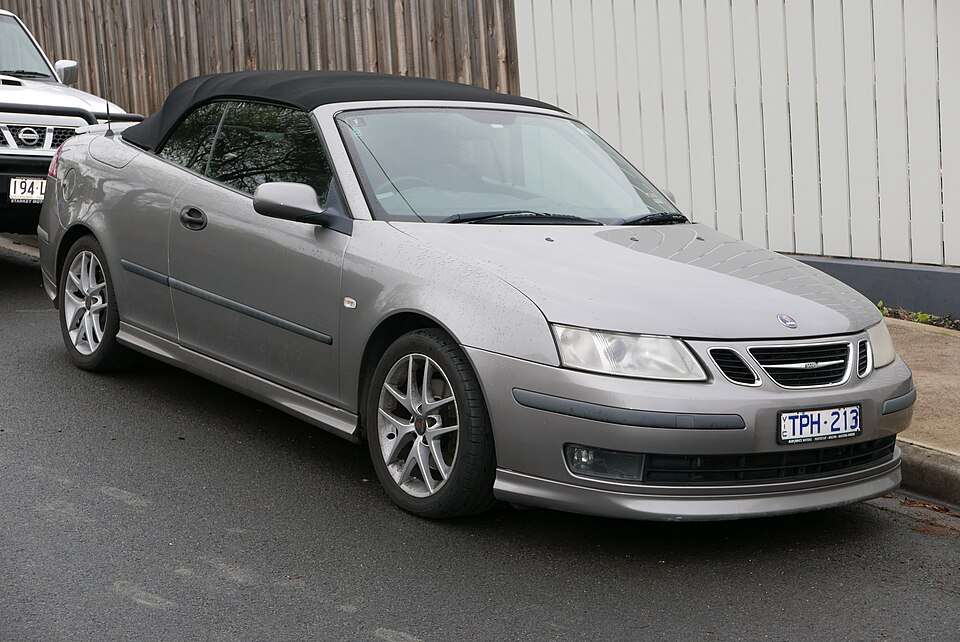
The later Saab 9-3 Convertible offers four seats, a well-insulated fabric roof and the relaxed appeal of a turbocharged Saab at approachable purchase prices. A low asking price can conceal a roof, electrical or structural repair that changes the calculation completely. This guide covers the second-generation Convertible introduced in 2003, with B207 four-cylinder petrol engines as the main buying focus and separate cautions for diesel and V6 alternatives.
Our buying verdict
For most occasional-use buyers, a well-maintained B207 petrol car with a completely working roof is a sensible starting point. Prioritise cold-start behaviour, dry cabin and boot, sound underside and access to Saab-capable diagnostics. An unresolved roof fault or missing key should be costed before purchase, not dismissed as a small job.

Which later Saab 9-3 Convertible should you buy?
The second-generation 9-3 Convertible arrived in 2003, following the new-generation saloon. Registration dates and the changeover can confuse searches, so identify the car itself. Earlier 9-3 Convertibles and the classic 900 have different engines, roof systems and inspection priorities. This guide does not apply their advice indiscriminately to the later model.
The 1.8t badge is particularly important: in this generation it identifies a turbocharged 2.0-litre B207 petrol engine, not a 1.8-litre turbo. The 2.0t and 2.0T use related B207 installations with different output and specification. Common launch figures were around 150bhp, 175bhp and 210bhp respectively, but market, year, trim and later modifications need checking. Do not infer every detail from the Aero badge alone.
| Choice | Likely appeal | What changes the buying decision |
|---|---|---|
| 1.8t / 2.0t B207 petrol | Relaxed performance and a useful starting point for occasional use | Cold starting, oil-service history, chain noise, ignition and actual engine specification. |
| Four-cylinder Aero / 2.0T | More performance and sportier equipment | Tyre and suspension condition, boost modifications and insurance disclosure. |
| 2.8 turbo V6 | Stronger performance and distinctive character | Separate engine, cooling, timing and access requirements; obtain V6-specific estimates. |
| 1.9 TiD / TTiD diesel | Potentially useful for sustained longer journeys | Timing belt/pump, emissions equipment and intake-system condition; short-trip use changes the calculation. |
| Later facelift | Different nose and equipment details | Assess condition first; a facelift does not establish freedom from engine or roof faults. |
Manual and automatic cars are available, with gearbox type and ratios varying by engine and year. Confirm what is fitted from records and the car rather than assuming every later Convertible uses one transmission. Drive it long enough to test cold and hot behaviour. An automatic that initially seems smooth may behave differently after the fluid is fully warm.
Do not import Turbo X or XWD saloon and estate specifications into a Convertible advert. Likewise, ordinary 9-3 parts searches can return saloon, estate and older-generation equipment. Ask suppliers to confirm the Convertible body, engine, transmission and model year. A registration lookup is useful, but modifications and catalogue errors make a physical specification check worthwhile.
For leisure use with repeated short journeys, a petrol car can avoid some diesel emissions-system complications. That is an editorial buying preference, not a claim that every diesel is unsuitable. A diesel with documented maintenance and regular long journeys may suit a different owner. Decide around your annual mileage, journey pattern and local access requirements, then inspect the individual vehicle.
Saab Convertible prices: use a careful sample
The Car & Classic modern-car Convertible results checked on 3 November 2026 included a 2005 9-3 Vector Convertible, described as a 2.0-litre petrol automatic with 121,500 miles, at £2,350. This is a seller asking price and description, not an independently verified value or completed sale. Only one clearly relevant later-generation example appeared in that particular result set, so it cannot support a reliable national price range.
The same results contained older-generation cars and potentially inconsistent Viggen descriptions. Those were excluded. A search filter labelled “9-3 Convertible” is not enough to make every result a direct comparable. Build a current shortlist of the same generation, engine, transmission and broad condition before drawing conclusions about value.
Compare the whole ownership position. A more expensive car with a dry interior, fully operating roof, two working keys, sound subframe and recent maintenance can be cheaper to own than one needing all those jobs. A long MOT is useful but does not test the roof through repeated full cycles or confirm that a cold-start compression issue is absent.
Request the service record, roof-repair invoices, diagnostic reports, key count and an explanation of any warning messages before travelling. If a seller says a roof only needs a reset, ask for the diagnosis supporting that claim. Obtain an inspection and a written estimate from a suitable specialist before treating any unresolved fault as a small negotiating allowance.
Body, underside, water ingress and accident repairs
Inspect the underside on a lift. Check the front subframe and associated mounting areas, sills, jacking regions, floors, brake pipes, suspension points and rear structure for corrosion and poor repairs. A low purchase price does not make structural work economical. Have a workshop distinguish surface corrosion from weakened sections and price any necessary work with the associated labour and fixings.
Walk around the arches, door bottoms, bonnet, bootlid and screen surrounds. Look for inconsistent paint, overspray, poor panel alignment and disturbed seams. Replacement panels or paintwork are not automatically a reason to reject a car, but the seller should be able to explain them. Seek repair photographs or invoices where substantial work is claimed.

Water ingress deserves deliberate investigation. Feel accessible carpets and inspect the boot, spare-wheel region where applicable, roof-storage area and visible connectors for moisture, staining or corrosion. Blocked drainage and failed sealing can create electrical problems that persist after a superficial clean. A wet car should be diagnosed, dried properly and checked for consequential damage before being represented as repaired.
Inspect the fabric roof for abrasion, cuts, seam damage and poor previous repairs, and examine the heated rear glass and its bonding. A fabric treatment will not repair a failed seal, damaged frame or leaking hydraulic component. Ask a roof specialist which maintenance products and methods suit the material; avoid assuming a pressure washer or generic waterproofer is the answer.
Check door and side-window alignment and the fit of the roof against the screen and body. Excess wind noise or water tracks can have several causes, including adjustment and previous repair. Structural accident damage can complicate roof alignment, so a badly fitting roof should not be treated as an isolated fabric problem without further assessment.
B207 engines, transmissions and chassis checks
Insist on a cold start
Ask the seller not to warm the car before you arrive. Observe cranking, initial idle and how quickly it settles, then assess hot running separately. Autocar’s 9-3 guide flags valve-related cold-running problems on some 2007–2009 petrol cars. This does not mean every car in those years is defective, or that every misfire has that cause. Persistent cold symptoms deserve proper compression and leakage diagnosis where indicated.
Ignition coils, plugs, intake leaks, electrical supply and other faults can also produce poor running. Have a Saab specialist diagnose the symptoms instead of accepting “it just needs a coil” without evidence. A fault-code printout identifies clues, not necessarily the failed component. Ask whether any codes were recently cleared and arrange a cold test if the car was warm on arrival.
Timing and balance chains
The B207 petrol engine uses timing and balance chains. It does not require the same scheduled cambelt kit as the 1.9 diesel. Chain-driven does not mean immune to wear or tensioner problems. Autocar highlights the importance of clean oil supply to tensioners and punctual servicing. Listen for abnormal rattling and investigate oil-pressure or lubrication concerns rather than assuming a new chain alone resolves the cause.
Ask for detailed invoices if chain work has been done: timing chain, balance-chain components, guides, tensioners, seals and any lubrication investigation should be clear. A receipt for one tensioner is not evidence of a complete timing-system renewal. Confirm the workshop’s maintenance advice for the actual engine and oil specification; do not invent a universal chain-replacement mileage.
Inspect oil level, leaks, coolant condition, radiator and hose condition, fan operation and signs of previous overheating. Investigate persistent coolant loss, contamination or abnormal pressure before buying. Do not remove a hot coolant cap. The turbo should deliver power smoothly without persistent smoke or misfire; non-standard software or boost hardware needs documentation and insurance disclosure.
Diesel and V6 alternatives need different advice
On 1.9 TiD and TTiD cars, establish the correct timing-belt and water-pump schedule for the specific engine and model year. Ask for an invoice covering the pump as well as the belt system. Diesel intake swirl equipment where fitted, EGR operation and DPF condition where fitted deserve appropriate inspection and diagnostics. A history of repeated short trips can be relevant to emissions-system problems.
Do not assume an emissions-system deletion makes a car an uncomplicated purchase. Establish the original specification, legal road-use requirements and actual equipment before committing. If your main use is occasional local trips, compare the total running costs of a healthy petrol car rather than choosing a diesel solely from a quoted economy figure.
The 2.8 turbo V6 is a separate engine family with different timing, ignition, cooling and access considerations. Obtain a V6-specific inspection and fitted service estimates. The B207 chain-kit example below does not fit it. A performance badge is not a reason to use the four-cylinder maintenance budget for a more complex installation.
Gearbox, steering, suspension and brakes
On a manual, check gear selection cold and hot, clutch slip and release, and vibration or rattling that may involve the dual-mass flywheel or other driveline components. Have the actual cause diagnosed before pricing a clutch-only repair. Test an automatic through normal shifts and hot engagement, and investigate fluid condition, leaks and any sign of coolant contamination using the correct procedure for that gearbox.
Listen for broken springs, worn bushes, links and wheel bearings, and inspect steering joints and assistance for leaks or noise. Assess alignment and tyre wear, including inner edges. A powerful front-wheel-drive Convertible can consume front tyres quickly, but rapid wear can also reflect geometry or component faults. Check tyre age and suitable specification rather than tread depth alone.
Test braking progressively and inspect calipers, discs, pads, hoses and lines. Low annual mileage can leave sticking components and corroded surfaces. Check the ABS and stability warning sequence and have any faults diagnosed. Wheel, suspension and brake modifications need a coherent parts specification so future servicing does not become guesswork.
Roof operation, keys and electrical systems
The roof is a central part of this purchase. With suitable battery support and the owner’s agreement, run it through complete opening and closing cycles in accordance with the handbook and with the car safely stationary. Check windows, latches, tonneau movement and completion messages. Stop if it snags, leaks, makes abnormal noises or fails to complete; forcing it can worsen damage.

Cayman Autos lists hydraulic rams, hoses and pump issues, position sensors and switches, control faults, alignment, tonneau problems and blocked drains among the faults it diagnoses on 9-3 roofs. Those are possible causes, not a checklist of parts every car needs. A slow or intermittent roof requires diagnosis before ordering a pump or assuming a reset will cure it.
Ask whether the roof was serviced, what work was performed and whether any leak source and consequential damage were addressed. A fabric replacement, hydraulic repair and control-system calibration are different jobs. Obtain a written quote specifying parts, labour, diagnosis and the intended result. If a roof cannot be closed securely, include transport and weather protection in the purchase decision.
Test every key supplied, central locking, starting, dashboard messages, steering-column controls, windows, mirrors, heated seats where fitted, climate control, lights, wipers, audio and parking equipment. Key recognition, ignition-switch and column-module symptoms need Saab-capable diagnosis. An arbitrary used module may require pairing or programming and is not always a plug-in solution.
A battery and charging check is sensible before condemning expensive electronics, but a new battery does not prove every intermittent fault is solved. Look for water-damaged connections and poor aftermarket alarm or audio wiring. Establish access to a workshop with appropriate Saab diagnostic tools and experience, rather than assuming any generic scanner can complete all configuration tasks.

Check seat and bolster wear, roof lining, plastic switches, trim coatings and display operation. Cosmetic wear can be tolerable at the right price; dampness, warning lights and non-working safety systems require a different response. Sit in both front and rear seats and check boot access with the roof in each configuration to see whether the car suits your actual trips.
Maintenance costs, chain kits and useful parts
Affiliate disclosure: eBay parts links below are affiliate links using our campaign. We may earn a commission if you buy, at no extra cost to you. Links open search results rather than a verified individual product. Check engine, year, part number, seller, condition and returns; search results can contain incompatible items.
Neo Brothers’ B207 combined timing-and-balance-chain package page displayed £253.91 including VAT (£211.59 excluding VAT) when checked on 3 November 2026. Crucially, it also stated that the product was no longer available to purchase. Treat that as a displayed historical/product reference, not an in-stock buying recommendation or a current guaranteed cost. The listed package included timing and balance kits, cover gasket and front crank seal. Obtain a current alternative and fitted quotation from the workshop.
| Job / item | How to budget correctly | Useful parts search |
|---|---|---|
| B207 timing and balance-chain work | Diagnose noise and oil supply; confirm full kit contents, current availability and fitted labour. | Compare B207 timing and balance-chain kits |
| Alternator | Test charging, battery and wiring; identify petrol/diesel/V6 application. | Search B207 alternators |
| B207 routine service | Correct oil, filters and plugs; inspect coils and hoses as required. | Search B207 service kits |
| Diesel belt and pump | Separate schedule and kit; verify engine code and model year. | Search 1.9 TiD belt and pump kits |
| Roof hydraulics or sensors | Obtain a fault diagnosis first; identify exact Convertible generation and component. | Search later 9-3 roof components |
| Clutch and flywheel | Verify gearbox and include access labour and associated parts. | Search B207 clutch and flywheel parts |
| Springs and brakes | Confirm axle load, suspension specification and actual braking equipment. | Search Convertible suspension parts |
The eBay links are separate shopping searches, not promises of the Neo Brothers product or price. Results may include used items, wrong generations, incorrect engines or incomplete kits. Verify part numbers, compatibility, condition, VAT, delivery, warranty and returns. Used roof and electrical components can need configuration or have the same age-related fault as the part being replaced.
Agree a baseline maintenance plan covering oil and filters, cooling, brakes, tyres, gearbox requirements, roof maintenance and drainage. Record dates as well as mileage. A roof service and an engine service are different jobs. After storage, assess battery, fluids, fuel condition, hoses and brake operation before normal use, and keep clear invoices for future diagnosis and resale.
Hidden Convertible ownership costs
Hidden ownership costs
Set a first-year budget before making an offer. Add the purchase price, fees and collection, independent inspection, immediate servicing, diagnosed repairs, insurance, storage and a reserve for unresolved work. Use quotations for the car in front of you; a percentage of the purchase price is a poor substitute for knowing what needs doing.
- A roof fault can include diagnosis, hydraulic or electrical parts, adjustment, water-damage repair and transport if it cannot close.
- A missing key or module fault may require programming and Saab-specific support rather than a simple used-part swap.
- Cold-start compression concerns and timing/balance-chain work need diagnosis before a parts-only budget is meaningful.
- Subframe corrosion, clutch/flywheel work, tyres and a suspension refresh can outweigh a very low purchase price.
- Parts are only part of the bill. Access, diagnosis, fluids, alignment, seized fasteners and VAT can change the total. Ask the workshop what its quotation includes and how additional work will be agreed.
- Exchange units and delivery. Alternators, starters and other rebuilt components can require a returnable old unit. Compare the surcharge, return postage, deadline and warranty before choosing a supplier.
- Insurance and downtime. Obtain a quote for the actual specification and declared modifications. Allow for recovery and alternative transport if this will be your only car.
Later 9-3 Convertible viewing checklist
Viewing and test-drive checklist
Before travelling
- Confirm registration, exact version, seller identity and ownership history. Ask about accidents, insurance write-offs, engine changes and modifications.
- Read the MOT chronology and request invoices, not just a stamped service book. Agree a cold start, inspection access and a properly insured test drive.
- Get a written list of included keys, original parts and any outstanding faults. For a distant car, request current underside and engine-bay photographs.
At the car
- □ Confirm later-generation body, actual engine code, gearbox and 1.8t/2.0t/B207 versus diesel or V6 specification.
- □ See a genuinely cold start; investigate persistent misfire, chain noise and oil/coolant concerns before a warmed demonstration masks symptoms.
- □ Operate the roof fully with the car safely stationary, following the handbook; inspect fabric, seals, glass, latches and completion messages.
- □ Check cabin, boot and roof-storage areas for water and corrosion, and inspect the underside and subframe on a lift.
- □ Test all keys, starting, warning lamps, climate and electrical equipment; obtain appropriate diagnostics for unresolved faults.
- □ Read engine, roof and gearbox invoices and price the full first-year plan, including tyres, structural work and missing-key costs.
- □ Compare identification with documents, check panel alignment and inspect accessible structure on a lift. Never go beneath a car supported only by a jack.
- □ Try lights, wipers, washers, heater, locks and warning lamps. Inspect tyres for age and damage as well as tread.
- □ Drive from cold to fully warm, using gears and brakes progressively. Note smoke, overheating, vibration, warning lights or hesitant acceleration; stop if a serious fault develops.
- □ Recheck hot starting and visible leaks afterwards. Record unresolved faults and obtain specialist estimates before paying a deposit.
Proceed when identity, structure and maintenance evidence fit the description. Investigate when a fault has a plausible cause but no diagnosis. Walk away when crucial inspection is refused, identity remains uncertain or the budget depends on a serious fault being cheap. Put any inspection condition and deposit terms in writing.
Saab 9-3 Convertible buying questions
Buying questions answered
Is the later 9-3 1.8t actually a 1.8-litre engine?
No. The 1.8t badge in this generation identifies a turbocharged 2.0-litre B207 petrol installation. Confirm the code and actual specification before ordering parts.
Does the B207 petrol engine have a cambelt?
It uses timing and balance chains. These can still develop wear or tensioner problems. The 1.9 diesel uses a separate belt-based maintenance plan.
Should I buy a car with a roof that only needs a reset?
Only after a suitable specialist has diagnosed the fault and priced the repair. Sensors, hydraulics, wiring, alignment and control faults can produce similar symptoms.
Why is a cold start important?
Some later petrol cars can have valve-related cold-running problems, while ignition and other faults can also cause symptoms. A fully warm demonstration cannot exclude a cold-only issue.
Are parts impossible to find because Saab stopped building cars?
Many service parts remain available through specialists, but individual roof, trim and electronic components can be more difficult. Confirm support and current stock for the actual repair rather than assuming every part is available.
For an older Saab alternative, see our Saab 900 Turbo buying guide. For another four-seat open tourer, compare the Triumph Stag guide.
Sources and research method
Independently written desk research by Unusual Cars UK, checked on 3 November 2026. We have not road-tested or inspected the illustrated cars or independently authenticated sellers’ claims. Buying recommendations and inspection priorities are our editorial assessment. Historical guides inform technical context; their old price bands are not current valuations. Confirm service requirements against the actual vehicle and suitable workshop information.
- RAC: later 9-3 Convertible review — Convertible layout and generation context; historic parts prices and unrelated drivetrain claims not used as current buying evidence.
- Autocar: 9-3 buying guide — B207 cold-running and chain concerns, diesel and chassis checks; body-style-specific interpretation applied.
- Cayman Autos: Saab 9-3 roof repairs — Primary roof-specialist fault categories; marketing promises not treated as repair guarantees.
- Neo Brothers: combined B207 kit — Primary application, contents, displayed price and unavailable status checked 3 November 2026.
- Car & Classic: Convertible listings — One relevant later-generation asking example; no national range inferred from the small sample.
- GOV.UK used-car checks and MOT history — document and test-history checks.
Images are illustrative surviving vehicles, not the advertised cars discussed in the market section. Individual credits and licence links accompany each photograph. No endorsement by a photographer, club, supplier or seller is implied. Prices and availability can change.