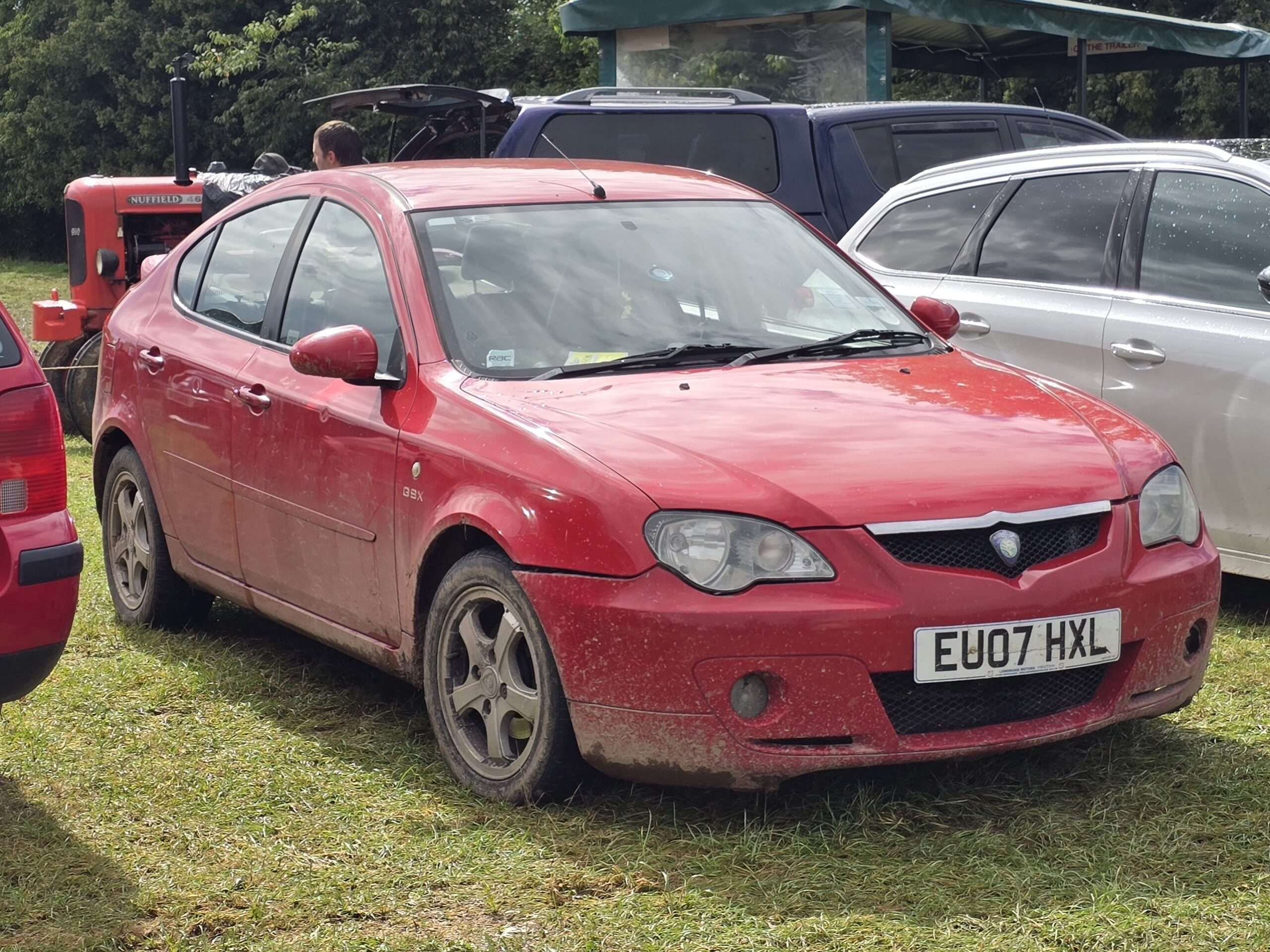
Proton Gen-2
The home-grown hatchback that was meant to reinvent Proton in Britain—styled in Malaysia, tuned with Lotus input and priced to challenge the mainstream.
Quick answer: The Proton Gen-2 reached the UK in September 2004 and remained available until Proton withdrew from the British new-car market around 2012. It was offered as a five-door hatchback and later a saloon, with 1.3- and 1.6-litre CamPro petrol engines. UK buyers could also choose automatic and factory-supported ecoLogic LPG versions.

A new generation of Proton
The name was deliberate. Where earlier Protons relied heavily on Mitsubishi platforms, the Gen-2 was developed around Proton’s own architecture and CamPro engine family. The Malaysian launch took place in February 2004, followed by the UK later that year. Proton hoped the sweeping roofline and unusual interior would move the brand beyond its bargain-car reputation.
Lotus Engineering, owned by Proton, contributed to chassis development. The result had accurate steering and secure cornering, although British reviews were less impressed by the firm ride, driving position and variable cabin quality. The Gen-2’s strongest argument remained value: Focus-sized accommodation and generous equipment for supermini money.
Hatchback, saloon and ecoLogic
The original five-door looked like a fastback but retained a practical top-hinged tailgate. A four-door saloon later broadened the range. Early cars were criticised for awkward switchgear and an engine that lacked low-rev torque; a 2007 update brought revised cabin materials and equipment. Later CamPro IAFM engines improved flexibility.
The ecoLogic bi-fuel model was a particularly unusual UK offering. Its professionally installed LPG system used a tank beneath the boot floor, allowing the car to run on petrol or cheaper liquefied petroleum gas. It appealed to high-mileage private-hire and value-conscious drivers, although the shrinking LPG network affects ownership today.

Proton Gen-2 specifications
- UK sales: 2004–2012
- Engines: 1.3-litre and 1.6-litre CamPro petrol; 1.6 ecoLogic petrol/LPG
- Typical 1.6 power: approximately 110bhp
- Gearboxes: five-speed manual or four-speed automatic
- Body styles: five-door hatchback and four-door saloon
- 0–62mph: roughly 12 seconds for a manual 1.6, depending on version
- Top speed: approximately 118mph for the 1.6
What is a Gen-2 like to drive?
The steering and basic balance are better than the badge’s reputation might suggest. It turns in neatly and remains composed on an open road. The 1.6 needs revs because early CamPro engines deliver little torque at low speed, making relaxed progress less effortless than the power figure suggests. The 1.3 is rarer and slower.
Noise levels and ride quality trail the best family hatchbacks of the period, while the high-mounted gear lever and low seating position divide opinion. Later cars feel better assembled, and the saloon offers a useful boot. The automatic is noticeably slower but suits gentle driving.
Proton Gen-2 buying guide
CamPro engine and timing belt
Verify timing-belt and water-pump replacement, oil-service history and coolant condition. Hesitation, unstable idle or warning lights may point to ignition coils, sensors or intake faults. Listen for belt noise and check carefully for overheating or oil leaks.
Manual, automatic and LPG systems
A manual should select every gear cleanly without clutch slip. The automatic must engage promptly and change smoothly when hot. On ecoLogic cars, confirm that the system switches fuels correctly, has current specialist paperwork and that the tank, lines and filler remain serviceable.
Suspension, steering and brakes
Knocking from tired anti-roll-bar links and bushes is common. Inspect dampers, springs, wheel bearings and tyres; poor geometry quickly produces uneven wear. Test for seized brakes and an illuminated ABS warning lamp.
Body, cabin and electrics
Check sills, floor edges, rear arches, subframes and suspension mounts for corrosion. Water can enter through seals and blocked drains. Test the central locking, windows, air conditioning, instruments and all column controls. Unique trim and electronic modules are becoming difficult to source.

Frequently asked questions
Is the Proton Gen-2 reliable?
The fundamentals can be durable, but age, patchy servicing and parts availability now matter more than the original design. A well-documented later car is the safest choice.
Did Lotus build the Gen-2?
No. Proton developed and manufactured it, with Lotus Engineering contributing to chassis tuning.
What is an ecoLogic?
It is the UK bi-fuel version, able to run on petrol or LPG through a professionally installed system.
Verdict
The Gen-2 did not transform Proton’s British fortunes, but it marked a major step in the company’s independence from Mitsubishi. Its ambitious styling, Lotus connection and rare ecoLogic derivative make it an increasingly interesting low-cost modern classic—provided you buy on condition and parts completeness.
Research basis: Proton’s 2004 annual report and corporate milestones, contemporary Autocar and Independent reviews, UK brochures, model archives and Wikimedia Commons.