UNUSUAL CARS MODEL GUIDE
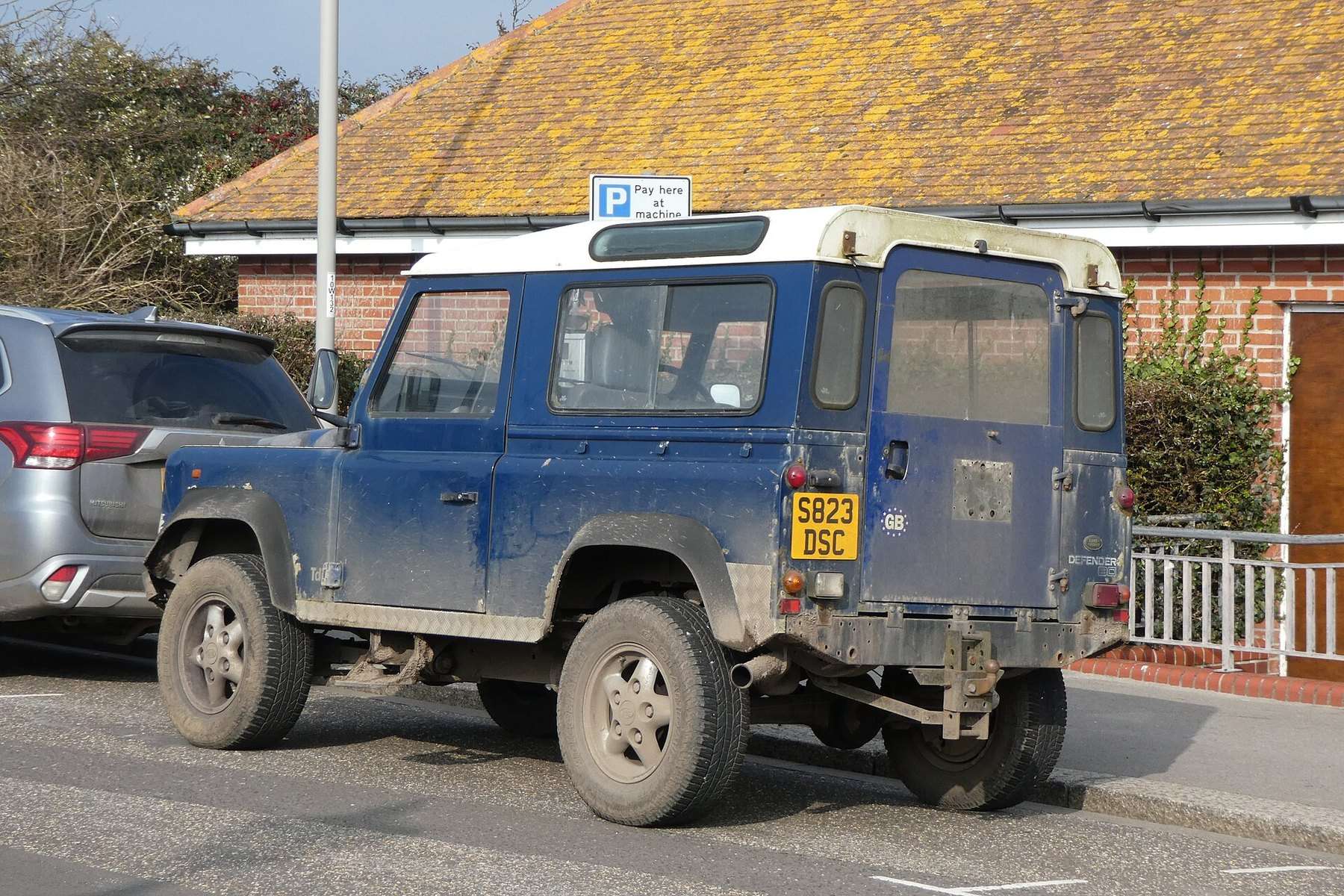
The 1998 Land Rover Defender 50th Anniversary V8 was the UK market’s unusually luxurious and fast factory Defender. It paired a 4.0-litre injected Rover V8 with a four-speed automatic gearbox, air conditioning and an internal roll cage, all wrapped in colour-shifting Atlantis Blue. Land Rover sources and marque records commonly give 385 cars for the UK allocation.
Quick answer: the Defender 50th is a 1998 three-door Defender 90 special derived from the North American V8 automatic specification. UK cars use a 4.0-litre V8, four-speed automatic transmission, permanent four-wheel drive and Atlantis Blue paint. Identity, originality and structural condition matter more than cosmetic restoration alone.
Featured image: Atlantis Blue Land Rover Defender 90 50th Anniversary V8. Photograph by Calreyn88, CC BY-SA 4.0, via Wikimedia Commons; locally hosted.
A very different anniversary Defender
Land Rover marked fifty years since the 1948 Series I with several commemorative models. The Defender 50th was the performance-led one: a fully trimmed 90 Station Wagon rather than a diesel workhorse. Its drivetrain echoed the North American Defender 90, bringing a factory V8 automatic combination to UK customers.
It sat alongside the more nostalgic Heritage edition, but the two cars had different purposes. The 50th used speed, equipment and a dramatic paint finish to show how far the utility Land Rover had moved from its agricultural origins.
The 4.0 V8 automatic drivetrain
| Item | UK Defender 50th |
|---|---|
| Engine | 4.0-litre fuel-injected Rover V8 |
| Quoted output | About 190 hp |
| Transmission | Four-speed automatic |
| Body | Defender 90 Station Wagon |
| UK allocation | Commonly recorded as 385 vehicles |
The automatic gearbox and V8 torque gave the short-wheelbase Defender a character unavailable from contemporary UK diesels. Permanent four-wheel drive and a two-speed transfer case retained serious off-road ability, while air conditioning and richer cabin trim made the car more usable as an expensive leisure vehicle.

Love cars you don’t see every day?
Get forgotten cars, surprising motoring stories and the most interesting finds from Unusual Cars by email.
Free to join. No spam. Unsubscribe whenever you like. See our privacy policy.
Atlantis Blue and special equipment
UK and European cars were finished in Atlantis Blue, a dark green-blue colour whose appearance changes with the light. Body-coloured wheelarch extensions, alloy wheels, side steps and anniversary badging added visual distinction. A Safety Devices roll-over structure surrounded the front seating area.
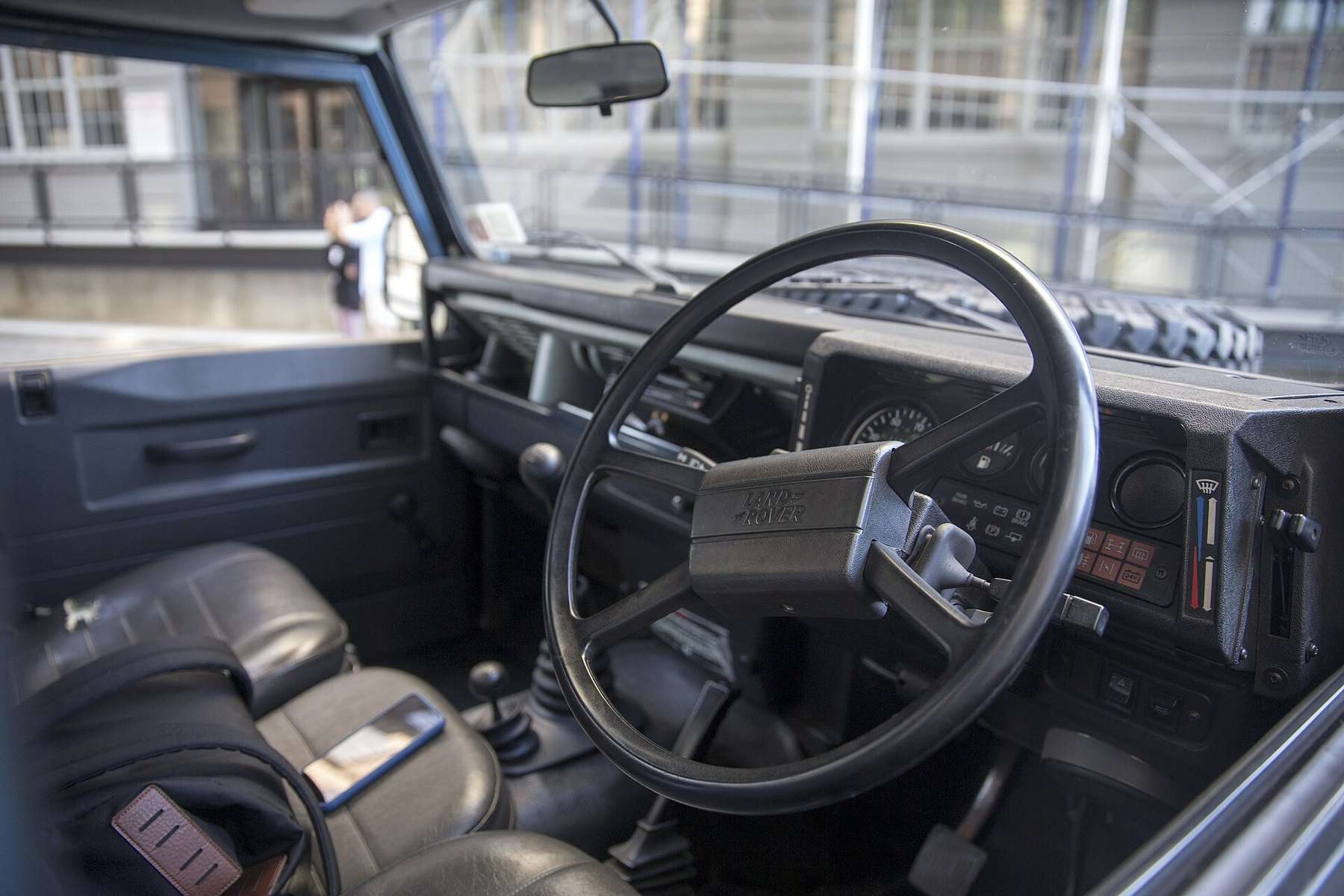
Inside, the 50th combined leather-trimmed seating, air conditioning and an automatic selector with the familiar Defender dashboard and driving position. Surviving cars are often modified, so original seats, cage, wheels, decals and trim deserve careful documentation.

Production and market variations
Published marque histories give 1,071 Defender 50th Anniversary vehicles across all markets, including 385 for the UK, with the remainder supplied to Japan, continental Europe and the Middle East. Japan received its own colour and equipment combinations, so an imported car should not automatically be described as a UK example.
Build and registration dates can differ, and enthusiast registers have identified anomalies around numbering. Treat the factory build record, VIN, market code and original specification as stronger evidence than a dashboard plaque or seller’s description alone.

Chassis, bulkhead and mechanical checks
Inspect the chassis rails, rear crossmember, outriggers, spring seats and every body mounting. Examine the bulkhead around the footwells, vents, windscreen hinges and door pillars. Aluminium panels can corrode where they meet steel, while replacement chassis and bulkheads require supporting paperwork and correct identity handling.
On the V8, check cold and hot oil pressure, coolant condition, exhaust emissions, ignition components and evidence of overheating. The automatic should engage promptly and shift smoothly; test high and low range, centre-differential lock, propshaft joints and axle noise. Brakes, swivel housings, wheel bearings, steering joints and suspension bushes must cope with more performance than a tired standard 90.
Originality and ownership
Many Defenders have been rebuilt, upgraded or converted. Good changes can improve reliability, but a collectible 50th needs an honest record of what remains factory original. Check engine and gearbox identity, paint history, interior, roll cage, wheels, badging and electrical equipment.
Parts support is strong for the base vehicle and Rover V8, but edition-specific trim can be difficult. A specialist inspection should confirm both structural integrity and the legitimacy of the vehicle identity before purchase.
Why the Defender 50th matters
The 50th anticipated today’s high-performance luxury Defender by combining the old utility body with a powerful petrol engine, automatic transmission and premium equipment. It was not the most austere or technically pure Defender, but that contradiction is exactly why it remains interesting.
Sources and further reading
- University of Worcester: The Making of a Design Icon
- Defender marque history and anniversary editions
- Land Rover Monthly: Defender special editions
Continue the Land Rover story
The 50th is the clearest factory link between the traditional Defender and later V8 luxury derivatives. Explore the complete Land Rover hub. Compare the Range Rover CSK. Discover the military 101 Forward Control.
Frequently asked questions
How many Defender 50th Anniversary V8s came to the UK?
The commonly published UK allocation is 385 vehicles, within a worldwide total often recorded as 1,071.
What engine is in the Defender 50th?
It uses a fuel-injected 4.0-litre Rover V8 producing about 190 hp.
Is the Defender 50th automatic?
Yes. The V8 is paired with a four-speed automatic gearbox.
What colour were UK Defender 50th Anniversary cars?
UK and European examples were finished in colour-shifting Atlantis Blue; other markets could receive different specifications.
What should be checked before buying one?
Confirm market identity and original equipment, then inspect the chassis, bulkhead, Rover V8 cooling and oil pressure, automatic gearbox, transfer case and edition-specific trim.