UNUSUAL CARS MODEL GUIDE
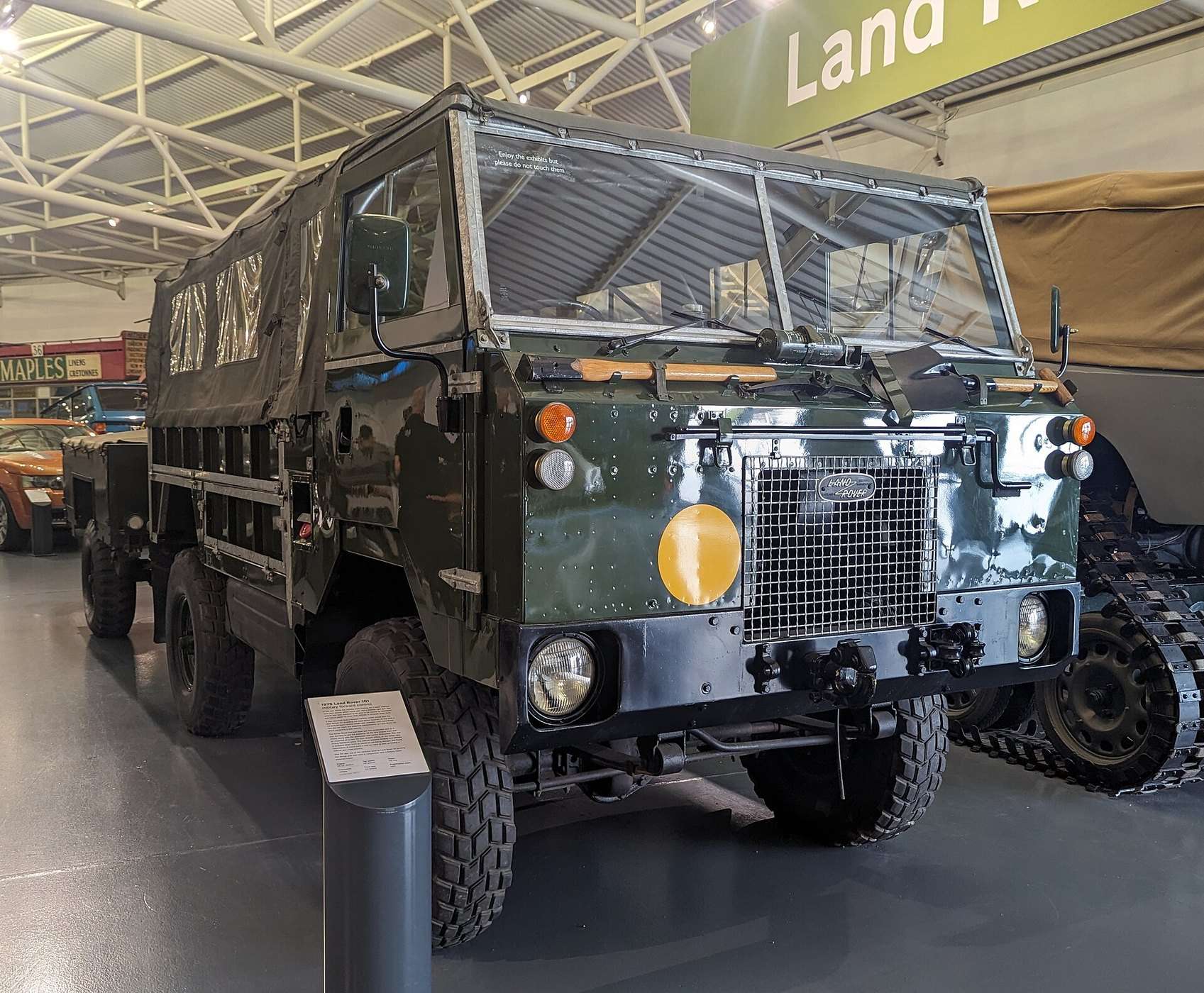
The Land Rover 101 Forward Control was designed as a compact one-tonne gun tractor for the British Army rather than as a civilian showroom model. Its driver sat above and slightly ahead of the front wheels, while a 3.5-litre Rover V8, four-wheel drive and a 101-inch wheelbase gave the square-bodied vehicle its name and purpose.
Quick answer: the 101 Forward Control was developed from 1967 and produced at Solihull from 1972 to 1978, with the main run concentrated in 1975–78. The 101 Club records about 2,668 vehicles, most supplied to the British government. General Service, ambulance and radio-bodied survivors have important specification differences.
Featured image: 1975 Land Rover 101 Forward Control at the British Motor Museum. Photograph by Mark Brown from Hampton, New Brunswick, Canada, CC BY-SA 2.0, via Wikimedia Commons; locally hosted.
Built around the L118 Light Gun
The British Army needed a vehicle able to tow the L118 105 mm Light Gun while carrying its crew, ammunition and equipment. Placing the cab over the drivetrain shortened the overall package and created a large rectangular load platform suitable for air transport.
Development began in 1967 under Land Rover engineer Norman Busby. Early prototypes tried different engines before the aluminium Rover V8 became the production choice. Pre-production vehicles appeared from 1972, followed by the principal production run from 1975.
Chassis and drivetrain specification
| Item | 101 Forward Control |
|---|---|
| Wheelbase | 101 inches |
| Engine | 3.5-litre Rover V8 petrol |
| Transmission | Four-speed manual with two-speed transfer case |
| Drive | Permanent four-wheel drive |
| Suspension | Heavy-duty leaf springs and live axles |
| Tyres | Large 9.00 × 16 military tyres |
The drivetrain shared broad principles with the early Range Rover but was adapted for a heavier military workload. The front-mounted winch used on some vehicles, 12- or 24-volt electrical systems and specialised fittings mean that apparently similar 101s can have materially different equipment.
Love cars you don’t see every day?
Get forgotten cars, surprising motoring stories and the most interesting finds from Unusual Cars by email.
Free to join. No spam. Unsubscribe whenever you like. See our privacy policy.
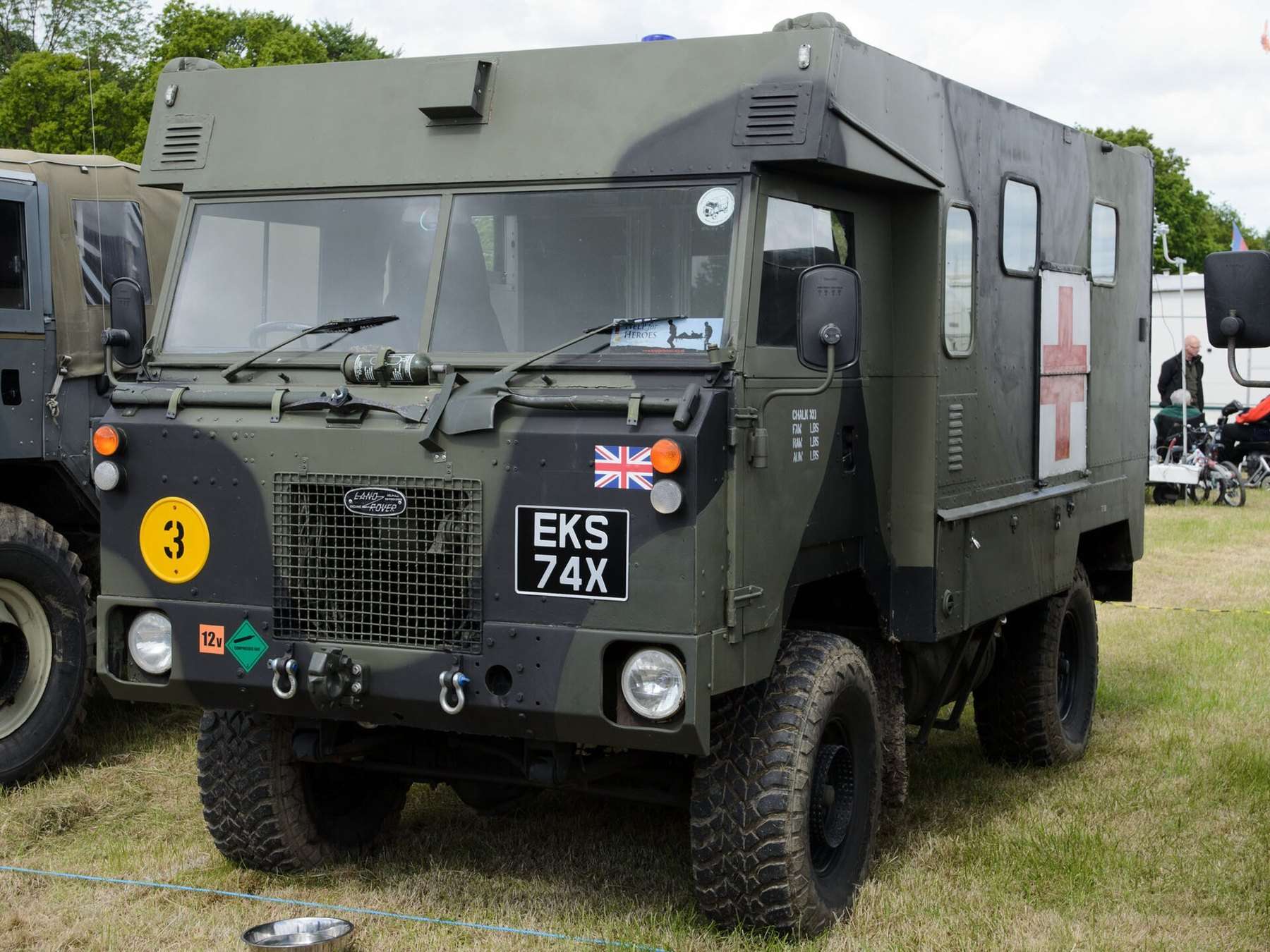
GS, ambulance and radio variants
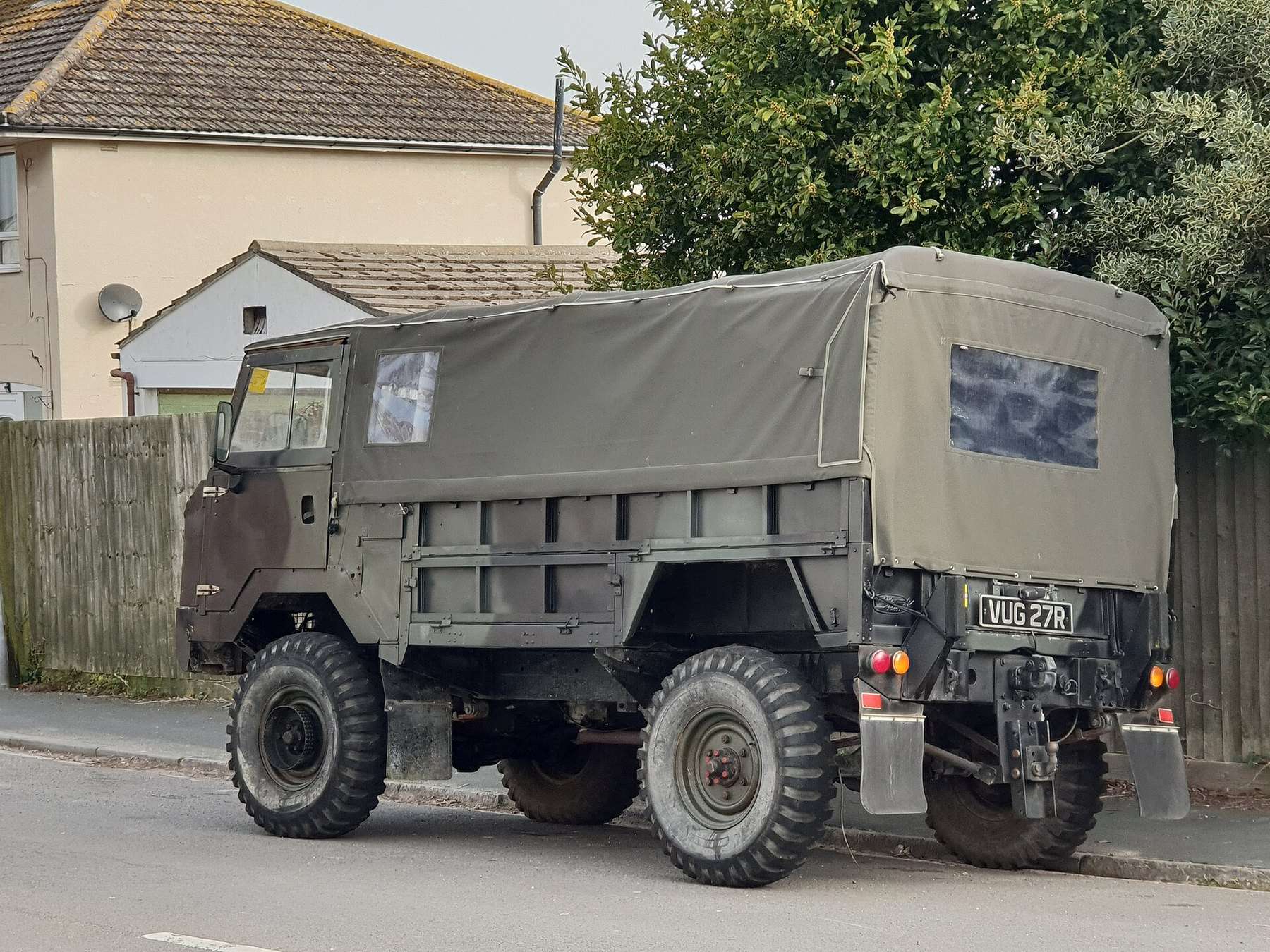
General Service: the open-backed soft-top gun tractor is the basic and most recognisable form. It carries inward-facing rear seats and military stowage.
Ambulance: a large box body provides treatment and stretcher space. It changes weight, height and driving character and contains specialised body components.
Radio and specialist bodies: military users fitted communication shelters and other equipment. Many civilian survivors have since become campers, recovery vehicles or expedition trucks, so current bodywork may not match original service form.
Production numbers and identity
The 101 Club gives approximately 2,668 vehicles, while surviving production tables can total 2,660 depending on whether unbuilt or development chassis are counted. Most went to the British government, with smaller right- and left-hand-drive export allocations.
That small numerical difference is worth preserving rather than hiding: published totals depend on how prototypes, pre-production vehicles and unused chassis numbers are treated. Buyers should use the chassis prefix, voltage, steering position and build record to identify a particular vehicle.

Buying and ownership checks
Inspect chassis rails, crossmembers, spring hangers, outriggers and the structure beneath any ambulance or camper body. Cab panels and doors are model-specific, while military repairs and later civilian conversions vary greatly in quality.
The Rover V8 should build oil pressure promptly, run without coolant loss and show no persistent smoke. Check the carburettors, cooling system, clutch, main gearbox, transfer case, propshafts and portal-free conventional axles. Steering and brakes require realistic expectations but must not be vague or pull strongly.
Tyres, wheels, winches, 24-volt components and unique transmission parts can be costly. The 101 Forward Control Club is an important source of technical knowledge and remanufactured parts, making club-supported ownership especially valuable.

A military Land Rover with a second life
Demobbed 101s became campers, expedition vehicles and show exhibits because the boxy body provides unusual space on a relatively short wheelbase. Those conversions are part of the type’s history, but they should be described honestly and not confused with original military specifications.
The 1970s 101 is also distinct from later Defender-based Forward Control military vehicles built on different wheelbases.
Sources and further reading
- 101 Forward Control Club and Register: vehicle history
- 101 Forward Control production record summary
- Land Rover 101 Forward Control military manual
- Land Rover Heritage Collection: Forward Control context
Continue the Land Rover story
The 101 shows how far Land Rover could stretch its basic four-wheel-drive philosophy for a specialised military task. Explore the complete Land Rover hub. Continue with the Defender 50th Anniversary V8. Read about the Discovery 3 G4 Challenge fleet.
Frequently asked questions
Why is it called the Land Rover 101 Forward Control?
The name combines its 101-inch wheelbase with the cab-forward layout, which places the driver above and slightly ahead of the front wheels.
What engine does a Land Rover 101 use?
Production vehicles use a 3.5-litre Rover V8 petrol engine.
How many Land Rover 101s were made?
The 101 Club records about 2,668 vehicles; some published build-table totals differ slightly depending on how development and unused numbers are counted.
Was the 101 sold as a normal civilian Land Rover?
No. It was developed primarily for military use, especially as a British Army gun tractor, although many were sold into civilian ownership after service.
What are the main 101 variants?
The principal forms are the General Service soft-top, ambulance and radio or specialist-bodied vehicles, with many later civilian conversions.