UNUSUAL CARS MODEL GUIDE
The Renault 8 Gordini transformed a small rear-engined saloon into an affordable competition car and created a route from showroom to rally stage. Launched in 1964 with a tuned 1,108cc engine, it evolved into the four-headlamp 1,255cc Gordini 1300 with a five-speed gearbox. Tour de Corse victories and the one-make Gordini Cup made the blue saloon a training ground for a generation of French drivers.
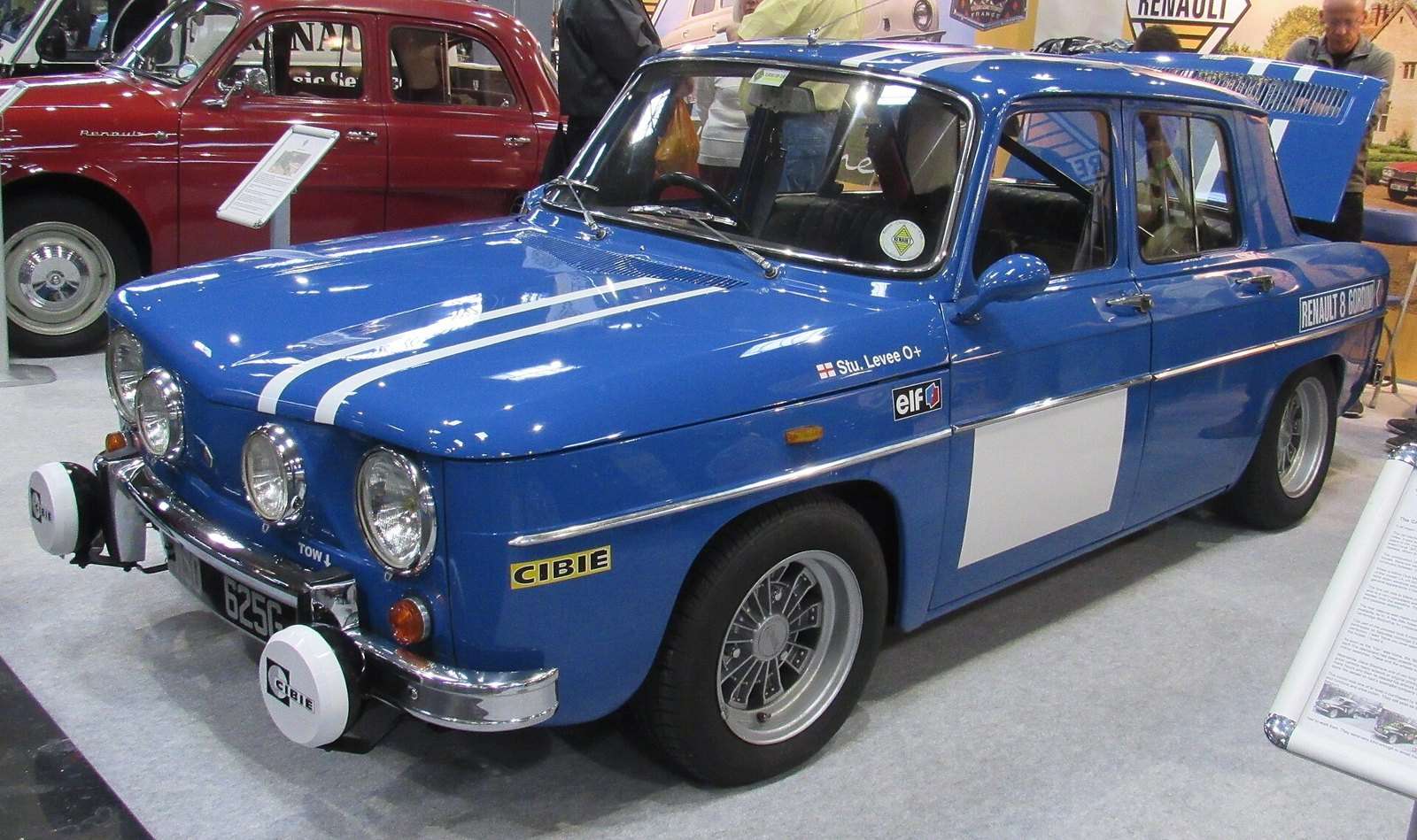
Featured image: 1967 Renault 8 Gordini 1300 at the NEC Classic Motor Show. Photograph by Vauxford, CC BY-SA 4.0, via Wikimedia Commons; locally hosted.
The Renault 8 becomes a Gordini
The ordinary Renault 8 arrived in 1962 with a longitudinal engine behind the rear axle, rear-wheel drive, independent suspension and four-wheel disc brakes. Amédée Gordini’s team developed the performance version for 1964. A crossflow hemispherical cylinder head, twin carburettors, four-branch exhaust and higher compression lifted the 1,108cc engine to roughly 90–95PS depending on the rating convention.
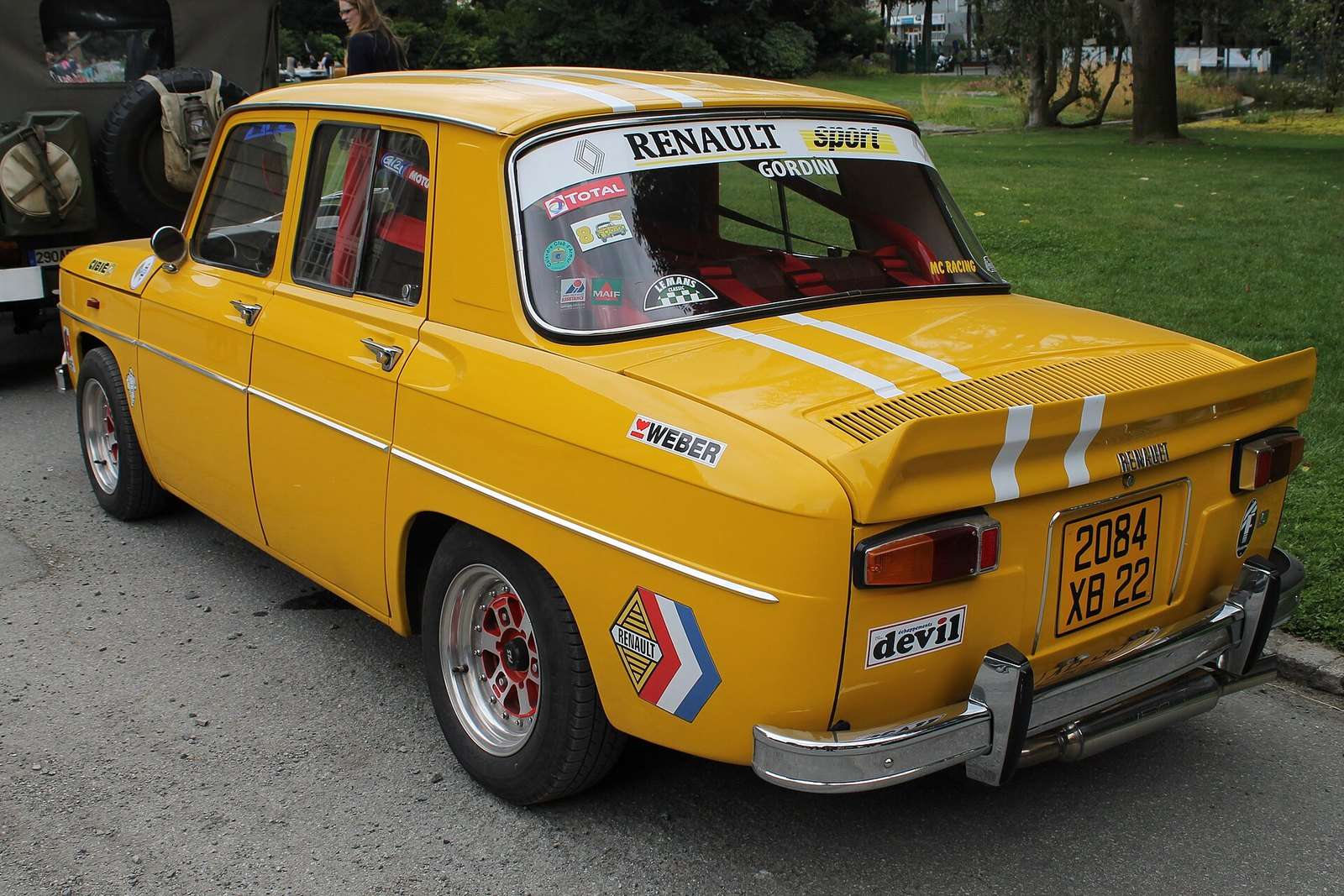
Servo-assisted discs, twin rear dampers, lowered suspension and a closer gearbox helped turn the family saloon into a serious sporting car. French blue paint and twin white stripes became its signature, although period UK details varied and the stripes were not always factory-applied.
R1134 1100 and R1135 1300
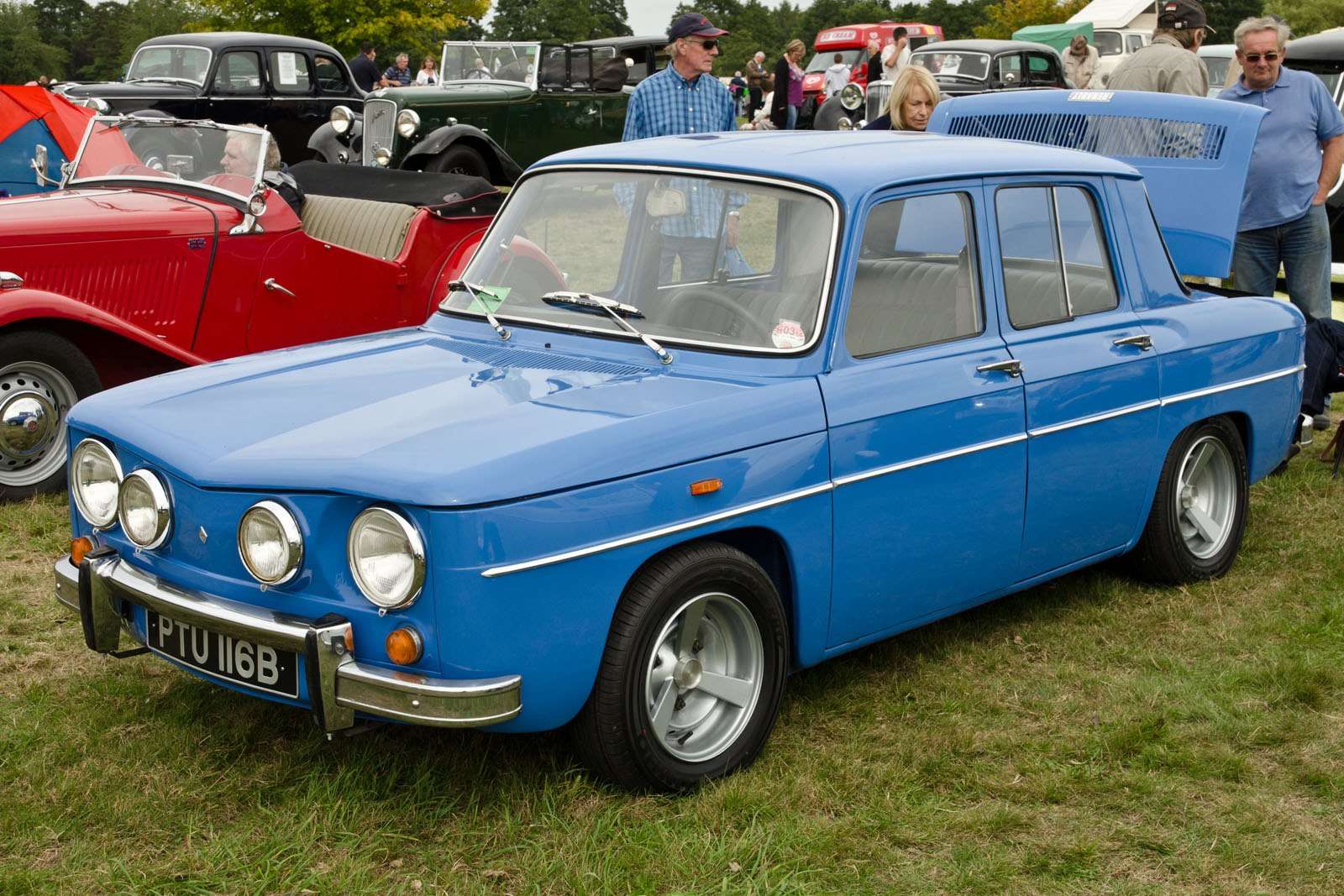
The first Gordini carries Renault type R1134 and uses the 1,108cc engine with a four-speed gearbox. In 1966 Renault presented the more powerful R1135, commonly called the Gordini 1300. Its 1,255cc engine produced about 110PS, the gearbox gained five forward ratios and the nose adopted four headlamps. Top speed rose to approximately 175km/h.
The visually similar Renault 8S arrived later with a much milder 1,108cc engine. An 8S in Gordini colours is not a Gordini, and many standard Renault 8s have acquired stripes, lamps and engines over the decades. The chassis plate, body number, engine type, gearbox and period documentation must agree.
| Version | Engine | Gearbox and identity |
|---|---|---|
| R1134 Gordini 1100 | 1,108cc, about 90–95PS | Four-speed; original two-headlamp form |
| R1135 Gordini 1300 | 1,255cc, about 110PS | Five-speed; four headlamps |
| Renault 8S | 1,108cc, about 60PS | Sporting road model, not a Gordini |

Love cars you don’t see every day?
Get forgotten cars, surprising motoring stories and the most interesting finds from Unusual Cars by email.
Free to join. No spam. Unsubscribe whenever you like. See our privacy policy.
Rally success and the Gordini Cup
Jean Vinatier won the 1964 Tour de Corse in a Renault 8 Gordini; Pierre Orsini and Jean-François Piot repeated the result in 1965 and 1966. The car also became a familiar sight in national rallies and circuit racing because it was comparatively affordable, simple and easy to modify within competition rules.
From 1966, the Coupe Nationale Renault 8 Gordini gave aspiring drivers equal machinery and a visible path into professional motorsport. Jean-Claude Andruet, Bernard Darniche, Jean-Pierre Jabouille, Jean-Pierre Jarier and Jean Ragnotti were among the names associated with the series. Renault built more than 11,800 Gordinis between 1964 and 1970, within a much larger Renault 8 family.

Engine, gearbox and cooling
A correct Gordini engine is valuable. Check numbers, cylinder head, carburettors, manifolds and ancillaries against the claimed version. Twin carburettors need balanced linkages and clean fuel; poor setup creates flat spots and overheating. Check cold oil pressure, smoke, crankcase breathing, water-pump condition, radiator, hoses and signs of repeated hot running.
The four- or five-speed transaxle should be quiet and select gears without jumping out. Five-speed R1135 gearboxes and their internal parts are especially expensive. Inspect driveshafts, couplings, mounts and oil leaks, and remember that a competition history may mean desirable provenance but also decades of stress and non-standard repairs.

Shell, suspension and brakes
Corrosion can affect sills, floors, jacking points, front inner wings, suspension mounts, windscreen surrounds, rear quarters and the engine bay. Measure panel gaps and look for old rally damage, replacement shells or reinforcing plates. Fresh paint and stripes are much cheaper than correct structural repairs.
Check kingpins or ball joints as applicable, steering box, wheel bearings, springs, dampers and rear geometry. The disc brakes must release evenly and the handbrake work correctly. Correct wheels, lamps, seats, instruments, fuel tank and trim matter because Gordini-specific pieces are scarce. A specialist club inspection is sensible before buying a purported original car.
Buying checklist
Prove whether it is R1134 or R1135
Chassis, engine and gearbox evidence matters more than blue paint, stripes or four headlamps.
Inspect the structure before the mechanicals
Rust and old competition repairs can exceed the cost of an engine rebuild.
Separate the Renault 8S story
The site’s existing orange 8S sprint-car page remains a modified-car case study, not the canonical Gordini guide.
References
- Renault The Originals: R8 Gordini history and specifications
- Renault Classic: Renault 8 Gordini historical dossier
- Classic & Sports Car: Renault 8 and 10 buyer's guide
- Unusual Cars: Renault 8S sprint-car case study
Continue the Renault story
Explore the complete Renault hub, then read Renault 8S sprint-car case study and Renault 5 Turbo and Turbo 2.
Frequently asked questions
What is the difference between Renault 8 Gordini 1100 and 1300?
The 1100 is the earlier R1134 with a 1,108cc engine and four-speed gearbox; the later R1135 has a 1,255cc engine, five-speed gearbox and four headlamps.
Is a Renault 8S the same as a Gordini?
No. The 8S is a lower-powered sporting Renault 8 and should not be described as a Gordini even if it wears similar colours or lamps.
How many Renault 8 Gordinis were built?
Renault states that more than 11,800 were produced between 1964 and 1970.
Why is the Renault 8 Gordini important?
It combined affordable showroom performance with rally success and a one-make cup that developed many leading French drivers.
What is the biggest buying risk?
A replica or heavily altered shell presented as an original Gordini is the greatest risk, followed by structural corrosion and scarce gearbox or trim parts.