UNUSUAL CARS MODEL GUIDE
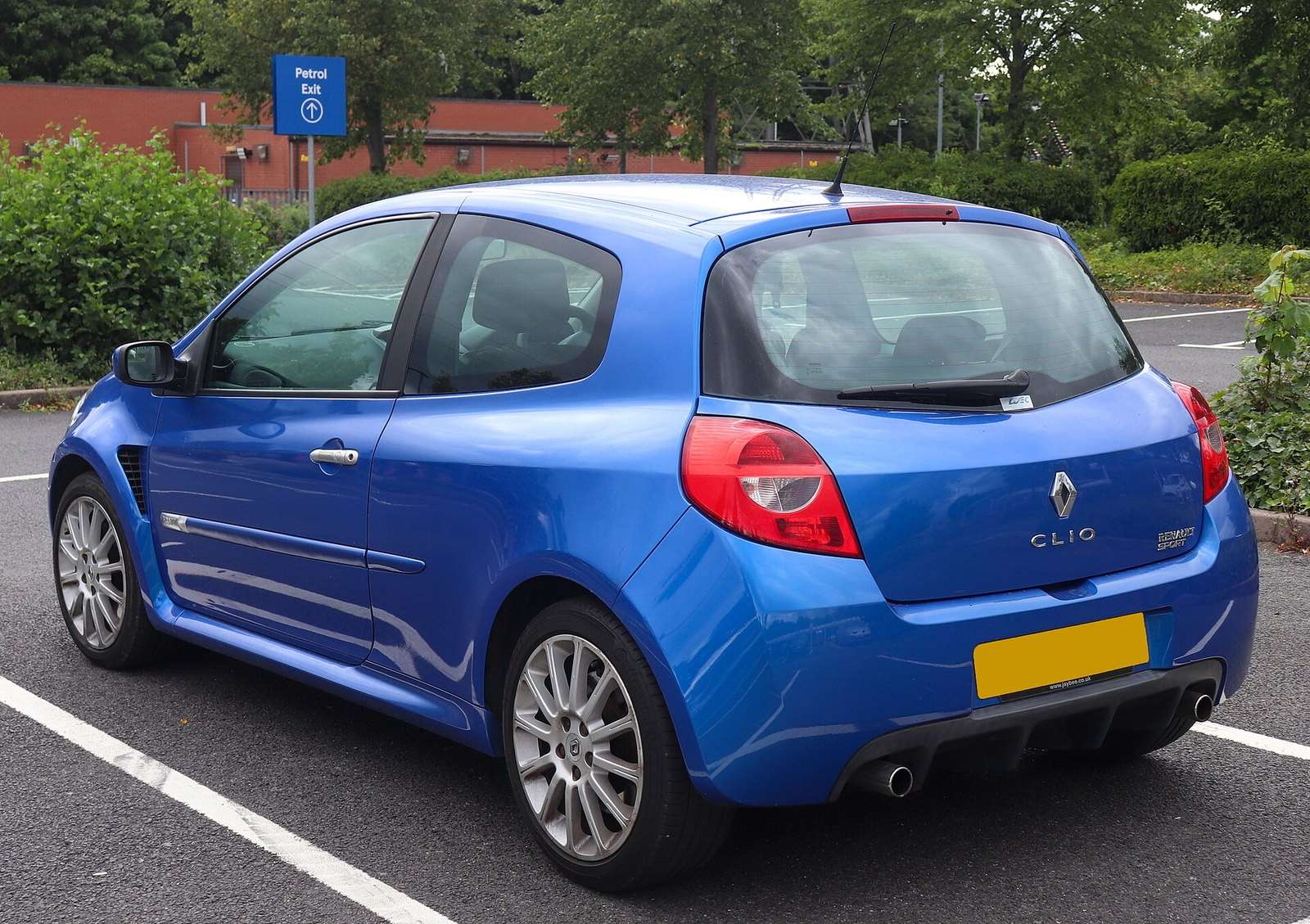
The third-generation Renaultsport Clio grew larger and more sophisticated without abandoning the high-revving 2.0-litre engine or manual gearbox. The 197 arrived in Britain in 2006, followed by Cup and F1 Team R27 derivatives; the facelifted 200 completed the line from 2009. Its Brembo brakes, sophisticated front suspension and fast-road balance remain exceptional, but neglected gearboxes and chassis components can be costly.
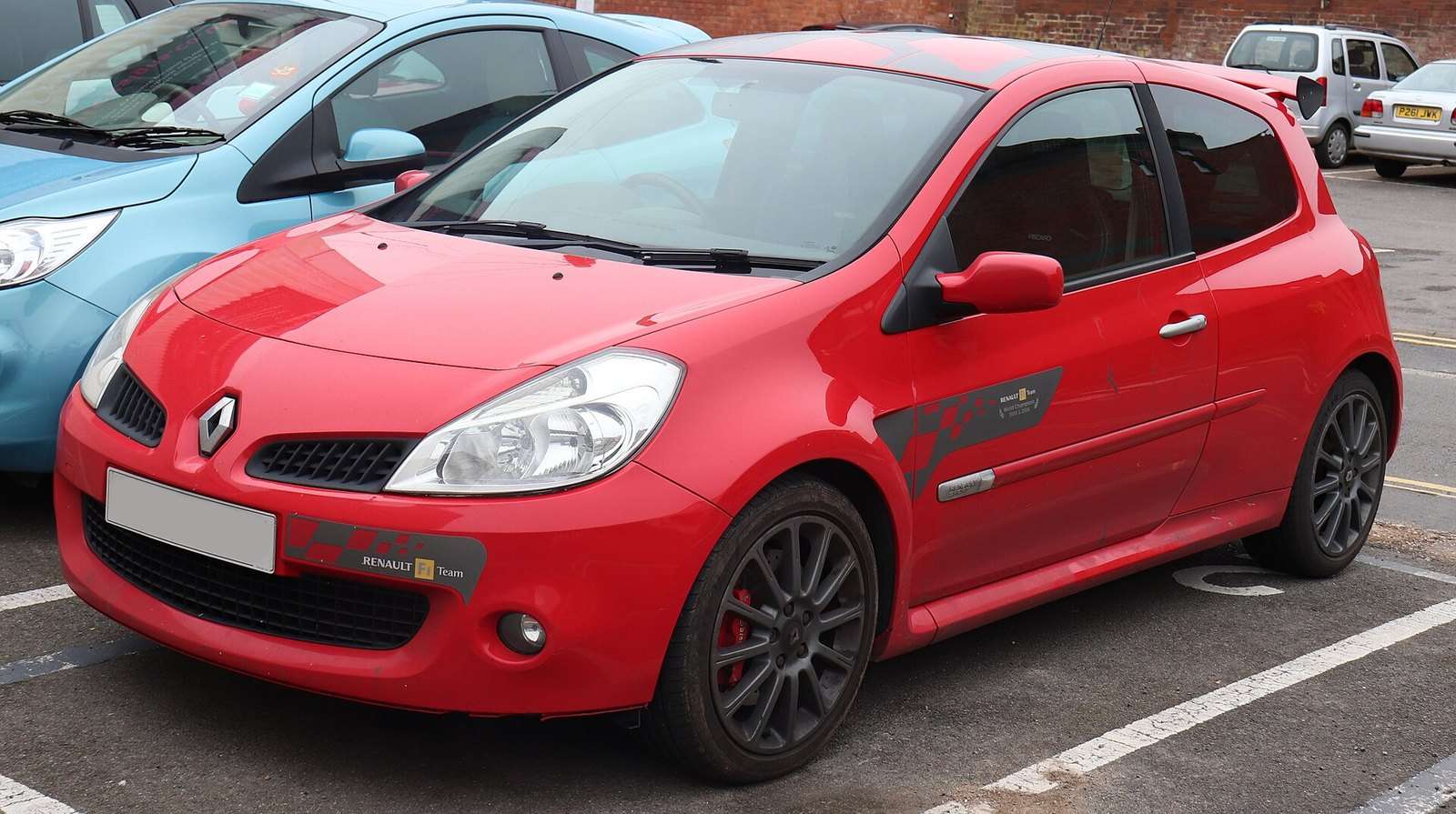
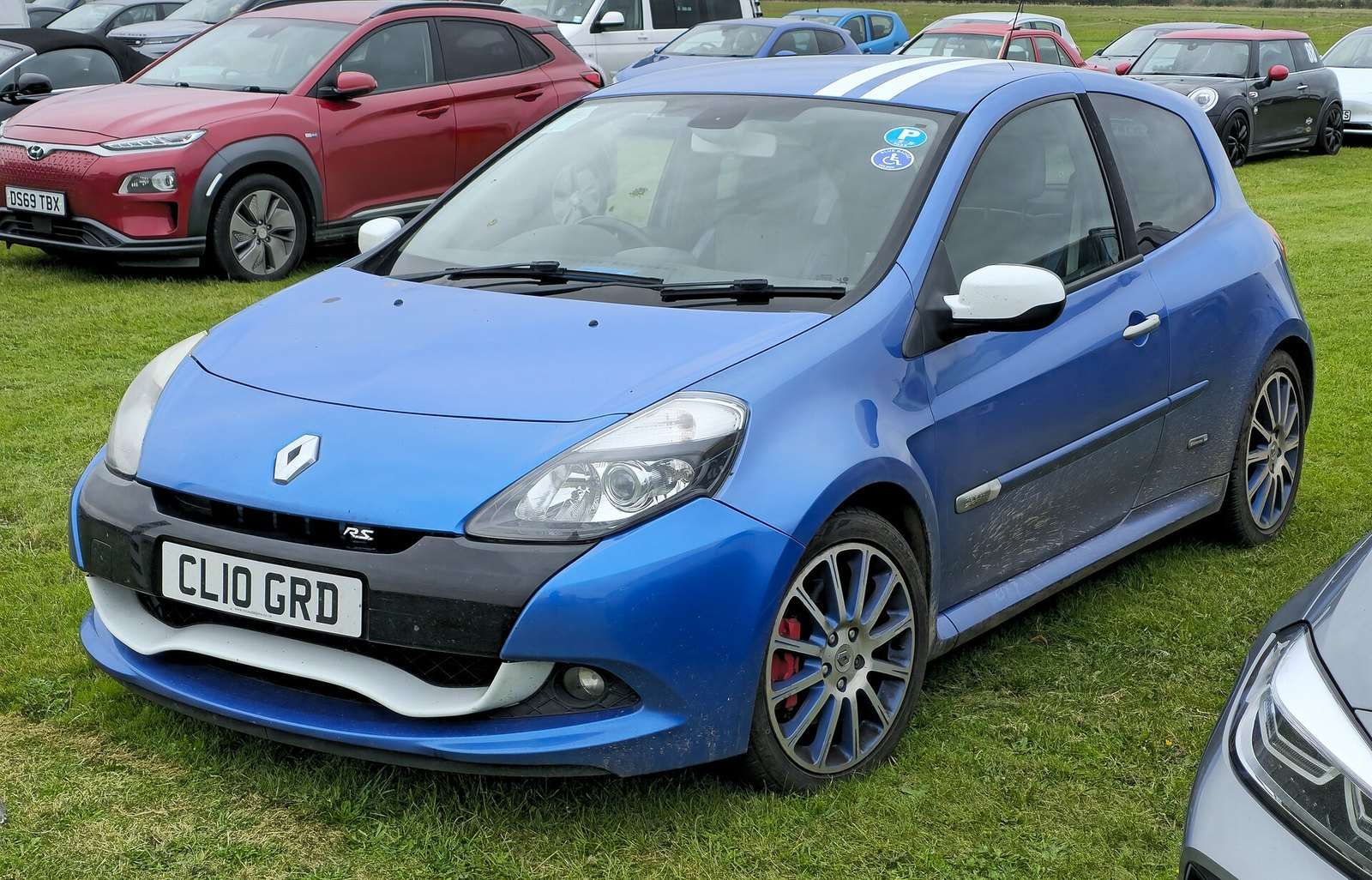
Featured image: 2010 Renault Clio Renaultsport 200 Cup front three-quarter view. Photograph by Vauxford, CC BY-SA 4.0, via Wikimedia Commons; locally hosted.
The 197: a more serious Clio
Renault launched the Clio Renaultsport 197 in 2006. Its 1,998cc F4R engine produced 197PS and drove through a close-ratio six-speed manual gearbox. Wider tracks, aluminium suspension components and a front hub design separating steering and suspension forces were intended to preserve precision under power.
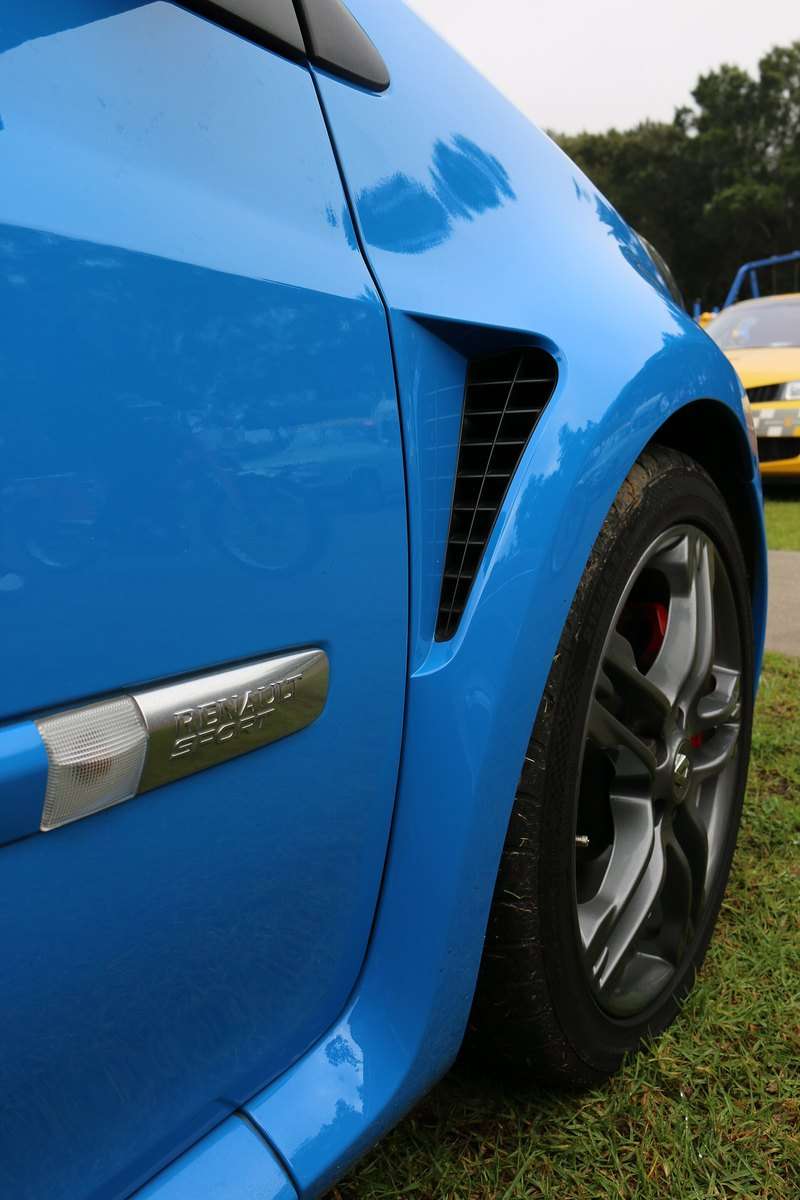
Large Brembo four-piston front calipers, a rear diffuser and flared bodywork made the car more visually assertive than the 172/182. It was also heavier and more refined. The engine makes its best power high in the rev range, so a 197 can feel modest at low speed and intensely energetic when worked hard.

Cup, R27 and the facelifted 200
The Cup chassis brought firmer springs and dampers, different steering calibration and lower ride height. It could be ordered as an option on a well-equipped 197, while the later 197 Cup was a distinct, cheaper and lighter model with reduced equipment. The F1 Team R27 combined Cup underpinnings with Recaro seats, numbered plaque and special trim.
For 2009, the facelifted Renaultsport 200 introduced revised front styling, a slightly more powerful engine and detail chassis changes. Standard, Cup and Gordini versions followed. Buyers should identify the actual build because badges, wheels and Recaros are commonly retrofitted.
| Version | What distinguishes it |
|---|---|
| 197 | Original 2006 road car with 197PS |
| 197 with Cup chassis | Full road-car equipment with firmer optional chassis |
| 197 Cup | Lighter, simplified separate derivative |
| R27 | Numbered F1 Team edition with Cup chassis and Recaros |
| 200 / 200 Cup | Facelifted styling, detail engine and chassis revisions |
| 200 Gordini | Higher-equipment special edition with distinctive trim |
Love cars you don’t see every day?
Get forgotten cars, surprising motoring stories and the most interesting finds from Unusual Cars by email.
Free to join. No spam. Unsubscribe whenever you like. See our privacy policy.
Engine, cambelt and exhaust
The F4R requires documented belt servicing by age as well as mileage. Ask for invoices identifying the cambelt kit, auxiliary belt, tensioners and water pump where replaced. A rattling dephaser pulley, oil leaks, misfire or unstable idle needs diagnosis. Test from cold and watch the temperature during a long drive.
Exhaust flex sections and mounts suffer, while aftermarket systems can drone or illuminate warning lights if poorly installed. The original catalytic converter is valuable. A remap cannot repair a weak engine; compression, timing and fuelling should be correct first.
The six-speed gearbox
Gearbox synchro wear is the defining 197/200 buying risk. Test deliberate upshifts and downshifts through every ratio when cold and fully warm, paying particular attention to third and fourth. Crunching, baulking or jumping out of gear means more than a fluid change. Check the clutch for slip and a high or uneven bite.
Different gearbox revisions and ratios were used during production, so replacements must be matched correctly. An invoice for a recognised rebuild is useful; a vague claim that the gearbox was ‘done’ is not. Inspect driveshaft boots and listen for wheel-bearing or differential noise.
Suspension, brakes and body
Inspect front swivel hubs, lower ball joints, top mounts, track-rod ends, springs and dampers. Worn parts create knocks, vague steering and uneven tyre wear. Genuine or high-quality components and correct geometry transform the car, while cheap coilovers usually obscure the intended balance.
Brembo calipers should operate freely and wear pads evenly. Check discs, rear calipers, handbrake and brake pipes. Examine sills, jacking points, rear arches, subframes and floor seams for corrosion or careless lifting. Inside, verify Recaro bolsters, air conditioning, electric windows, key cards and displays.
Buying checklist
Road-test the gearbox twice
A short cold drive is not enough; repeat every shift once the oil is hot.
Separate Cup chassis from Cup model
One is an option on a regular car, the other a distinct reduced-equipment derivative.
Budget for chassis restoration
Swivel hubs, joints, springs, dampers and brake refurbishment are normal age-related work, not reasons to accept poor handling.
Related technical guide: Renault Clio 197 and 200 diagnostic scanner guide.
Sources
- Renault: Clio III Renaultsport heritage
- Renault: Clio model history
- evo: Renaultsport Clio 197/200 buying checkpoints
- PistonHeads: Clio 197/200 buyer's guide
- Parkers: Clio Renaultsport used review
Continue the Renault story
Explore more French performance cars, sporting hatchbacks and unusual grand tourers in the complete Renault hub.
Frequently asked questions
What is the difference between Clio 197 and 200?
The 200 is the 2009 facelift with revised styling, a small power increase and detail engine and chassis changes.
Is a Cup chassis car the same as a Clio Cup?
No. A regular 197 or 200 could have the firmer Cup chassis while retaining road-car equipment; the separate Cup model was lighter and more basic.
Which gearbox problem affects these cars?
Synchro wear can cause crunching or baulking, commonly involving third and fourth gears. A proper rebuild is the durable repair.
Do the 197 and 200 use a turbo?
No. Both use a naturally aspirated 2.0-litre F4R four-cylinder engine and a six-speed manual gearbox.
What is an R27?
The R27 is a numbered Clio 197 F1 Team special edition with Cup chassis, Recaro seats and distinctive trim.