UNUSUAL CARS MODEL GUIDE
The Renault 19 16V turned Renault’s sober late-1980s family car into a high-revving performance hatch, saloon and Cabriolet. Britain received the 16V around the start of the 1990s, with the four-door saloon initially wearing the Chamade name. A 1,764cc twin-cam F7P engine, close-ratio five-speed gearbox, four-wheel disc brakes and distinctive vented bonnet created a capable alternative to the era’s better-known hot hatchbacks.
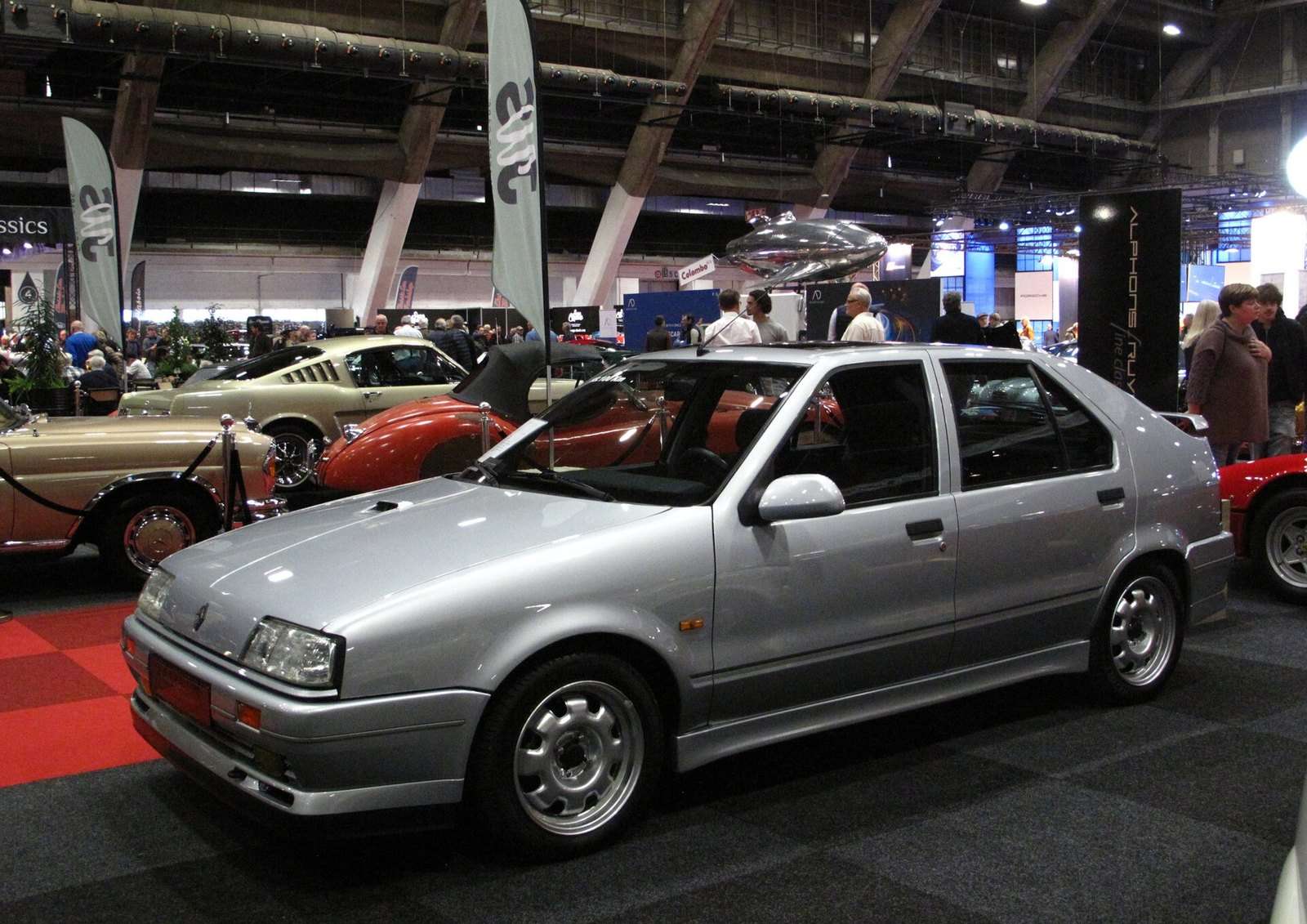
Featured image: 1990 Renault 19 16V hatchback front three-quarter view. Photograph by Charles from Port Chester, New York, CC BY 2.0, via Wikimedia Commons; locally hosted.
Renault 19 becomes a 16-valve performance car
The Renault 19 replaced the 9 and 11, reaching right-hand-drive Britain in 1989. Giorgetto Giugiaro’s restrained body concealed a modern structure and a broad engine range. The performance model used Renault’s 1,764cc F7P twin-cam 16-valve engine with multipoint fuel injection, producing roughly 135–140PS depending on market and emissions specification.
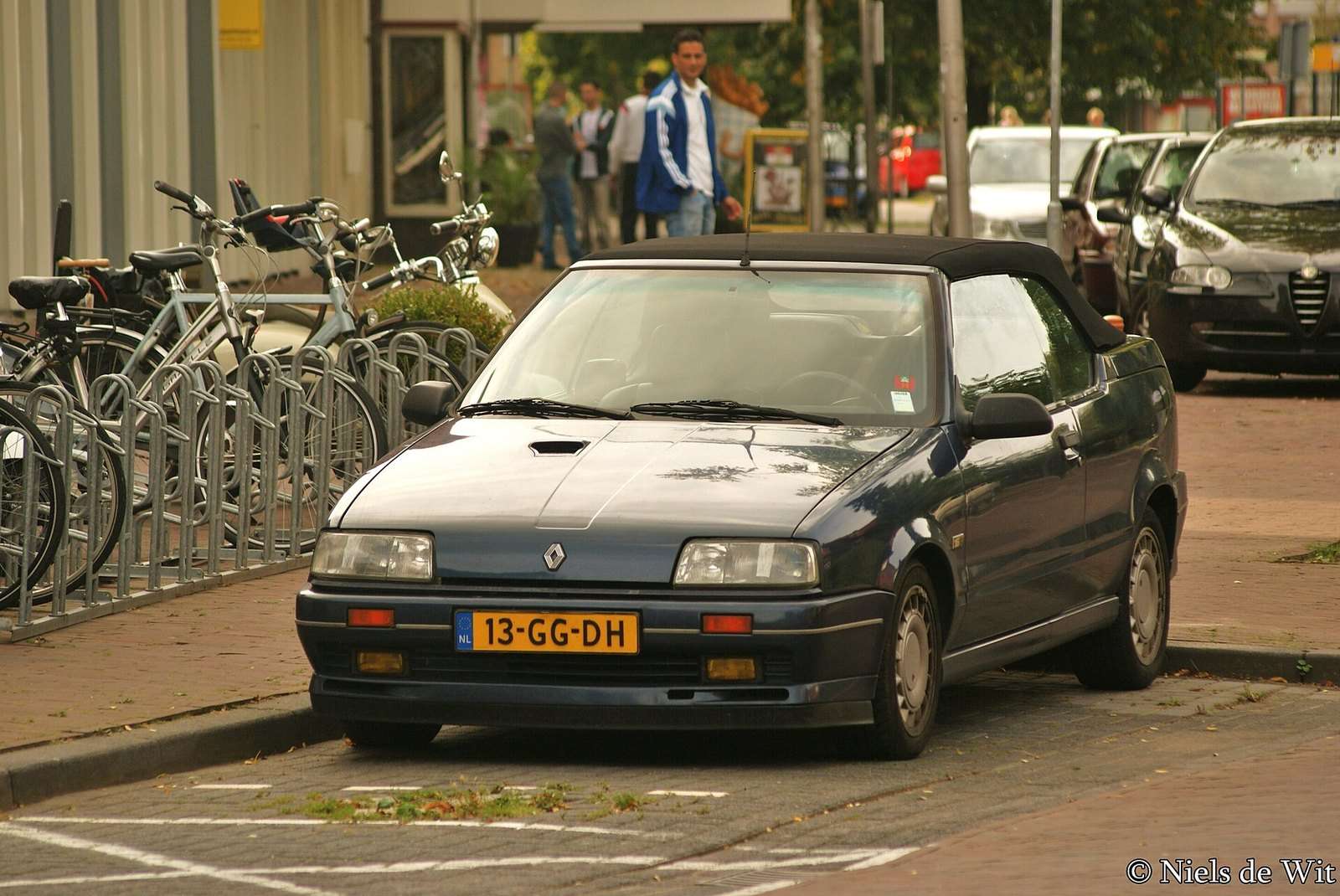
Visual identifiers included a vented bonnet, deeper bumpers, side skirts, alloy wheels and rear spoiler. The 16V was offered as a three-door hatchback and four-door saloon; the latter was initially called Chamade. A Karmann-built Cabriolet extended the same idea into an open four-seater.

Hatchback, Chamade and Phase 2
The hatchback is the model most people remember, but the Chamade 16V saloon used the same essential mechanical package with a conventional boot and long rear spoiler. Renault facelifted the 19 for 1992, softening the front and rear styling and dropping the Chamade badge in several markets. Power outputs and catalytic-converter fit varied by year and country, so UK paperwork and engine codes are more reliable than online specification tables.
The Cabriolet was engineered and assembled by Karmann. It shares many service parts with the closed cars but adds structural reinforcements, roof mechanisms and unique body trim. Water tightness and shell rigidity therefore matter as much as engine performance.
| Version | Body and identity |
|---|---|
| 19 16V hatchback | Three-door performance hatch with vented bonnet and spoiler |
| 19 Chamade 16V | Four-door Phase 1 saloon with conventional boot |
| Phase 2 16V | Facelifted front and rear styling from 1992 |
| 19 Cabriolet 16V | Karmann-built open model with reinforced shell |
Love cars you don’t see every day?
Get forgotten cars, surprising motoring stories and the most interesting finds from Unusual Cars by email.
Free to join. No spam. Unsubscribe whenever you like. See our privacy policy.
F7P engine, cambelt and cooling
The F7P is related to the engine used in the Clio 16V and rewards revs, but age makes preventative maintenance critical. Ask for dated cambelt and tensioner invoices. Inspect the auxiliary drive, water pump, radiator, hoses, heater matrix and cooling fan, then allow the engine to become fully warm without overheating.
Cold starting should be prompt, idle stable and oil pressure warning extinguish quickly. Misfires can involve plugs, leads, distributor components, sensors or injectors. Smoke, low compression and persistent tappet or bottom-end noise require specialist diagnosis. Verify the engine number and induction hardware because replacements and conversions are possible after three decades.

Gearbox, suspension and brakes
The five-speed manual should select all ratios without crunching, and the clutch should not slip under full load. Check driveshaft joints and boots, engine mounts and power-steering hoses. Fluid leaks and sloppy linkages are common age-related faults; serious gearbox noise is harder to solve because correct replacement units are scarce.
The 16V used firmer suspension and four-wheel disc brakes. Examine front struts, bushes, ball joints, wheel bearings and the rear torsion-bar arrangement. A low rear corner, uneven ride height or unstable handling suggests more than cosmetic wear. Calipers can seize on little-used cars, so check disc faces, handbrake action and brake-pipe condition.

Corrosion, cabin and Cabriolet checks
Inspect outer and inner sills, jacking points, floor seams, rear arches, front chassis legs, subframes, suspension mounts, boot floor and windscreen surround. Remove loose trim where practical and distrust thick fresh underseal. Replacement panels and correct 16V exterior pieces are difficult to source.
Inside, check seat bolsters, dashboard plastics, headlining, instruments, windows, central locking and heater fan. For a Cabriolet, inspect roof fabric, frame, latches, drains and hydraulic or mechanical operation as applicable. Look for cracks around reinforced floor and sill sections, water beneath carpets and doors that drop when opened.
Buying checklist
Confirm it is a genuine 16V
Use the VIN, engine code, registration history and factory details rather than badges or a vented bonnet alone.
Prioritise structural metal
A complete, sound shell is far more valuable than fresh paint over weakened sills or mounts.
Secure specialist support early
Clubs and Renault specialists are essential for model-specific parts, engine setup and torsion-bar work.
Sources
- Renault Germany: official Renault 19 model history
- AA: period Renault 19 Phase 2 chassis and range assessment
- Honest John Classics: Renault 19 history and buyer overview
- AutoWeek archive: Renault 19 16V Chamade specification
- Facet application data: F7P Renault 19 16V body and engine references
Continue the Renault story
Explore more French performance cars, sporting hatchbacks and unusual grand tourers in the complete Renault hub.
Frequently asked questions
Was the Renault 19 16V sold in the UK?
Yes. UK buyers could obtain the performance 16V in hatchback and saloon form, with the Cabriolet also available during the model's life.
What does Chamade mean on a Renault 19?
Chamade was the name used for the four-door saloon version of the Phase 1 Renault 19; the badge was later dropped in several markets.
What engine does the Renault 19 16V use?
It uses Renault's 1,764cc F7P twin-cam 16-valve four-cylinder engine with multipoint fuel injection.
Who built the Renault 19 Cabriolet?
Karmann engineered and assembled the Cabriolet, which has additional structural reinforcement and unique roof and body parts.
What is the greatest buying risk?
Structural corrosion and missing model-specific parts are the greatest risks, followed by neglected cambelt, cooling, gearbox and suspension maintenance.