UNUSUAL CARS MODEL GUIDE
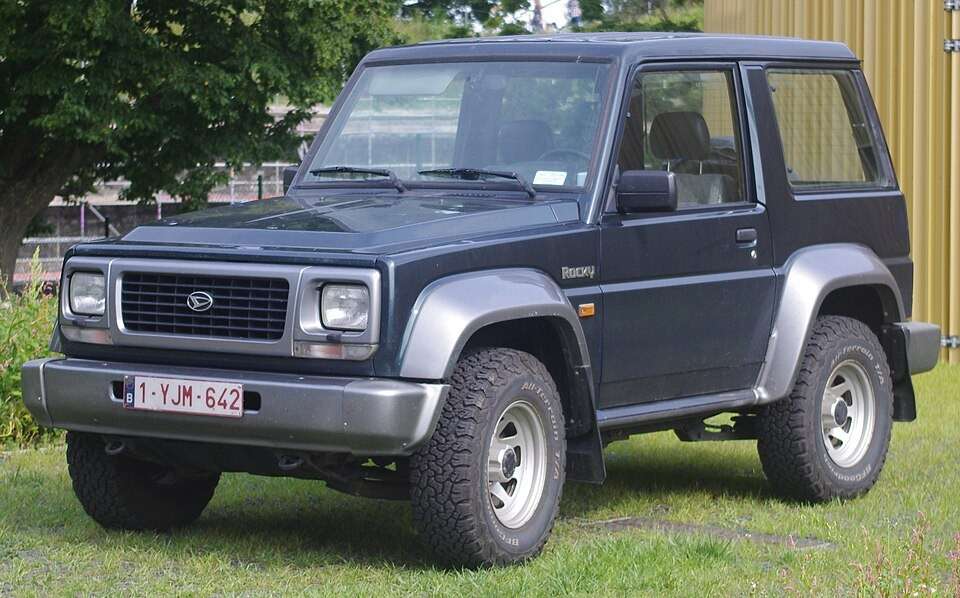
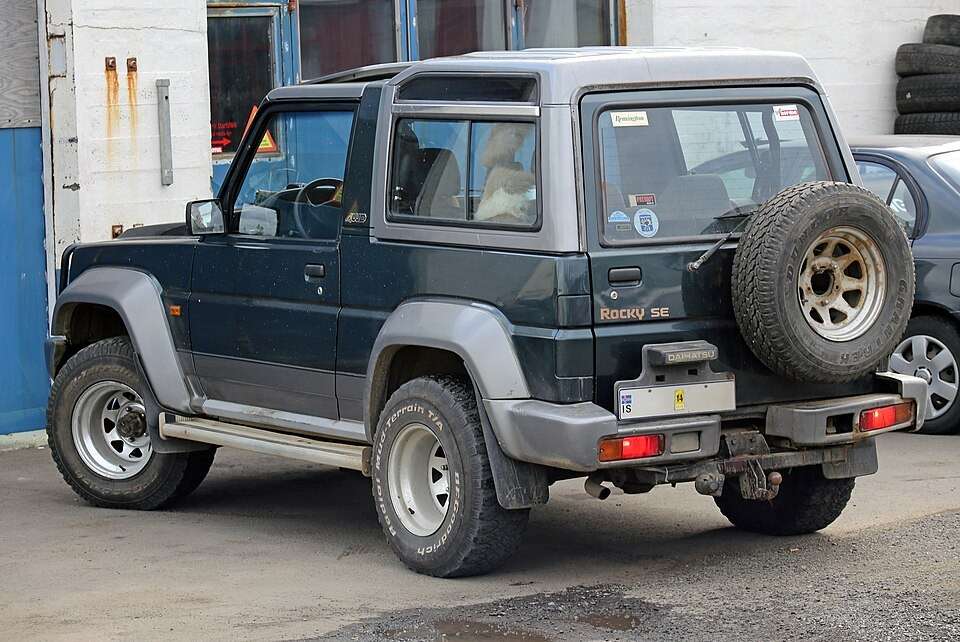
The Daihatsu Fourtrak was a compact but serious working 4×4, sold in Britain from 1984 until the early 2000s. Known as the Rugger or Rocky in other markets, it combined a separate chassis, selectable four-wheel drive and low-range gearing with a long-lived 2.8-litre diesel. Later Independent versions made it more civilised, but the qualities that built its UK following were strength, towing ability and competence away from tarmac.
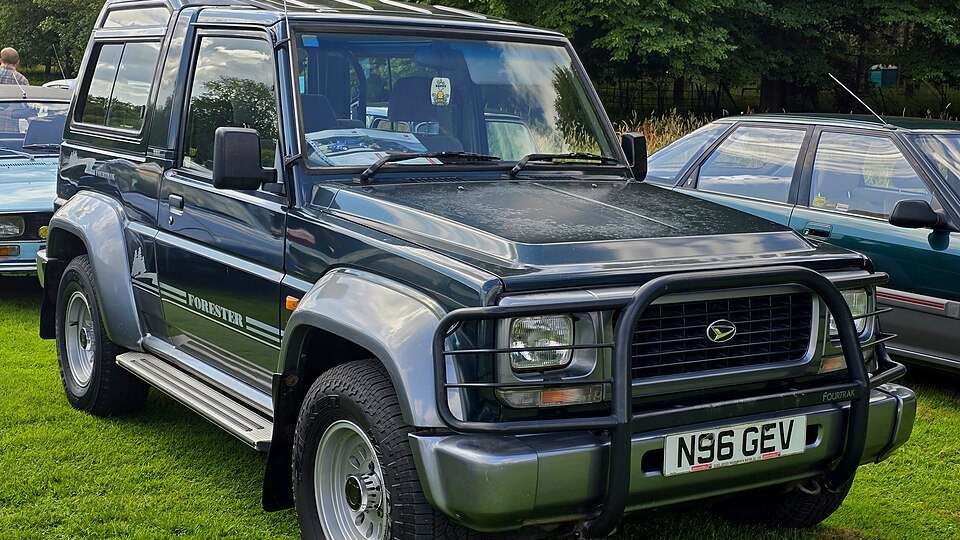
Featured image: 1996 Daihatsu Fourtrak Forester TDX front three-quarter view. Photograph by Calreyn88, CC BY-SA 4.0, via Wikimedia Commons; locally hosted.
From basic off-roader to rural favourite
The first Fourtraks reached Britain in 1984 as short-wheelbase three-door off-roaders. Early models were deliberately simple, with a separate ladder chassis, robust axles and a two-speed transfer case. Commercial vans and pickups broadened the range, while long-wheelbase estates added family and towing usefulness.
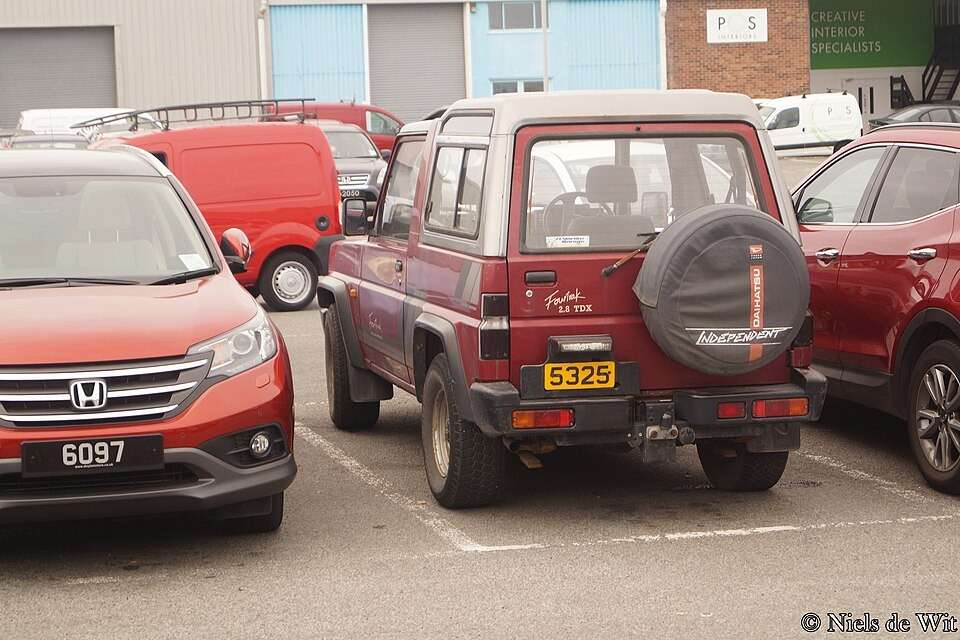
UK import quotas restricted supply during the model’s early years, but the Fourtrak became familiar in farming, forestry and equestrian use. By the early 1990s Daihatsu had revised the body, brakes, transmission and equipment. The 1993 Independent range was the biggest change, adding double-wishbone front suspension and a five-link coil-sprung rear arrangement to improve road comfort.
Engines, bodies and four-wheel drive
Petrol engines appeared during the Fourtrak’s life, but Britain is most strongly associated with the 2,765cc diesel. Naturally aspirated and turbocharged versions were sold, with charge-cooling or intercooling on later high-output derivatives. Model names such as TDS, TDL, TDX, Fieldman and Independent describe different wheelbases, equipment and commercial or passenger roles.
Four-wheel drive is selectable rather than intended for constant use on dry high-grip roads. The transfer box provides high and low ranges, and some vehicles use manually operated front hubs. Confirm the exact procedure for the individual model and make sure every position engages and releases without noise.
| Version | Typical role |
|---|---|
| Short-wheelbase estate or van | Compact off-roader with strong approach and breakover ability |
| Long-wheelbase estate | More passenger and load space, including seven-seat versions |
| Pickup and Fieldman | Commercial work, towing and agricultural use |
| Independent | Later, more road-friendly suspension and improved equipment |

Love cars you don’t see every day?
Get forgotten cars, surprising motoring stories and the most interesting finds from Unusual Cars by email.
Free to join. No spam. Unsubscribe whenever you like. See our privacy policy.
Chassis corrosion and working damage
A Fourtrak can look presentable while its ladder chassis is seriously weakened. Inspect the chassis rails from front to rear, outriggers, crossmembers, suspension brackets, steering-box area, rear spring or link mounts, fuel-tank supports and every body mounting. Packed mud holds moisture, especially around doubled metal and inaccessible upper surfaces.
Check the body floors, sills, arches, bulkhead, windscreen frame, roof gutters and rear door. Commercial conversions and off-road accessories may conceal cutting or poor welding. Look for bent recovery points, dented underbody protection and crushed rails. A sound chassis with a tired engine is usually easier to rescue than a cosmetically attractive vehicle requiring extensive structural fabrication.
Diesel, transmission and cooling checks
Start the engine cold and watch for excessive cranking, heavy smoke, coolant pressure or persistent knocking. Inspect the radiator, fan, water pump, hoses and evidence of overheating. Verify timing-belt work where applicable, regular oil changes and correct attention to the turbocharger and intake system. Oil contamination around the engine may be ordinary leakage, but rapid loss under load is not.
Drive through every gearbox ratio and listen on acceleration and overrun. Test the clutch under load, then engage four-wheel drive and low range on a loose surface. Check front hubs, prop-shafts, universal joints, transfer case and differentials for noise or leakage. Mismatched tyres can wind up the transmission, so all four should be compatible in size and wear.
Steering, suspension and ownership fit
Excessive steering play can come from the box, joints, wheel bearings or worn suspension rather than one adjustment. Early leaf-sprung vehicles ride firmly; later Independent versions should still feel controlled rather than vague. Check springs, dampers, bushes, brake pipes, calipers and rear load-compensating hardware.
Many Fourtraks earned their keep towing. Examine the towbar mounts, rear chassis and cooling system, and check that plated weights match the intended use. Parts availability is mixed: service items remain accessible, but clean body panels, trim and some drivetrain components require specialists. A carefully maintained working vehicle is preferable to a freshly painted example with no evidence of what lies underneath.
Buying checklist
Inspect the ladder chassis professionally
Structural rust around mounts and crossmembers determines whether the vehicle is viable.
Test the complete driveline
Use a suitable loose surface to check high and low range, hubs, propshafts and differentials.
Look for evidence of its working life
Towing, overloading and off-road use are not automatic reasons to reject it, but repairs must be competent and documented.
Sources
- RAC Drive: Fourtrak UK model history
- Commercial Motor: 1991 Fourtrak road test
- Commercial Motor: UK Fourtrak pickup introduction
- AA: Fourtrak 2.8 TDX test report
Continue the Daihatsu story
Explore more inventive Japanese city cars, turbo hatchbacks and rugged 4x4s in the complete Daihatsu hub.
Frequently asked questions
When was the Daihatsu Fourtrak sold in Britain?
The first Fourtraks arrived in 1984 and the model remained available into the early 2000s.
What is the Fourtrak called outside the UK?
Related versions were sold under Rugger and Rocky names, although specifications differed by market.
Which Fourtrak engine is most common in Britain?
The 2.8-litre diesel, particularly turbocharged versions, is the engine most closely associated with UK Fourtraks.
Does the Fourtrak have permanent four-wheel drive?
No. It uses selectable part-time four-wheel drive with high and low transfer-box ranges.
What is the biggest Fourtrak buying risk?
Serious ladder-chassis corrosion, often hidden by mud, underseal or bodywork, is the principal risk.