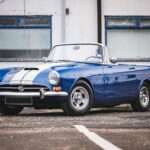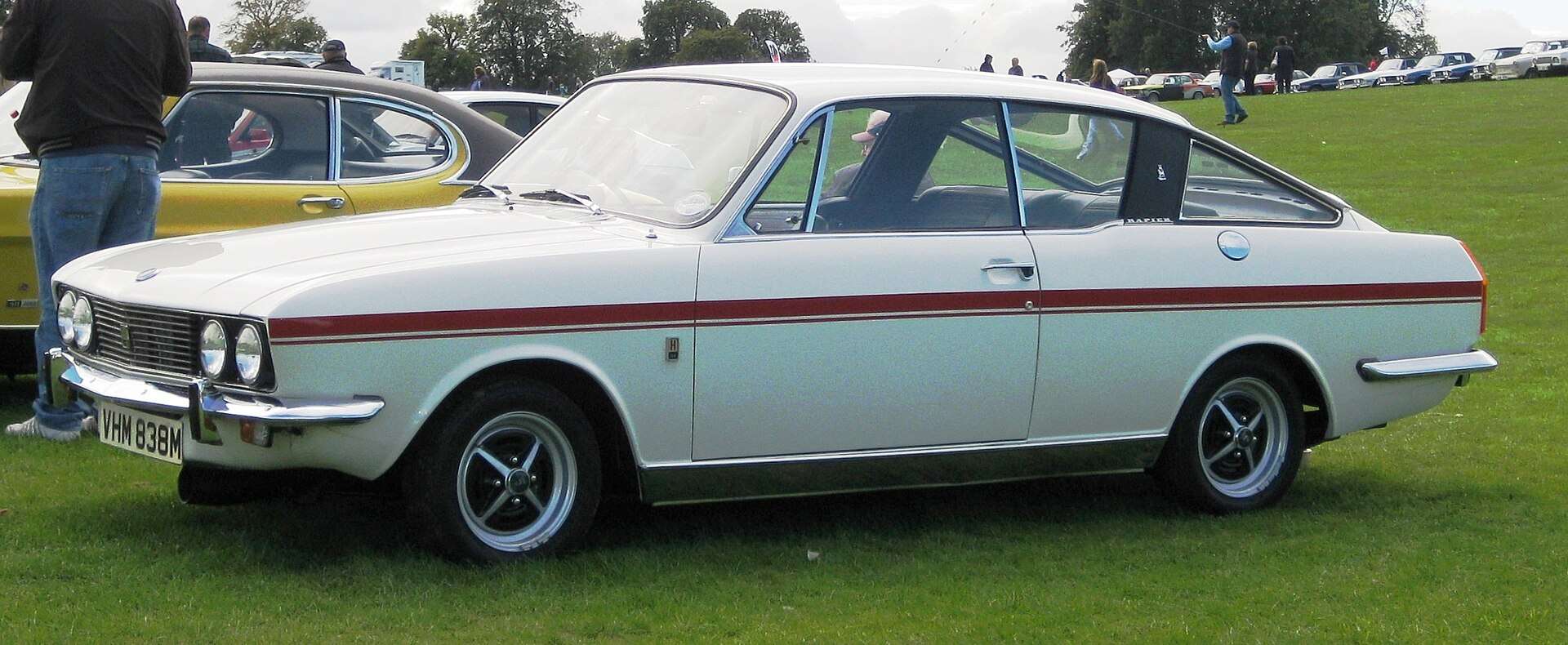
The original Sunbeam Rapier was Rootes’ glamorous two-door sporting saloon, combining proven Hillman Minx engineering with sharper performance, richer trim and genuine competition credibility. Built from 1955 to 1967 in five main series, it evolved from a 1.4-litre hardtop into a 1.7-litre grand tourer and was also offered as a rare convertible.

Rapier Series I to V at a glance
| Model | Years | Engine | Main changes |
|---|---|---|---|
| Series I | 1955–58 | 1,390cc | Hardtop coupé, column change initially, overdrive |
| Series II | 1958–59 | 1,494cc | Larger fins, floor change, convertible added |
| Series III | 1959–61 | 1,494cc | Alloy head, front discs, revised cabin |
| Series IIIA | 1961–63 | 1,592cc | More torque and detail improvements |
| Series IV | 1963–65 | 1,592cc | Restyled nose, 13-inch wheels, all-synchromesh gearbox |
| Series V | 1965–67 | 1,725cc | Five-bearing engine, final and fastest Audax Rapier |
From Audax coupé to mature grand tourer
The Rapier was the first production member of Rootes’ “Audax” family. Raymond Loewy Associates influenced the crisp transatlantic styling, while Pressed Steel produced the shells. Painting and trimming were carried out by Thrupp & Maberly before final assembly at Ryton. The result looked more special than the related Minx and Singer Gazelle, with a low roofline, two-tone paint options and extensive brightwork.
Early Series I cars used the 1,390cc overhead-valve four-cylinder engine. Twin Zenith carburettors replaced the original single-carburettor arrangement during production. The Series II brought the 1,494cc engine and a floor-mounted gear lever, while the convertible added genuine open-air appeal. Series III cars are especially desirable because they gained front disc brakes and an eight-port aluminium cylinder head.
The IIIA increased capacity to 1,592cc. Series IV styling became cleaner and the transmission finally gained synchromesh on first gear. The final Series V used Rootes’ stronger five-bearing 1,725cc engine, making it the easiest version to use in modern traffic.
Rally and competition history
The Rapier was far more than a dressed-up Minx. It scored class successes in the Mille Miglia, Monte Carlo Rally, Alpine Rally, Acropolis Rally, East African Safari and Liège–Rome–Liège. Peter Harper won the 1958 RAC Rally in a Rapier, while works and privateer cars made the model a familiar sight in international rallying. That history adds appeal, but claimed competition provenance must be supported by period records rather than badges and later modifications.
What is a Rapier like to drive?
A sound Rapier feels light, precise and more refined than many sporting saloons of its era. Overdrive makes a major difference on faster roads. Series III onward front disc brakes inspire more confidence, while the larger engines provide useful mid-range pull rather than outright sports-car acceleration. Steering should be positive without excessive play, and the live rear axle should remain composed on decent dampers and bushes.
Sunbeam Rapier buying guide
Body and rust
Structure matters more than mechanical condition. Inspect the sills, jacking points, floor edges, front crossmember, suspension mounts, outriggers, rear spring hangers, wheelarches, boot floor, door bottoms and the bases of the front and rear wings. Coupé roof gutters and the windscreen surround can conceal corrosion. Convertibles deserve particularly careful checks around the sills, A-posts and door gaps because weakened shells can sag.
Engine and cooling
Listen for timing-chain noise, crankshaft rumble and low oil pressure when hot. Check for coolant loss, overheating and oil contamination. Alloy-headed Series III and IIIA cars need correct coolant and careful inspection for corrosion or past overheating. Twin-carburettor linkages should be balanced and free from air leaks.
Gearbox, overdrive and brakes
Second-gear synchromesh can wear, and early gearboxes naturally lack synchromesh on first. Test the overdrive repeatedly when warm; delayed or intermittent engagement can point to electrical, hydraulic or internal faults. Check for seized calipers on disc-brake cars, leaking wheel cylinders and tired flexible hoses.
Trim and identity
Model-specific glass, brightwork, dashboards, side flashes and convertible fittings can be harder to source than mechanical parts. Confirm the chassis number, engine type and series-specific details. A restored car should have invoices and photographs showing structural work, not merely fresh paint.
Frequently asked questions
Which Rapier is best for regular use?
The Series V combines the strongest engine with the most developed gearbox and brakes. A Series III or IIIA offers the classic finned appearance with useful mechanical improvements.
Was the Rapier sold in Britain?
Yes. It was built by the British Rootes Group and sold through UK dealers in both coupé and, for part of the production run, convertible form.
Is the Rapier the same as an Alpine?
No. The Rapier is a four-seat Audax-based coupé or convertible. The better-known 1959–68 Alpine is a separate two-seat roadster, although the cars share Rootes components.