The Sunbeam Alpine Series I–V is one of Britain’s most approachable 1960s sports cars. Handsome, comfortable and easier to live with than many rivals, it combined Rootes Group engineering with transatlantic-inspired styling. This UK-focused Sunbeam Alpine buying guide explains the five series, the major specification changes and the checks that matter before buying.
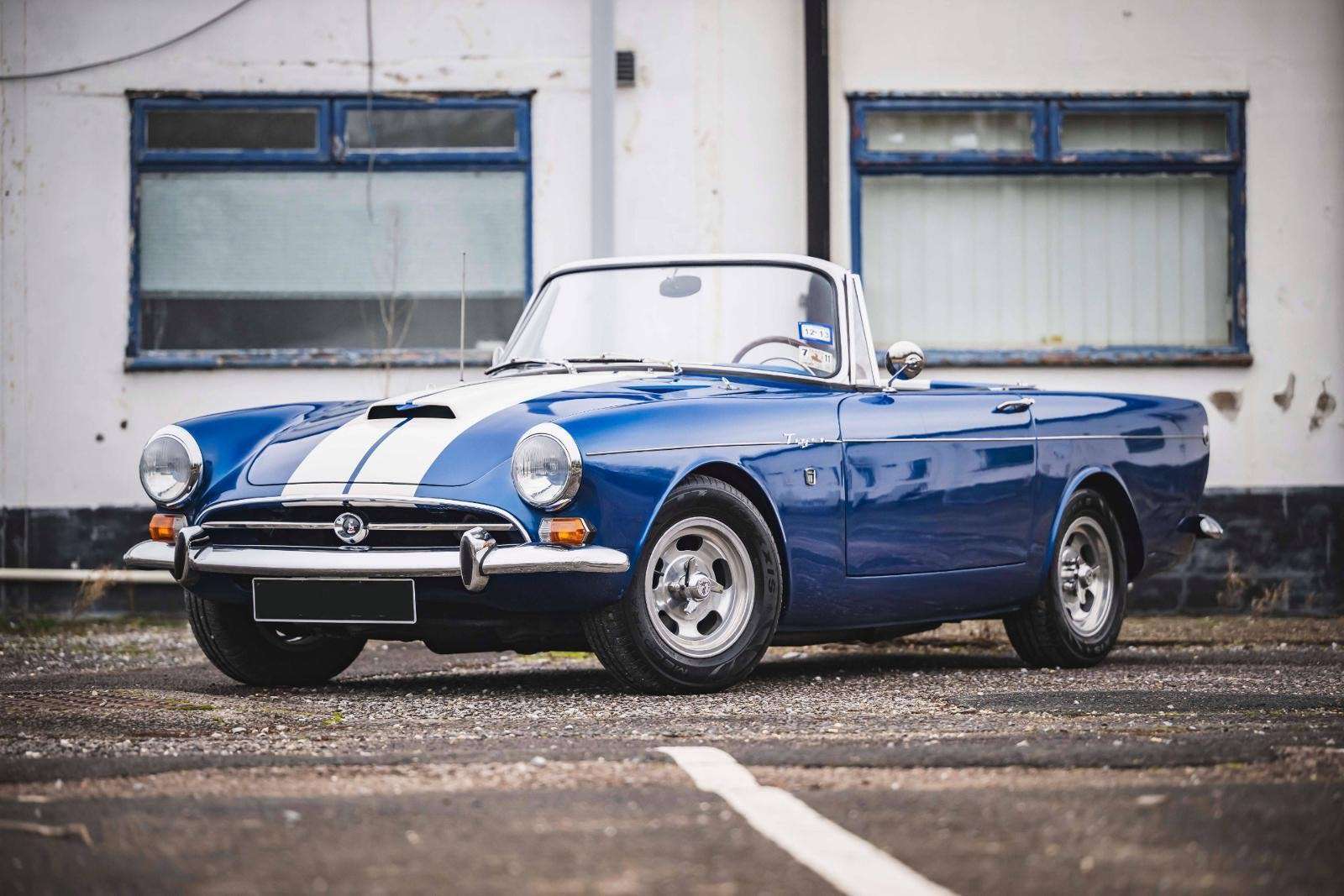
Sunbeam Alpine at a glance
| UK production | 1959–1968 |
|---|---|
| Body | Two-seat sports tourer with occasional rear shelf |
| Engines | 1,494cc, 1,592cc and 1,725cc four-cylinder |
| Gearbox | Four-speed manual; overdrive on many cars; automatic offered on some later models |
| Layout | Front engine, rear-wheel drive |
| Best known rival | MGB |
How the Alpine was developed
Rootes wanted a civilised open sports car that would sell at home and in export markets. The production Alpine used a shortened Hillman Husky floor structure, Sunbeam Rapier running gear and styling led by Kenneth Howes. The result was less spartan than a Triumph and more touring-orientated than an outright competition car.
The first cars appeared in 1959 with pronounced rear fins, a curved windscreen and a 1,494cc engine. Series II arrived in 1960 with a 1,592cc unit and detail revisions. The Series III of 1963 broadened the range with Sports Tourer and more luxuriously trimmed GT versions, while the Series IV introduced tidier rear styling with reduced fins. The final Series V gained the 1,725cc five-bearing engine and is generally the easiest version to use in modern traffic.
Series I, II, III, IV and V differences
Series I (1959–60)
The purest early shape, with 1,494cc power and prominent fins. It is charming and collectible but parts unique to the earliest cars can be harder to source.
Series II (1960–63)
The engine grew to 1,592cc and cooling and detail improvements made it a more relaxed tourer. Many surviving cars have acquired later engines or trim, so originality needs careful checking.
Series III (1963–64)
Quarter-light windows, revised trim and separate Sports Tourer and GT specifications distinguish the Series III. It was the last of the large-fin cars.
Series IV (1964–65)
The cropped fins and cleaner tail modernised the Alpine. This series retained the 1,592cc engine but brought useful refinements and a less flamboyant appearance.
Series V (1965–68)
The 1,725cc five-bearing engine, alternator and further detail changes make the Series V the most usable standard Alpine. It is also the most numerous, so buyers usually have the widest choice.
What is a Sunbeam Alpine like to drive?
An Alpine feels like a compact grand tourer rather than a bare-bones roadster. The steering is light once moving, the ride is relatively supple and a healthy car will cruise comfortably, especially with overdrive. Performance is modest by modern standards, but the flexible later engine and pleasant gearbox suit B-roads. Disc brakes at the front provide reassuring stopping power when properly maintained.
Sunbeam Alpine buying guide
Body and chassis
Rust is the decisive issue. Inspect the outer and inner sills, jacking points, front crossmember, floors, rear spring hangers, wheelarches, boot floor and the structure around the windscreen and doors. Decorative outer panels can hide extensive corrosion. Uneven door gaps or doors that lift when closed may indicate weakened sills. A shiny respray is not proof of a sound shell.
Engine and cooling
Listen for timing-chain noise, rumbling bearings and piston slap, and check for blue smoke after idling. Oil pressure should be healthy when hot. Cooling systems must be clean: blocked radiators, tired pumps and silted blocks cause overheating. The 1,725cc engine is robust when maintained, but neglect and incorrect antifreeze can be expensive.
Gearbox, overdrive and axle
Second-gear synchromesh is a familiar weak point. Test overdrive only when the oil is warm and confirm it engages and disengages cleanly without slipping. Whining axles and vibration on the overrun point to wear in the differential or propshaft.
Steering, suspension and brakes
Check front suspension bushes, ball joints and steering-box play. Rear springs can sag and tired lever-arm dampers make the car float. Pulling under braking may be caused by seized calipers or contaminated drums. Parts support is generally good, but a complete suspension overhaul still adds up.
Trim, hood and originality
Missing brightwork, correct seats, dashboard parts and model-specific badges can cost more than expected. Check the hood frame as well as the fabric and look for water damage behind the seats. Compare chassis and engine numbers with club data because many cars have been upgraded over six decades.
Which Sunbeam Alpine should you buy?
Choose the best bodyshell rather than chasing a particular badge. A Series V with overdrive is the easiest entry point for regular use; a sound Series III combines the dramatic early styling with useful development; Series I and II cars suit collectors who value originality. A documented restoration by a recognised specialist is usually worth paying for.
Sunbeam Alpine FAQs
Is the Sunbeam Alpine the same as the Tiger?
No. The Tiger shares the basic body but uses a Ford V8 and has important structural, steering, cooling and transmission differences. Converting an Alpine does not automatically create an authentic Tiger.
Does a Sunbeam Alpine have overdrive?
Many do, but it was not universal. Confirm the switch, relay, wiring and gearbox are all present and working.
Are Sunbeam Alpine parts available in the UK?
Service parts and many mechanical components are well supported by specialists and owners’ clubs. Rare trim, early-series details and sound original body panels can be harder to find.
Verdict
The Alpine deserves more attention from buyers who want a stylish British classic without the austerity of some rivals. Buy on structure, verify the specification and budget for proper cooling and suspension work. A sorted Alpine is a friendly, distinctive and rewarding way into 1960s sports-car ownership.
Research sources: Sunbeam model history, Sunbeam Alpine Owners Club and contemporary buyer-guide material archived by the club.