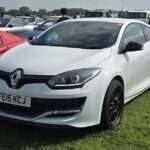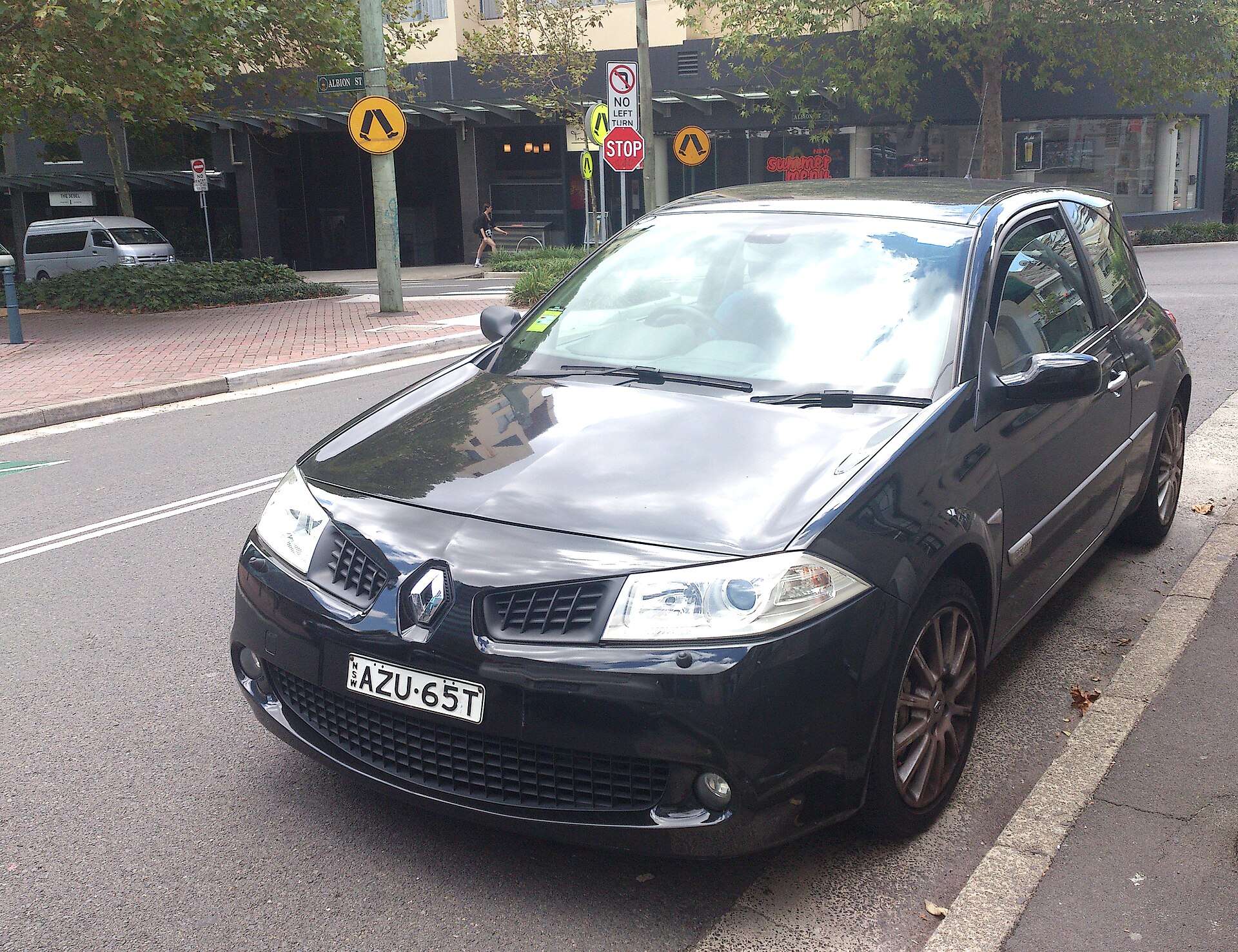
The second-generation Renaultsport Mégane combines turbocharged pace with a chassis that rewards a good road. It also presents a more complicated purchase than an advertisement promising “R26 spec” might suggest. A genuine limited-slip differential, a recent complete belt service and suspension that steers properly matter more than decals or a peak power figure. This UK buying guide covers the petrol Mégane II Renaultsport 225 and F1 Team R26, with the rare R26.R treated separately. It does not cover the diesel 175 or the later 250, 265 and 275.
Our buying verdict
Choose the best documented, structurally sound example you can inspect on a lift. A well maintained ordinary 225 can be a better purchase than an R26 with uncertain identity, overdue belts and tired hubs. Pay an R26 premium for verified specification and condition. Reserve money for diagnosis and a first service even when the car has a fresh MOT; that certificate does not establish turbo health, differential specification or the age of the timing belt.

Versions and specifications: 225, Cup, F1 Team and R26
The core purchase is a front-wheel-drive, 2.0-litre turbocharged petrol hatchback with a six-speed manual gearbox. Three- and five-door bodies exist. Do not assume that a three-door shell, black wheels or a numbered-looking plaque establishes which derivative you are viewing. Registration descriptions can be incomplete, and components have been swapped during two decades of ownership.
| Version | Why buyers consider it | What to establish |
|---|---|---|
| Renaultsport 225 | The broadest choice, including practical five-door examples | Original engine, trim and chassis specification; service and repair history |
| Cup-equipped cars and special editions | Chassis specification and a more focused feel | Which package was fitted when new, rather than what a seller calls “Cup suspension” |
| 225 F1 Team | Period edition with distinctive presentation | Do not treat an F1 decal as proof of the later R26 mechanical specification |
| F1 Team R26 | A particularly attractive road-car specification with a limited-slip differential | Genuine identity and differential, original equipment, structural condition and maintenance |
| R26.R | A separate, highly specialised collector and track proposition | Authenticity, equipment, accident history and specialist valuation; not an ordinary R26 price benchmark |
Renault’s July 2008 R26.R announcement explicitly describes it as based on the F1 Team R26, retaining its engine, gearbox and limited-slip differential while losing 123kg and receiving specific suspension calibration. That is useful primary evidence for the relationship between the models. It is not evidence that every 225 carrying F1 graphics has an R26 drivetrain. Ask for the original order, build information, supplying-dealer records and invoices for any subsequent differential installation.
Establish whether you want an enjoyable road car, a largely original collectible or a track project before shopping. A remapped, stripped car may suit a specialist enthusiast, but returning it to a quiet, complete road specification can cost far more than its visible modifications suggest. Seats, trim and correct wheels are not incidental if originality is part of your reason for buying.
Prices and market evidence: compare the right cars
Research on 4 November 2026 found a Car & Classic advertisement for a 2008 Renaultsport Mégane 225 five-door in London at £5,500, showing 90,500 miles. This is one advertised asking price, not a completed sale or a reliable national price band. The actual car still needs inspection, and an advertisement can change or disappear.
At the same research date, PistonHeads showed R26.R advertisements at £35,000 with 32,000 miles and £54,995 with 13,300 miles. These illustrate how a special derivative can occupy a different market. They should not be used to justify a premium on an ordinary R26, and the wider Renaultsport Mégane results also contain later-generation cars which are outside this guide.
For a specific R26 purchase, assemble a fresh set of comparable genuine R26 advertisements and obtain a specialist opinion on the individual car. We did not find enough directly comparable ordinary R26 examples in the checked pages to publish a defensible current range. It is better to state that limit than to manufacture a valuation. Mileage, originality, corrosion, a documented belt job and the quality of previous chassis repairs can move the purchase decision substantially.
Make the comparison in total-money terms. Add any immediately due belt work, tyres, hub repairs, brake work and transport to the asking price. A cheaper example with four unrelated tyres, heavy steering and no detailed service invoices can quickly become the more expensive choice. Equally, a high asking price is not proof that those jobs have been completed correctly.

Rust, identity and bodywork
Start with the VIN and registration documents, then check the physical identifiers and the continuity of the service and MOT records. Look for recorded mileage changes, unexplained gaps and repair bills that do not correspond with the car’s identity. An HPI-style history check can help reveal finance or recorded damage; it does not replace looking for an unrecorded repair.
Arrange a lift inspection. Examine sills, jacking points, floor seams, subframes, suspension mounting areas, brake pipes and the underside of the rear body. Rust severity, access and the quality of past repairs matter more than a general claim that this model “does not rust”. Fresh coating needs an explanation and, ideally, photographs of the metal before it was covered. Do not probe or dismantle somebody else’s car without permission.
Check panel gaps, paint texture, overspray on rubbers, disturbed fixings and the fit of the bumper and lamps. Look beneath the boot carpet for moisture, distorted metal and evidence of repair. A car used on track may have perfectly legitimate replacement panels; what matters is a credible explanation and work of an appropriate standard. Uneven suspension pickup points or unresolved alignment problems are much more serious than a repainted bumper.
Inspect wheel rims and the inner tyre shoulders. Matching tread on the visible outside edge can conceal severe wear inside. Ask why the car is lowered and which dampers, springs and alignment settings it uses. A road car should clear ordinary surfaces without repeated impacts, and the seller should be able to explain any non-standard tyre sizes rather than saying that they “just fit”.
Engine, turbo, gearbox and steering problems
Timing belt: verify the complete job
The F4R turbo engine uses a timing belt. A stamp saying “major service” does not establish that the belt, pulleys, auxiliary drive and water pump were renewed. Read the dated, mileage-stamped invoice. Confirm the applicable Renault service schedule for the exact vehicle, including calendar age as well as distance, and bring forward overdue or unproven work before normal use.
K-Tec’s selected Mégane 2 RS 225/R26/R26.R major belt service was displayed at £786.80 including tax when checked. Its listed scope includes the cambelt and pulleys, auxiliary belt and tensioner, water pump and coolant, camshaft end caps and a health check. Confirm that scope and the current quote before booking. The same multi-model page mentions a dephaser for Clio 172/182 applications; that is not a reason to copy a Clio-specific dephaser allowance into a Mégane invoice.
The page also describes an additional cam-cover reseal for an F4R-T with an oil leak at approximately £175 plus VAT while the belt work is being done. That is a conditional add-on, not a universal standalone repair price. Ask the inspector to distinguish oil from the cover, another upper-engine source and leakage lower down. Paying for a belt change while leaving a known contaminating leak unresolved is a poor economy.
Cold start, cooling and boost
Request a genuinely cold start and check that the engine has not been warmed before arrival. Observe warning lamps, starting behaviour, idle and exhaust smoke, then repeat observations once fully warm. Investigate persistent smoke, coolant loss, unexplained pressure or overheating rather than accepting a generic turbo-car explanation. Never open a hot cooling system.
Inspect coolant hoses, radiator condition, fan operation and signs of dried coolant. Read oil-service invoices for the actual specification and intervals used. Look for split or oily boost connections, improvised vacuum plumbing, poorly supported intake parts and exhaust changes. Some oil mist in an intake system is not, by itself, proof that a turbocharger has failed; a specialist needs to interpret symptoms and inspect the complete system.
On a lawful, warm road test, power should arrive consistently without misfire, warning lights or repeated hesitation. Scan for stored faults, and be cautious if monitors or records suggest recent clearing. Ask who supplied a remap, which hardware it requires and whether it was declared to the insurer. A dyno sheet does not certify the present condition of the fuel, cooling or lubrication systems.
Clutch, gearbox and differential
Try every gear cold and hot without forcing the lever. Listen for abnormal whine or rumble, and distinguish gearbox noise from tyres, a wheel bearing or a clutch-related sound. A high bite point alone does not measure remaining clutch life. Slipping under normal load, persistent vibration, a difficult shift or substantial transmission noise needs a written diagnosis and quote before negotiation.
For an R26, verify differential identity through specification evidence and specialist examination. Do not attempt an aggressive public-road traction demonstration as a substitute for checking what is fitted. A replacement limited-slip unit can be a useful upgrade on a 225, but it does not turn the vehicle into a genuine factory R26 for valuation purposes.
Lower swivel bearings: a model-specific buying check
Heavy or reluctant steering, poor self-centring and a knock deserve careful examination of the front hub swivel system. Engine Dynamics identifies wear or seizure of the lower swivel bearing as a known Mégane II RS issue and offers the bearing separately. This is not the same component as the ordinary rotating wheel bearing; a vague invoice for “front bearing” is insufficient evidence of repair.
The listed lower swivel bearing was £24.99 excluding VAT / £29.99 including VAT each, with one required per side. That is the component price, not the cost of diagnosing, dismantling and rebuilding a corner. Seized parts, damaged housings, other worn joints and alignment can make the fitted job substantially different. Ask whether a separate bearing repair is appropriate for the actual hub condition rather than assuming that either the cheapest part or a complete new hub is automatically the answer.
Inspect the rest of the steering and suspension together: track rods, bushes, joints, dampers and tyre condition can produce overlapping symptoms. Check the fixed front brake calipers, pad movement, retaining hardware, discs, hoses and fluid. Correct assessment of these calipers is more useful than applying a generic sliding-caliper checklist to every front brake design.

Interior, electrics and everyday usability
Test every window repeatedly from both sets of switches, including the full travel and any one-touch function. Check both keycards for starting and locking, not just whether the seller has two plastic cards. A missing functioning spare can create an inconvenient programming expense later. Confirm that the steering lock and starting routine work consistently.
Run the heater, air conditioning and blower through their settings. Inspect carpets and the boot for damp, and investigate water stains rather than covering them with a new mat. Where a glass roof is fitted, check operation, seals and drains through an appropriate inspection. Do not assume that all cars have the same roof equipment.
Recaro seats and other desirable trim can be costly to restore. Inspect bolsters, frames, adjustment, seatbelts and airbag warning behaviour. An extinguished warning lamp is not enough if the original safety equipment has been replaced or bypassed. Try your own driving position, rear access and boot requirements before buying a focused derivative for everyday use.
Check the radio, displays, mirrors, lights, rear wiper and central locking. Photograph the instrument readings with the seller’s agreement, and compare them with the service record. Electrical faults can be modest individually but time-consuming in combination; “a fuse” is a diagnosis only after somebody has established the cause and ruled out water damage or poor wiring.
Maintenance costs and useful parts
Affiliate disclosure: This guide contains eBay affiliate links. We may earn a commission from qualifying purchases. These links open relevant searches, not vetted products or guaranteed fitments. Match VIN, engine, gearbox, original part numbers and modifications before ordering; availability and prices change.
Use the £786.80 including-tax K-Tec belt-service example as evidence of one supplier’s stated fitted package, not as a nationwide fixed tariff. The £29.99 including-VAT lower swivel bearing is parts-only and must not be presented as a complete front suspension repair. Obtain a vehicle-specific written quote showing labour, VAT, fluids, seals and any extra work authorised after dismantling.
Parts searches below are a starting point for comparing availability. Specify 225 or R26, engine, build information and the existing component number. Check genuine fitment with the supplier; a search result carrying “Megane” is not sufficient. Used safety-critical parts and unidentified performance components need particular care.
| Item | What to check before spending | Relevant eBay search |
|---|---|---|
| Timing-belt kit | Check belt, pulleys, water pump, auxiliary drive and calendar history as a complete job | Timing-belt kit searches |
| Alternator | Diagnose battery, charging output, connections and belt drive before ordering | Alternator searches |
| Oil and filter | Use the vehicle-appropriate specification; record date and mileage | Oil and filter searches |
| Spark plugs and ignition coils | Investigate misfire first; confirm correct plugs for standard or modified specification | Spark plugs and ignition coils searches |
| Cooling parts | Identify the actual leak or thermostat/fan fault, then match the component | Cooling parts searches |
| Lower hub swivel bearing | Distinct from a wheel bearing; check hub condition and price labour separately | Lower hub swivel bearing searches |
| Front brakes | Match caliper, disc and pad application; include retaining hardware if required | Front brakes searches |
| Clutch and flywheel | Quote diagnosis, applicable flywheel, seals, fluid and labour together | Clutch and flywheel searches |
| Suspension and steering | Identify worn joints before choosing bushes, dampers or track rods | Suspension and steering searches |
Turn the inspection into a service plan
Ask for an itemised quotation showing parts, labour, VAT, fluids, diagnostic work and any refundable exchange surcharge. A complete fitted job and a parts-only listing answer different questions. Establish which associated seals, fasteners, tensioners or alignment work are included, and agree how the garage will handle additional faults found during dismantling. Confirm whether it will fit customer-supplied parts and what warranty applies.
Prioritise safety, overdue scheduled maintenance and defects that could cause further damage. Start a dated record at purchase, with mileage, component specifications and invoices. Cosmetic changes can wait until the car has a trustworthy mechanical baseline. Service stamps are useful, but an invoice explaining the actual work carries more information than a tick in a book.

Hidden ownership costs
The first-year budget needs more than purchase price and an oil change. Price the work identified on this particular car before agreeing a deal. Keep immediate repairs, recurring running costs and discretionary improvements separate; do not treat an unspent repair reserve as permission to ignore a fault.
- Belt-job overlap: a leaking cam cover or neglected auxiliary drive can add work even when a belt has been purchased cheaply. Confirm what the fitted package includes.
- Seized swivel hardware: a small bearing price can conceal substantial dismantling time or a damaged housing. A diagnosed quote is more useful than a parts listing.
- Returning a modified car to road use: correct seats, exhaust, suspension, emissions equipment and tyres can outweigh the appeal of included upgrades.
- Keycards and interior trim: programming, water-related faults and Recaro repairs can accumulate even when the engine feels healthy.
- Track consumables: tyres, brake fluid, pads and alignment are recurring costs. Establish how recently these were renewed and whether the present setup suits road use.
- Authenticity premium: paying R26 money for an unidentified differential and a graphics kit is an avoidable ownership cost. Verify before committing.
Obtain insurance quotations using the registration and declare modifications, including software changes. Check the actual vehicle’s tax and local emissions-zone treatment through the relevant official services rather than assuming every version is identical. Include storage, recovery or transport if specialist repairs will take the car off the road. An inexpensive used component is not a saving if its condition is unknown and you must pay the labour twice.
Viewing and test-drive checklist
Before travelling
Request registration, VIN details, ownership history, service invoices and photographs of the underside. Read the MOT history for repeated advisories, mileage inconsistencies and long gaps in use. Confirm that the engine will be cold and that a lift inspection and sensible test drive are permitted. Ask directly about accident repairs, overheating and modifications, then compare the answers with the records.
- Before travelling, ask for the VIN, cold-start availability, full belt invoice, modification list and underside photographs. Check MOT chronology and obtain an insurance quote for the actual specification.
- Inspect identity, body repairs, sill and jacking-point condition, subframes, brake pipes and tyre inner shoulders. Use a lift and an independent specialist for an expensive or uncertain example.
- Start cold; assess oil, coolant, warning lights and smoke without opening a hot cooling system. Scan faults and investigate evidence of recent clearing.
- Road-test warm at legal speeds. Assess boost consistency, clutch, every gear, steering return, knocks, braking and straight-line behaviour.
- Test both keycards, windows, locks, climate equipment and any glass roof. Inspect damp, seat operation and safety-equipment alterations.
- Price due work in writing. Separate parts-only figures from fitted costs, and establish differential and edition identity before agreeing an R26 premium.
Make the decision from evidence
Proceed when identity and history are consistent, the structure and major systems pass inspection and immediate work has been priced. Investigate an isolated, diagnosable issue with a written repair scope and enough budget. Walk away from unexplained identity conflicts, unsafe structural repairs, overheating, serious unresolved engine symptoms or a seller who refuses reasonable inspection. There will be another car; a cheap asking price does not put a ceiling on repair costs.
Buying questions answered
Is the R26 worth more than an ordinary 225?
It can be, when the buyer values its verified factory specification, including its limited-slip differential. Condition and maintenance still come first. Stickers, wheels or an aftermarket differential do not establish genuine R26 identity.
How much does a Mégane 225 timing-belt change cost?
The checked K-Tec Mégane 2 RS package was £786.80 including tax and listed the belt, pulleys, auxiliary drive, water pump, coolant, end caps and health check. Confirm the current quote, vehicle eligibility and any additional leak repairs. It is one supplier example, not a fixed UK rate.
Are heavy steering and a front knock always the wheel bearing?
No. The lower hub swivel bearing is a distinct model-specific inspection point. Other joints, tyres and steering components can cause similar symptoms. Diagnose the fault before buying either a bearing or a complete hub.
Does a 225 F1 Team automatically have the R26 differential?
No such assumption should be made from its name or decals. Verify the exact derivative and installed transmission through build evidence, invoices and specialist inspection.
Should I buy a remapped example?
Only if the hardware, calibration, maintenance and insurance declaration are documented and an inspection supports the condition. A power claim or dyno printout does not establish the remaining life of the turbo, engine, gearbox or clutch.
Sources and research method
Independently written desk research by Unusual Cars UK, checked on 4 November 2026. We have not inspected or road-tested the illustrated cars or authenticated sellers’ claims. Recommendations and inspection priorities are editorial assessments. Prices below are dated evidence, not guaranteed quotations or predictions of appreciation.
- Renault press release: Mégane R26.R, 22 July 2008 — Primary manufacturer evidence for the R26/R26.R relationship, differential and 123kg reduction; historic release, not current pricing.
- K-Tec Racing: major service / belt change — Mégane 2 RS 225/R26/R26.R selected; £786.80 tax-included display, listed work and conditional cover-reseal note checked 4 November 2026.
- Engine Dynamics: lower hub swivel replacement bearing — Primary supplier description, model applicability and £29.99 including-VAT individual part price.
- Car & Classic: Mégane 225 advertisements — One directly read UK 2008 five-door asking-price example; not sold-price evidence.
- PistonHeads: Renaultsport Mégane advertisements — R26.R examples distinguished from ordinary R26 and later-generation listings.
- GOV.UK used-car checks and MOT history — verify documents, identity and test records.
Images illustrate the model and buying themes; they are not the advertised cars discussed in the price section. Credits and licence links accompany each image. No endorsement by a photographer, owner, manufacturer or specialist is implied. Confirm workshop information against the actual vehicle.
Compare alternatives in the Buying Guides hub.