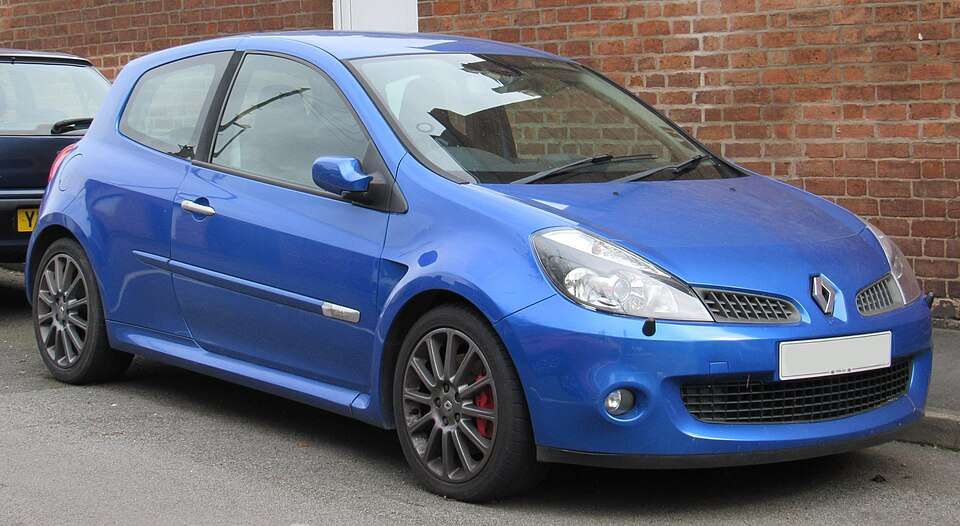
The naturally aspirated Clio 197 and 200 offer a distinctive kind of hot-hatch appeal: a rev-hungry 2.0-litre engine, six-speed manual gearbox and a chassis that rewards careful maintenance. They also have buying traps that are easy to overlook in an exciting test drive. Belt history, TL4 shift quality, front swivel joints and expensive trim deserve the same attention as colour and Recaro seats. This guide covers the Clio III Renaultsport, rather than the later turbocharged automatic 200.
Our buying verdict
Start with a sound standard car whose belts, gearbox and front suspension have convincing evidence behind them. Choose a Cup chassis only if its ride suits your roads, and distinguish it from the stripped-back Cup model. A well-documented 197 can be a better purchase than a tired 200; reserve money for essential work before paying for rare paint or seats.

197, 200, Cup and special editions explained
The 197 arrived in 2006 and the revised naturally aspirated 200 followed in 2009. Both belong to the Clio III Renaultsport family, with a 2.0-litre F4R engine and six-speed manual. The 200 brought revisions to engine specification, styling and chassis settings. It is not the same buying proposition as the later 1.6 turbo/EDC Clio IV also advertised as “200”.
| Version | What to establish |
|---|---|
| Ordinary 197 | Equipment varies; check actual build, key-card operation and options rather than relying on a generic specification list. |
| 197 with Cup chassis | Chassis option on an otherwise equipped car. Repainted calipers and refurbished wheels can imitate visual clues. |
| 197 Cup | Lower-cost version with equipment differences. Air-conditioning and seats may have been optional; inspect what is actually fitted. |
| F1 Team R27 | Verify identity, plaque, original equipment and chassis. Graphics can be replaced or removed, so appearance alone is insufficient. |
| 200 / 200 with Cup chassis / 200 Cup | Separate body/equipment and chassis choices; the Cup-related steering specification needs version-specific confirmation. |
| Gordini, Silverstone, Raider and other claims | Check genuine identity and original trim. A special colour or badge does not establish the full specification. |
The primary Clio197.net owner guide distinguishes Cup models from Cup chassis options and describes a gearbox-ratio revision during the 197’s life. Use its detail to ask informed questions, then verify the actual build and fitted parts. Do not assume every 197 Cup has the later 200 Cup steering rack, or every car with red calipers has factory Cup suspension.
For road use, standard seats and a standard chassis deserve a fair trial. Recaros can be appealing, but bolster condition and correct installation matter; retrofitting can involve safety-system compatibility as well as mounting hardware. Do not accept resistors masking an airbag warning as proof of a sound installation. Check that all relevant warning lamps behave correctly.
Track use is not automatically disqualifying. A well-prepared, properly maintained car can be a more transparent proposition than one with hidden hard use. Ask for event history, fluid schedules, geometry records and work on hubs, brakes and gearbox. Modifications should suit your use and be documented and declared to the insurer. Compare ride and noise before paying extra for them.

Clio 197 and 200 prices: current examples
Car & Classic searches checked on 4 November 2026 displayed the following UK asks. The broad “Clio 200” result also included older cars with 2000s dates, V6s and later turbocharged models; these were excluded. This is a small advertisement sample, not an achieved-price guide or proof of seller claims.
| Advertised example | Displayed ask | Comparison note |
|---|---|---|
| 2008 197, 88,000 miles, Davenham | £5,500 | The dedicated 197 search showed this single example; too little evidence for a national price band. |
| 2010 200, 90,000 miles, Rainham | £7,500 | Compare belt, gearbox, chassis and body condition with similar manual Clio III cars. |
| 2011 RS Gordini 200, 55,000 miles, Keighley | £8,500 | Verify special-edition identity and fitted chassis/equipment before attaching a premium. |
| 2007 R27 F1 Team, 44,500 miles, Burnley | £11,480 | Advert claims numbered limited-edition identity; request supporting records. |
| 2010 200, 1,980 miles, Peterhead/Hatton | £18,995 | An unusually low-mileage ask; storage and originality require separate assessment. |
A scheduled 2012 RS200 Cup auction was not counted as a fixed asking-price comparison. Neither were later 1.6-litre automatics. Keyword searches do not define a clean model dataset: read engine, gearbox and generation fields yourself, and treat obvious listing errors as reasons to verify rather than repeat them.
Set a budget from the whole car. Belts, a gearbox repair, hub work, caliper servicing and four tyres can coincide. An invoice for one job cannot compensate for all the others being deferred. Ask a Renaultsport specialist for realistic quotations on the faults found, then compare the total with a more expensive car whose major maintenance is already documented.
Mileage can be useful context, but age affects seals, belts, bushes and corrosion even in a lightly used car. A correctly maintained high-mileage driver may suit regular use better than a stored low-mileage example needing recommissioning. Collectors should check original paint, trim, wheels and paperwork as a separate layer of value.
Bodywork, rust and signs of hard use
Inspect front bumper, splitter, underside and lifting points for speed-bump or kerb damage. Check panel alignment, paint transitions, fasteners, overspray and lamp fit for repair evidence. A new bumper may be harmless, but ask what happened and inspect the structure behind it. Track-related damage can be repaired well or poorly, just like ordinary road damage.
Check arch lips, sill seams, floor sections, mounting areas and accessible subframes on a suitable lift. Do not repeat an old description of rear-quarter rust as rare as a guarantee for a car now many years older. Inspect inside the boot and beneath carpets for moisture. Unexplained fresh coating deserves preparation photographs and a clear repair history.
Look for holes or poorly sealed fixings where spoilers or splitters have been removed. Check rear side-window weather seals, door alignment, check straps and the condition of lights. Drainage around the scuttle matters: the owner guide describes blocked drains allowing water around the wiper mechanism. Investigate the source and any damage rather than assuming cleaning a hole finishes the job.
Verify VIN, registration, seller identity, mileage chronology and provenance before paying a deposit. Read MOT history for recurring suspension, braking and emissions issues. Special editions require genuine build/identity evidence, not just stickers and seats. If a seller refuses underside access or specialist assessment, make that part of your decision.

Engine, belts, gearbox and suspension problems
Timing-belt evidence must be specific
The owner guide reproduces a 2006 197 service schedule specifying timing belt/pulleys and auxiliary belt at 72,000 miles or 60 months. JXL’s specialist guide also quotes five years/72,000 miles. Confirm the current requirement for the actual vehicle and components with an appropriate specialist; age matters even if the car has covered few miles.
Ask for an invoice with date, mileage, parts and the garage that performed the work. Establish whether tensioners, auxiliary-drive components, water pump and dephaser assessment/replacement were included as appropriate. “Cambelt done” is not a complete scope. Proper timing tools and Renaultsport experience matter, and poor timing can leave an apparently healthy car underperforming.
If history is missing or work is due, agree a suitable service before regular use and obtain a written quote. A noisy timing/dephaser area, rough running or fault codes require diagnosis rather than an assumption that a new belt will cure everything. A parts-kit price alone does not establish the fitted cost or the condition of the engine.
Cold running, mounts and exhaust
See the car genuinely cold, check fluid levels and observe starting, idle and smoke. Owner accounts describe cold-running quirks, but severe hesitation or misfire should not be dismissed as normal. Diagnose ignition, fuelling, intake, sensors, calibration and mechanical condition where indicated. A change of fuel grade is not a universal repair for a poorly running car.
Inspect coolant leaks, thermostat-housing areas, hoses and radiator condition. Check stable operation on a progressive drive and investigate loss or overheating history. Never open a hot pressurised system. Oil leaks and consumption should be described in measured terms, with invoices and testing if the explanation is doubtful.
Engine movement and tired mounts can affect refinement, shift feel and exhaust stress. An upgraded mount may increase cabin vibration, so judge it against your intended use. Listen for exhaust blowing or ticking and distinguish manifold/flexi issues from heat-shield rattles. The owner guide highlights that access and refitting can make a manifold repair expensive despite a modest component price.
Check the legality and suitability of exhaust and catalyst changes. A claimed performance gain needs supporting evidence, not just a louder demonstration. Do not assume a remap cures every flat spot or that removing an emissions component is an acceptable maintenance shortcut. Returning a modified car to road-compliant specification belongs in the budget.
TL4 gearbox and clutch
Test all gears from cold and warm with sensible, unforced shifts. Owner and specialist material flags synchro problems, particularly around the middle gears; do not accept persistent crunching as just a cold-box trait. A reluctant selection may involve clutch operation or linkage as well as the gearbox, so obtain a diagnosis rather than declaring the entire transmission worn from one symptom.
Ask whether a claimed rebuild included inspection and replacement of the relevant components, who did it and what warranty applies. A fluid change is not the same as a rebuild. Check clutch take-up, hydraulics, mount condition and leaks. Avoid abusive fast shifts or repeated forced downchanges during a seller’s test drive.
JXL quotes a broad gearbox-rebuild range in its guide, but we have not verified a current individual fitted scope and do not present it as a guaranteed bill. Removal/refitting, clutch work, damaged gears, bearings, fluids and tax can alter the result. Obtain a quotation for the actual fault and installed transmission.
Front swivel joints and steering
The separate-axis front suspension makes the swivel-hub joints a particular inspection priority. Knock, creak, uneven wear, wandering or notchy steering merit a proper assessment of joints, bearings, rack, links and related components. Similar symptoms can have different causes. Do not buy an entire hub assembly simply because a forum post mentions a ball joint.
Some specialist repair routes replace individual joints where appropriate, while suppliers also offer complete components. Ask the repairer what condition they found, which parts they intend to renew and whether fitting tools and expertise are available. A cheaper part can become an expensive mistake if it is not correctly fitted or if another worn component remains.
Inspect dampers, springs, top mounts, bushes and rear-beam attachments. Cup or aftermarket suspension needs the correct specification and matching components. Alignment should follow repairs and use settings appropriate to road or track use. A car that pulls or clunks is not displaying sporting character; establish the cause.
Brembo brakes and wheel fitment
Check discs, pads, hoses, caliper condition and retaining hardware. The fixed front Brembos and rear calipers have different service details; do not assume one generic “slider pin” description applies to both. Seized front pad-retaining pins and rear sliding hardware are distinct issues in the primary owner material. A sensible brake assessment also checks sticking pads and uneven wear.
Rear-disc listings may differ in bearings and ABS-related components supplied. Compare complete contents and fitting requirements rather than headline price. Inspect wheel offset, spacers, fasteners, tyre size and clearance on modified cars. Four suitable tyres and sound geometry are central to how this car drives; worn or mismatched tyres undermine the rest of the work.
Recaros, key cards, wipers and electrical checks
Inspect both standard and Recaro seats for cloth, foam, frame and adjustment wear. Compare missing or damaged trim against current replacement availability. Test both key cards or keys, entry sensors/locks where fitted, windows, mirrors, climate/air-conditioning and audio. A working spare is more useful than a promise that it only needs a battery.
Try the wipers through their full sweep and speeds, and check drainage and signs of water damage around the scuttle. Inspect steering-wheel covering, glovebox fit and warning displays. A bulb change or access to a lamp can involve more labour than expected; xenon and cornering-light equipment must be assessed against the actual specification.
Standard seats can be comfortable and supportive. If you specifically want Recaros or certain equipment, price buying the right car against retrofitting correctly. A lightly equipped Cup should be judged as that model, rather than treated as a fully equipped car with inexpensive items missing. Air-conditioning, steering adjustment and wiring differences are not always simple additions.

Maintenance costs and useful parts searches
On 4 November 2026, AP Motorsport displayed the genuine lower swivel hub from £325 each, explicitly excluding UK VAT and with availability to be confirmed. Its page identifies LH 7701208961 and RH 7701208960. This is a starting parts price, not a fitted repair cost or an assurance that either side is immediately available. Compare Clio 197/200 lower swivel-hub options only after the fault and exact side/component are confirmed.
Affiliate disclosure: Our eBay parts links use campaign 5339238906. We may earn a commission if you buy, at no extra cost to you. Links open searches rather than a verified product. Results may include unsuitable parts; confirm engine, build date, part number, condition and returns before ordering.
| Maintenance item | What to establish | Model-specific search |
|---|---|---|
| Timing belt / dephaser | Correct engine, kit contents, tools, tensioners and agreed pump/dephaser work; labour-inclusive scope. | Clio 197/200 timing kits |
| Auxiliary drive | Belt, pulleys and tensioner condition; distinguish from the timing-belt job. | Clio 197/200 auxiliary kits |
| Alternator | Part number, output, pulley and connector after electrical diagnosis. | Clio 197/200 alternators |
| Swivel joints / hubs | Diagnose actual joint or bearing, side and repair method; fitting expertise matters. | Clio RS swivel-joint parts |
| Gearbox and clutch | Identify TL4 version and fault; clarify removal/refitting, fluids and associated work. | Clio 197/200 clutch kits |
| Brakes | Compare rear bearings/ABS components and front pin/clip contents, not discs alone. | Clio RS rear discs with bearings/ABS parts |
| Mounts / manifold | Confirm noise source, existing modifications and labour for access. | Clio RS manifold and flexi options |
Build a first-year plan around belt evidence, a baseline service, diagnosed gearbox/hub work, brakes and tyres. Agree fluid specifications and intervals for your usage, especially if track work is planned. The owner guide’s old prices are not current quotations. Keep routine maintenance separate from a reserve for repairs that need investigation.
Before ordering, ask whether the garage will fit supplied parts and what warranty it offers. A search can return ordinary Clio or later turbo parts alongside the right components. Verify engine code, build date and part number. Returning an unsuitable item after dismantling the car can add downtime and transport expense even where the seller accepts the return.
Hidden ownership costs
Plan the first year before agreeing the purchase price. Add inspection, collection, immediate servicing, diagnosed repairs, tyres, insurance, storage and a contingency for unresolved work. Use a written estimate for the actual car rather than assuming that spending a fixed percentage of its price will cover everything.
- A belt invoice may omit dephaser, pump or auxiliary hardware. Ask what the specialist recommends and what the fitted quote actually includes.
- Hub-joint repair may require specialist fitting; an inexpensive individual component is not comparable with a complete installed assembly.
- Manifold/flexi access can make labour the main expense. Poor mounts or modifications may add associated work.
- Recaro restoration, missing equipment, key cards and correct rear brake assemblies can make an otherwise cheap example costly to complete.
- Labour and associated work: diagnosis, access, fluids, alignment, seized fixings and tax can change the bill. Confirm what the quotation includes and how additional work will be agreed.
- Exchange components: rebuilt alternators or starters may require a returnable old unit. Compare the surcharge, return deadline, postage and warranty as well as the headline price.
- Downtime: allow for recovery and alternative transport if a rare component or specialist appointment is needed. A catalogue entry does not prove that a part is on the shelf.
Viewing and test-drive checklist
Before travelling
- Confirm registration, exact specification, seller identity and ownership history. Ask about accidents, insurance losses, modifications and engine replacements.
- Read the MOT chronology and request dated invoices. Arrange a genuinely cold start, inspection access and a properly insured road test.
- Request current underside photographs and a written list of known faults, included keys and spare or original parts.
At the car
- □ Verify Clio III 2.0 manual identity, 197/200 specification, Cup model versus chassis option and special-edition evidence.
- □ Read dated timing/auxiliary-belt invoices and establish pump/dephaser scope; budget for missing or overdue work.
- □ Test TL4 shifts cold and warm without forcing; obtain a diagnosis for crunching or poor disengagement.
- □ Inspect swivel joints, steering, dampers, springs, tyres and alignment, including any modifications.
- □ Assess brakes and correct rear-disc contents, manifold leaks, mounts, cooling and cold-running faults.
- □ Check underside repairs, scuttle drainage, wipers, key cards, air-conditioning, seat condition and safety warning lamps.
- □ Inspect accessible structure on a suitable lift. Never go under a vehicle supported only by a jack.
- □ Try all fitted equipment, check warning-lamp behaviour and assess tyres for age, damage and specification as well as tread.
- □ Test progressively from cold to fully warm, then recheck starting and visible leaks. Stop if a serious fault develops.
Proceed when the description, identity, condition and records agree. Investigate a plausible but undiagnosed fault before negotiating. Walk away if crucial inspection is refused or the budget depends on a serious problem proving cheap. Put inspection conditions and deposit terms in writing.
Buying questions answered
Is the Clio 200 better than the 197?
The revised naturally aspirated 200 brings changes that some drivers prefer, but maintenance and condition can easily outweigh them. Try both and compare total first-year cost.
Is Cup the same as a Cup chassis?
No. A Cup model has equipment differences; a Cup chassis can be an option on another version. Painted calipers or wheels alone cannot prove the factory specification.
How often do the belts need changing?
The primary owner guide reproduces five years/72,000 miles for timing belt/pulleys and auxiliary belt on a 2006 197 schedule. Confirm current vehicle-specific requirements and complete scope with your specialist.
Should I avoid a crunchy gearbox?
Obtain a diagnosis and written repair scope before buying. Persistent crunching is not something to dismiss as normal; a recent oil change does not prove synchro repair.
Are track-used Clios bad buys?
Not automatically. Transparent history, correct maintenance, sound structure and competent preparation matter more than a simple yes/no claim. Price wear and modifications for your intended use.
Sources and research method
Independently written desk research by Unusual Cars UK, checked on 4 November 2026. We have not inspected or road-tested the illustrated cars or independently authenticated sellers’ claims. Inspection priorities and recommendations are our editorial assessment. Historical guides inform technical context; their old prices are not current valuations. Confirm service requirements against the actual vehicle and appropriate workshop information.
- Clio197.net owner buying and maintenance guide — Primary community evidence including a reproduced 2006 schedule, Cup distinctions, gearbox, hubs and brake contents; historical costs not reused.
- JXL Performance Clio 197/200 specialist guide — February 2026 inspection priorities. Generic claims and unverified fitted repair ranges are not treated as universal facts.
- AP Motorsport genuine lower swivel hub — Primary product identity and from-£325-each excluding-UK-VAT price, checked 4 November 2026; confirm side and availability.
- Car & Classic Clio 197 search — Single live asking example checked 4 November 2026; not enough to establish a national value band.
- Car & Classic Clio 200 search — Selected Clio III 2.0 manual asks; unrelated generations, V6s and auction entries excluded.
- GOV.UK used-car checks and MOT history — identity, document and test-history checks.
Images illustrate versions and inspection themes; they are not photographs of the advertised examples discussed above. Credits and licence links accompany each image. No endorsement by photographers, owners, specialists or suppliers is implied. Prices and availability can change.