The third-generation MX-5 offers a persuasive route into an enjoyable two-seat roadster. It has a useful choice of engines and roofs, strong specialist support and enough practicality to make regular use realistic. Its reputation for accessible fun should not distract from the inspection: corrosion, low oil, cooling-system neglect and seized suspension hardware can turn a cheap car into a sizeable project. This guide covers the NC, commonly called Mk3, Mk3.5 and Mk3.75 in the UK.
Our buying verdict
Buy the best structure and maintenance history your budget can support. A healthy 2.0-litre manual is our preferred starting point for an enthusiast, but a sound 1.8 is preferable to a neglected Sport. Choose soft-top or folding hardtop for how you will use it, then verify operation, drainage and repair history rather than assuming one roof removes all ownership worries.

MX-5 NC versions: 1.8, 2.0 and roof choices
The NC generation ran from 2005 to 2015. UK enthusiasts commonly describe the early shape as Mk3 or NC1, the first facelift as Mk3.5/NC2, and the later update as Mk3.75/NC3. Registration dates can overlap changes; establish the actual build and specification. The facelift is more than a different grille on certain versions, so do not order mechanical parts by bumper appearance alone.
| Choice | Buying implications |
|---|---|
| 1.8-litre | Usually a five-speed manual UK proposition. An appealing roadster if condition and price are right; do not dismiss it merely for lacking the larger engine. |
| 2.0-litre | More performance potential. Five- or six-speed manual and automatic examples exist across specifications/markets; verify the actual car. |
| Sport / Sport Tech | Check the exact year’s equipment, gearbox, dampers and differential specification against build information. A badge or replacement wheels do not prove it. |
| Soft-top | Simple manual roof operation and less mechanism to inspect, but fabric, seals, latches and drainage still cost money. |
| Power Retractable Hard Top / Roadster Coupe | Offers a different ownership experience; test a complete opening and closing cycle, seals and mechanism. It is not a removable hardtop. |
| Special editions and modified cars | Check original equipment and changes individually. Collectability, a tuning invoice and good mechanical condition are separate questions. |
Our editorial preference is a healthy 2.0 manual because it suits the car’s enthusiast role. That does not justify overlooking a cleaner 1.8, or paying extra for a six-speed with an obstructive shift. Drive the configurations you can realistically afford. Seat comfort, headroom, roof clearance and getting in and out matter more on a daily car than a small specification advantage.
A folding hardtop can suit outdoor parking and year-round use; a soft-top makes spontaneous roof-down driving straightforward. Neither choice guarantees a dry interior. Check garage dimensions and insurance/storage requirements before buying, and test the car in your normal seating position. Tall drivers should try it with the roof shut, particularly where aftermarket seat brackets or roll protection have been fitted.
Many NCs have altered suspension, exhausts or engine calibrations. Ask for component brands, alignment printouts, fitting invoices and the original parts. Tasteful work by a reputable specialist may improve a car for its intended use, but a harsh ride, scraping exhaust and anonymous springs are obligations to investigate. Modifications should be declared to the insurer and suitable for UK road use.

MX-5 NC prices: current asking evidence
The Car & Classic “mx5 nc” search on 4 November 2026 displayed these UK examples. They illustrate a wide spread of advertised specifications and mileages; they are not verified sale results or a national price guide. A small keyword search also misses cars listed simply as MX-5.
| Displayed advert | Asking price | Context |
|---|---|---|
| 2006 2.0 manual five-speed, 83,000 miles, Cheltenham | £2,500 | An early budget example; underside and engine condition need establishing before judging value. |
| 2013 1.8 SE Roadster, 71,122 miles, Courteenhall | £6,990 | Compare roof, condition and documented servicing with similar later 1.8s. |
| 2010 2.0 folding-hardtop automatic, 44,121 miles, West Bridgford | £7,995 | Different roof and transmission from the budget car; not a direct like-for-like comparison. |
| 2013 NC3 2.0 Sport Tech Nav, 29,000 miles, Northampton | £14,895 | Advertised as upgraded; identify and assess the changes before attaching value to them. |
We excluded overseas euro-priced cars and a POA Launch Edition listing with questionable engine/gearbox fields from numeric comparisons. Advert databases can contain errors. Verify displacement, transmission, trim and mileage against the vehicle rather than repeating a listing’s fields as fact. A later low-mileage example and an early high-mileage car answer different buying needs.
Before travelling, compare current adverts for the same roof, engine and transmission. Read the MOT chronology and ask whether previous corrosion advisories were professionally repaired or merely disappeared from the next test. Price a specialist inspection, initial fluids and any overdue work. Then set your offer from the total first-year cost, not the cheapest number in a search result.
Low mileage does not prevent ageing seals, corroded hardware, old tyres or a brittle tank. Conversely, a regularly used car with excellent records may be a better driver than a stored example needing recommissioning. Where a seller claims rust-proofing, request dated photographs before the coating was applied and evidence that repair preceded protection.
Rust inspection: look beyond the outer panels
BOFI Racing and SPS Motorsport both emphasise corrosion. Inspect the rear wheelarch area, especially where the rear sill meets the arch and behind accessible liners. Check sill seams, lifting points, floor sections and attachment areas on a suitable lift. Rear subframe braces deserve close inspection: a tidy body does not establish the condition of the bolted structure below.
Separate a replaceable rusty brace from corrosion in the surrounding shell or mounting point. A quotation should identify which components and metal sections are affected, how far dismantling goes and what happens if more damage appears. Do not assume an MOT pass means the inaccessible cavities are healthy. Fresh black coating with no preparation record requires questions rather than reassurance.
Examine door sealing edges, boot seams, number-plate-light areas and the bonnet edges for deterioration. Aluminium panel corrosion and paint failure are different from steel structural rot, but both can need paintwork. Ask for evidence behind repairs and compare panel gaps, finish, fasteners and lamp fit. Accident repair quality matters more than a seller’s description of it as “only cosmetic”.
Check identity and ownership documents, the VIN, mileage chronology, accident/finance history and the specification claimed. Engine swaps and special-edition claims need evidence. A recently replaced engine can be a positive if the cause, replacement identity and installation are documented; an unexplained swap should widen the inspection, particularly around cooling and lubrication.
Engine problems, cooling and transmission
Oil level and oil consumption
Check the oil correctly before the test drive and ask the owner how often it is checked. BOFI and SPS both raise oil consumption and engine damage as buying concerns, particularly on earlier cars. A low reading is a reason to investigate maintenance and leakage, not simply an invitation to top it up and forget it. Listen for persistent knocking or abnormal mechanical noise from cold and warm.
Ask for consumption in litres over a measured distance, rather than “they all use a bit”. Smoke, poor running, fouled plugs or inconsistent compression warrant further testing. A quiet few minutes at idle cannot prove healthy bearings or rings. If the budget cannot tolerate a major engine repair, make satisfactory specialist assessment a purchase condition.
SPS links thermostat problems, cold running and oil-related damage in its specialist account. That is a useful inspection theme, not evidence that a particular car will inevitably suffer the same sequence. A temperature gauge that remains unusually low merits diagnosis using actual operating-temperature data. Neither a new thermostat nor a seller’s explanation proves the engine has escaped previous damage.
Cooling system and expansion tank
The ageing plastic expansion tank deserves explicit attention. MX5Parts describes discolouration, brittleness and cracking through repeated heat cycles, and offers a genuine replacement with cap and breather hose. Inspect the tank, seams, neck, cap area, hoses and visible dried coolant. Colour alone is not a conclusive strength test; a clean-looking old tank is not guaranteed sound.
Review coolant-change evidence, correct specification and the radiator/thermostat history. Check from cold; never open a hot pressurised system. During a progressive drive, watch for abnormal temperature behaviour, smell of coolant, heater inconsistencies or loss. Any overheating history requires assessment of the resulting engine condition, not just confirmation that the leaking component was changed.
An aluminium tank is a component choice, not a guarantee that the whole cooling system cannot fail. Fitting quality, cap pressure, hose routing and actual compatibility matter. A reputable standard replacement can be a sensible maintenance decision. Prefer a documented, correctly completed cooling refresh to a collection of attractive parts with no explanation.
Timing chain and auxiliary belts
The NC uses a timing chain rather than the routine cambelt found in earlier MX-5 generations. MX5Parts makes that distinction in its Mk3 belts information. Do not add an unnecessary “cambelt due” cost to an NC, and do not accept “chain-driven” as proof that timing components never need attention. Persistent rattles, timing faults or suspect oil history require diagnosis.
The external auxiliary belt is a separate service item. Inspect belt condition, pulleys and tensioning hardware, and match the car’s accessories when ordering. A squeal can come from more than the belt itself. Ask the workshop to identify the cause before replacing an alternator or fitting a chain kit on guesswork.

Clutch, gearbox and differential
Assess cold selection, warm shifts, clutch take-up and abnormal noises on an insured test drive. A worn clutch, hydraulic fault and gearbox problem can create overlapping symptoms; a high biting point alone does not identify the full job. Check for leaks and read invoices for gearbox and differential fluids using the correct specification.
Identify the actual differential and gearbox rather than assuming every 2.0 or special edition has identical hardware. On an automatic, test engagement and changes from cold and hot and obtain a transmission-specific assessment of any delay or shudder. A fluid change is routine maintenance, not proof that a worn transmission has been repaired.
Suspension, steering and brakes
SPS specifically warns that suspension adjustment bolts can seize into the bushes. This can turn a geometry session or damper replacement into cutting out bolts and replacing additional hardware. Ask whether adjusters have been freed and protected, and whether there is a recent geometry report. An alignment quote often assumes the components can actually be adjusted.
Check dampers, springs, anti-roll-bar links, wheel bearings and bushes for wear or damage. A lowered car needs assessment of suspension travel, tyre clearance and road behaviour. Correct geometry should follow necessary repairs. Do not hide worn components with a more aggressive alignment or assume every rattle is a harmless trait.
The early power-steering cooling loop can corrode and leak, according to SPS. Inspect it and other visible fluid lines, and investigate groaning or fluid loss. Check brake response, corrosion, sticking calipers and parking-brake function. Four appropriate tyres in sound condition are essential to predictable handling; matching tread depth alone does not establish suitability.
Roofs, water leaks and interior checks
Operate the roof as instructed in the handbook, on suitable ground with clear space. For a folding hardtop, watch a complete opening and closing cycle and listen for struggling, asymmetry or abnormal noises. Check latches, seals, trim and evidence of water entry. Do not force a reluctant mechanism or assume an inexpensive switch is the only possible fault.
On a soft-top, inspect fabric, stitching, rear window, folding areas and latch security. Check drainage routes and carpets behind the seats; SPS highlights wet rear carpets as an indication of blocked drains. Front footwell dampness can have other routes, so locate the source. A cleaned drain does not automatically reverse damage to soaked insulation or electrics.
Try the locks, windows, mirrors, heater, air-conditioning, audio and all fitted equipment. Check speakers for distortion and doors for water. Inspect seat bolsters, seat movement, belt operation and aftermarket wiring. Bring both keys into the discussion before a deposit: replacement and programming can add expense. A louder exhaust can also become tiring on long journeys, even if it sounds appealing at a viewing.

Maintenance costs, parts and first-year planning
On 4 November 2026, MX5Parts listed its genuine Mazda NC expansion tank, SKU SI7922, at £59.40 including £9.90 VAT. The description includes a cap and breather hose and specifies suitable FL22 applications. Delivery, coolant, labour and diagnosis are additional. That is a dated individual product price, not the cost of repairing an overheated engine. Compare current MX-5 NC expansion-tank options after verifying the precise specification.
Affiliate disclosure: Our eBay parts links use campaign 5339238906. We may earn a commission if you buy, at no extra cost to you. Links open searches rather than a verified product. Results may include unsuitable parts; confirm engine, build date, part number, condition and returns before ordering.
| Maintenance item | What the quotation should cover | Model-specific search |
|---|---|---|
| Oil and filters | Correct engine oil and filters; investigate consumption rather than merely shortening change intervals. | NC 2.0 service kits |
| Timing system | Chain diagnosis if symptoms justify it; no routine NC cambelt replacement. Match engine/build and associated components. | NC timing-chain kits |
| Auxiliary drive | Belt, pulleys and tensioner as required; match accessory configuration. | NC auxiliary belts and tensioners |
| Alternator | Confirm output, pulley, connectors and replacement/exchange terms after charging diagnosis. | NC alternators |
| Cooling system | Tank/cap, thermostat, coolant and hoses as required; pressure-test and assess previous overheating. | NC thermostat and cooling parts |
| Suspension and alignment | Include seized adjusters, bolts/bushes, dampers and final geometry as applicable. | NC suspension bolts and bushes |
| Brakes and clutch | Match actual hardware and gearbox. Include fitting, fluids and associated work. | NC brake discs and pads |
Create three separate figures: essential work before use, maintenance likely during your first year and a reserve for diagnosis or unexpected repairs. Obtain actual labour-inclusive quotations from the garage you intend to use. A seller’s receipt for an aftermarket part does not tell you what it will cost to fit correctly, undo seized fixings or rectify poor installation.
Keep a simple maintenance record with date, mileage, oil additions, coolant observations and invoices. Follow the appropriate Mazda schedule and specialist advice for age, storage and use. Track work may justify a different maintenance plan. Do not spend the initial repair reserve on suspension upgrades until the structure, cooling and oil condition have been established.
Hidden ownership costs
Plan the first year before agreeing the purchase price. Add inspection, collection, immediate servicing, diagnosed repairs, tyres, insurance, storage and a contingency for unresolved work. Use a written estimate for the actual car rather than assuming that spending a fixed percentage of its price will cover everything.
- Suspension adjustment can require cutting out seized bolts, replacing bushes and then aligning the car. Ask the garage what its estimate assumes.
- Rust protection is not rust repair. Preparation, metalwork, cavity treatment, paint and subsequent inspection can exceed the price of the advertised coating service.
- A roof fault can involve seals, drainage, trim and mechanisms. Price the diagnosed problem and any water damage before buying a supposedly inexpensive project.
- Oil consumption or overheating may require engine investigation. A new tank or freshly changed oil does not erase previous damage; retain a reserve suitable for your risk tolerance.
- Labour and associated work: diagnosis, access, fluids, alignment, seized fixings and tax can change the bill. Confirm what the quotation includes and how additional work will be agreed.
- Exchange components: rebuilt alternators or starters may require a returnable old unit. Compare the surcharge, return deadline, postage and warranty as well as the headline price.
- Downtime: allow for recovery and alternative transport if a rare component or specialist appointment is needed. A catalogue entry does not prove that a part is on the shelf.
Viewing and test-drive checklist
Before travelling
- Confirm registration, exact specification, seller identity and ownership history. Ask about accidents, insurance losses, modifications and engine replacements.
- Read the MOT chronology and request dated invoices. Arrange a genuinely cold start, inspection access and a properly insured road test.
- Request current underside photographs and a written list of known faults, included keys and spare or original parts.
At the car
- □ Verify NC generation, engine, transmission, roof and claimed Sport/special-edition equipment against records.
- □ Inspect rear sill/arch junctions, lifting points, braces, mounting areas, boot seams and prior repair evidence on a lift.
- □ Check oil level and measured consumption history; witness a genuinely cold start and assess warm running.
- □ Inspect cooling-tank age/condition, thermostat behaviour and coolant history; investigate any overheating story.
- □ Check suspension adjusters, tyre wear, geometry records, brakes, steering lines and transmission operation.
- □ Cycle the roof safely, examine damp carpets and drains, and operate all electrical equipment.
- □ Inspect accessible structure on a suitable lift. Never go under a vehicle supported only by a jack.
- □ Try all fitted equipment, check warning-lamp behaviour and assess tyres for age, damage and specification as well as tread.
- □ Test progressively from cold to fully warm, then recheck starting and visible leaks. Stop if a serious fault develops.
Proceed when the description, identity, condition and records agree. Investigate a plausible but undiagnosed fault before negotiating. Walk away if crucial inspection is refused or the budget depends on a serious problem proving cheap. Put inspection conditions and deposit terms in writing.
Buying questions answered
Is the NC MX-5 a good first sports car?
It can be, if two seats suit your life and you can fund inspection, maintenance and suitable tyres. Buy structural condition and documented care before specification or modifications.
Should I buy the 1.8 or 2.0?
We favour a healthy 2.0 manual for enthusiast use, but a sound 1.8 can be the better purchase. Compare condition, gearing, equipment and total first-year cost.
Does the NC have a cambelt?
No: it uses a timing chain. The auxiliary belt is separate, and chain-related symptoms still need diagnosis. Earlier-generation cambelt advice is not interchangeable.
Should I replace the expansion tank?
An ageing or suspect tank merits specialist assessment and replacement where appropriate. Verify the correct tank/cap and coolant, and inspect the rest of the cooling system. A new tank cannot prove that an engine never overheated.
Is a folding hardtop better than a soft-top?
It depends on parking, climate, preference and condition. Test both, inspect drainage and seals and price actual faults. A folding hardtop adds mechanisms to assess; a soft-top still needs care.
Sources and research method
Independently written desk research by Unusual Cars UK, checked on 4 November 2026. We have not inspected or road-tested the illustrated cars or independently authenticated sellers’ claims. Inspection priorities and recommendations are our editorial assessment. Historical guides inform technical context; their old prices are not current valuations. Confirm service requirements against the actual vehicle and appropriate workshop information.
- BOFI Racing NC buying guide — Specialist inspection themes and version context, updated December 2025; promotional modification and resale claims are not treated as guarantees.
- SPS Motorsport NC inspection guide — Specialist account of corrosion, thermostat, steering-loop, drainage and seized suspension hardware; not a measured failure-rate study.
- MX5Parts genuine expansion tank SI7922 — Current contents, fitment caveat and £59.40 VAT-inclusive parts price observed 4 November 2026.
- MX5Parts NC belts and bearings information — Primary supplier explanation of timing chain versus auxiliary belt and fitment variation.
- Car & Classic MX-5 NC advertisements — Dated asking examples; seller descriptions unverified and obvious specification inconsistencies excluded.
- GOV.UK used-car checks and MOT history — identity, document and test-history checks.
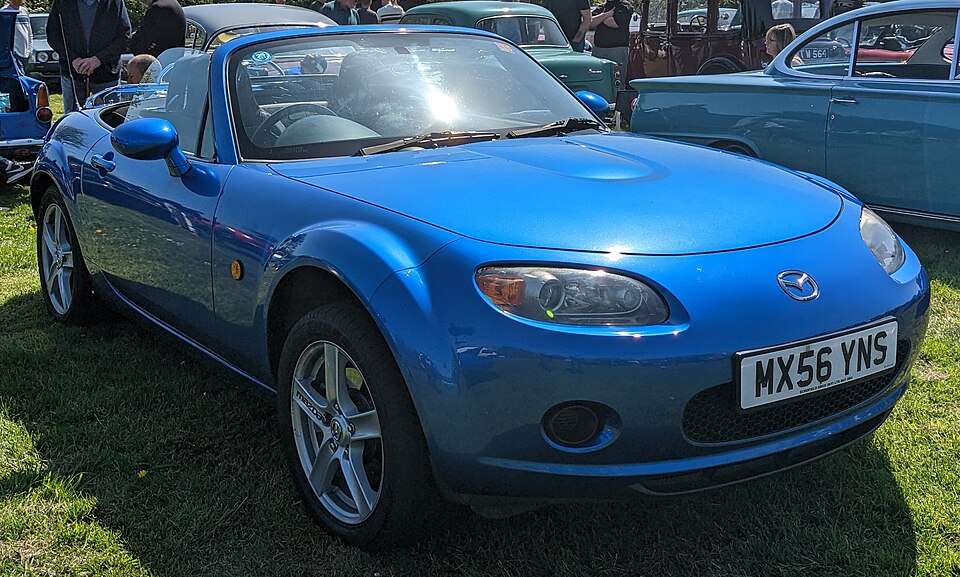
Images illustrate versions and inspection themes; they are not photographs of the advertised examples discussed above. Credits and licence links accompany each image. No endorsement by photographers, owners, specialists or suppliers is implied. Prices and availability can change.