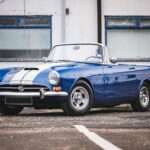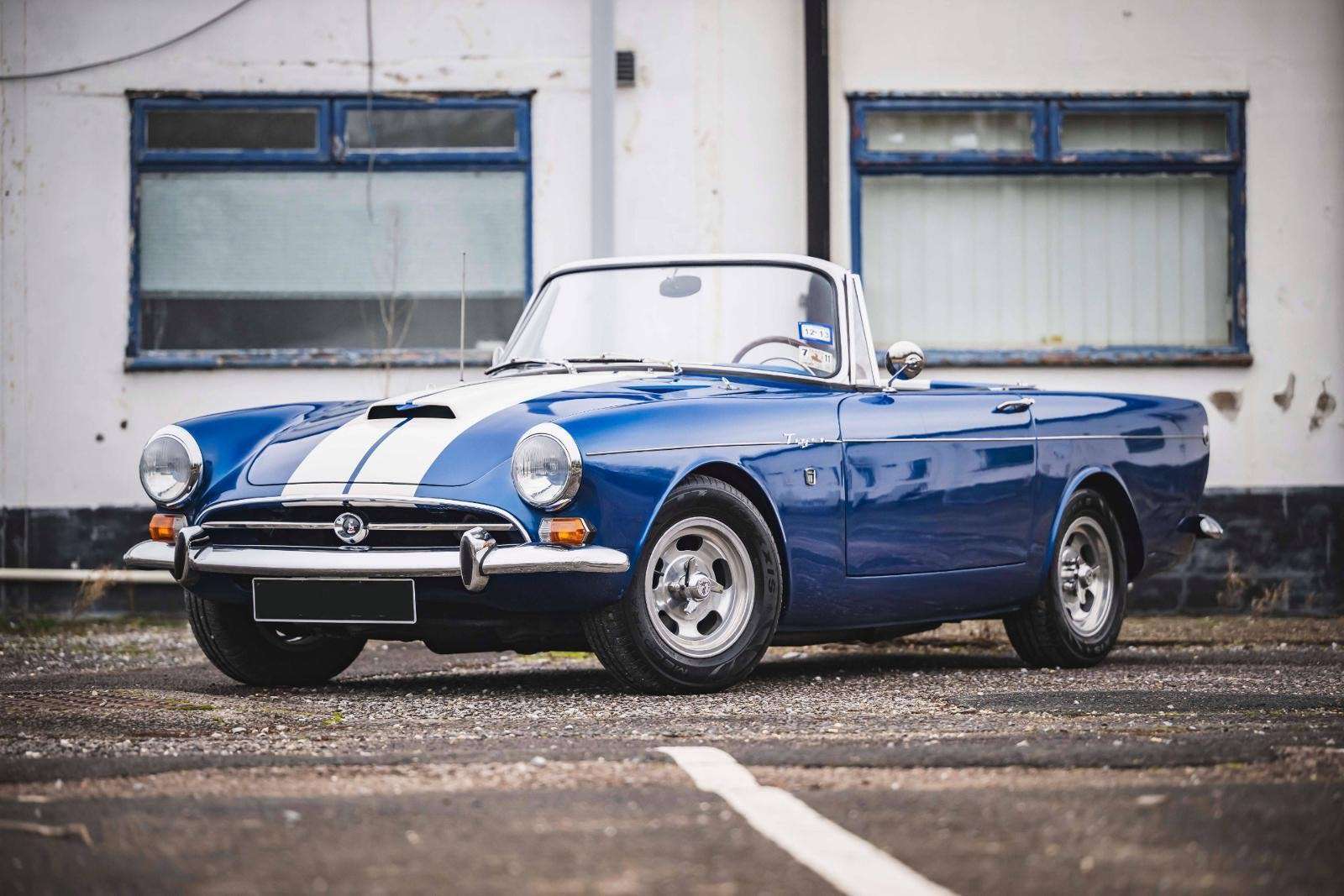
The Harrington Alpine transformed Rootes’ open Sunbeam roadster into one of Britain’s most elegant early-1960s fastback grand tourers. Built in tiny numbers by Thomas Harrington Ltd of Hove, the family included the original Harrington Alpine, the competition-inspired Le Mans, and the exceptionally rare Series C and Series D.

How the Harrington Alpine was created
Thomas Harrington was best known for coachwork on buses and luxury vehicles. Designer Ron Humphries developed a sleek fixed-roof conversion for the Sunbeam Alpine, replacing the open car’s rear deck with a glassfibre roof and extended luggage area. The first Harrington Alpine appeared in March 1961 and could be ordered as a new car or, in some cases, created from an existing Alpine.
The conversion was more than a detachable hardtop. Original bodywork was cut away, the rear structure was altered and the new fastback assembly was integrated with the shell. The roof increased enclosed luggage space and gave the Alpine a continental GT character unlike any regular Rootes model.
Harrington models explained
| Model | Approx. period | Key features |
|---|---|---|
| Harrington Alpine | 1961 | Original fastback conversion, Alpine Series II basis |
| Harrington Le Mans | 1961–63 | Le Mans-inspired styling and tuned engine options |
| Series C | 1962–63 | Opening rear hatch and retained Alpine fins |
| Series D | 1963–64 | Adapted to Series 3/IV windscreen and body changes |
Production records were destroyed when Harrington closed, so totals vary. The International Sunbeam Harrington Association documents overlapping production rather than a simple model-by-model sequence. Roughly 100 original cars, about 250 Le Mans versions, around 20 Series Cs and only about a dozen Series Ds are commonly quoted.
Why “Le Mans”?
A Harrington-bodied Alpine competed at the 1961 24 Hours of Le Mans and won the Index of Thermal Efficiency. Rootes and Harrington used that achievement to promote the Harrington Le Mans, which became an official Rootes product. Period buyers could specify Hartwell engine tuning, and the Le Mans received distinctive badging, interior details and body treatment. Its price was substantially higher than a standard Alpine, limiting sales but ensuring exclusivity.
What is it like to drive?
Mechanically, a Harrington shares the familiar character of the contemporary Alpine: light controls, accurate steering and an eager Rootes four-cylinder engine. The fixed roof improves weather protection and luggage capacity, while the additional structure and trim add weight. Correctly set up overdrive is especially useful for touring. Performance depends heavily on engine specification because cars were offered with different tuning stages and many have been modified since.
Harrington Alpine buying guide
Prove the identity first
Factory-built Harringtons are valuable enough to attract later conversions and reconstructed cars. Obtain the Alpine chassis number, Harrington body details, registration history and restoration records, then consult the International Sunbeam Harrington Association registry. A well-executed later conversion can still be an enjoyable car, but it must not be represented or priced as an original.
Inspect the conversion structure
Examine the roof bonding, internal frame, rear bulkhead, hatch opening, window apertures and the junction between glassfibre and steel. Cracks, distortion, water leaks and poor alignment can be difficult to correct. Look beneath trim panels rather than relying on a smooth exterior finish.
Check the Alpine shell for rust
The underlying Alpine is vulnerable in its sills, floors, outriggers, front suspension mounts, crossmember, wheelarches, battery area and spring-hanger locations. Fresh outer panels can conceal a weak inner structure. Door gaps and windscreen alignment provide useful clues, but a specialist inspection is strongly recommended.
Mechanical and trim condition
Check hot oil pressure, cooling, carburettor balance, gearbox synchromesh and overdrive engagement. Harrington-specific glass, hatch fittings, badges, seats and interior panels are extremely scarce. Missing unique parts may be more serious than a tired standard engine.
Frequently asked questions
Is a Harrington Alpine a factory Sunbeam?
The Le Mans was marketed as an official Rootes product, while the original conversion was officially sanctioned. Exact status and build route vary, making registry verification essential.
How many survive?
No definitive total exists. Production records were lost and cars have been restored, rebodied or converted, so the marque registry is the best source for known survivors.
Was there a Harrington Tiger?
At least one Harrington-bodied car was completed with Tiger-type V8 specification, making it one of the rarest derivatives.