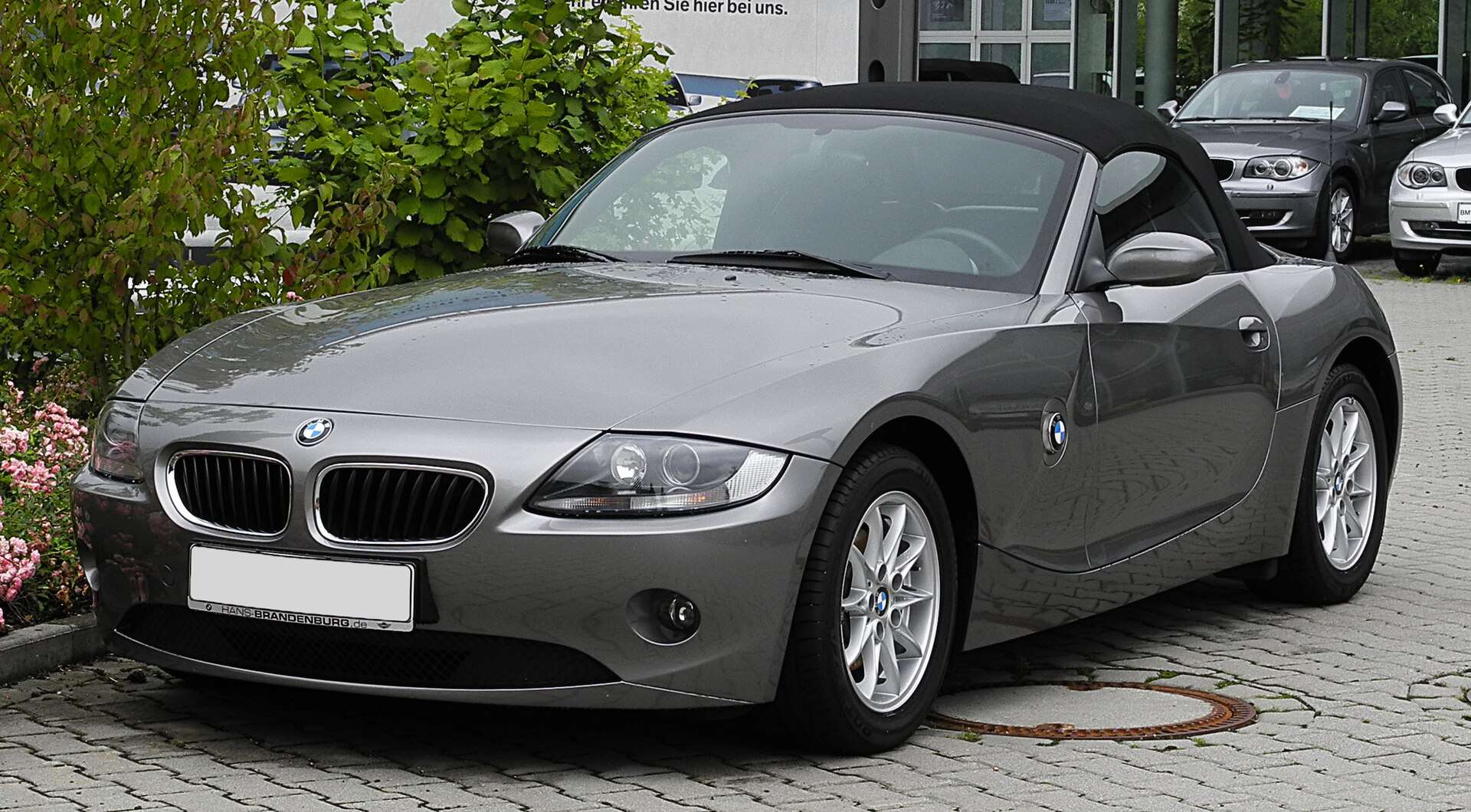
The first Z4 offers two distinct routes into an older BMW sports car: the E85 soft-top Roadster and the E86 fixed-roof Coupé. A six-cylinder engine is central to the appeal, but the engine family, roof system and accumulated chassis wear matter more than an attractive wheel design. This guide focuses on the non-M six-cylinder cars. The four-cylinder 2.0i and S54-engined Z4 M need additional engine-specific advice; their repair requirements should not be mixed into a generic Z4 budget.
Our buying verdict
For value and straightforward road use, shortlist a sound earlier six-cylinder Roadster with a proven roof and cooling history. Choose a 3.0si or Coupé when its character and body style justify the price for you, while allowing for the later engine’s electric cooling pump. Buy consistent records, a dry cabin and correct chassis behaviour; avoid a car whose roof or overheating fault has been dismissed without diagnosis.

E85 versus E86, M54 versus N52
The Roadster’s removable view of the sky and the Coupé’s permanent roof make different ownership propositions. Both deserve underbody and mechanical inspection. The Coupé avoids the Roadster’s hydraulic soft-top system, but still has hatch seals, glass, trim and water-entry checks. Neither is equivalent to the later E89 folding-hardtop Z4.
| Version | Buying implications |
|---|---|
| Early 2.2i, 2.5i and 3.0i six-cylinder Roadsters | M54-family engine. Inspect age-related cooling components, crankcase ventilation, intake controls and oil leaks; verify the actual engine and build information. |
| Facelift six-cylinder Roadsters | N52-family 2.5i/2.5si/3.0si applications depend on market. Assess electric coolant-pump operation, oil leaks and valve-control faults through proper diagnosis. |
| E86 3.0si Coupé | Fixed roof and N52 engine. Check hatch seals, struts, cargo-area water entry and body-specific parts. Do not price it from an E85-only advert sample. |
| Manual, automatic or automated-manual listing | Identify the actual transmission, not just the word “auto”. Check cold/hot operation and maintenance evidence; quote repairs for that gearbox. |
| 2.0i and Z4 M | Outside this guide’s detailed engine scope. Do not apply six-cylinder cooling parts or a non-M maintenance budget to a different engine. |
Choose condition before a badge
A larger engine or rarer body style does not make deferred work disappear. Compare a fully functional 2.2i with a neglected 3.0si by adding the costs of roof repairs, cooling, tyres, brakes, suspension and oil leaks. A low-mileage car that has stood outside may have water damage and aged rubber; a regularly used car can have better maintenance evidence. Neither pattern replaces inspection.
Confirm Sport trim, seats, suspension and wheel specification from build data. Lowering springs and large wheels can alter ride, clearance and tyre costs. Drive on roads representative of your intended use. Check whether the seating position, visibility, boot access and cabin storage work for you before treating a Coupé or Roadster as the obvious choice.
BMW Z4 prices: current advertised examples
Checked 4 November 2026: Car & Classic’s E85 results showed a 2004 2.2i manual at £4,600 with 89,000 advertised miles in Wolsingham; a 2003 3.0i manual at £6,250 with 71,000 miles in Sherbourne; a 2007 2.5si manual at £3,750 with 102,000 miles in Hayes; and a 2006 3.0si Sport manual at £12,990 with 36,921 miles in Courteenhall. These are asking examples, not an inspected condition ranking or achieved-price range.
The same page mixes overseas stock, wanted adverts and Z4 M cars. We excluded those from the ordinary UK Roadster comparison. We have not used it to invent an E86 Coupé value band. These few cars illustrate how version, mileage and presentation vary; they do not tell you that the cheapest is a bargain or the most expensive is the best.
For each shortlisted car, record roof operation, evidence of water entry, engine identity, cooling invoices, tyre age, suspension work and the results of an independent inspection. Ask for installed repair estimates before a deposit becomes a commitment. An advertised “full service history” should mean a coherent record you can read, not merely an unbroken line of stamps with no explanation of major work.

Structure, corrosion and accident repairs
Match VIN and registration details to the V5C, service and MOT records. Check mileage progression and ask about long periods off the road, changes of registration, imported history and replacement instruments. A commercial history report is useful evidence alongside the inspection, not a certificate of undamaged condition.
Inspect sills and jacking points, floor sections, subframes, mounting areas, brake pipes and underbody repairs on a lift. Check low front and rear bodywork for impact damage and inspect behind accessible trim where there are signs of previous work. Cosmetic sill covers and clean paint can conceal rather than explain what lies underneath.
Look at bonnet and wing gaps, headlamp mounts, boot/hatch alignment and the finish around repaired panels. Ask for photographs and invoices if substantial repairs are claimed. Price a damaged bumper, lamp or Coupé-specific piece from actual availability before assuming it can be replaced cheaply. Check wheel alignment and steering-wheel position if tyres wear unevenly.
Roadster roof: operation, drainage and evidence
Grosvenor’s first-hand repair page documents E85 hydraulic roof motors damaged by water accumulating in their housing when roof drains fail to clear it. Its example came from a 40,000-mile car, which is a useful reminder that mileage alone does not protect the system. Grosvenor describes modifying the housing drainage when replacing a motor.
Operate the roof completely in both directions under the correct conditions. Confirm latching, window movement and final positioning. Ask whether the motor has been repaired, replaced or relocated, and obtain the installer’s invoice and explanation of how drainage was addressed. A relocation can be sensible, but its workmanship, line routing and leak-free operation still matter.
A flashing switch lamp or a motor noise should trigger diagnosis of the complete system, not an automatic motor order. Switches, wiring, hydraulic components and mechanism faults can require different repairs. Check the fabric, rear-window area, seals and cabin/boot for dampness. Do not force a stalled roof or accept a manual demonstration as proof that powered operation is healthy.
Six-cylinder engine and cooling checks
M54 and N52 cooling need different quotations
Check a cold engine for coolant level, staining, damaged hoses and active leakage. Ask about repeated top-ups, overheating, radiator or expansion-tank replacements and any engine work that followed. Warm the car fully, monitor temperature behaviour and have the inspector verify fan and cooling operation. Stop safely if it overheats and never open a hot pressurised system.
The N52 uses an electric main coolant pump. AUTODOC’s 3.0si catalogue identifies the N52 application and lists electric replacement pumps; Pelican’s hands-on N52 technical article illustrates electrical-fault diagnosis and the need for correct fasteners and bleeding. The Pelican procedure is shown on an X3, so we use it for shared engine-system context, not as Z4 installation instructions or a labour quote.
A pump invoice should identify the actual engine, component and associated work. Ask whether the thermostat, coolant, required fasteners and any damaged hoses were included and whether faults were rechecked. A reassuring dashboard gauge during a five-minute drive does not establish the age or condition of the pump and plastic cooling components. Earlier M54 cooling parts and labour must be quoted separately.
Oil leaks, breathing and running quality
Inspect the cam-cover area, oil-filter housing and underside for leakage, with the source identified rather than guessed from where oil drips. Check oil level using the correct procedure for the engine and ask how much is added between services. A recorded consumption pattern is more useful than “BMWs all do that”. Significant smoke, oil loss or contamination warrants diagnosis before buying.
On the M54, have crankcase ventilation, intake leaks and the intake-control mechanism assessed if idle quality or low-speed response is poor. On the N52, valve-lift and cam-timing faults need appropriate scan data and diagnosis. Avoid replacing a list of sensors speculatively. A smooth test drive is encouraging, but it does not replace checking stored faults, service records and actual mechanical symptoms.
These non-M six-cylinder engines use timing chains rather than a routine cambelt service. That does not make the timing system immortal. Investigate abnormal persistent noise or timing faults, and match any replacement work to the actual engine. Do not buy a belt kit simply because an online advert uses a broad “BMW Z4” compatibility label.
Warm steering behaviour deserves attention
Try the steering after the cabin and car are fully warm, as well as at the start. It should move predictably through ordinary small corrections without an unexplained sticky or notchy feel. Investigate abnormal effort, poor self-centring, warning lamps and wandering through a BMW specialist. Do not accept a diagnosis of “just tyres” until the tyres, geometry, suspension and steering have actually been assessed.
Tyre construction, pressure, wheel size and worn bushes can affect tramlining, but these are variables to check, not excuses for unsafe behaviour. A repair quotation should identify which component or adjustment is required. A claimed steering repair needs an invoice and a warm test drive, not only a cold demonstration.

Gearboxes, differential and chassis
Try all manual gears cold and warm, checking clutch take-up, slip, selection resistance, whine and jumping out of gear. Check any automatic’s initial engagement, shifts and fully warm operation. Ask what transmission is fitted and what work has been done. A fluid change or adaptation reset cannot establish that an unresolved internal fault has been repaired.
Listen for drivetrain knocks and differential noise at sensible speeds and have mounts, propshaft/driveshaft joints and leakage inspected. Check suspension springs, dampers, bushes, joints, wheel bearings and mounts. A fresh MOT does not guarantee that every component is unworn, and a harsh ride is not proof that a Sport setup is healthy.
Assess brake discs, pads, calipers, hoses and pipes, and confirm straight stopping without binding. Inspect all tyres for age, matching specification and uneven wear. A staggered wheel setup needs the correct sizes and clearances for that car. Budget for alignment when wear or replacement work justifies it rather than trying to cure poor geometry with new tyres alone.
Interior, water entry and electrical functions
Operate air conditioning, blower speeds, heated seats if fitted, windows, mirrors, locks, lights, washers and audio/navigation equipment. Confirm warning lamps illuminate and extinguish appropriately. A window that does not drop or seal correctly deserves diagnosis, particularly where it affects the roof or water tightness.
Check seat rails and adjustments, trim, belts and cabin wear against the claimed history. Examine carpets, storage areas and the boot or Coupé cargo area for water. Ask about flat-battery history and assess charging and electrical drain where necessary. A new battery does not prove that a water-related electrical problem has been solved.
The photographed cabin below is a left-hand-drive German Coupé with wood trim and a manual gearbox. Its purpose is to illustrate controls and inspection areas, not to define the equipment every UK car should have. Confirm your candidate’s actual options and that aftermarket installations have been done competently.

Maintenance costs and useful parts
Affiliate disclosure: This guide contains eBay affiliate links. We may earn a commission from qualifying purchases. These links open relevant searches, not vetted products or guaranteed fitments. Match VIN, engine, gearbox, original part numbers and modifications before ordering; availability and prices change.
Parts price checked 4 November 2026: AUTODOC’s 3.0si N52 catalogue displayed a RIDEX 1260W0195 electric pump at £198.99 including 20% VAT, excluding delivery, with a screw set and without a gasket/seal in the listing specification. This is a supplier’s parts-only example, not a recommendation or a complete installed quote. Match VIN and part numbers; compare N52 electric water-pump searches separately from workshop labour, thermostat, coolant and other required components.
| Item | What to check before spending | Relevant eBay search |
|---|---|---|
| Water pump and thermostat | Identify M54/N52; confirm complete job, fasteners and bleeding procedure. | Water pump and thermostat searches |
| Alternator | Test charging; match engine, output, pulley and mounting. | Alternator searches |
| Oil and filter | Correct BMW approval and service requirements for actual engine. | Oil and filter searches |
| Cooling reservoir and hoses | Locate leakage and confirm model-specific fitment. | Cooling reservoir and hoses searches |
| Cam-cover and oil-filter seals | Diagnose the leak before ordering; include associated labour. | Cam-cover and oil-filter seals searches |
| Roof hydraulic parts | E85 only; diagnose electrical, hydraulic and mechanism faults first. | Roof hydraulic parts searches |
| Suspension | Identify worn components and include alignment where required. | Suspension searches |
| Brake parts | Match engine, axle and actual brake package. | Brake parts searches |
Turn the inspection into a service plan
Ask for an itemised quotation showing parts, labour, VAT, fluids, diagnostic work and any refundable exchange surcharge. A complete fitted job and a parts-only listing answer different questions. Establish which associated seals, fasteners, tensioners or alignment work are included, and agree how the garage will handle additional faults found during dismantling. Confirm whether it will fit customer-supplied parts and what warranty applies.
Prioritise safety, overdue scheduled maintenance and defects that could cause further damage. Start a dated record at purchase, with mileage, component specifications and invoices. Cosmetic changes can wait until the car has a trustworthy mechanical baseline. Service stamps are useful, but an invoice explaining the actual work carries more information than a tick in a book.
Hidden ownership costs
The first-year budget needs more than purchase price and an oil change. Price the work identified on this particular car before agreeing a deal. Keep immediate repairs, recurring running costs and discretionary improvements separate; do not treat an unspent repair reserve as permission to ignore a fault.
- Roof access and drainage: a motor price does not cover diagnosis, hydraulic faults, installation or remedying water entry.
- Cooling-system overlap: pump, thermostat, fasteners, hoses and coolant can be needed together; one parts price is not a repair budget.
- Tyres and geometry: large staggered wheels can make a four-tyre baseline and alignment a significant first bill.
- Coupé-specific glass and trim: confirm price and availability rather than assuming every Roadster body part transfers.
Obtain insurance quotations using the registration and declare modifications, including software changes. Check the actual vehicle’s tax and local emissions-zone treatment through the relevant official services rather than assuming every version is identical. Include storage, recovery or transport if specialist repairs will take the car off the road. An inexpensive used component is not a saving if its condition is unknown and you must pay the labour twice.
Viewing and test-drive checklist
Before travelling
Request registration, VIN details, ownership history, service invoices and photographs of the underside. Read the MOT history for repeated advisories, mileage inconsistencies and long gaps in use. Confirm that the engine will be cold and that a lift inspection and sensible test drive are permitted. Ask directly about accident repairs, overheating and modifications, then compare the answers with the records.
- Identify E85/E86, engine family, gearbox and genuine factory options.
- Read the cooling, oil-leak, roof and transmission invoices in date/mileage order.
- Lift the car for structure, pipes, chassis wear, leaks and repair quality.
- Cycle the E85 roof fully and inspect water entry and drainage evidence.
- Drive cold and fully warm, checking temperature, steering, all gears and brakes.
- Scan relevant faults, test equipment and obtain installed quotes for unresolved work.
Make the decision from evidence
Proceed when identity and history are consistent, the structure and major systems pass inspection and immediate work has been priced. Investigate an isolated, diagnosable issue with a written repair scope and enough budget. Walk away from unexplained identity conflicts, unsafe structural repairs, overheating, serious unresolved engine symptoms or a seller who refuses reasonable inspection. There will be another car; a cheap asking price does not put a ceiling on repair costs.
Buying questions answered
Should I buy a Roadster or Coupé?
Choose around how you will use it. The Roadster gives open-top driving but needs hydraulic-roof and drainage checks. The Coupé avoids that mechanism while retaining hatch, water-entry and body-specific checks.
Does a low-mileage Z4 avoid roof problems?
No. Grosvenor documents a water-damaged roof motor from a 40,000-mile car. Storage conditions, drainage and actual operation matter.
Do all six-cylinder Z4s use the same water pump?
No. Identify the engine family and match the exact part and installation scope. N52 cars use an electric main pump; do not apply its quotation blindly to an earlier M54.
Do these engines need cambelt replacement?
The non-M M54/N52 sixes covered here use chains. Investigate abnormal timing noise or faults, but do not order a generic belt kit for a scheduled service.
Does this guide cover the Z4 M?
Its body checks can help, but its detailed engine advice and budget are for non-M six-cylinder cars. The S54 Z4 M needs its own specialist engine and service assessment.
Sources and research method
Independently written desk research by Unusual Cars UK, checked on 4 November 2026. We have not inspected or road-tested the illustrated cars or authenticated sellers’ claims. Recommendations and inspection priorities are editorial assessments. Prices below are dated evidence, not guaranteed quotations or predictions of appreciation.
- Grosvenor: E85 roof motor failure — Primary repair examples and explanation of housing water damage and drainage modification.
- AUTODOC Z4 3.0si water-pump catalogue — Primary supplier N52 application and dated parts-only RIDEX example; fitment requires confirmation.
- Pelican Parts: N52 coolant pump technical article — Hands-on shared-engine context, illustrated on an X3; not used for Z4 labour time, US prices or installation instructions.
- Car & Classic E85 adverts — Dated UK Roadster asking evidence; M, overseas and wanted results excluded.
- GOV.UK used-car checks and MOT history — verify documents, identity and test records.
Images illustrate the model and buying themes; they are not the advertised cars discussed in the price section. Credits and licence links accompany each image. No endorsement by a photographer, owner, manufacturer or specialist is implied. Confirm workshop information against the actual vehicle.
Compare alternatives in the Buying Guides hub.