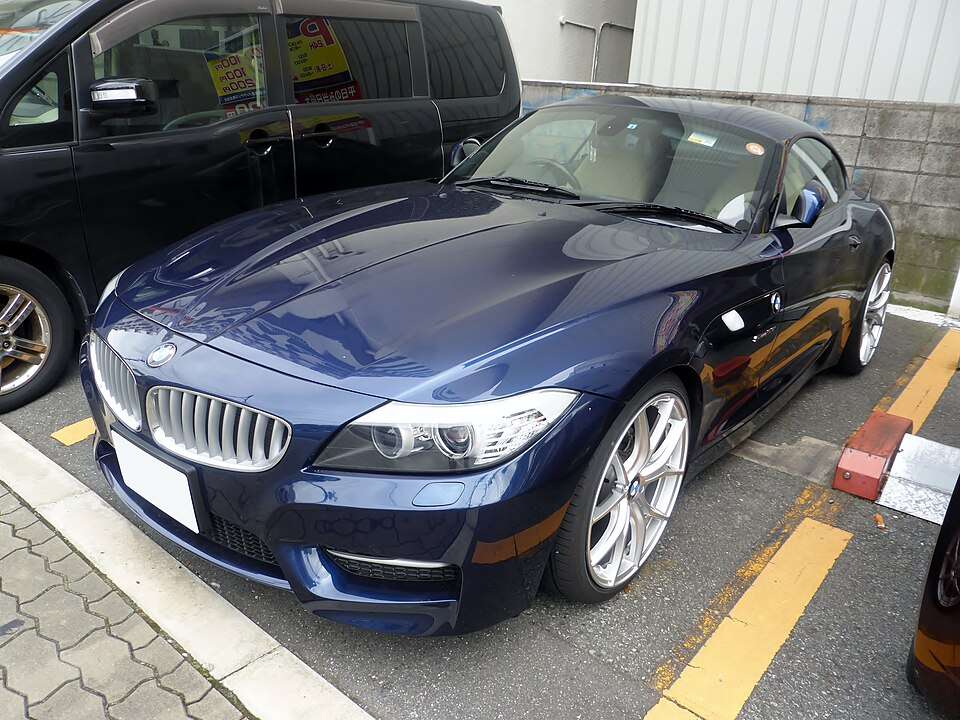
The E89 Z4 combines long-bonnet roadster proportions with a folding metal roof and a broad choice of engines. Used prices can be tempting, but the roof, engine family, transmission and optional suspension change the ownership budget substantially. This guide explains how to inspect the 2009–2016 generation and choose a car whose complete condition makes sense, rather than buying on its badge alone.
Our buying verdict
For an enjoyable road car with fewer turbo-related complications, we would start with a well-documented naturally aspirated sDrive23i or sDrive30i. An N20 four-cylinder or N54 35i/35is can also make sense with the appropriate specialist checks and repair reserve. Every version needs a complete roof inspection, including water entry and diagnostic evidence. A working demonstration once is not a substitute for diagnosis of an intermittent fault.

E89 engines and gearboxes: the badge is not the capacity
The E89 is the Z4 with a two-piece folding metal hardtop. It differs from the earlier E85/E86 and later G29. BMW’s original launch material confirms three straight-six choices: a 2,497cc 23i, 2,996cc 30i and twin-turbo 2,979cc 35i. Those capacity differences show why a badge number cannot be treated as a literal engine size.
| Version | Character | Buying focus |
|---|---|---|
| sDrive23i | 2.5-litre naturally aspirated N52 six. | Oil leaks, electric cooling, service evidence and roof condition. |
| sDrive30i | 3.0-litre naturally aspirated N52 six. | The same broad family checks, with exact parts matched by VIN. |
| sDrive18i / 20i / 28i | Later turbocharged 2.0-litre N20 four-cylinder variants. | Timing and oil-pump-drive evidence, cooling and engine-specific diagnosis. |
| sDrive35i | N54 twin-turbo straight-six. | Fuel delivery, ignition, turbo/boost, cooling and transmission condition. |
| sDrive35is | Higher-performance N54 proposition. | Condition, original hardware, DCT and option-specific repair costs. |
| M Sport / Adaptive M options | Equipment and chassis choices, not an alternative engine identity. | Build record, damper condition, wheel/tyre fitment and ride quality. |
At launch, BMW offered a six-speed automatic on 23i/30i and a seven-speed double-clutch option on 35i. Later four-cylinder automatics have different hardware again. Do not order a generic Z4 automatic-service kit or apply one gearbox’s maintenance advice to another. Identify the unit from the VIN and transmission record.
The N54 in the turbo six-cylinder E89 is also different from the N55 used in an M135i. Familiar BMW branding and similar capacity do not make their turbo, fuelling and maintenance parts interchangeable. A remapped 20i is not automatically equivalent to a factory 28i, and a 35i with cosmetic additions is not a 35is.
Our preference for an N52 is an ownership judgement rather than a claim of zero risk. A cared-for turbo car can be a better buy than a neglected naturally aspirated one. Try the driving position, roof-up visibility, luggage space with the roof in each position, ride and tyre noise before choosing the specification.
Z4 E89 prices: compare engine families separately
CarGurus’ E89 search checked on 4 November 2026 included a 2009 23i automatic with 62,600 miles advertised at £6,490; a 2012 20i with 94,767 miles at £6,600; a 2012 20i M Sport with 60,220 miles at £8,900; a 2013 28i M Sport automatic with 79,200 miles at £9,990; and a 2009 35i with 65,075 miles at £13,995. A 2015 35is DCT with 34,000 miles was advertised at £23,990.
These are dated seller asking prices from a location-influenced search, not achieved sales or a national valuation. Sponsored duplicates were not treated as extra market evidence. Recheck the live E89 listings and verify engine, gearbox, history, damage record and actual condition. A low-mileage 35is and a high-mileage 20i are not sensible direct comparisons.
Inspect before paying a roof-related premium or accepting a roof-related discount. An intermittent mechanism can involve sensors, wiring, hydraulics, alignment or water damage, with different repair scopes. Likewise, a recent oil service cannot establish the timing-system condition of an N20 or the health of an N54’s fuel and turbo systems.
Add all known work to the asking price, then retain contingency. Tyres, wheel repairs, adaptive dampers, cooling and roof repairs can arrive together. If an apparently cheaper car’s first-year total approaches a better documented example, buy the evidence rather than the lowest headline. Cosmetic packages and modifications need provenance, not automatic monetary credit.

Folding roof, water entry and bodywork
Test the roof through a complete normal cycle, using the handbook’s operating conditions and a healthy battery. Observe smooth sequencing, latches, windows, boot movement and warning messages. Check clearances and luggage-divider position before operation. Do not force a hesitant mechanism or reach into moving roof components.
Repeat the assessment after a normal drive if an intermittent fault is suspected, and scan the roof system. Ask a roof specialist to diagnose stopping partway, unusual pump noise, failure to latch or inconsistent boot operation. A relay, sensor or battery may be involved, but that is a diagnosis to establish rather than a seller’s cheap-fix promise.
The Zed Shed’s first-party E89 repair examples identify split hydraulic hoses and water-damaged pump motors as real repair areas. Inspect hydraulic leakage, wiring and pump/storage areas for water evidence. Ask whether the source of ingress was resolved alongside any replacement motor. A repaired component can be damaged again if the underlying leak remains.
Inspect roof-panel alignment, seals, rear-glass areas, headlining and damp carpets or boot wells. Photograph staining and residue before a seller dries them. Ask which seal-care products and repairs were used; inappropriate treatment can complicate a proper repair. This is a metal hardtop, so generic fabric-cleaning packages are not relevant roof-maintenance evidence.
Verify VIN, V5C, seller identity and finance/damage history. Examine bonnet/wing gaps, bumper fit, lamp supports and paint edges. A clear database check cannot exclude private repairs. On a lift, inspect jacking points, sill seams, floors, subframes, brake pipes, suspension mounts and exhaust supports. Look for impact damage and concealed leaks below clean undertrays.
Engine-family checks and drivetrain condition
Request a cold start. Check oil and coolant before running, inspect leaks and warning-lamp self-tests, and scan stored/pending faults. Reassess warm idle and hot restarting after a normal drive. Persistent smoke, misfire, coolant loss or abnormal timing noise requires diagnosis before purchase, regardless of badge or mileage.
On N52 23i/30i cars, inspect oil leaks around the filter housing, valve-cover area and lower engine. Establish the source rather than accepting that every wet surface is harmless seepage. Oil contamination of the auxiliary drive needs prompt attention. Check electric cooling-pump and thermostat behaviour, invoices and fault history. A temperature display without warnings does not prove the cooling system is sound.
Ask about oil top-ups over a known distance, overheating and previous cooling repairs. Rough running can involve ignition, ventilation, air leaks, valve-control systems or other causes; a scan is the beginning of diagnosis. Compression or leak-down tests may be appropriate where symptoms warrant them. Do not assume a cheap coil or gasket will cure every expensive symptom.
N20 18i/20i/28i cars need a specific timing-system and oil-pump-drive assessment. Motronix’s first-hand repair guidance identifies guide/chain concerns and explains why complete repair scope matters. Ask for invoices identifying updated components and associated oil-system inspection. Do not establish safety from a quiet start, an oil-cap tug test or a guessed registration cutoff. A specialist should combine hardware, history and appropriate diagnostics.
If an N20 has persistent whine, timing-related rattle, correlation faults or oil-pressure warnings, do not treat it as a harmless belt noise without diagnosis. Noise can have other causes, so the response is specialist assessment, not automatic condemnation or continued test driving. A red oil-pressure or overheating warning calls for stopping safely and switching off, rather than attempting to drive through the symptom.
The N54 35i/35is adds twin-turbo plumbing, direct-injection fuel-system and ignition checks. Look for a consistent cold start, clean warm acceleration, hot restart and credible injector, pump and plug/coil invoices. Persistent misfires, extended cranking, smoke or boost-control symptoms require investigation. Turbo replacement claims should identify the actual components and installer; a dyno figure cannot establish reliability.
On a modified turbo car, identify software, fuel requirements, intercooler/intake/exhaust changes and any emissions alterations. Restoring visible standard parts does not prove standard software history. Obtain insurance acceptance and quote any return to an acceptable road specification. Crackle calibrations and untraceable power claims warrant particular caution.
For an automatic or DCT, identify the exact unit, read service invoices and assess engagement and ordinary shifts cold and hot. Delay, shudder, flare, harshness or leaks need diagnosis. Transmission fluid service and mechanical repair are different jobs. On a manual, check clutch slip, pedal return, flywheel symptoms, all gears and reverse selection. Price release components and access labour as well as the kit.
Inspect differential and driveline mountings, couplings and leaks where take-up produces knocks or vibration. Check suspension arms, bushes, springs, top mounts and wheel bearings on a lift. Test adaptive damper functions if fitted and quote the exact option. An inexpensive passive damper listing is not an adaptive replacement price.
Inspect inner wheel rims for cracks and repairs, all tyre shoulders for uneven wear, and compatibility of the complete tyre setup. Large wheels and changes from run-flat tyres can affect ride and steering. Obtain a geometry assessment where needed. Check both faces of brake discs, pads, hoses, caliper movement and parking-brake operation; cosmetic wheel condition cannot establish brake health.

iDrive, comfort equipment and electrical diagnosis
Test both keys, locks, windows, mirrors, wipers and lamps. Roof operation and window positioning interact, so investigate inconsistent movement rather than treating it as a simple window reset. Check restraints and airbag warnings and compare interior wear with invoice/MOT mileage.
If iDrive is fitted, check the folding display, controller, navigation, audio and phone connection. A working radio does not prove that the display mechanism or other functions are sound. Retrofitted screens and interfaces need installation evidence and a compatibility check. Premium electronics can remain expensive even when the car’s used value has fallen.
Test seat heating, adjustment, parking assistance and air conditioning. A non-functioning climate system needs diagnosis rather than an assumed regas. Check boot and cabin dampness before blaming repeated electrical warnings solely on a battery. Request a charging-system test and confirm correct battery specification and registration where applicable.
Try the luggage space with the roof in each position. Assess wind noise and seal fit on a normal drive with the roof raised. A weekend roadster that spends time outside needs sound drainage and seals as much as an immaculate cabin. Service records should document repairs, not merely that warning messages were reset.
Maintenance, alternators and engine-specific parts
The figures below are editorial planning allowances for parts only, unless a fitted service is explicitly identified. They are not live eBay quotes: brand, specification, availability, delivery and VAT treatment vary. Obtain a registration/VIN-matched written estimate before committing to a repair. Cheap search results can include incompatible parts, deposits or single components rather than a complete kit.
Affiliate disclosure: the parts searches below use our eBay affiliate campaign. We may earn a commission if you buy, at no additional cost to you. Search results are not a recommendation of every seller or product; verify fitment, maker, returns and warranty.
| Maintenance item | Parts allowance / search | What to check |
|---|---|---|
| N52 oil/filter materials | £60–£115 | Use the actual BMW oil approval and correct filter. |
| N52 spark plugs, six | £50–£105 | Match engine and correct plug type. |
| N52 alternator | £180–£380 | Match output, pulley, connector and exchange terms. |
| N52 auxiliary belt/tensioner | £85–£180 | Not a timing-belt service; inspect oil contamination. |
| N52 electric pump/thermostat | £320–£580 | Coolant, hardware and access labour separate. |
| N52 filter-housing seals | £15–£45 | Correct seal scope; fitting may dominate cost. |
| Front discs/pads/sensor | £170–£340 | Match the actual brake package. |
| Suspension arms/bushes | £90–£240 | Quantity and alignment change the total. |
| Manual clutch components | £200–£380 | Flywheel, release parts and labour separate. |
| Roof-related diagnosis | Quote after diagnosis | A search is for relevant components, not a complete roof repair estimate. |
Other engines need separate searches: N20 timing/oil-pump-drive components merit a parts planning allowance around £250–£500, with complete-job scope confirmed by a specialist. N54 plugs and coils and N54 high-pressure fuel pumps are different from N52 parts; quote the actual revision and diagnosis. Do not assume a generic six-cylinder listing fits every E89.
Observed roof-cost context: HoodTech’s E89 page displayed an average repair range of £445–£595 including VAT when checked on 4 November 2026, with an initial diagnostic consultation at £90. This is one firm’s advertised context, not a fixed quote or maximum repair cost. Its page also contains generic convertible services; fabric cleaning is not relevant to the E89 metal roof. Ask for a fault-specific written estimate.
Follow the BMW schedule and condition-based requirements for the VIN, engine and transmission. All engines discussed use chains rather than a routine cambelt kit, but chain-driven does not mean immune to timing faults. Keep itemised invoices and ask a specialist about shorter preventive fluid intervals for your use. A low-mileage weekend car still ages its tyres, rubber parts, coolant and seals.
Hidden Z4 E89 ownership costs
| Often missed | Why it changes the budget |
|---|---|
| Roof diagnosis and water damage | A motor alone may not resolve leaking hoses, wiring or ingress. Include the underlying cause and follow-up testing. |
| Engine-family timing work | N20 chains/oil-pump drive, N52 maintenance and N54 turbo/fuelling are different assessments and costs. |
| Automatic versus DCT | Correct fluids, filters, procedure and repair quotes depend on the exact unit. |
| Adaptive suspension and wheels | Option-specific dampers, cracked inner rims, tyres and alignment can add together. |
| Premium cabin equipment | Keys, folding iDrive display, lamps and seat functions can remain expensive on an affordable car. |
| Seasonal use and running costs | Storage, battery condition, current VED/insurance and age-related service catch-up belong in the annual budget. |
Keep a separate reserve after pricing known work. Do not spend it on a trim package or remap before establishing roof, cooling, engine and gearbox health. A cared-for 23i can be a better ownership proposition than a cheap turbo car needing several specialist repairs, while a healthy turbo car can justify its higher cost for a buyer who values its performance.

Z4 E89 viewing checklist
- Confirm VIN, E89 generation, engine family, gearbox and original equipment; do not read capacity from the badge.
- Read invoices, MOT trends, finance/damage history and BMW VIN-specific recall/campaign status.
- Inspect cold and hot, scan engine and roof systems, and investigate oil/coolant loss, timing noise or warnings before purchase.
- Cycle the hardtop correctly, inspect hoses/pump areas, seals, drains and wiring, and diagnose intermittent behaviour.
- On N20 cars, obtain specific timing/oil-pump-drive evidence; on N54 cars, assess fuel, ignition, turbo and boost systems.
- Test the actual automatic/DCT cold and hot or manual clutch/gears; inspect driveline noise and leaks.
- Lift the car for structure, suspension, adaptive dampers if fitted, wheels, tyres, brakes and hidden repairs.
- Test every cabin option and both keys, confirm modifications/insurance, and obtain complete first-year repair estimates.
BMW Z4 E89 buying questions
Which engine would you choose for a road car?
We would start with a documented N52 23i/30i if reducing turbo-related complexity matters. Condition still comes first; a neglected naturally aspirated car is not automatically a safer purchase than a maintained turbo one.
Is sDrive23i a 2.3-litre engine?
No. BMW’s original specification gives it a 2,497cc six-cylinder. Badge numbers across the range do not directly describe capacity. Verify the VIN and engine.
Does every automatic E89 use the same gearbox?
No. Launch 23i/30i automatics, 35i/35is DCT applications and later four-cylinder automatics differ. Identify the transmission before judging service history or buying a kit.
Can one successful roof cycle prove the mechanism is healthy?
No. Inspect for leaks and water entry, scan the system and investigate any history of intermittent operation. A specialist diagnosis matters where symptoms recur.
Should I buy a car with an N20 timing-chain concern?
Only after a qualified assessment establishes condition and repair scope, with an affordable written estimate where needed. Do not buy on a promise that a noise is harmless or that one changed tensioner proves the whole system is sound.
Sources and research method
Checked 4 November 2026. No physical inspection or road test was conducted. Market figures are asking prices from a restricted search, not achieved values. Parts allowances are editorial planning figures; the roof range is one specialist’s observed advertised context and is not a repair-cost ceiling. The guide does not claim measured failure rates or UK entitlement to overseas warranty schemes.
- BMW Group: original E89 Z4 launch material — primary engine capacities, hardtop and launch transmission distinctions.
- The Zed Shed: E89 roof repairs — first-party hose and water-damaged motor repair examples.
- HoodTech: E89 roof fault/repair page — observed VAT-inclusive repair context and consultation price; individual scope must be quoted.
- Motronix: N20 timing-system repair guidance — first-hand workshop concerns and complete-job context, not a UK failure-rate or warranty statement.
- CarGurus: E89 advertisements — dated examples separated by engine and transmission.
- GOV.UK: MOT history and vehicle recalls — official checks alongside a BMW VIN enquiry.
Images show licensed examples rather than the sampled adverts. Captions identify sources and terms; overseas equipment can differ. No photographer endorses the guide.