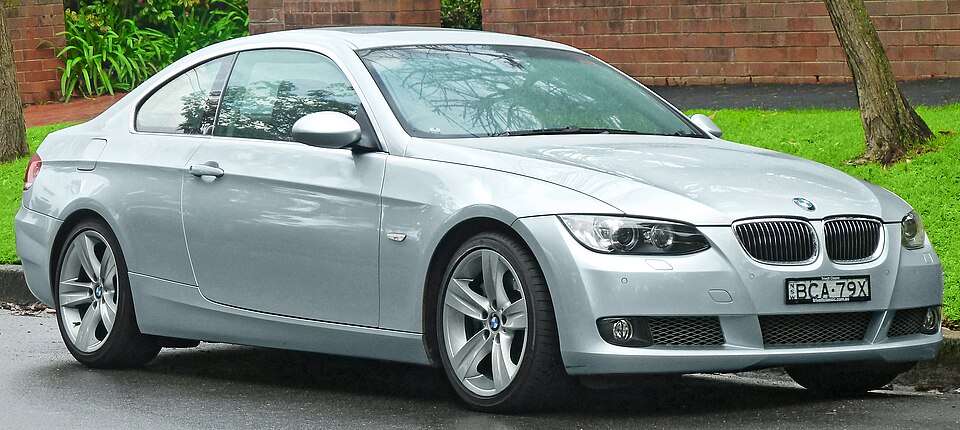
The E9x BMW 335i offers turbocharged straight-six performance in saloon, estate, coupe and folding-hardtop forms. Its modest used price can conceal a complicated engine, expensive access work and years of accumulated maintenance. The right purchase begins with the engine and transmission actually fitted, then a cold-to-hot inspection that covers much more than the number on a dyno sheet.
Our buying verdict
For a road car, favour documented standard or lightly modified condition, a dry and healthy engine, a functioning cooling system and a smooth drivetrain. Later N55 power is a different proposition from early twin-turbo N54 power, but neither engine name removes the need for specialist checks. Buy with a repair reserve; the cheapest 335i can be the most expensive way to get six-cylinder performance.

N54 or N55, and which body style?
The E9x family covers E90 saloon, E91 Touring, E92 coupe and E93 folding-hardtop convertible. Their production and registration periods overlap, and the 335i changed engine during its life. Establish the VIN, build date, engine and gearbox before applying an interval, parts list or buying recommendation. A seller describing every later car as “twin turbo” may simply be repeating an old advert.
| Choice | Main distinction | Inspection priority |
|---|---|---|
| N54 | Two turbochargers and direct injection | Fuel system, boost control, intake condition, oil leaks and cooling. |
| N55 | Single twin-scroll turbocharger and Valvetronic | Correct engine identification, charge plumbing, oil/coolant leaks and diagnostics. |
| E90 / E91 | Saloon or Touring practicality | Body condition, rear access, load area and any water ingress. |
| E92 | Fixed-roof coupe | Long doors, window operation, seat access and repair history. |
| E93 | Retractable hardtop | Complete roof cycle, drains, seals, boot partition and damp-related electrics. |
| Manual / automatic / DCT | Equipment varies with build and market | Identify actual transmission; do not assume every two-pedal car has the same unit. |
BMW’s January 2010 factory overview confirms a revised engine range across the family. Do not use its model-year label as a universal changeover date for every market and body style. A specialist should verify the actual installation, especially on an imported, engine-swapped or extensively modified car.
N54 and N55 fuelling, intake and ancillary parts are not interchangeable simply because both cars wear 335i badges. M Sport is a trim and chassis specification, not an M3 powertrain. Likewise, optional equipment and replacement wheels can change maintenance costs without improving the underlying condition.
Choose the body you need after trying its access and luggage space. An E93 adds mechanical and sealing complexity that a coupe buyer need not take on. A Touring may suit daily use particularly well, but rarity is not a reason to accept poor structure or undiagnosed engine trouble.
UK prices: buy the car, not the 3 Series portal average
Checked 4 November 2026. The PistonHeads petrol E9x page showed ninety adverts across engines and bodies. Its visible 335i examples included a 2007 automatic convertible advertised at £6,995 with 110,000 miles, and a 2011 left-hand-drive convertible at £8,500 with 96,660 miles. These are asking prices and seller descriptions, not completed sales or inspected-condition evidence.
The left-hand-drive example is not a direct UK right-hand-drive benchmark, and neither advert establishes a coupe, Touring or manual price range. Most visible results were other engines. A cheap 320i, a naturally aspirated 330i and a 335d are different buying propositions, even when a portal groups them under the same generation.
Compare like engine, body, transmission, market origin and maintenance evidence. Ask whether major invoices describe the fault, parts and completed work or only a diagnostic visit. A recent turbo or injector expense is useful evidence when properly documented, but it cannot prove that every related issue has been resolved.
Price the car plus immediate maintenance and faults identified in writing. Do not put the entire budget into the lowest-mileage example and leave nothing for cooling, oil leaks, tyres or drivetrain repairs. Get insurance terms for software and hardware changes before paying a deposit.
Body, underside and convertible roof checks
Inspect front structure, inner wings, floor areas, panel gaps, lamp brackets and boot floor for collision repair or poor reassembly. Compare paint finish and look for disturbed fixings. Check jacking points, sills, arch edges, subframes, brake pipes and underside fasteners on a lift rather than judging the shell from its polished upper panels.
Look for dampness under carpets and in the luggage compartment, water marks near seals and untidy repairs around electrical equipment. On a Touring, test the tailgate and associated glass/wiper functions. Check door locks, windows and any sunroof operation. Age-related trim and sealing faults can produce costs unrelated to the headline engine risks.
For an E93, cycle the roof fully using the handbook procedure and inspect alignment, seals and the luggage partition. Check for uneven movement, warnings, trapped trim and water ingress. A claim that it only needs a sensor or adjustment needs a roof specialist’s diagnosis. Do not repeatedly force a reluctant mechanism during a viewing.

Fuel system, turbos, oil leaks and cooling
Insist on an untouched cold start, then inspect again after a fully warm drive and restart. Long cranking, misfires, persistent smoke, reduced-power warnings and coolant loss need diagnosis. Scan all relevant modules with BMW-capable equipment and discuss the stored faults, readiness and any recent clearing. A warning-free dashboard is a useful observation, not a full inspection.
Fuelling: have a specialist assess low- and high-pressure supply, injector behaviour and ignition when symptoms justify it. Do not assume every cold misfire is a coil or every long start is the high-pressure pump. When injectors have been replaced, request part numbers, compatibility, installation and coding evidence as appropriate to the engine. N54 and N55 fuel-system advice must remain separate.
Boost and turbo condition: inspect intake and charge plumbing, vacuum/control arrangements, oil leakage and the reasons for underboost or overboost codes. Rattles, smoke or poor response need investigation before assuming the cheapest hose will fix them. Ask what a previous turbo replacement included, and whether oil/coolant lines, seals, controls and consequential issues were addressed.
BimmerWorld’s own N54 project documents cooling, ignition, intake-deposit and charge-pipe concerns in its particular car and track development. That experience supports inspection priorities, not a failure rate or a recommendation that every road car needs its racing modifications. A power increase should follow a healthy base vehicle, not disguise a fault.
Cooling: assess the electric water pump, thermostat, hoses, reservoir, radiator and any oil-cooling equipment. Confirm repair dates and parts, test suspected leaks and investigate overheating history. A new reservoir alone does not prove the system is healthy. Avoid opening a hot cooling system and do not continue a test drive with temperature or pressure warnings.
Oil leaks: inspect the valve-cover area, oil-filter housing and sump region, then identify the source before costing repair. BimmerWorld’s later N55 project highlights these engine-family inspection areas, but its F32 chassis details and parts are not an E9x fitment guide. Check whether leaking oil has contaminated belts, hoses or surrounding components and quote the related work too.
Direct-injection intake deposits can affect running, but a walnut blast is not a universal cure for fuelling, ignition or compression trouble. Have the specialist decide whether further mechanical tests are justified. Both engines use timing chains: an auxiliary-belt invoice is not evidence of internal timing work or an engine overhaul.
Check a manual’s clutch engagement, slip, selection and flywheel noises. Identify the automatic or DCT unit actually fitted and test engagement, low-speed behaviour and shifts hot and cold. Obtain the correct fluid/service history. A gearbox reset or fluid change cannot guarantee that an internal fault is solved. Inspect propshaft, mounts, differential and driveshafts for leaks, vibration and poor modifications.
On a lift, assess arms, bushes, springs, dampers, wheel bearings, brake hardware and tyre condition. Run-flat changes, lowering, oversized wheels and mismatched tyres can materially alter the car’s behaviour. Correct worn parts before alignment. Ask for a complete tuning inventory, including software, turbo hardware, exhaust and clutch/gearbox calibration; a claimed power figure cannot establish reliability.
Interior, electrics and usable luxury
Test all seat adjustments, heating where fitted, climate control, air conditioning, windows, mirrors, locks and both keys. Check iDrive and audio functions with your own phone; equipment and connectivity vary by build. An updated screen does not prove that the installation, microphones or parking display work correctly.
Look for damp carpets, water marks, disturbed trim and additions to the wiring. Confirm warning-lamp self-tests and investigate battery-drain claims. A replacement battery may require the correct registration procedure, but do not assume that coding alone cures an ongoing electrical fault. Have a suitable diagnostic inspection cover body and roof systems as relevant.
Compare wear on seats, pedals and steering wheel with mileage and MOT records. Inspect door seals, window operation and any roof noises during a drive. Check tools and locking-wheel-bolt key, and price missing original trim. Day-to-day usability depends as much on these accumulated small defects as on the engine’s peak output.

Maintenance costs and engine-specific parts searches
The figures below are editorial planning allowances for parts only, unless a fitted service is explicitly identified. They are not live eBay quotes: brand, specification, availability, delivery and VAT treatment vary. Obtain a registration/VIN-matched written estimate before committing to a repair. Cheap search results can include incompatible parts, deposits or single components rather than a complete kit.
Affiliate disclosure: the parts searches below use our eBay affiliate campaign. We may earn a commission if you buy, at no additional cost to you. Search results are not a recommendation of every seller or product; verify fitment, maker, returns and warranty.
| Maintenance item | Parts allowance / search | What to check |
|---|---|---|
| Oil/filter service parts | £55–£100 | Correct approval and quantity for the actual engine. |
| Six spark plugs | £45–£100 | N54 and N55 specification differs; tuning may change requirements. |
| Ignition coils | £120–£260 | Diagnose the misfire; confirm individual versus set pricing. |
| Electric water pump and thermostat | £280–£500 | Correct engine/build match; coolant and labour extra. |
| Alternator | £160–£350 | Confirm output, connector and exchange surcharge. |
| Auxiliary belt/tensioner parts | £70–£160 | Inspect oil contamination and pulleys; not an internal timing kit. |
| Valve-cover gasket parts | £30–£85 | A cracked cover or PCV fault may require a larger assembly. |
| Oil-filter housing seals | £15–£45 | Related cleaning, belts and labour can dominate the fitted bill. |
| Front discs and pads | £150–£320 | Match actual brakes; inspect calipers, rear brakes and hoses. |
| Manual clutch kit | £230–£450 | Flywheel, hydraulics and fitting are separate. |
These table searches start with the N54 application. For an N55, use N55 water-pump and thermostat parts: allow £280–£500 and N55 alternator: allow £160–£350 under the same planning and affiliate cautions above. Confirm all other parts by VIN; a similar engine cover is not a fitment check.
Injectors, turbochargers and transmission repairs need diagnosed, individually written estimates. Ask for VAT, labour, fluid, seals, coding and warranty to be itemised. Keep a time-and-mileage service plan instead of assuming that the dashboard’s oil-service date covers the whole car.
Hidden ownership costs: access, coding and previous tuning
A small gasket can create a large fitted bill when access, cleaning and associated parts are included. Sump-area work, turbo jobs and roof repairs are especially poor candidates for costing from a single component advert. Ask for a complete scope and a process for agreeing additional damage found during dismantling.
Fuelling repairs may involve compatible components, seals and coding rather than one inexpensive used injector. Turbo quotations can differ in whether they include lines, controls and removal/refitting. Likewise, a recently replaced water pump does not prove the hoses and radiator are healthy. Preserve the detailed evidence rather than relying on a verbal repair list.
Budget for tyres on the actual wheel sizes, brakes, geometry and worn suspension parts. A lowered car can need more than one arm to return to a suitable road setup. On an E93, sealing and roof diagnosis can add a separate ownership budget. An extended warranty needs careful reading for claim limits, exclusions and approval requirements.
Get insurance terms for every change, check current tax by registration and estimate fuel realistically for your mileage. A map may require a particular fuel and hardware configuration. A cheap car with undocumented modifications can cost more to identify and return to a dependable specification than a sound original example.

BMW 335i viewing checklist
- Verify VIN, engine, body, transmission and original market; identify any conversion.
- Read MOT and service chronology with invoices for cooling, fuelling and turbo work.
- Start genuinely cold, drive fully warm and obtain a BMW-capable fault scan.
- Investigate misfires, long cranking, smoke, boost faults and oil/coolant consumption.
- Inspect charge plumbing, cooling, leaks, belts and ancillary condition on a lift.
- Test manual or automatic/DCT appropriately hot and cold, with drivetrain vibration checks.
- Inspect structure, suspension, tyres, brakes, electrics and the full roof system on an E93.
- Document tuning, confirm insurance and obtain complete repair scopes before agreeing a price.
BMW 335i E9x buying questions
Are all E9x 335is twin turbo?
No. Early N54 cars use two turbochargers; N55 cars use one twin-scroll turbocharger. Confirm the actual engine and build rather than relying on a seller’s terminology or registration year.
Is an N55 automatically the safer buy?
It has different hardware and inspection priorities, but age, maintenance and present condition remain decisive. A neglected N55 is not made healthy by its engine code.
Does the 335i need a timing belt?
N54 and N55 engines use timing chains. The external auxiliary belt is a separate service item, and its replacement does not prove that internal timing components have been renewed.
Can I solve a misfire with plugs and coils?
Sometimes, but fuel delivery, injectors, air leaks and mechanical condition also need consideration. Diagnose the cause instead of replacing a list of parts and assuming the engine is sound.
Should I buy a heavily tuned example?
Only with a complete hardware/software history, suitable inspection, realistic repair budget and insurer acceptance. A dyno sheet or a return-to-standard appearance does not establish how the car was used or maintained.
Sources, method and image credits
Checked 4 November 2026. Independently written inspection guidance draws on factory model-change context and first-party project experience. Track projects are used selectively for engine-family inspection context, not as a recommendation for road-car modifications or a claim about failure frequency.
- BMW Group: 2010 model-year range and engine revision context
- BimmerWorld: its N54 335i project, cooling and intake/ignition observations
- BimmerWorld: N55 engine inspection observations in a later F32; not E9x chassis fitment advice
- PistonHeads: dated 335i convertible asking-price examples
Four licensed photos illustrate coupe body details and an engine bay, including overseas cars. They do not establish originality or inspected condition. Attribution and reuse licences appear beside images; thumbnail credits remain outside hub cards.