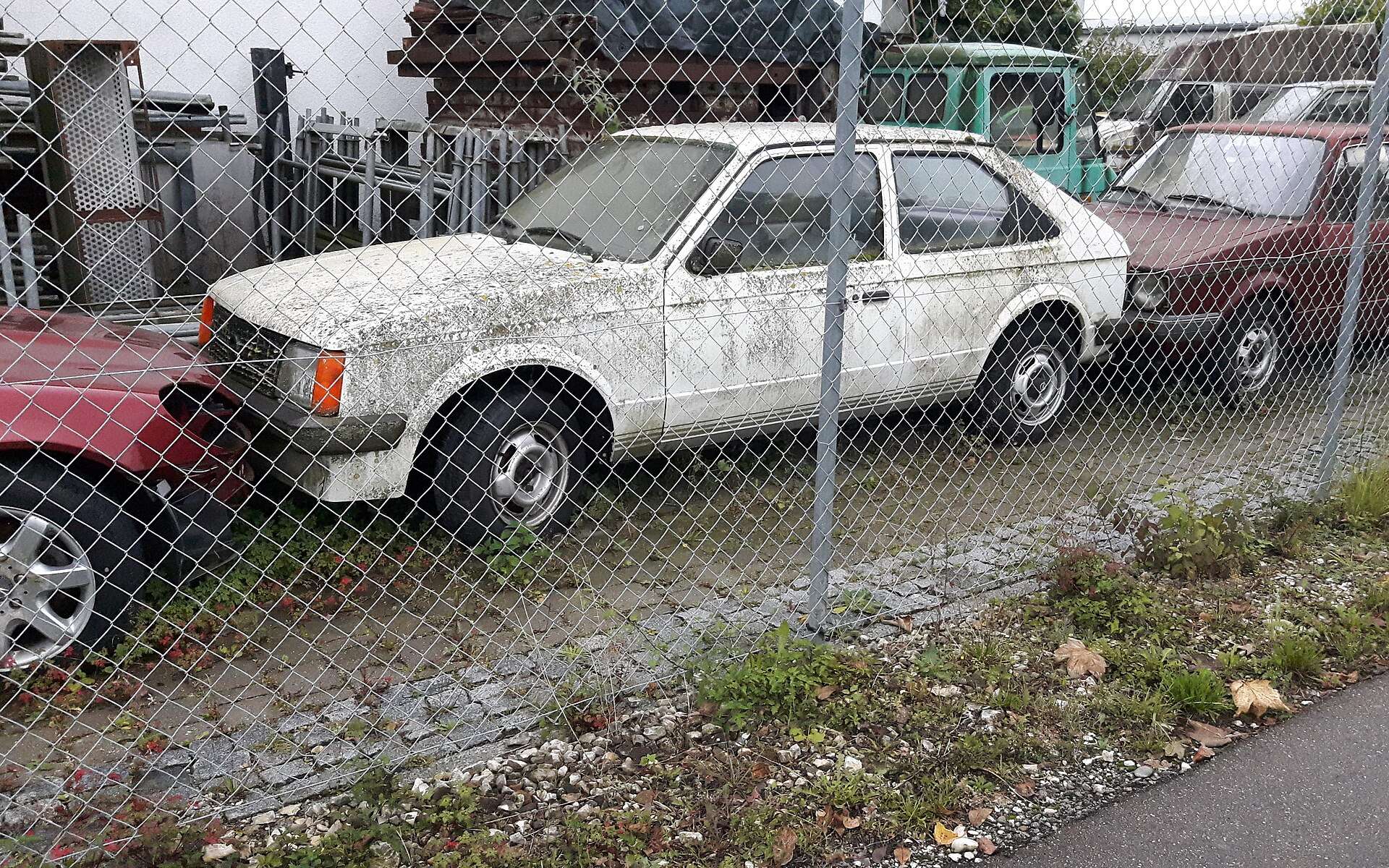
The Opel Kadett D deserves a special place in British motoring history. It introduced Opel’s first front-wheel-drive compact car and, remarkably, reached UK showrooms before its Vauxhall Astra counterpart. Once an everyday family hatchback, it is now a rare survivor.
Quick answer
The Kadett D was produced from 1979 to 1984. UK right-hand-drive sales began in November 1979, several months before the Vauxhall Astra arrived in 1980, and the two were briefly sold alongside one another. Most British buyers chose the Vauxhall, making an original UK-market Kadett especially scarce.
What is the Opel Kadett D?
The D was a major technical break with earlier Kadetts. Front-wheel drive created more cabin space within a body only 3,998mm long. Although 126mm shorter than the rear-driven Kadett C, it offered a roomier passenger compartment and a practical hatchback layout.
Early 1.3-litre overhead-cam engines produced 60 or 75hp. The range included three- and five-door hatchbacks plus a capacious Caravan estate. The sporting GTE arrived in 1983 with a 1.8-litre 115hp engine and a claimed 187km/h top speed.
The UK-market story
Opel launched the right-hand-drive Kadett D in Britain in November 1979. The Vauxhall Astra followed in spring 1980. Period advertising shows both identities at the start of this new front-wheel-drive era, but Vauxhall’s stronger dealer presence soon made the Astra dominant. That short overlap explains why British-registered Kadett Ds are far rarer than equivalent Mk1 Astras.
Specifications
| Production | 1979–1984 |
|---|---|
| Layout | Front-engine, front-wheel drive |
| Length | 3,998mm |
| Typical early engine | 1.3-litre OHC, 60 or 75hp |
| GTE | 1.8-litre, 115hp |
| Estate capacity | Up to 1,425 litres |
Driving and ownership
A standard Kadett D feels light, airy and easy to place. The steering and pedals are uncomplicated, while the low weight makes modest engines more willing than the numbers suggest. The GTE is considerably quicker, but rarity and condition matter more than outright performance for most buyers.
Common problems
Structural corrosion
Inspect front chassis rails, inner wings, suspension turrets, sills, jacking points, rear arches, floorpans and the area around the fuel tank. Check carefully around previous repairs.
Engines
Look for neglected oil changes, carburettor wear, cooling-system leaks and tired ignition components. Uneven idle may be minor, but overheating can lead to expensive work.
Gearbox and driveshafts
Listen for worn wheel bearings, clicking CV joints and gearbox noise. Test clutch engagement and every gear from cold.
Trim
Original lights, bumpers, badges, seat cloth and dashboards can be harder to find than service parts. A complete, unfashionably standard car is usually the best purchase.
Parts and practicality
Mechanical crossover with early Astra models can help, although not every component is identical. German and Dutch Opel specialists are valuable. Body and trim parts are the real challenge, so completeness should influence the price.
Buying checklist
- Confirm whether it is an original UK-market right-hand-drive car.
- Inspect all structural areas for corrosion.
- Check cooling, carburation and cold starting.
- Listen for CV-joint and gearbox noise.
- Preserve rare original trim and documentation.
Is it worth buying?
For anyone interested in overlooked 1980s family cars, the Kadett D is a strong choice. Its importance as Opel’s first front-driver, combined with the unusual UK overlap with the Astra, gives it a story few ordinary hatchbacks can match.
Frequently asked questions
Was the Opel Kadett D sold in the UK?
Yes. Right-hand-drive sales started in November 1979.
Did it arrive before the Astra?
Yes. The Vauxhall Astra followed in spring 1980.
How many were built?
Opel states that roughly 2.1 million Kadett Ds were produced worldwide.
Sources and further reading
- Opel/Stellantis heritage: Kadett and Astra history.
- Period UK advertising and brochure archives.
- Contemporary UK motoring history sources.
Check specifications against the chassis number and original documentation, as engines and trim varied.