
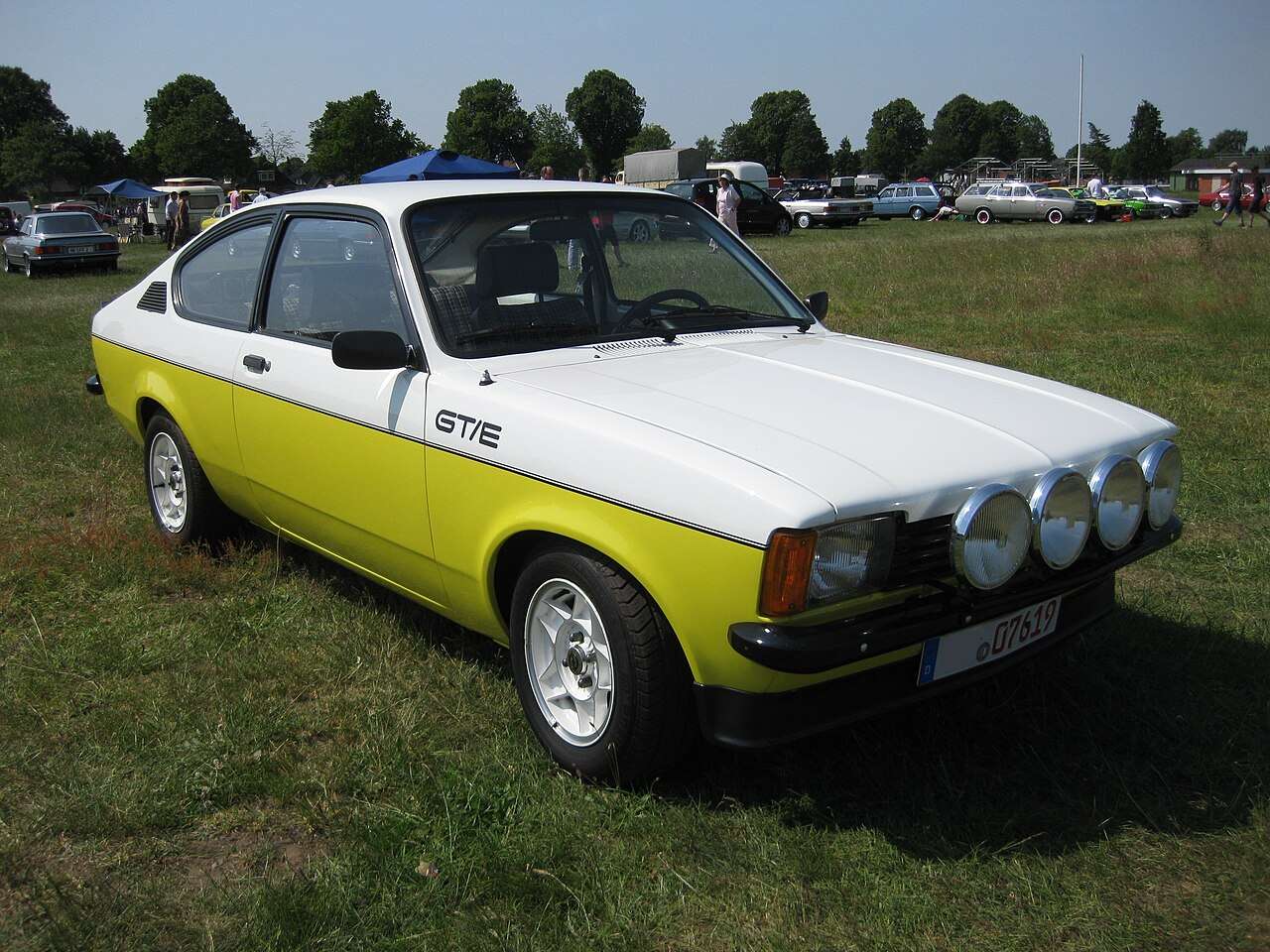
The Opel Kadett C GT/E was the rear-wheel-drive performance Kadett built to give Opel a credible rally weapon and an affordable rival to cars such as the Ford Escort RS2000. British buyers saw very few, which makes an original GT/E one of the rarest 1970s Opel coupes in the UK today.

Opel Kadett C GT/E history
Introduced in 1975, the GT/E turned the compact Kadett C into a serious sporting car. Its front-engine, rear-wheel-drive layout was simple and light, while Bosch fuel injection gave the 1.9-litre cam-in-head four-cylinder engine a useful step up in power. The first cars are best known for their yellow-and-white paint scheme; later 2.0-litre cars often appeared in yellow and black.
The Kadett C range was sold in Britain during Opel’s final years as a separate showroom brand, although GT/E numbers were tiny and surviving UK cars include both period sales and later imports. Mechanically it shared useful family DNA with the Vauxhall Chevette, but the fuel-injected GT/E remained distinct in specification and character.
Specifications
| Engine | 1,897cc or later 1,979cc CIH four-cylinder |
|---|---|
| Fuel system | Bosch electronic injection |
| Power | About 105–115 PS depending on version |
| Transmission | Four-speed manual; close-ratio competition options |
| Drive | Rear-wheel drive |
| Kerb weight | Approximately 900–950kg |
| Performance | Roughly 0–60mph in 9–10 seconds; around 115mph |
What is it like to drive?
A sound GT/E feels compact, alert and mechanical. The steering is unassisted but communicative, the body is light and the live rear axle makes the car adjustable without demanding huge speeds. It is not refined by modern standards, yet the combination of low weight, eager injection engine and rear-wheel drive explains its lasting appeal.
Opel Kadett C GT/E common problems
Rust and previous repairs
Corrosion is the decisive issue. Inspect front wings, battery tray, inner wings, chassis legs, A-pillars, windscreen surround, sills, jacking points, floors, rear arches, suspension mounts and the boot floor. Many cars were repaired when values were low, so look for thick filler, uneven seams and poorly aligned panels.
Engine, injection and cooling
The CIH engine is durable when serviced, but oil leaks, timing-chain noise, tired valve gear and overheating need investigation. Old fuel hoses, corroded electrical connections, vacuum leaks and worn injection components can cause difficult starting or uneven running. Confirm that the car has the correct injected engine rather than a later substitute.
Gearbox, axle and suspension
Listen for gearbox whine, jumping out of gear and differential noise. Check propshaft joints, wheel bearings, bushes, dampers and steering joints. Competition use and enthusiastic road driving can leave cracks around mounts or a shell that is no longer straight.
Authenticity and trim
Replicas are common because ordinary Kadett shells are much less valuable. Match chassis and engine numbers against specialist records, inspect factory tags and verify the injection equipment, brakes, axle, interior and body details. Original seats, instruments, bumpers and exterior trim can be difficult and expensive to replace.
Buying checklist
- Confirm identity and GT/E-specific components before discussing price.
- Inspect the complete shell on a lift; do not rely on a fresh paint finish.
- Start the engine from cold and check injection behaviour as it warms.
- Test every gear, listen to the axle and check for vibration.
- Ask for restoration photographs, invoices and provenance.
- Budget for specialist parts sourcing rather than assuming Chevette parts always fit.
Which Kadett GT/E should you buy?
Early 1.9-litre cars have the purest period look, while later 2.0-litre versions offer stronger performance. Condition and authenticity matter more than year. A correctly restored car with evidence is usually better value than an apparently cheaper project with an uncertain shell.
Frequently asked questions
Was the Kadett C GT/E sold in the UK?
The Kadett C range was available through Opel’s British network and GT/E examples reached the UK in very small numbers. Some surviving cars are later European imports, so verify each car’s individual history.
Is it the same as a Vauxhall Chevette HS?
No. The cars share broad GM T-car roots, but their engines, body details and competition development differ. They should be assessed as separate models.
Research sources
- Alt-Opel specialist resources
- Hagerty UK valuation and model data
- Auto Zeitung archive and model history
See more rare Opel models in our Opel history and buying guides hub.
ALSO …
 Rare & Performance Opel Cars: Models, UK History & Buying Guides
 Opel Omega Evolution 500: The Rare DTM Special in the Lotus Carlton’s Shadow
 Opel Commodore B GS/E: UK History, Specifications, Common Problems and Buying Guide
Opel Ascona 400: UK History, Rally Heritage, Specifications and Buying Guide