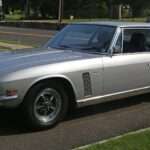
The Jensen Interceptor combined three very different traditions: Italian styling, British hand assembly and American V8 power. Its vast rear window is familiar, but the story around it includes pioneering four-wheel drive, unusual derivatives and a surprisingly complicated afterlife.
1. It was designed in Milan and first bodied in Turin
Carrozzeria Touring created the shape, then Vignale produced the early painted and trimmed bodyshells before they were shipped to West Bromwich for final assembly. Jensen later brought more of the body construction in-house, making the Interceptor an Anglo-Italian collaboration in more than name.
2. The famous rear window was part of the original Italian proposal
That huge wraparound glass hatch gave the Interceptor an unmistakable profile and unusually useful luggage access for a grand tourer. It also made heat, sealing and replacement glass important ownership considerations—style and practicality arrived with consequences.
3. Its engine was pure American muscle
Early cars used Chrysler’s 383-cubic-inch, 6.3-litre V8 with a TorqueFlite automatic. Later Interceptor IIIs adopted the larger 440-cubic-inch, 7.2-litre unit. The rugged, understressed engines gave effortless torque but never made the hand-built car light or economical.
4. The FF was related, but it was not simply an Interceptor with four-wheel drive
The Jensen FF used Ferguson Formula four-wheel drive and Dunlop Maxaret anti-lock braking, years before such technology became common. Its chassis was substantially different and longer, so an FF is a distinct engineering model rather than an option pack.
Love cars you don’t see every day?
Get forgotten cars, surprising motoring stories and the most interesting finds from Unusual Cars by email.
Free to join. No spam. Unsubscribe whenever you like. See our Privacy Policy.
5. A manual gearbox existed—but it is exceptionally rare
Most Interceptors used the three-speed TorqueFlite automatic that suited their grand-touring character. A tiny number of early cars were fitted with a manual transmission, making genuine factory manuals rare enough that documentation is essential.
6. The SP used three two-barrel carburettors
Jensen’s SP paired the 7.2-litre V8 with Chrysler’s “Six Pack” induction: three two-barrel carburettors. It was the most overtly muscular regular derivative, powerful and scarce, but correct setup demands knowledge and patience.
7. A convertible arrived near the end
The Interceptor Convertible was introduced for the American market in the 1970s, combining the familiar V8 with a power-operated hood and extensive reinforcement. It is rarer than the saloon and changed the car’s visual character without losing the lavish cabin.
8. The final original coupé was rarer still
Late in production Jensen offered a fixed-roof Coupé based on convertible rear bodywork, using a Jaguar XJ6 rear screen and distinctive roof treatment. Only 54 were made, making it one of the least common factory Interceptors.
9. Jensen’s collapse did not end the name
Original production ended amid receivership in 1976, but parts, servicing, restorations and small-scale updated Interceptors continued under successor companies. The later S4 revival showed how durable the basic concept and specialist support had become.
10. Celebrity ownership added to the mythology
Famous owners included musicians, actors and public figures, helping the Interceptor become shorthand for flamboyant British success. Provenance can add value, but the car’s real appeal remains its improbable blend of cultures and its continent-crossing ability.
Few grand tourers wear their ingredients so openly. The Interceptor is Italian in outline, American under the bonnet and unmistakably British in execution—an extravagant combination that could only have happened in its era.
Love cars you don’t see every day?
Get forgotten cars, surprising motoring stories and the most interesting finds from Unusual Cars by email.
Free to join. No spam. Unsubscribe whenever you like. See our Privacy Policy.