Long before the famous Italian-styled V8 Interceptor, Jensen used the name for a hand-built Austin-powered grand tourer. The 1950–57 car is one of the rarest and least understood British GTs of its era.
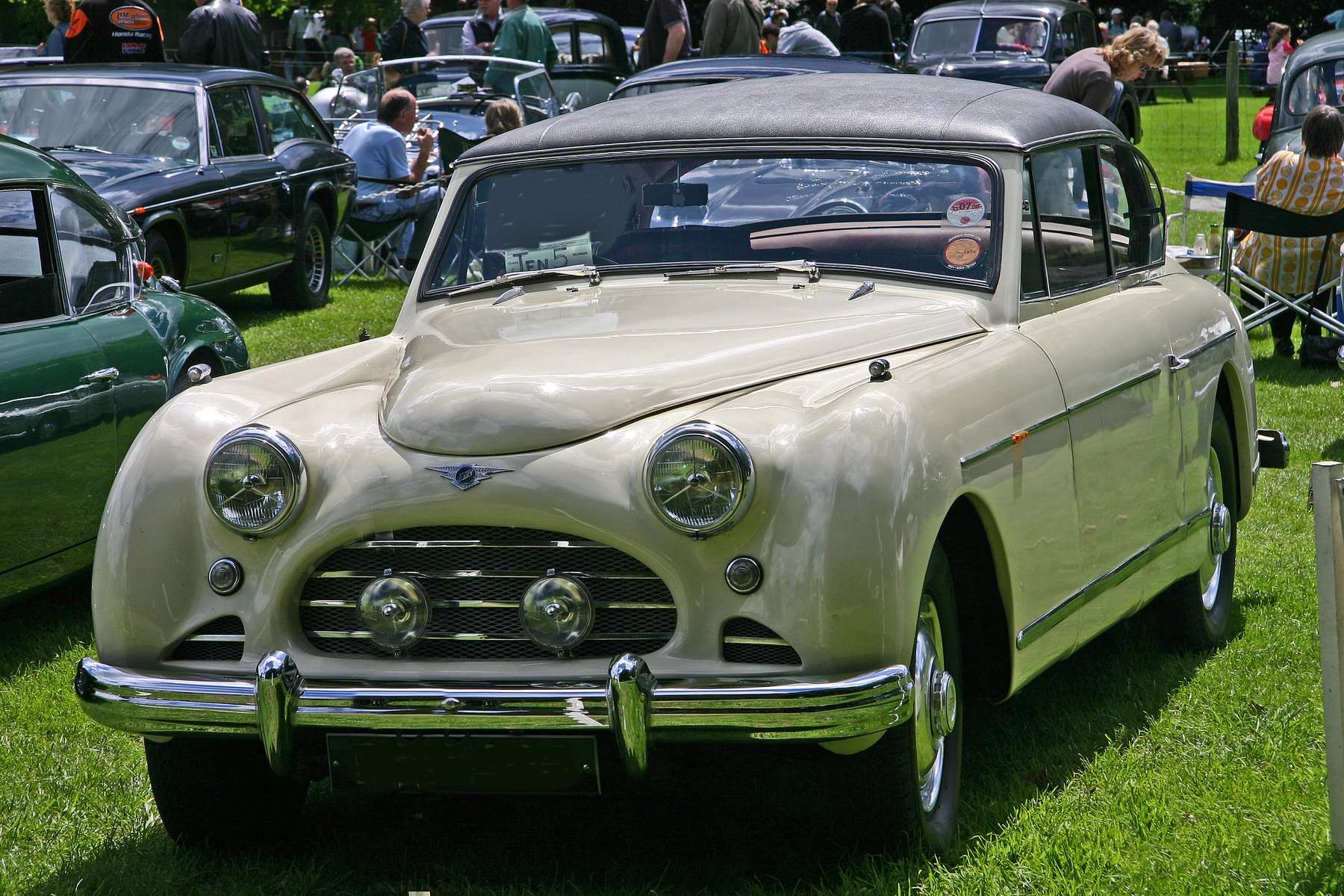
The first Interceptor story
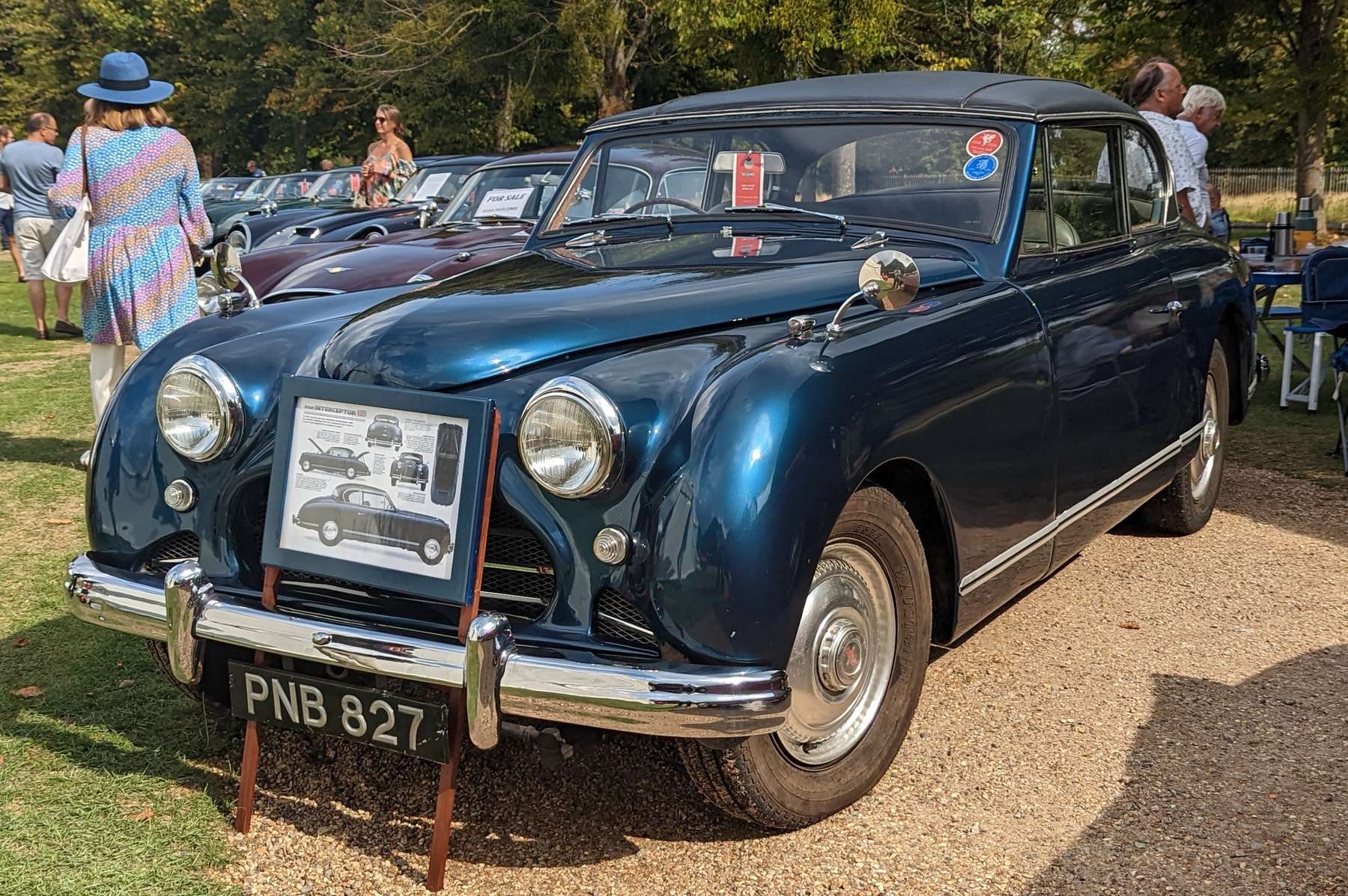
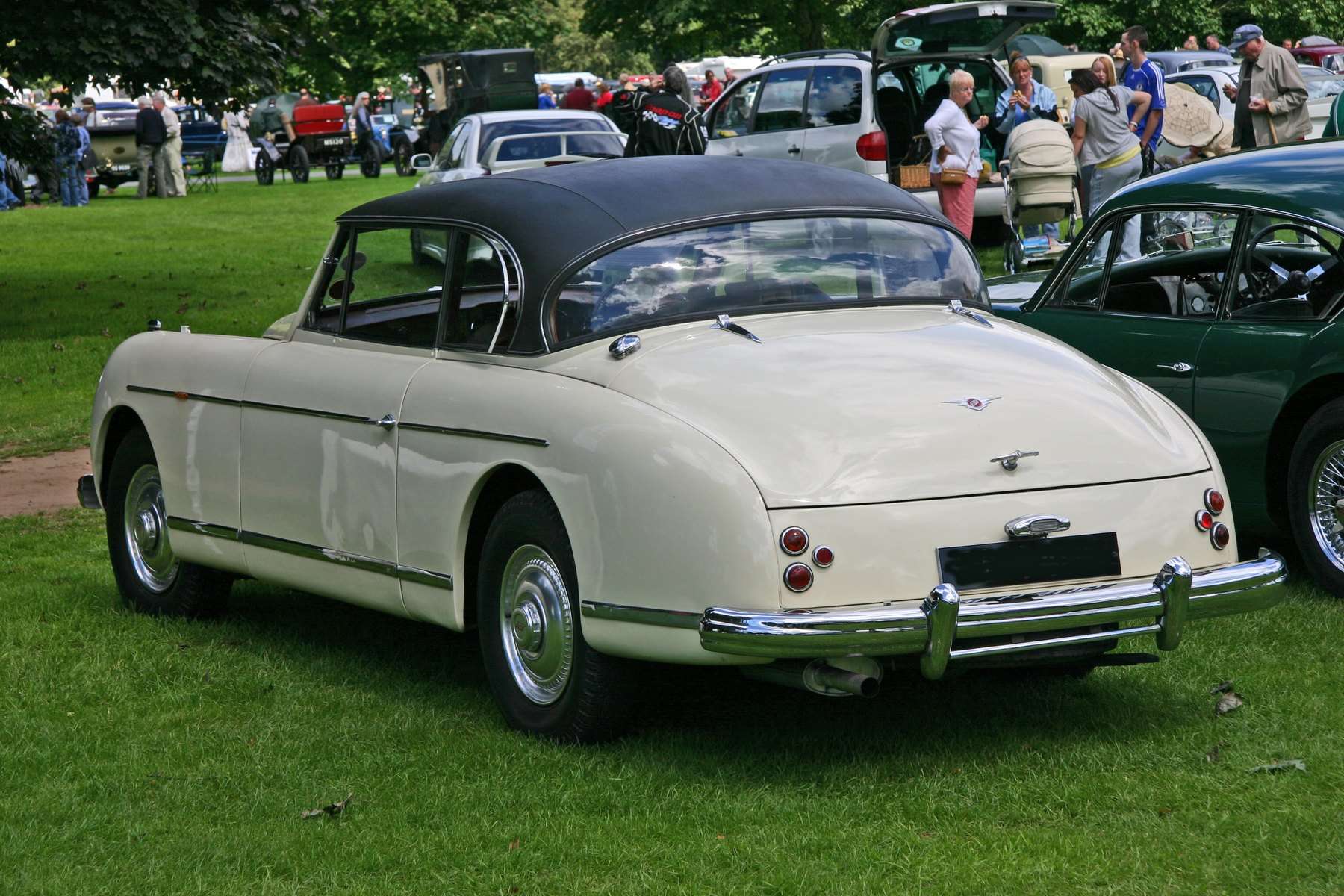
Jensen introduced its first Interceptor around 1950, nearly two decades before the better-known hatchback GT. Designed by Eric Neale, it combined an Austin-derived chassis and mechanical package with a sweeping aluminium body built in West Bromwich.
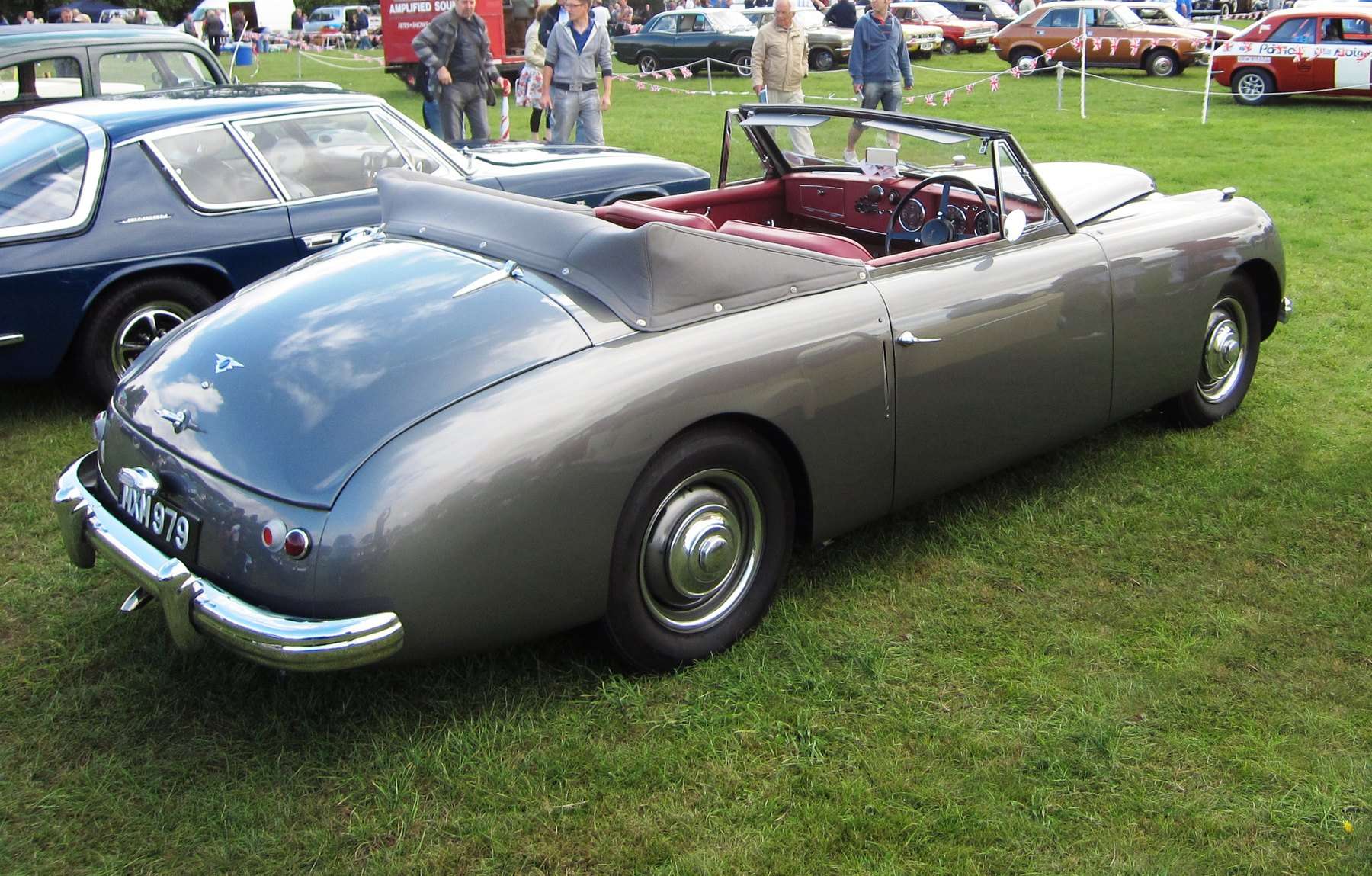
The name was apt: this was a rapid, expensive cross-country car rather than a small sports machine. Its long wings, full-width grille and flowing rear deck gave it a presence closer to a coachbuilt continental tourer than a conventional British saloon.
Only 88 saloons and convertibles were built according to Jensen Owners’ Club production records. Today, the model is usually called the “early Interceptor” to distinguish it from the 1966 car.
Austin foundations, Jensen execution
Most cars used Austin’s four-litre six-cylinder engine and related chassis hardware. The arrangement made sense for a small manufacturer: dependable large-car components could be clothed in a far more exclusive body and finished to a higher standard.
Jensen Museum research records two V8-powered exceptions, underlining how hand-built the series was. Small production changes and owner modifications mean survivors should be judged individually rather than against an overly rigid specification sheet.
The aluminium panels require traditional coachbuilding skills. This is not a car whose body can be economically restored by replacing readily available pressed panels.
Saloon and convertible versions
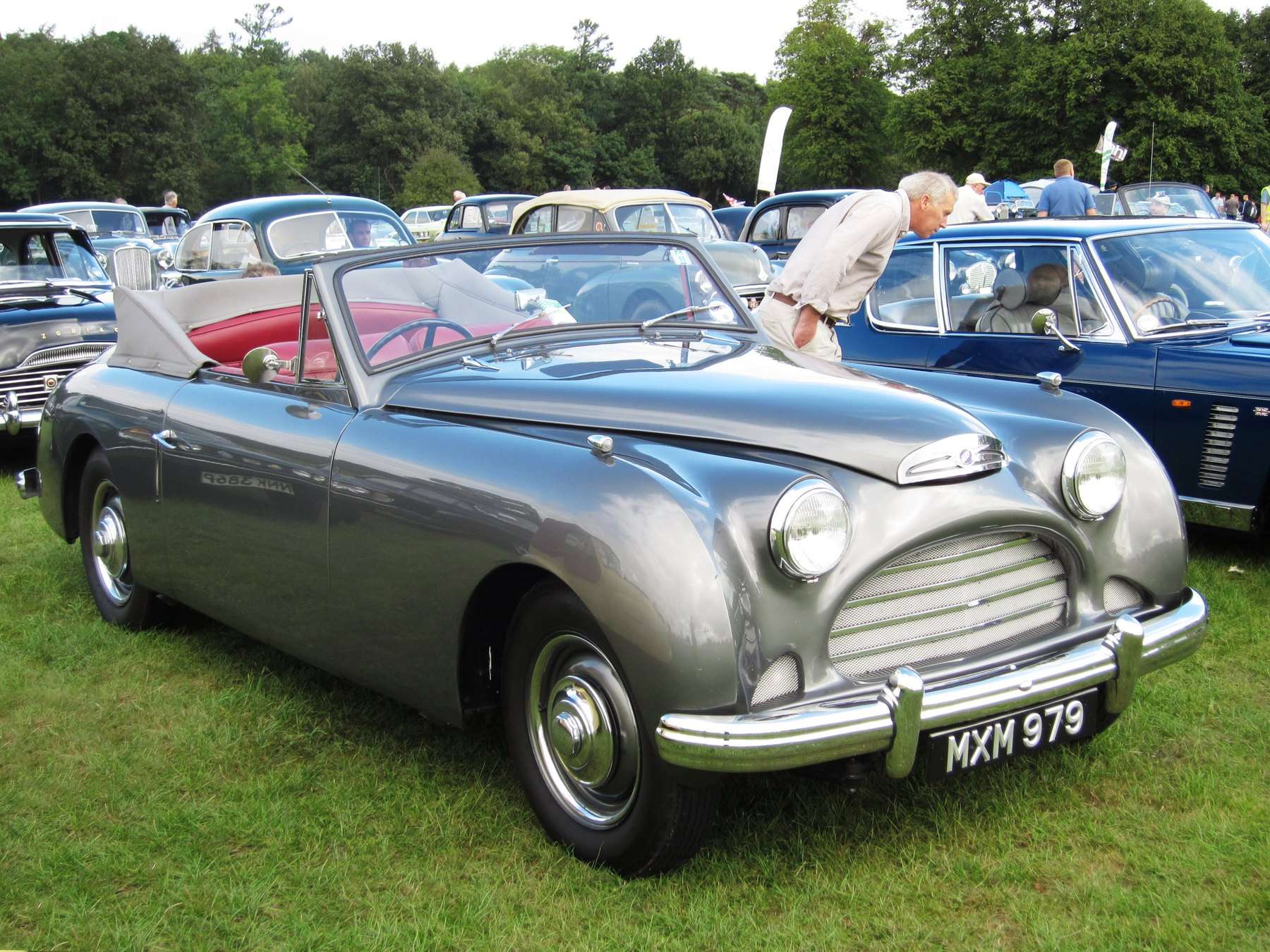
The closed car offered genuine grand-touring weather protection, while the convertible gave the Interceptor an even more glamorous profile. Both were large, expensive machines aimed at a small clientele.
Survival is low enough that buyers cannot usually select from several comparable cars. Provenance, completeness and the quality of earlier work will matter more than whether the roof folds.
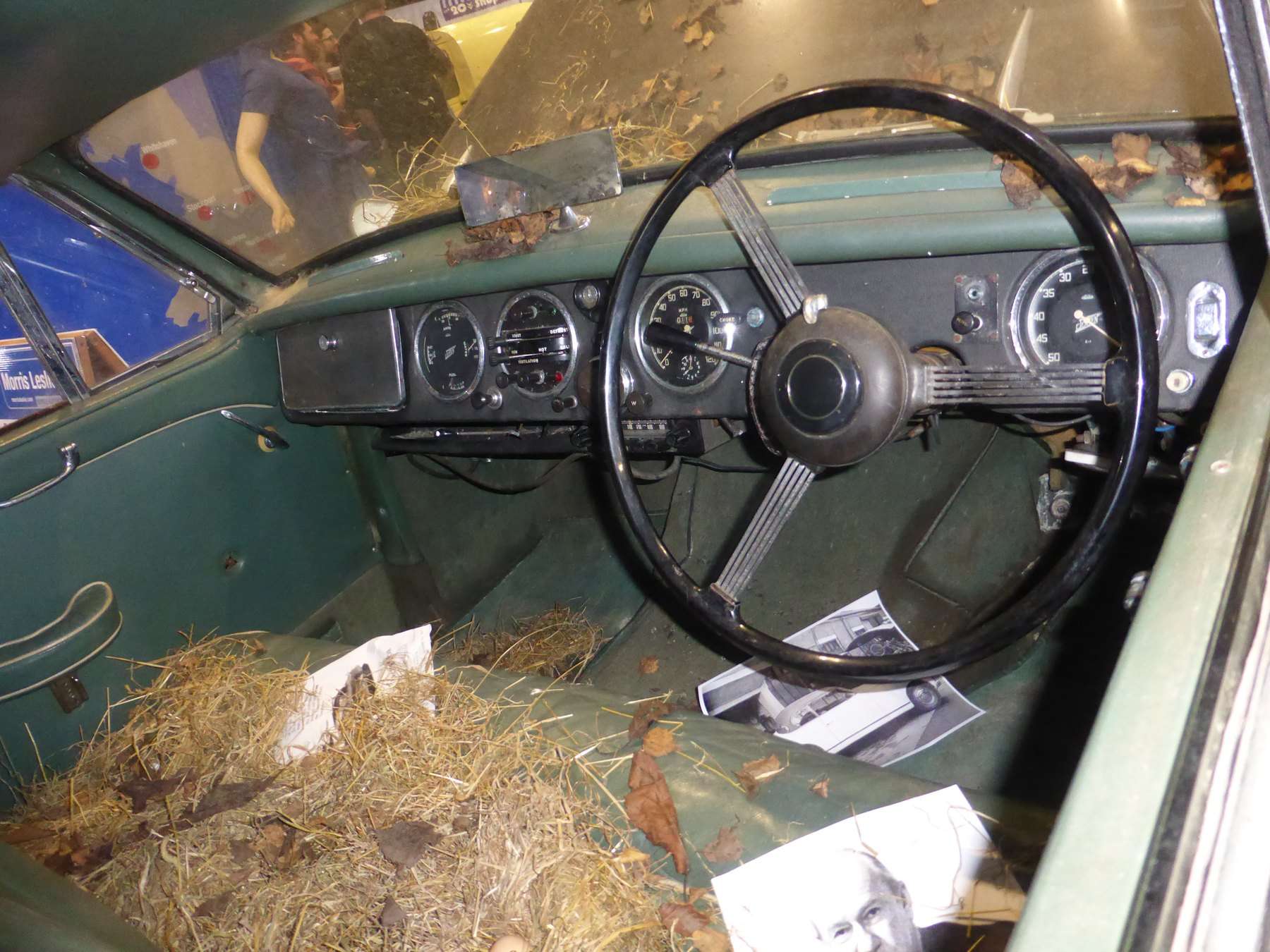
Details such as lamps, brightwork, instruments and interior fittings can be difficult to replace. A complete but tired car may be a safer proposition than a dismantled project missing irreplaceable trim.
On the road
The large Austin six supplies relaxed torque and a dignified gait. Steering and brakes reflect the period, and the car’s size is always apparent, but a properly set-up example should feel stable rather than ponderous.
This is a machine for measured progress, not modern sports-car responses. Its appeal comes from the combination of rarity, hand-built ambience and the sense that every journey is an occasion.
Restoration and buying checks
Inspect the chassis for corrosion and poorly executed repairs, then assess the aluminium body for cracking, distortion and electrolytic corrosion where dissimilar metals meet. Door fit and panel alignment can reveal tired structure or unsympathetic restoration.
Confirm that the cooling system, fuel system and brakes have been maintained for current use. Long periods off the road can create more faults than regular careful mileage.
Documentation is exceptionally valuable. Old photographs, invoices and Jensen club records can verify identity and explain deviations from standard. Commission an inspection from someone familiar with aluminium coachwork and low-volume British cars.

Why the early Interceptor deserves recognition
The 1950s Interceptor established Jensen as a maker of serious grand tourers before glassfibre 541s and Chrysler-powered models transformed the company. It also shows how effectively Jensen could integrate proven components into something individual.
Its scarcity has kept it outside the usual classic-car conversation, but that is precisely why it belongs in the Unusual Cars story: it is the forgotten first chapter of one of Britain’s most recognisable GT names.
Frequently asked questions
Is the 1950s Jensen Interceptor related to the 1966 Interceptor?
They share a manufacturer and model name, but they are distinct designs from different eras.
What engine did the early Jensen Interceptor use?
Nearly all used an Austin four-litre straight-six; Jensen Museum research records two V8-powered exceptions.
How many early Jensen Interceptors were made?
Jensen Owners’ Club figures list 88 saloons and convertibles.
Was the early Interceptor steel-bodied?
No. It used hand-formed aluminium bodywork over an Austin-derived chassis.
Is an early Jensen Interceptor difficult to restore?
Yes. Its rarity, coachbuilt aluminium body and scarce trim make specialist knowledge and a complete car especially important.
Sources and further reading
Jensen Owners’ Club model histories and production records; The Jensen Museum production and model features; period specifications collated by the Jensen-Healey Preservation Society. Vehicle photographs are individually credited beneath each image.