Unusual Cars Model Guide
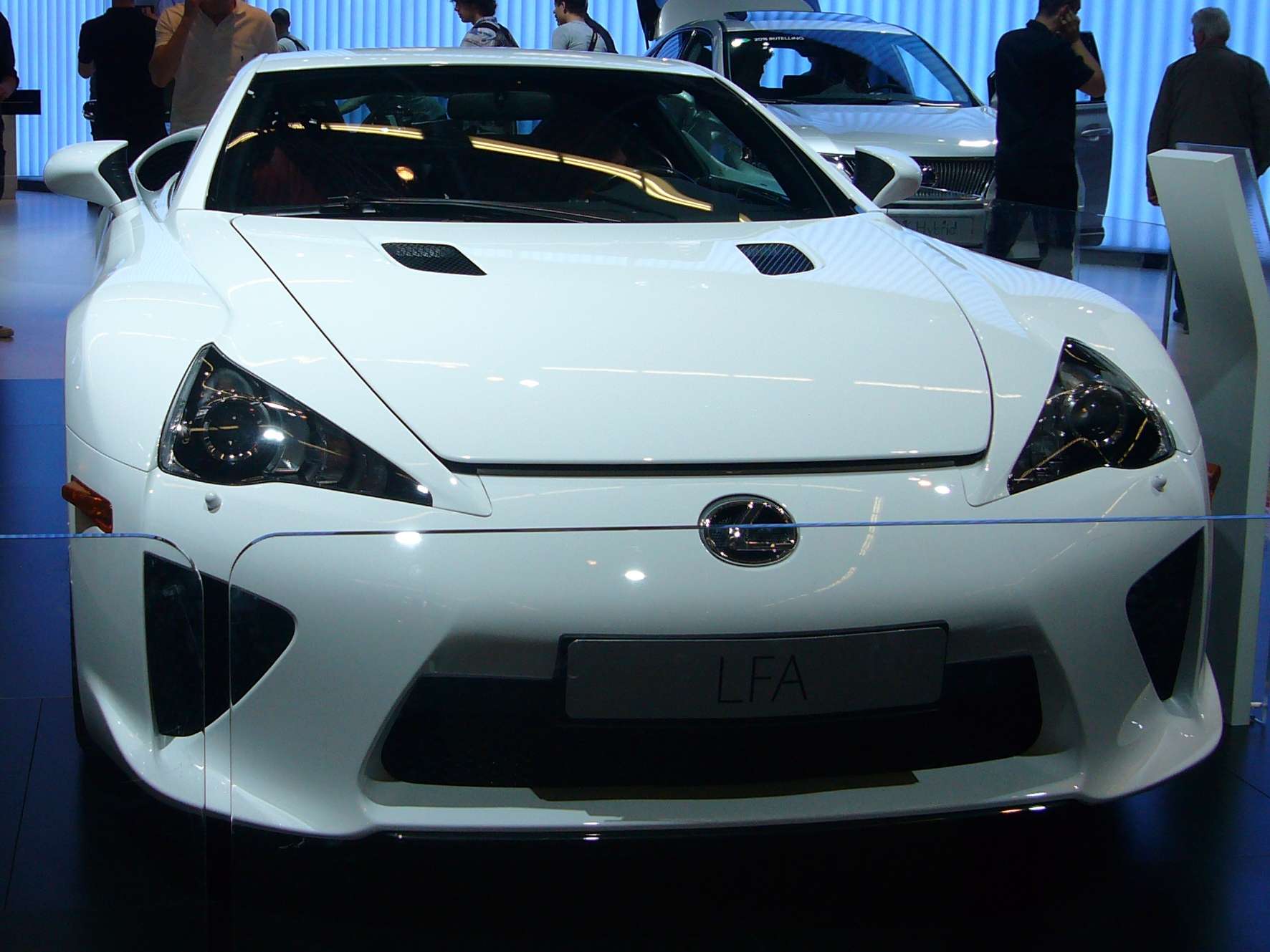
The Lexus LFA is one of the defining supercars of the modern era: a carbon-fibre two-seater powered by a bespoke 4.8-litre V10 that revs to 9,000 rpm. Only 500 were built, making it both the rarest Lexus road car and the ultimate expression of the company’s analogue engineering ambition.

A decade-long flagship project
The LFA began as an ambitious engineering programme rather than a straightforward product plan. Development stretched across years of prototypes and motor-show concepts. During that period Lexus changed the production structure from aluminium to carbon-fibre-reinforced plastic, accepting more time and cost in pursuit of lower mass and greater stiffness.
The production car arrived in 2009, with manufacturing beginning in December 2010 at Toyota’s Motomachi plant. Production was deliberately slow—about 20 cars per month—and ended in December 2012 when the five-hundredth example was completed.
At a glance
| Production | 500 cars worldwide |
|---|---|
| Engine | 4,805 cc 1LR-GUE naturally aspirated V10 |
| Power | 552 bhp at 8,700 rpm |
| Torque | 480 Nm at 6,800 rpm |
| Maximum engine speed | 9,000 rpm |
| Transmission | Six-speed automated sequential transaxle |
| 0–62 mph | 3.7 seconds |
| Top speed | 202 mph |
| Structure | Carbon-fibre-reinforced plastic with aluminium substructures |
| Indicative UK price when new | About £336,000 |
The V10 and its sound
The 72-degree 1LR-GUE V10 was engineered specifically for the LFA, with Yamaha involved in key aspects of its development. Its compact size, low rotating inertia and dry-sump lubrication allowed it to respond so quickly that Lexus used a digital rev counter because a conventional needle could not accurately follow the engine.
The exhaust was tuned as an instrument as well as a gas path. Multiple stages and cabin sound channels shaped the note into the LFA’s signature rising howl. Yet the statistics matter too: 552 bhp, 480 Nm, a 9,000 rpm limit and a claimed 202 mph top speed.

Chassis and construction
Carbon fibre accounts for much of the passenger cell and body structure, while aluminium is used strategically in subframes and suspension components. The engine sits behind the front axle and the transaxle at the rear, improving weight distribution. Carbon-ceramic brakes, sophisticated aerodynamics and a rising rear wing support repeated high-speed use.
The single-clutch automated transmission is part of the car’s character. It does not imitate a modern dual-clutch unit; shifts are more mechanical and their speed can be adjusted. Smooth driving requires the driver to understand the system rather than leaving every decision to the electronics.
Nürburgring Package
A limited Nürburgring Package sharpened the car further with additional power, faster transmission calibration, fixed aerodynamic additions, revised suspension and dedicated wheels and tyres. These examples are particularly valuable, so originality and precise factory documentation are essential.
UK connection
The LFA was officially offered in Britain, although only a tiny number reached UK owners. Its new price placed it above many established supercars and contemporary road tests questioned the value. Time has changed that judgement: rarity, engineering depth and the disappearance of high-revving naturally aspirated engines have made the LFA intensely collectible.
Lexus LFA buying guide
Identity and provenance
Verify the chassis number with Lexus, confirm the original market specification and reconstruct the ownership and servicing chronology. The build configuration, colour, wheels, interior trim and any Nürburgring Package status must agree with factory records. Auction descriptions and internet registries are useful leads, not substitutes for documentation.
Carbon-fibre structure and body
Any damage requires assessment by a specialist familiar with composite structures. Paint depth alone cannot reveal the condition of carbon fibre beneath it. Inspect panel alignment, underbody aero panels, mounting points and every visible fastener. Obtain records for any cosmetic or structural repair and avoid assuming that an apparently small impact was simple.
Engine, fluids and storage
The V10 should have a complete Lexus service record and evidence that age-related work was completed even if mileage is minimal. Long storage can harm seals, batteries, tyres and fuel systems. Check oil and coolant condition, inspect for leaks and insist on a controlled cold start. Any warning message or unusual mechanical sound needs factory-level diagnosis.
Transmission and clutch
Drive the car with a model specialist. Confirm correct operation in every mode, assess clutch wear data with suitable diagnostic equipment and distinguish normal single-clutch shift behaviour from a fault. Replacement parts and calibration require expertise; a conventional road test alone is inadequate.
Brakes, tyres and suspension
Carbon-ceramic discs are extremely costly. They need measurement and specialist inspection for chips, heat damage and remaining life. Tyres must be correct, age-appropriate and free from flat spots. Check dampers, control arms, wheels and geometry, particularly if the car has seen circuit use.
Accessories and originality
Confirm the presence of keys, manuals, luggage or tools supplied with the car, battery equipment and all supporting paperwork. Originality has a major effect on value. Non-standard paint protection, exhaust components or electronics should be documented and reversible.
Pre-purchase checklist
- Factory verification of chassis and specification
- Complete service and ownership provenance
- Composite-structure inspection by an LFA specialist
- Diagnostic report including clutch information
- Carbon-ceramic brake condition measured
- Correct, recent tyres without storage damage
- Recall and campaign completion confirmed
- All keys, equipment and original components present
Verdict
The LFA is not simply the fastest Lexus of its period. It is a rare example of a major manufacturer allowing engineering curiosity, craftsmanship and sound to shape a production car. Values reflect that significance. For a buyer, condition and authenticity matter more than headline mileage; the right example deserves inspection and stewardship at the highest level.