Unusual Cars Model Guide
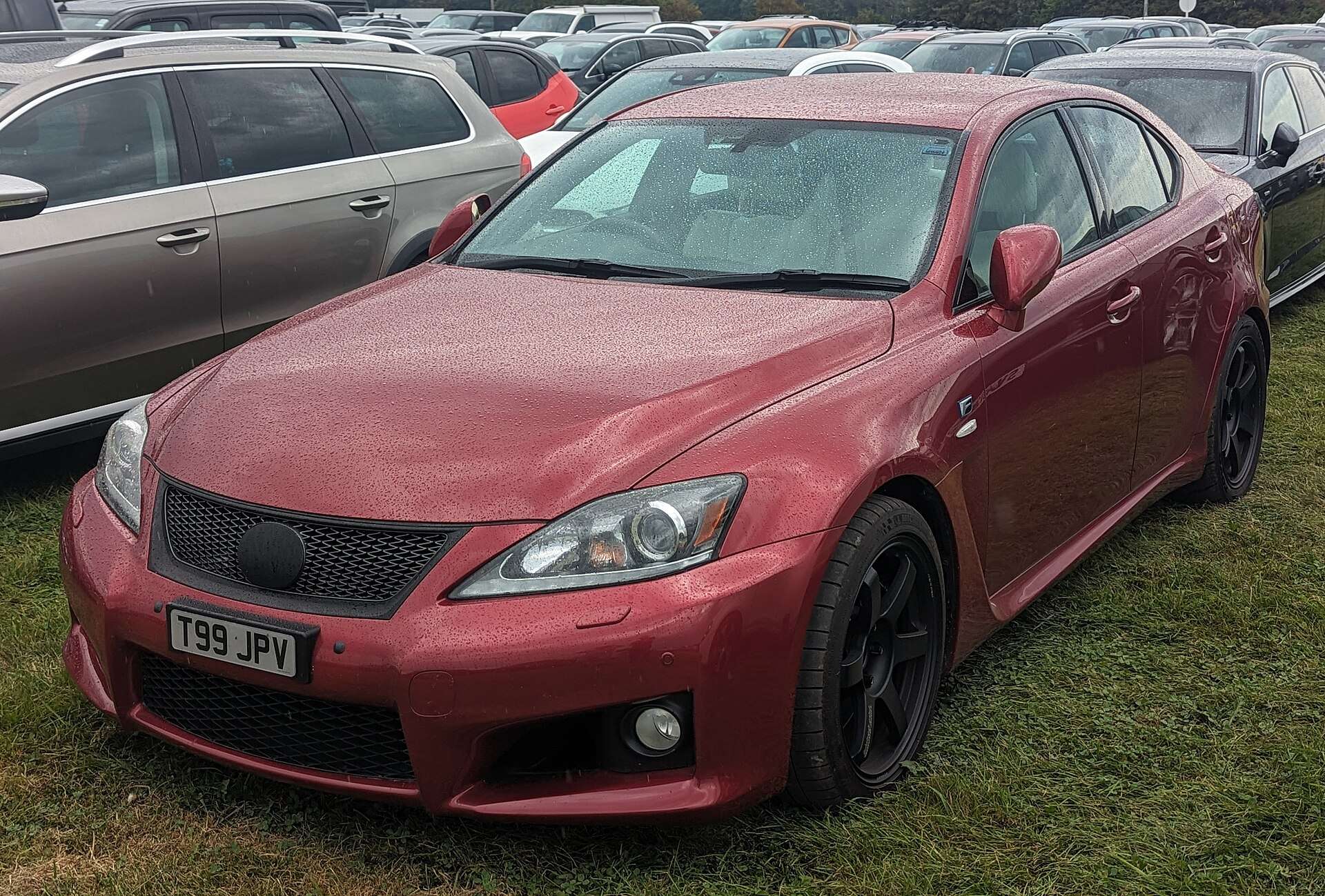
The Lexus IS F was the car that proved Lexus could build a serious compact performance saloon. A hand-assembled 5.0-litre V8, eight-speed transmission, Brembo brakes and discreet four-door body made it a rare, naturally aspirated alternative to the BMW M3, Mercedes C63 AMG and Audi RS4.

The birth of Lexus F
The letter F refers to Fuji Speedway, the circuit used extensively during development and represented by the shape of the division’s badge. The IS F became the first production model in the high-performance F line, reaching UK customers in 2008. It transformed the second-generation IS with a larger engine bay, wider front bodywork, heavily revised suspension and brakes, and unmistakable stacked exhaust outlets.
Its appeal was as much philosophical as technical. Where contemporary rivals increasingly relied on complex options and sometimes edgy road manners, the IS F combined dramatic V8 performance with Lexus reliability, everyday equipment and an automatic gearbox that worked convincingly in traffic.
At a glance
| UK sales | 2008–2013 |
|---|---|
| Engine | 5.0-litre 2UR-GSE naturally aspirated V8 |
| Power | 417 bhp (UK specification) |
| Transmission | Eight-speed Sport Direct Shift automatic |
| Drive | Rear-wheel drive |
| Brakes | Brembo performance system |
| Body | Four-door compact sports saloon |
| Significance | First production Lexus F model |
Engine and transmission
The 2UR-GSE V8 combines variable valve timing, high compression and a broad operating range. Yamaha contributed to the cylinder-head development. At gentle speeds it behaves like a refined luxury-car engine; at high revs the induction and exhaust character change dramatically.
The eight-speed automatic was unusual in a performance saloon of its era. In manual mode it locks gears quickly and gives the driver paddle control, while retaining smooth full-automatic operation. Early criticism centred on the absence of a limited-slip differential, addressed on later cars when Lexus added a Torsen unit.

UK model development
All IS F models are rare in Britain, but later cars are especially scarce. Running changes improved steering and suspension calibration, and the 2010 model-year revisions introduced the mechanical limited-slip differential. Further updates brought altered dampers, springs, anti-roll settings and cabin details. Verify the exact specification by VIN and documentation because registration date alone may not identify every change.
Driving experience
The IS F is compact, fast and unusually usable. The ride is firm—particularly on early cars—but the controls are precise and the V8 dominates the experience. It is happy to commute quietly, then becomes urgent when the gearbox and engine are switched to their more aggressive modes. Later examples feel more cohesive, though the rawer early set-up has its admirers.
Lexus IS F buying guide
History, identity and previous use
Start with a Lexus or recognised specialist service record and verify recall completion by VIN. A high-mileage road car with detailed invoices may be preferable to a low-mileage example that has been stored badly or used hard on track. Inspect for non-standard software, exhausts, suspension and wheels; modifications are not automatically undesirable, but they must be declared, engineered and documented.
Engine and cooling
The V8 has an excellent reputation, but neglect is still costly. Check oil level and quality, coolant condition and evidence of regular servicing. Inspect for water-pump seepage and coolant loss around the engine’s valley area, and investigate any sweet smell or falling level. Cold start should be clean, idle stable and warning lights absent.
Gearbox and differential
Drive in automatic and manual modes, using every gear once the car is warm. Shifts should be decisive without flare or harsh engagement. Confirm that paddle commands are accepted correctly. On later limited-slip cars, listen for driveline noise and check differential-fluid maintenance; on all cars, inspect for leaks.
Brakes, wheels and tyres
Large Brembo components and premium tyres are not cheap. Drilled discs can crack around the holes after hard use, while aggressive pads create heavy dust. Measure disc condition, inspect calipers and confirm matching high-quality tyres in the correct sizes. Uneven wear may reveal poor alignment, worn bushes or a history of track work.
Suspension and body
Listen for knocks, wheel-bearing noise and tired dampers. The car should track straight and feel tightly controlled rather than nervous. Check the low front bumper, sills, wheelarches and undertrays for impact damage. Panel gaps, overspray and mismatched paint deserve investigation because performance cars can acquire accident history.
Cabin and electronics
Test the navigation and audio system, seat heating, climate control, parking sensors, mirrors, keyless functions and every warning lamp. Interior wear should correspond with mileage. A healthy IS F feels solid; rattles, warning messages and improvised wiring are reasons to slow down.
Viewing checklist
- VIN-confirmed specification and recall history
- Complete Lexus or specialist servicing
- No unexplained coolant loss or warning lights
- Clean eight-speed shifts and working paddles
- Crack-free discs and healthy Brembo calipers
- Matching premium tyres with even wear
- Straight body and undamaged undertrays
- Modifications fully documented
Verdict
The IS F is one of the most distinctive performance saloons of its generation. Its cabin design and early ride are products of their era, but the naturally aspirated V8, rarity and everyday manners give it lasting appeal. Buy on condition, brakes, tyres and history; a carefully maintained example is the one most likely to deliver the full F experience without an unpleasant financial surprise.