The Austin Allegro was British Leyland’s ambitious family car for the 1970s: compact outside, unusually roomy inside and suspended on interconnected Hydragas units. Its reputation was shaped by industrial turmoil and early quality problems, but a good surviving Allegro is far more interesting than the old jokes suggest.
At a glance
- UK production: 1973–1982
- Body styles: two- and four-door saloon; three-door estate
- Engines: 1.1- and 1.3-litre A-Series; 1.5- and 1.75-litre E-Series
- Suspension: Hydragas
- Transmission: four- or five-speed manual; AP automatic on selected versions
History and UK context
Launched in May 1973, the Allegro replaced the long-running 1100/1300 range. Harris Mann’s rounded body was intended to package contemporary safety requirements and generous cabin space into a short car. British Leyland paired it with Alex Moulton’s Hydragas suspension, making the Allegro technically more adventurous than many orthodox rear-wheel-drive rivals.
The range was broad from the start. Smaller cars used the familiar A-Series engine, while the 1500 and 1750 adopted the overhead-cam E-Series and five-speed gearbox. The better-trimmed Vanden Plas 1500 arrived in 1974 with its unmistakable upright grille and wood-and-leather cabin. An estate followed in 1975, as did the Allegro 2 revisions; the Allegro 3 of 1979 brought tidier styling, mechanical improvements and a more conventional round steering wheel.
UK specifications
| Version | Engine | Gearbox | Character |
|---|---|---|---|
| 1100/1300 | 1098/1275cc A-Series | 4-speed manual or automatic | Simple, economical core models |
| 1500 | 1485cc E-Series | 5-speed manual | Long-legged middle of the range |
| 1750/1750 SS | 1748cc E-Series | 5-speed manual | Strongest conventional Allegros |
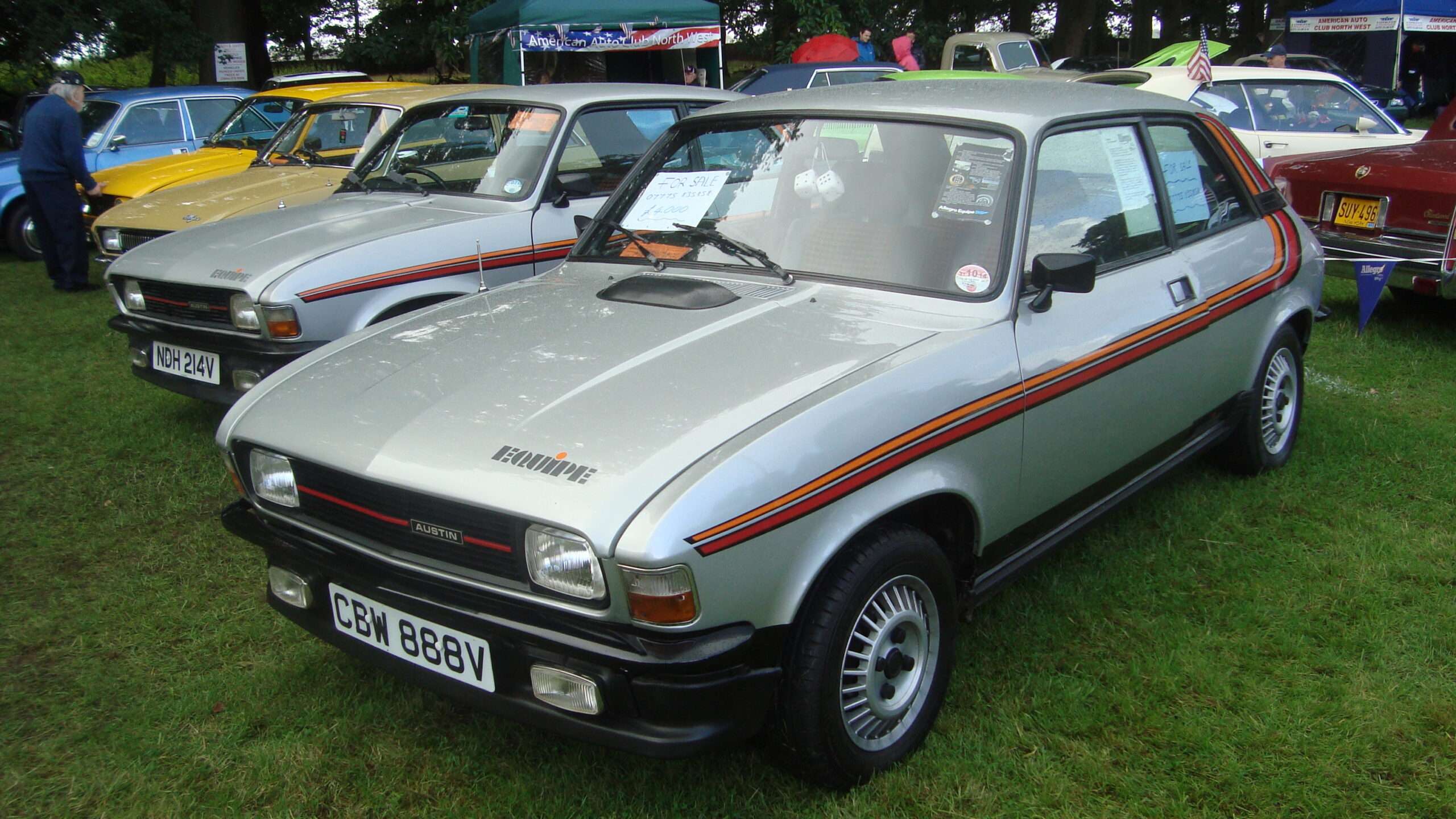
| Equipe | 1748cc twin-carb E-Series | 5-speed manual | Rare sporting special |
What is it like to drive?
An Allegro is not a sports saloon, but that misses its appeal. When the Hydragas system is healthy it rides with a supple, floating quality and keeps remarkably composed on broken British roads. The steering is light, visibility is excellent and the compact dimensions make the car easy to place. A-Series cars feel willing but modest; the 1750 has noticeably more torque and relaxed motorway gearing.
Versions worth knowing
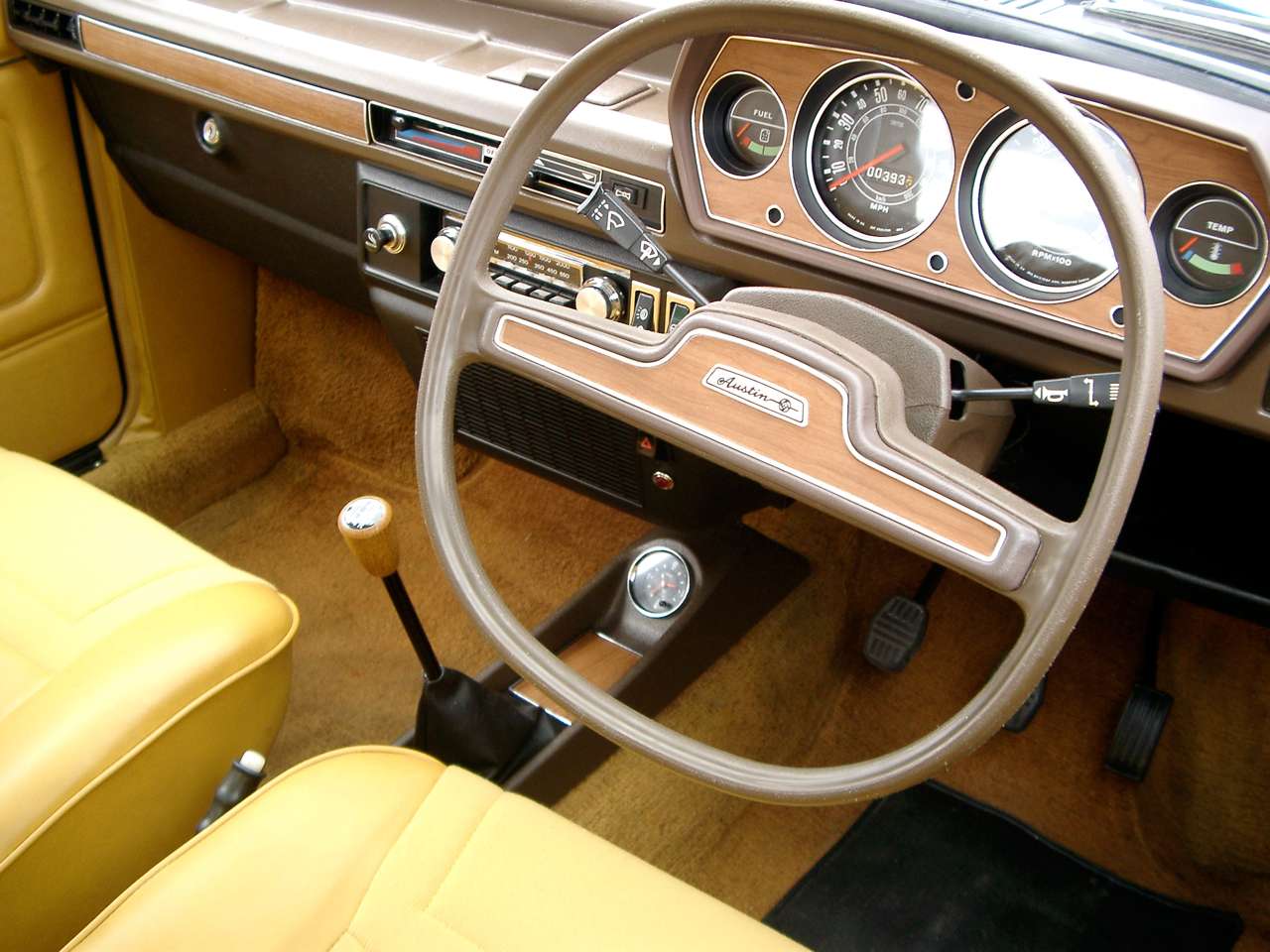
Early Series 1 cars are now the purest and rarest, especially with the original Quartic steering wheel. Estates combine genuine practicality with scarcity. Vanden Plas models offer a wonderfully unlikely miniature-luxury-car atmosphere, while the striped Equipe is the collector’s prize: only about 2,700 were built and many disappeared quickly.
Buying guide
- Body: inspect sills, floor edges, subframe mountings, suspension pick-up points, front valance, wheelarches and the base of the windscreen. Cosmetic panels can be harder to find than mechanical parts.
- Hydragas: the car should sit level and ride without bouncing or crashing. Leaks and discharged spheres require specialist attention.
- Engines: listen for timing-chain rattle and tappet noise on A-Series cars. E-Series units need clean coolant and evidence of regular servicing.
- Gearbox: check synchromesh, clutch action and the quality of the five-speed linkage. Early cable-change cars can feel vague but should still select every ratio.
- Trim: dashboards, seat fabrics, lamps and model-specific brightwork are often more difficult to replace than engines or brakes.
Why it matters
The Allegro represents British Leyland at its most contradictory: imaginative engineering and clever packaging undermined by rushed development and inconsistent manufacture. Surviving cars deserve to be judged on what they actually are—comfortable, distinctive and increasingly rare pieces of everyday British motoring history.
Sources and further reading
- Classic & Sports Car: Austin Allegro buyer’s guide
- FIA Historic Database: BL Austin Allegro
- Honest John Classics: Austin Allegro review
Image sources and licences
Images are from Wikimedia Commons: 1973 Allegro 1300 DL, Allegro Equipe and Quartic interior. Individual file pages contain the author and applicable Creative Commons terms.
Enjoy unusual cars?
Get new histories and buying guides by email.