UNUSUAL CARS MODEL GUIDE
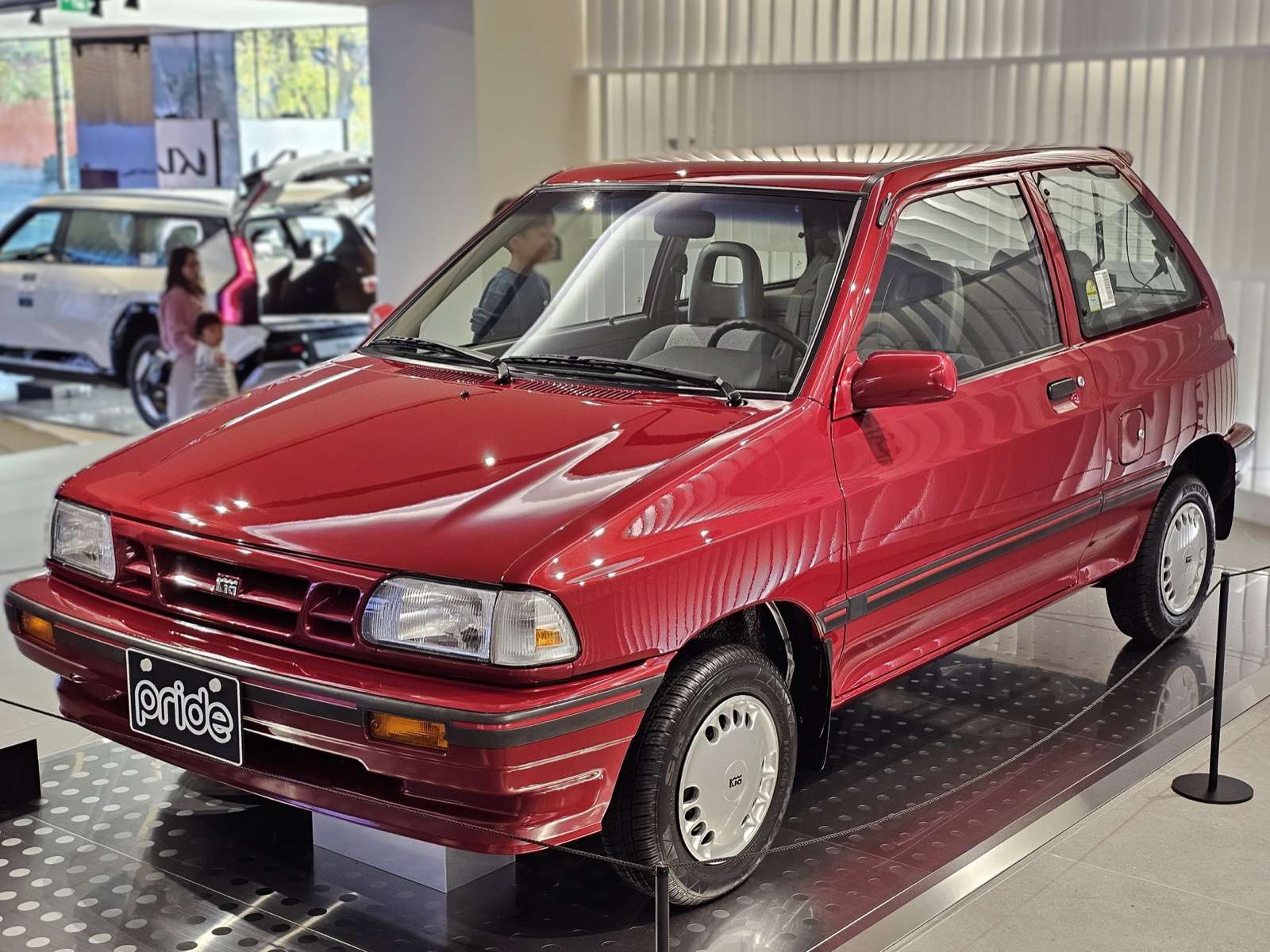
The Kia Pride was the modest little hatchback that introduced British motorists to Kia. It was inexpensive, mechanically simple and closely related to the Mazda 121 and Ford Festiva, yet its importance is much greater than its humble specification suggests: without the Pride, Kia’s extraordinary rise in the UK would not have begun.
Featured image: Kia Pride front three-quarter view. Photograph by Damien B Oh, CC BY-SA 4.0, via Wikimedia Commons; resized and locally hosted.
The car that brought Kia to Britain
Kia entered the UK passenger-car market in June 1991. Its sole model was the Pride, a compact hatchback whose basic design began life as a Mazda project and was also sold as the Ford Festiva in other markets. Kia manufactured the car under licence, giving it a proven foundation at a moment when the Korean company was almost unknown to British buyers.
Launch prices were central to the proposition. Period reporting lists the 1.1 LX at £5,799 and the 1.3 LX at £6,399, undercutting many established superminis. The Pride did not pretend to be sophisticated; it offered simple controls, light weight, good visibility and enough equipment to make the unfamiliar badge feel like a rational gamble.

Engines and UK versions
Early UK cars used carburetted 1.1- and 1.3-litre four-cylinder petrol engines, usually with a five-speed manual gearbox. The 1.1 was about economy and affordability; the 1.3 provided the more usable all-round performance. Later cars gained fuel injection and modest trim revisions, while buyers could choose three- or five-door bodies.
| Specification | UK-market Kia Pride |
|---|---|
| UK introduction | June 1991 |
| Body | Three- or five-door hatchback |
| Engines | 1.1- and 1.3-litre petrol fours |
| Transmission | Five-speed manual; automatic on selected versions |
| Layout | Front engine, front-wheel drive |
| Origins | Related to Mazda 121 and Ford Festiva |
Why it has become unusual
Prides were bought as cheap transport and used accordingly. Low residual values meant that corrosion, a failed clutch or a minor accident could end a car’s life. Few owners imagined that an ordinary Kia would one day document the start of one of Britain’s biggest-selling marques.
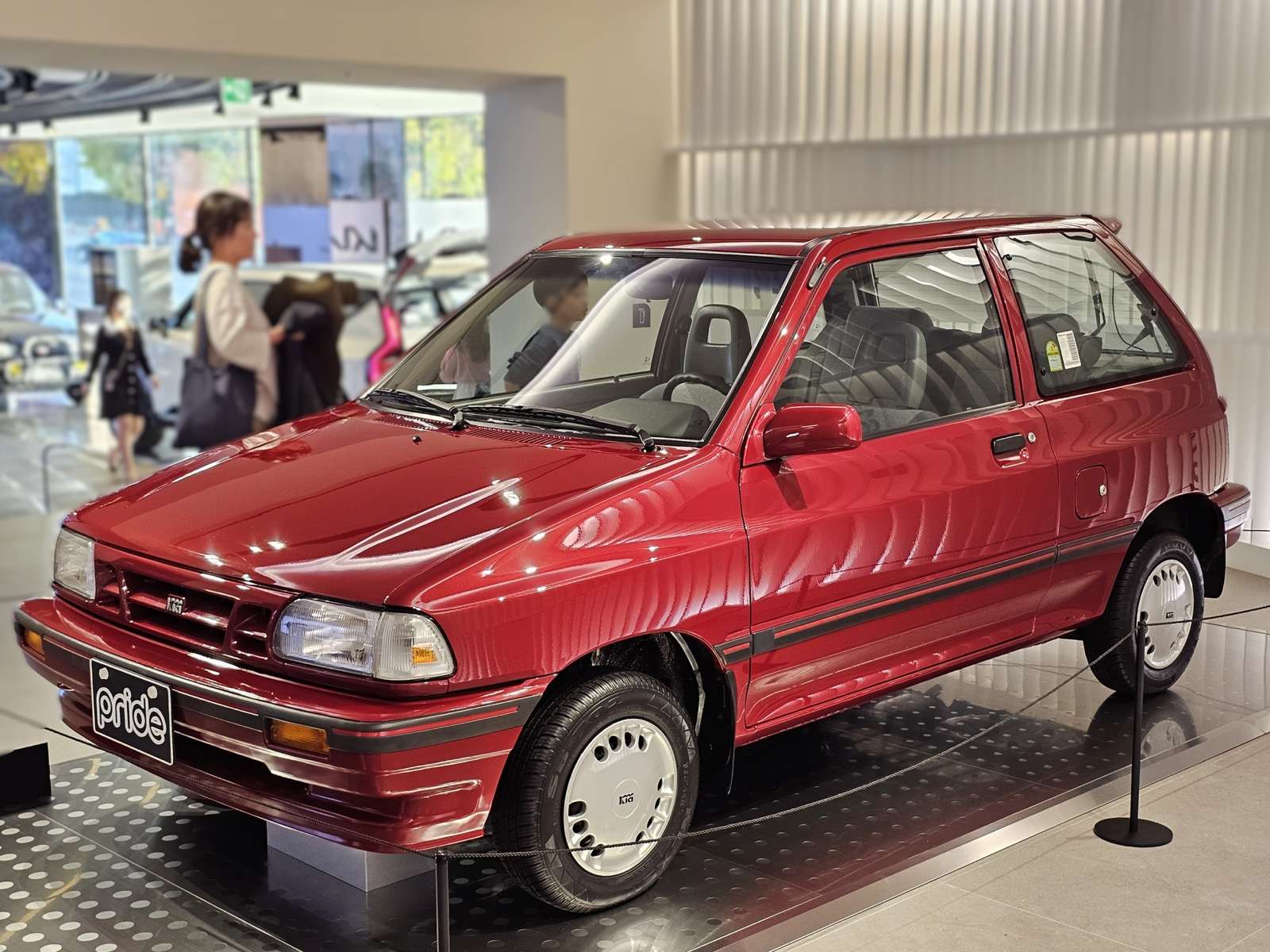
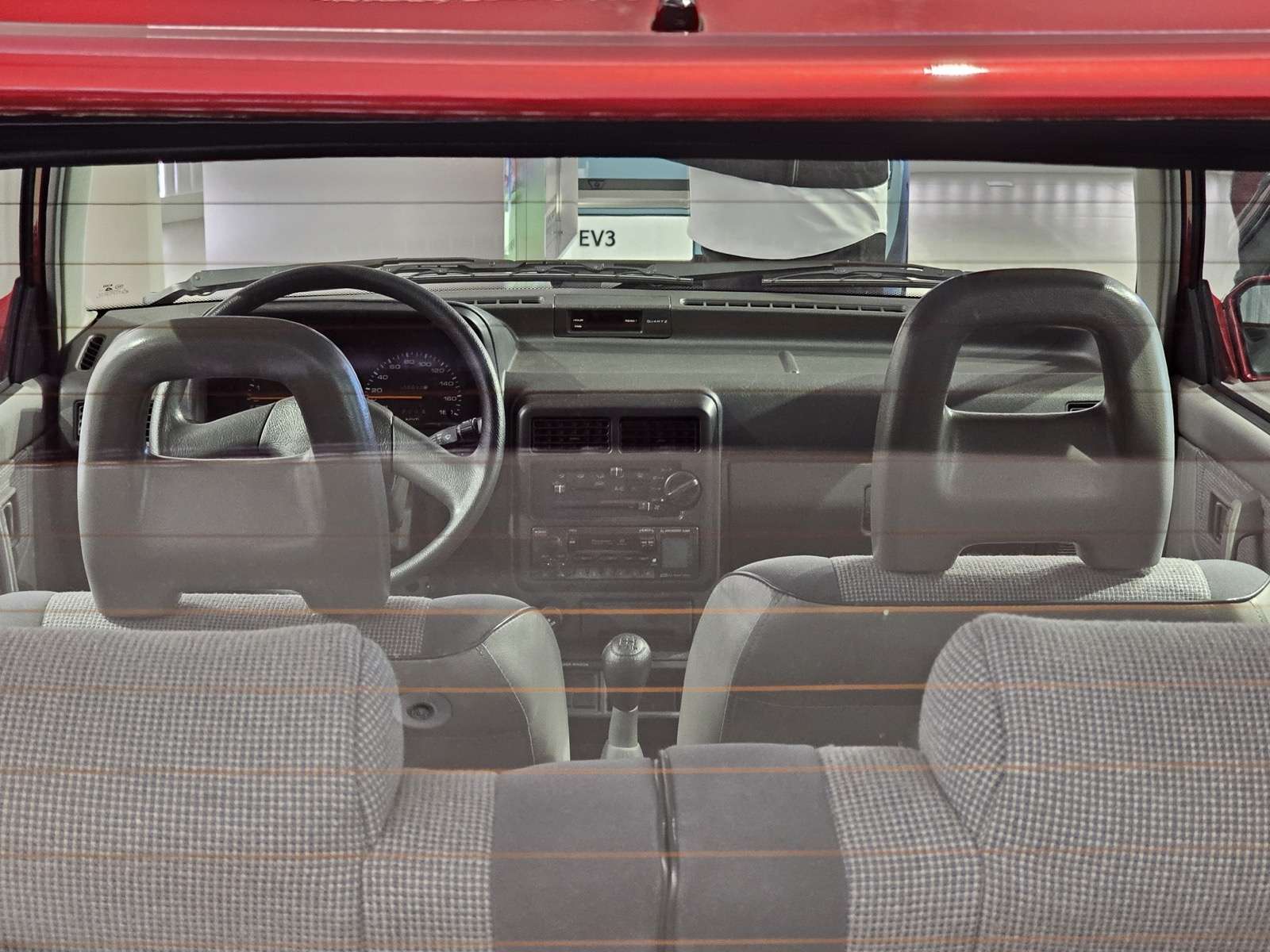
A surviving Pride is charming precisely because it is so unpretentious. Its narrow tyres, light controls and compact dimensions make modern traffic feel oversized, while the cabin preserves the texture of an early-1990s budget car.
Love cars you don’t see every day?
Get forgotten cars, surprising motoring stories and the most interesting finds from Unusual Cars by email.
Free to join. No spam. Unsubscribe whenever you like. See our privacy policy.
Kia Pride buying guide
Body and corrosion
Rust is the first concern. Inspect sills, jacking points, floor edges, rear wheelarches, suspension mounting areas, the boot floor and metal around the windscreens. Panel supply is limited, so a complete straight shell is worth more than a shiny car hiding structural repairs.
Engine and transmission
The Mazda-derived engines are fundamentally durable but suffer from neglect. Look for blue smoke, coolant loss, oil leaks, stale fuel and carburettor hesitation. The gearbox should select without crunching; clutch slip or judder can turn an inexpensive car into a poor buy.
Brakes, suspension and trim
Check for seized brakes, perished hoses, tired dampers and worn bushes after long storage. Lamps, badges, wheel trims, seat fabric and dashboard parts are harder to replace than routine mechanical items. Buy the most complete example available.
Research sources
- Kia: 30 years in the UK
- PetrolBlog: Kia Pride retrospective
- Car & Driving: Kia Pride used review
- Hagerty UK: Kia Pride history
Continue the Kia story
Explore the Rare & Performance Kias hub, then move from Kia’s first UK car to the Shuma 1.8 and modern Stinger GT S.
Frequently asked questions
When did Kia arrive in the UK?
Kia began selling passenger cars in Britain in 1991, initially with the Pride.
Is the Kia Pride related to the Ford Festiva?
Yes. Both stem from the same Mazda-developed design, also associated with the first-generation Mazda 121.
Which Pride is best to buy?
A rust-free, complete 1.3-litre car is usually the most usable choice, but condition matters more than specification.