UNUSUAL CARS MODEL GUIDE
The Aston Martin V12 Speedster is an open-cockpit two-seater built by Q by Aston Martin. Revealed in 2020, it has no conventional windscreen or roof and combines elements of the DBS Superleggera and Vantage with a bespoke carbon-fibre body. Production was limited to 88 cars, with deliveries beginning in 2021.
Quick answer: The V12 Speedster uses Aston Martin’s 5.2-litre twin-turbo V12, producing 700PS and 753Nm through an eight-speed ZF automatic transmission. Aston Martin quoted 0–62mph in about 3.5 seconds and a limited 186mph maximum. Buyers should verify exact factory specification, inspect the carbon body and bonded structure, test the transmission and electronics, and pay particular attention to weather exposure, cockpit trim and model-specific parts.
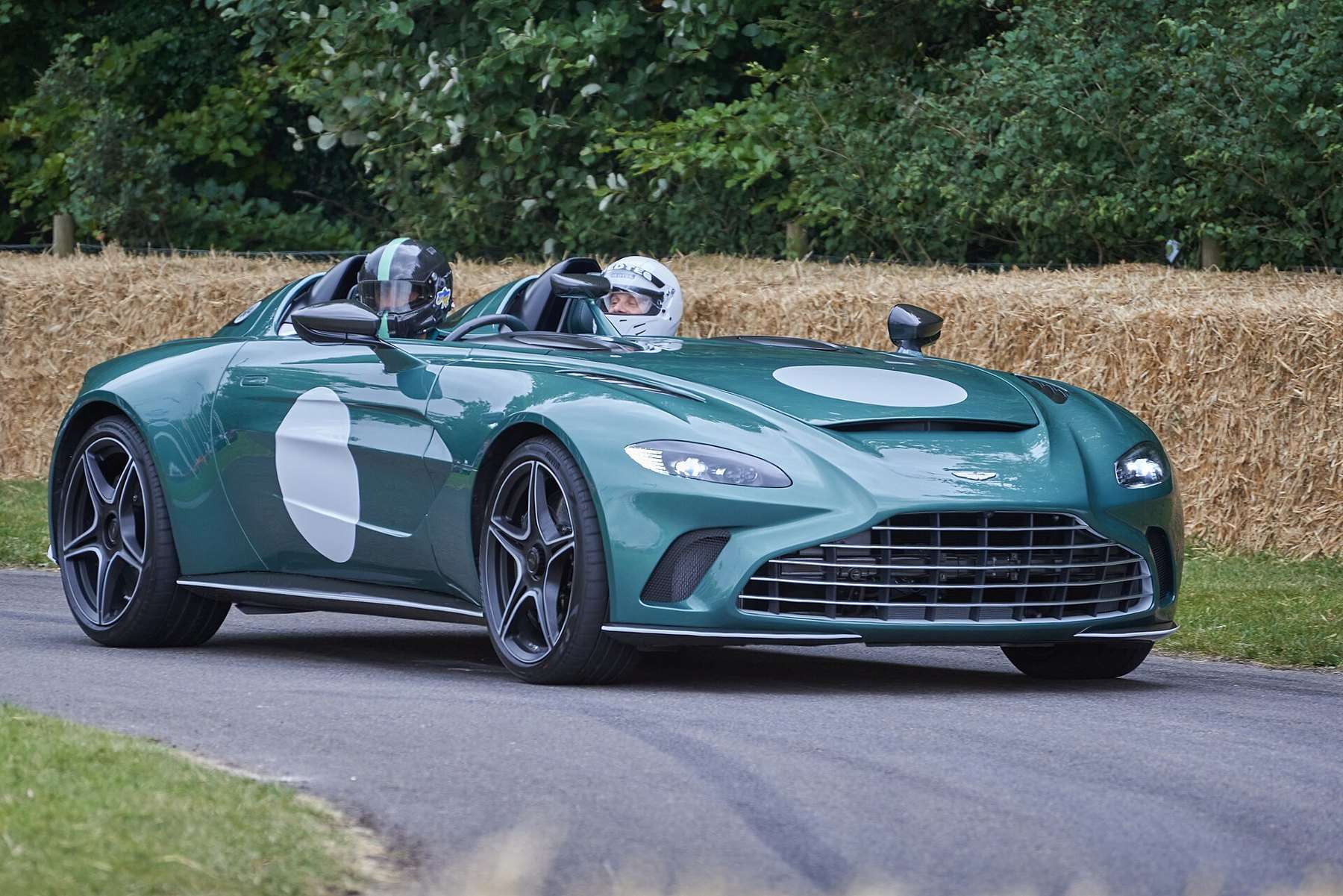
Featured image: Green Aston Martin V12 Speedster front three-quarter view. Photograph by MrWalkr, CC BY-SA 4.0, via Wikimedia Commons; locally hosted.
A modern Aston without a roof or windscreen
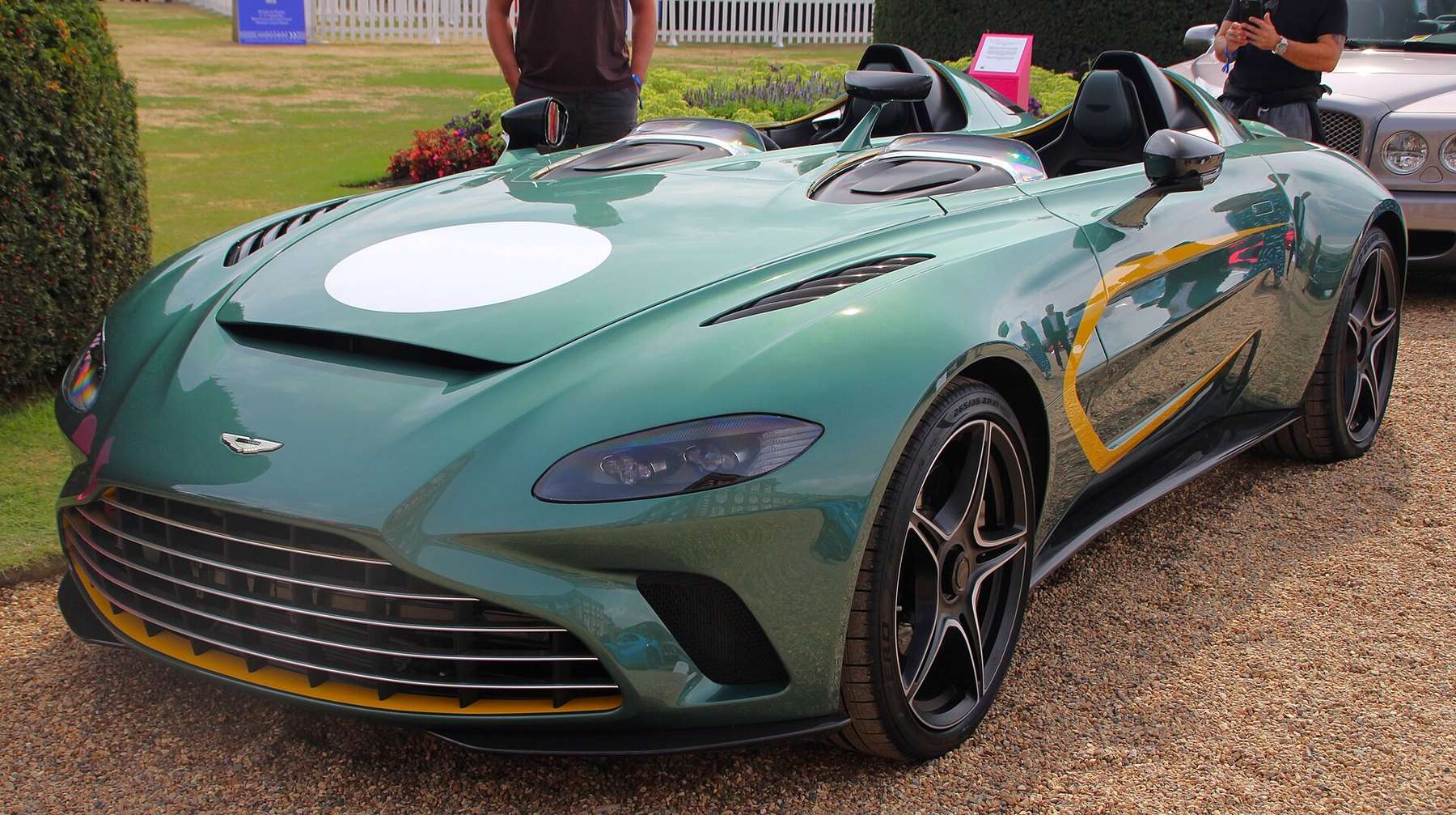
The Speedster was conceived as a modern expression of Aston Martin’s open competition cars and the 2013 CC100 concept. Its separated cockpit forms, central spine and rear fairings create a two-seat layout in which driver and passenger sit in individual openings rather than beneath a conventional shared windscreen.
Q by Aston Martin developed the project from concept to running prototype in roughly a year. The first display specification drew on the F/A-18 fighter aircraft, while a later DBR1-inspired treatment used Aston Martin Racing Green, white roundels, silver details and carefully selected leather to reference the 1959 Le Mans winner.

V12, platform and specifications
The bonded-aluminium architecture combines elements from the contemporary DBS Superleggera and Vantage. Carbon-fibre bodywork covers the bespoke structure, while double-wishbone front and multi-link rear suspension use adaptive damping.
| Item | V12 Speedster |
|---|---|
| Production | 88 cars |
| Engine | 5.2-litre twin-turbo V12 |
| Output | 700PS and 753Nm |
| Transmission | Eight-speed ZF automatic |
| Quoted top speed | 186mph, limited |
Power reaches the rear wheels through a limited-slip differential. Large carbon-ceramic brakes and 21-inch wheels provide the stopping and tyre capacity required by the engine’s performance.

Love cars you don’t see every day?
Get forgotten cars, surprising motoring stories and the most interesting finds from Unusual Cars by email.
Free to join. No spam. Unsubscribe whenever you like. See our privacy policy.
Fighter-jet and DBR1 specifications
The conceptual F/A-18 presentation car used Skyfall Silver, satin-black hardware and cockpit graphics influenced by aircraft. The DBR1 specification took a different route, pairing Racing Green with white circles, a silver grille and tan-and-green cabin materials. Matching helmets were part of the visual programme.
These themes sit alongside extensive bespoke choices available through Q. Establish the exact original order, exterior finish, exposed-carbon treatment, luggage and accessories. Because small details were tailored, a replacement or retrim that looks plausible may not be factory correct.
Open-cockpit usability and weather exposure
Without a full windscreen, occupants rely on helmets or eye protection and experience substantial airflow. The cockpit is not intended to provide the security of a normal convertible roof. Storage, route planning and weather conditions therefore shape how the car can be used.
Inspect leather, switches, displays, seat mechanisms, harnesses and exposed trim for water, ultraviolet and abrasion damage. Check drainage channels and hidden cavities even if the owner says the car has never seen rain. Model-specific covers and delivery equipment should remain with the car.

Engine, cooling and running gear
The twin-turbo V12 must start cleanly, maintain correct temperatures and deliver power without misfire or boost irregularity. Inspect radiators and condensers for blockage or impact, examine hoses and fluid condition, and review software campaigns and annual servicing regardless of mileage.
The ZF automatic should engage promptly and shift consistently in every mode. Measure carbon-ceramic disc condition and inspect tyres for age or flat spotting. Adaptive dampers, steering, wheel bearings and alignment must be assessed, while the low carbon splitter and floor need inspection for grounding.
Provenance and buying one of 88
Confirm chassis identity, build number, exact Q specification and first-delivery documentation. Original photographs, design samples, helmets, covers, charging equipment, luggage, keys and books strengthen the history. Verify any repaint, protective film or carbon repair with invoices and images.
Low mileage is common but does not remove age-related needs. A stored car may require tyres, battery, fluids, seals and careful recommissioning. The strongest purchase is complete, factory-correct and regularly maintained, with specialist inspection of its carbon surfaces, bonded structure, V12 and electronic systems.

Sources and further reading
- Aston Martin: V12 Speedster specifications
- Aston Martin: production announcement
- Autocar: DBR1 specification
- Aston Martin Heritage Trust
Continue the Aston Martin story
The V12 Speedster turns Aston Martin’s modern VH-successor hardware into a deliberately exposed two-seat special. Explore the complete Aston Martin hub. Read the earlier DBS guide. Explore the second-generation Vanquish.
Frequently asked questions
How many Aston Martin V12 Speedsters were built?
Production was limited to 88 cars worldwide.
Does the V12 Speedster have a windscreen or roof?
It has no conventional windscreen or roof and is designed as an open-cockpit car.
What engine does it use?
It uses a 5.2-litre twin-turbo V12 producing 700PS and 753Nm.
What is the DBR1 specification?
It is a factory design treatment inspired by Aston Martin’s 1959 Le Mans-winning DBR1, using Racing Green, white roundels and period-influenced details.
What should be checked before buying?
Verify the Q specification and accessories, then inspect carbon bodywork, bonded structure, weather-exposed trim, V12 cooling, transmission, brakes and tyres.