UNUSUAL CARS MODEL GUIDE
The second-generation Aston Martin Vanquish replaced the DBS in 2012 and became the fullest expression of the VH-platform era. Every exterior panel was carbon fibre, its styling drew openly from the One-77 and the revised naturally aspirated V12 made 565 bhp. The Vanquish Volante followed, then an eight-speed transmission and the sharper 595 bhp Vanquish S carried the line to 2018.
Quick answer: the 2012 Vanquish uses a 5,935 cc naturally aspirated V12, carbon-fibre body panels, carbon-ceramic brakes and rear transaxle. Early cars have a six-speed Touchtronic 2 automatic; the 2015 model year brought the quicker eight-speed Touchtronic 3. The 2017 Vanquish S raised output to 595 bhp. Service history, carbon body condition, brakes, adaptive dampers, cooling, ignition and electrical systems are the main buying priorities.
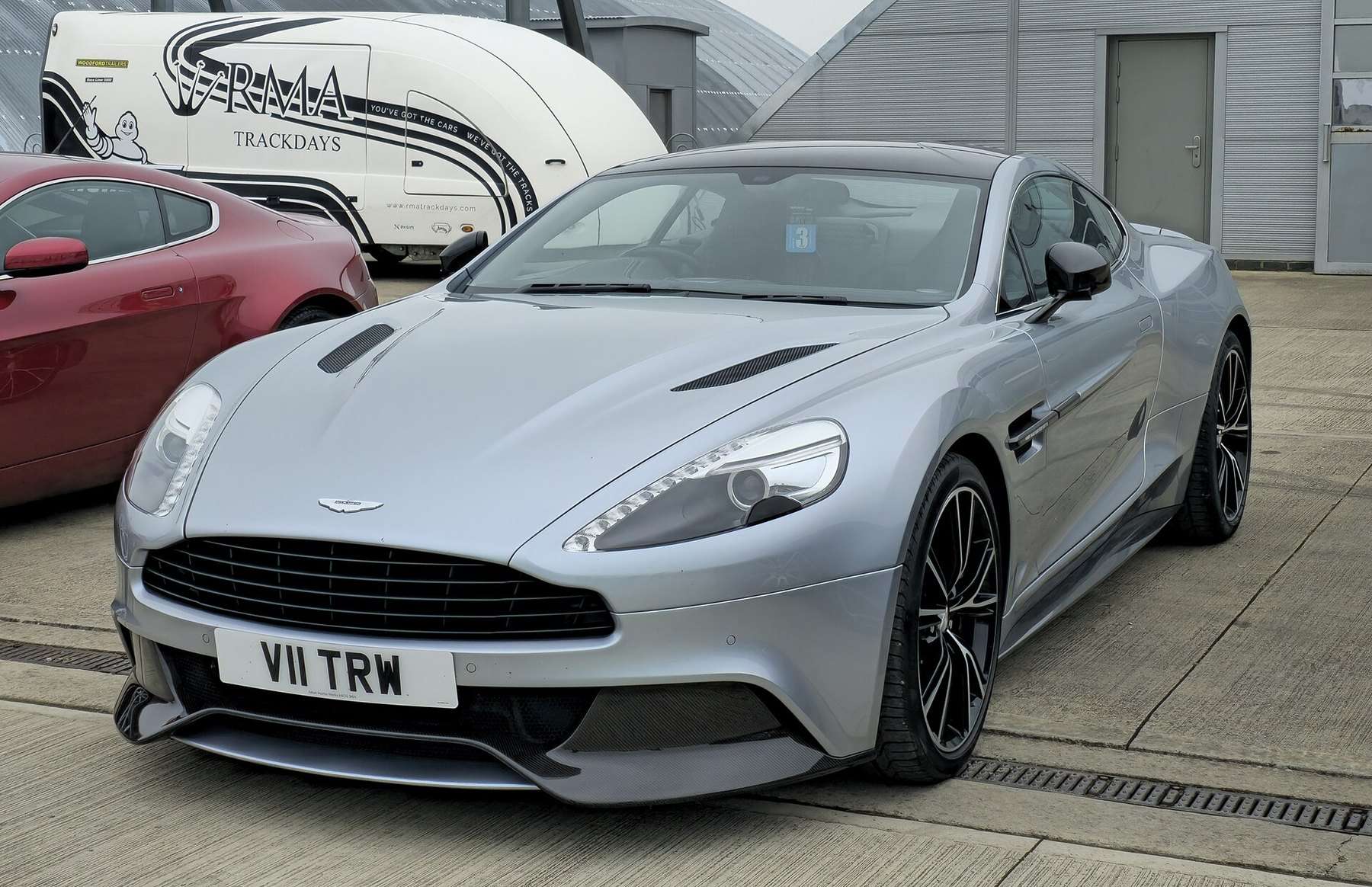
Featured image: 2012 Aston Martin Vanquish coupé. Photograph by Axion23, CC BY 2.0, via Wikimedia Commons; locally hosted.
A One-77-inspired flagship
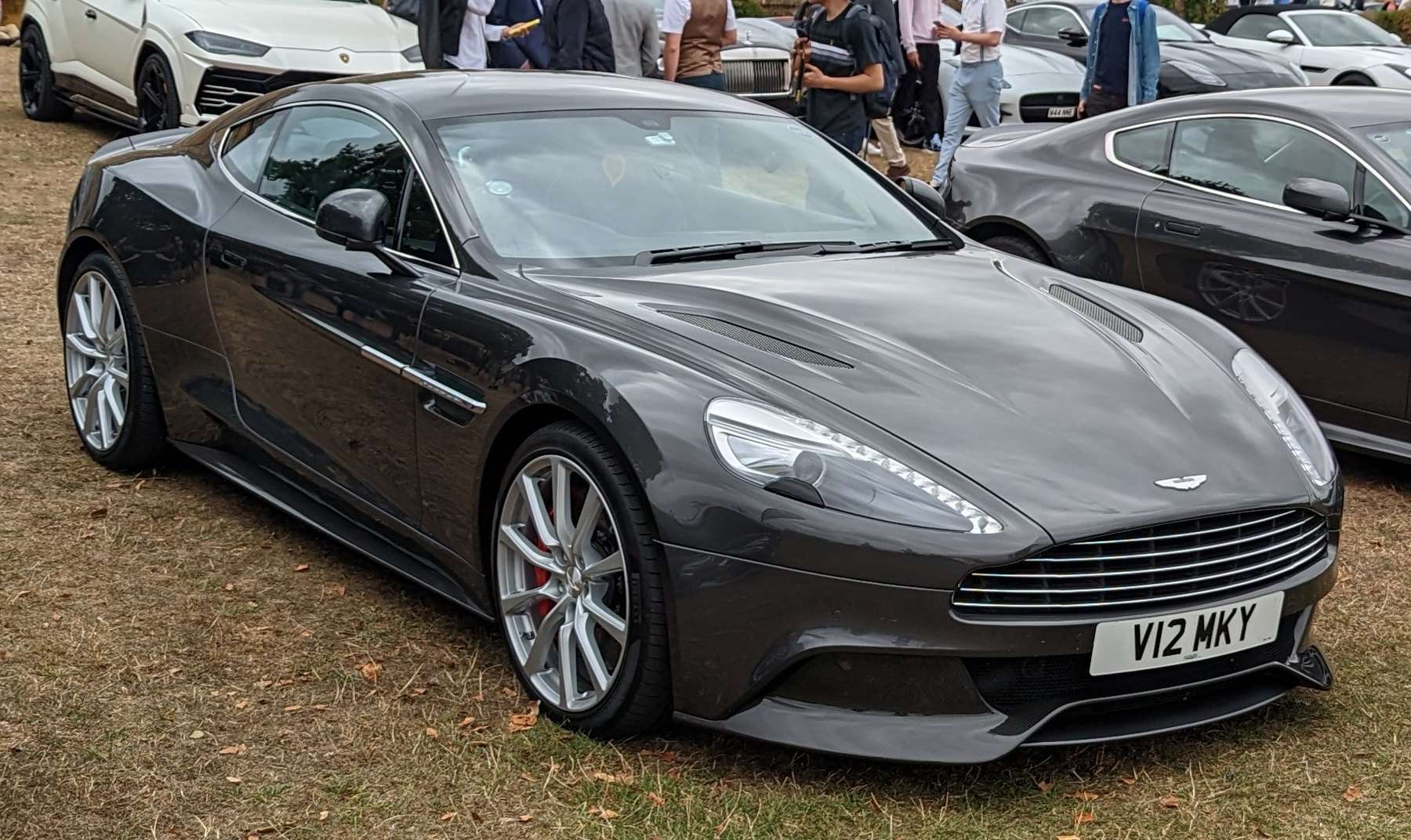
Aston Martin revealed the production Vanquish in 2012 after previewing its design direction with the Project AM310 concept. Marek Reichman’s shape carried One-77 cues in the waist, side strakes and dramatic rear, but wrapped them around the familiar bonded-aluminium VH structure.
Unlike the preceding DBS, every external panel was made from aerospace-standard carbon fibre. Aston Martin said the body was 25 per cent lighter than the DBS body, while a new interior introduced touch-sensitive controls, a revised instrument panel and far greater luggage capacity.
V12, chassis and specifications
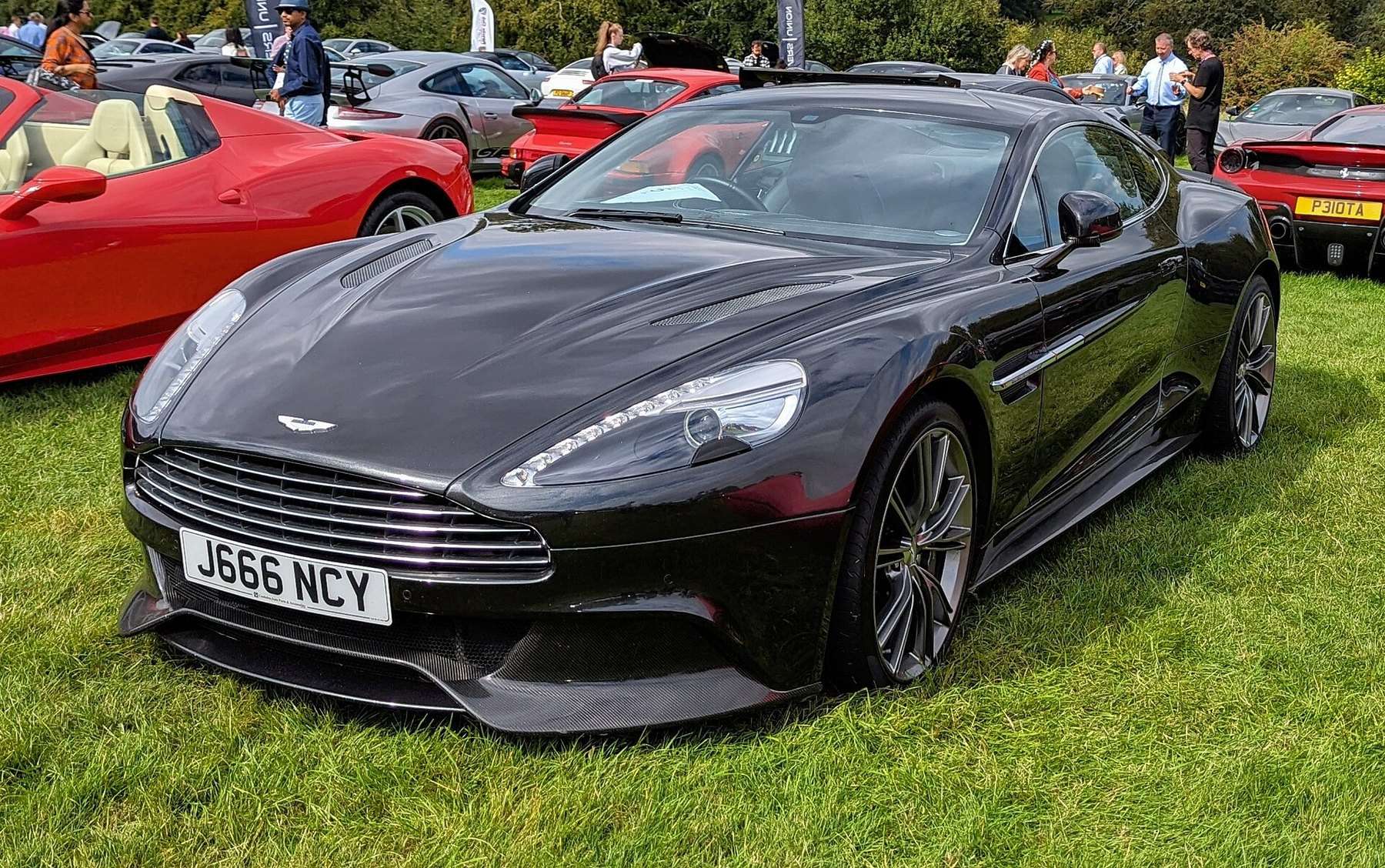
The Cologne-built 5,935 cc V12 gained dual variable valve timing, enlarged throttle bodies, machined combustion chambers and a new intake manifold. Launch output was 565 bhp, sent to the rear-mounted transaxle through a carbon-fibre propeller shaft. Carbon-ceramic brakes and adaptive dampers were standard.
| Version | Power | Transmission |
|---|---|---|
| Vanquish 2012 | 565 bhp | Six-speed Touchtronic 2 |
| Vanquish 2015 model year | 568 bhp | Eight-speed Touchtronic 3 |
| Vanquish S | 595 bhp | Eight-speed Touchtronic 3 |
The later eight-speed car is materially quicker and more responsive, but a well-maintained six-speed remains a capable, more affordable route into the same carbon-bodied flagship.
Love cars you don’t see every day?
Get forgotten cars, surprising motoring stories and the most interesting finds from Unusual Cars by email.
Free to join. No spam. Unsubscribe whenever you like. See our privacy policy.
Volante, Vanquish S and special editions
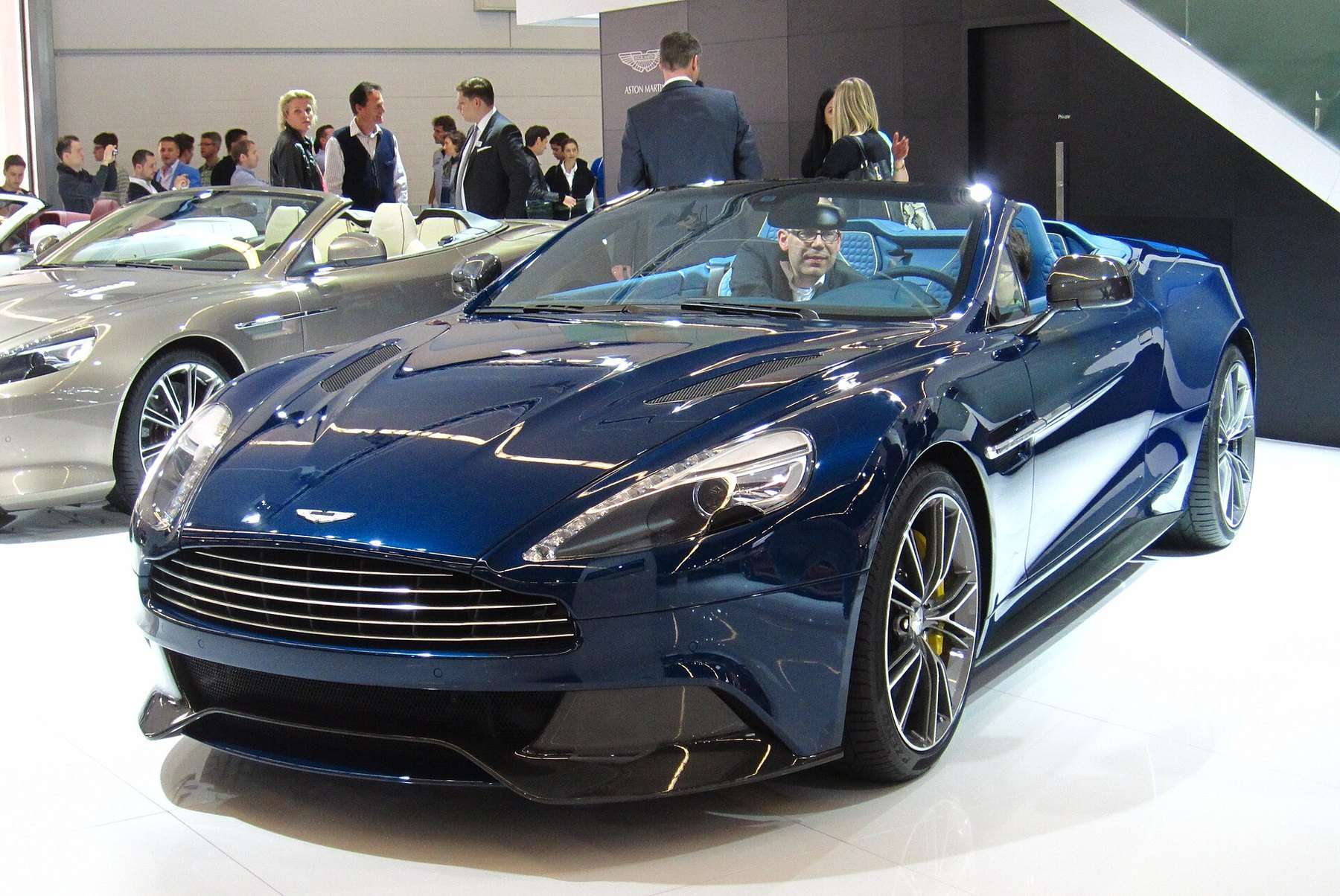
The Vanquish Volante arrived in 2013 with a powered fabric roof and the same carbon-fibre exterior construction as the coupé. Inspect the complete opening cycle, hydraulic components, seals, drains and carpets. Water ingress can affect both trim and electronic modules.
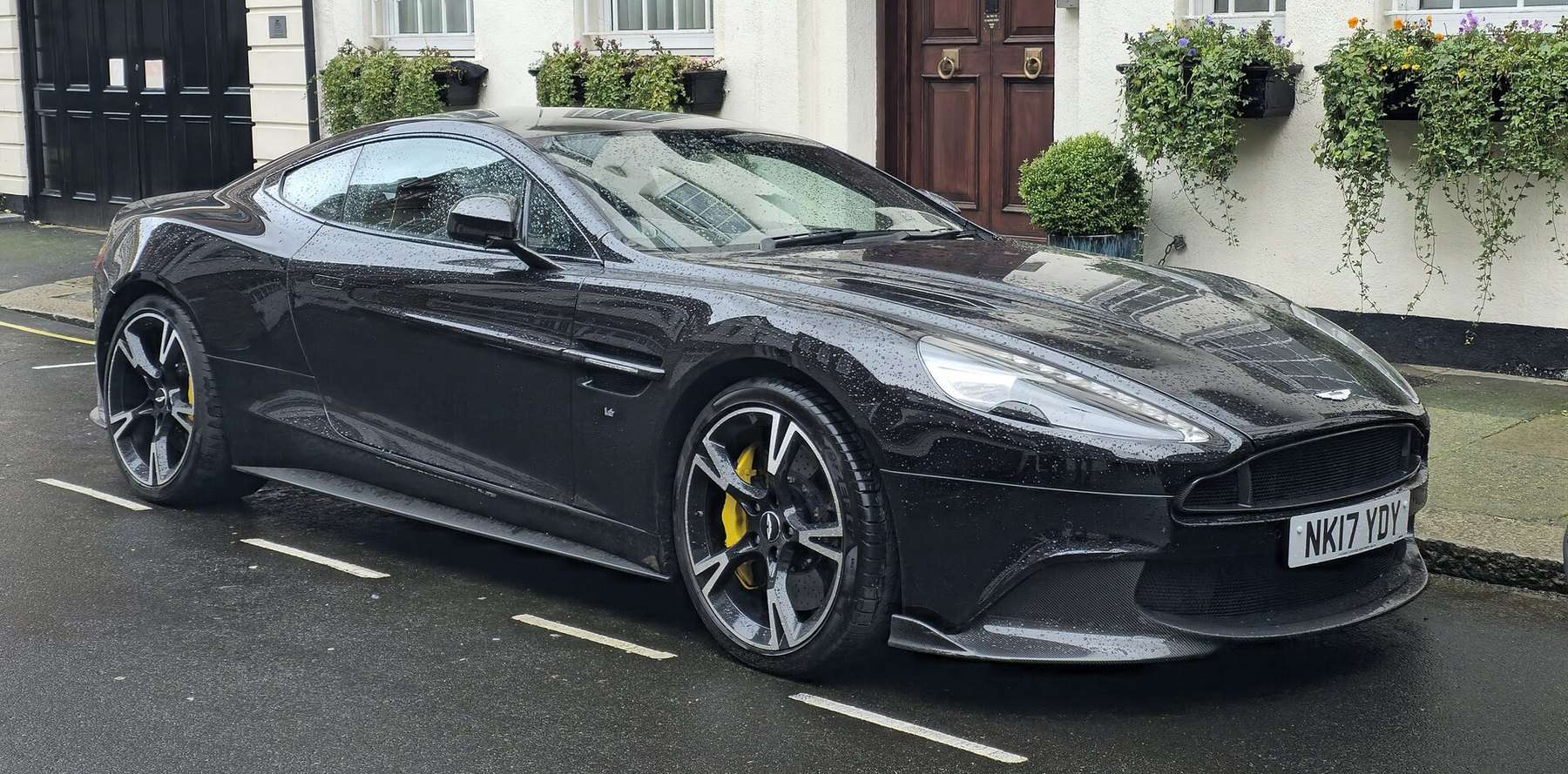
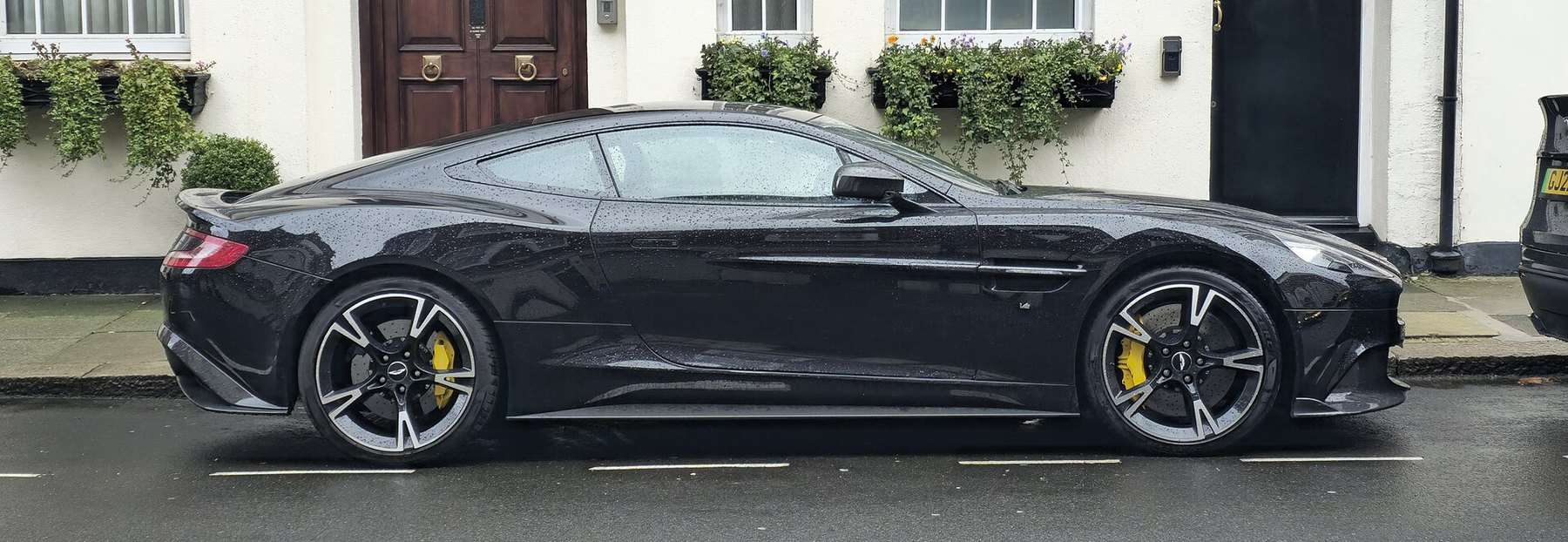
The 2017 Vanquish S added freer breathing, 595 bhp, revised suspension, a quad-exit exhaust and more assertive aerodynamics. Ultimate editions marked the end of production, while Zagato coupé, Volante, Speedster and Shooting Brake derivatives are distinct coachbuilt collectibles. Verify any claimed limited model through its build record.
Engine, cooling and transmission
The naturally aspirated V12 is proven but access makes neglected maintenance expensive. Start from cold, check for smoke, persistent noise, oil or coolant leaks and a smooth idle, then scan every control unit. Coil packs, plugs, oxygen sensors and leaking covers can generate significant labour.
Radiators and air-conditioning condensers collect road debris. Confirm that fans, thermostat and coolant circuits control temperature in traffic. Both Touchtronic versions should engage promptly and shift cleanly; hesitation, warning messages or driveline vibration require investigation rather than a software reset alone.
Carbon body, brakes and suspension
Carbon-fibre panels do not rust, but they can crack, delaminate or hide expensive collision repairs. Check alignment, paint depth, mounting points, undertrays and exposed edges. The bonded aluminium structure also deserves inspection for accident damage and corrosion around steel fixings.
Carbon-ceramic discs are durable in road use but costly to replace. Have them assessed for chips, heat damage and remaining life rather than relying on mileage. Adaptive dampers should change mode without leakage or knocking; tyres must be correct, evenly worn and recent enough for the car’s performance.
Cabin systems and ownership costs
Test touch controls, infotainment, navigation, parking sensors, cameras, seat modules, windows, mirrors, air conditioning, keyless functions and tyre-pressure monitoring. A weak battery creates misleading faults, but repeated warning messages still require diagnosis. Check that both glass keys are present and fully functional.
Annual servicing matters even at low mileage. Look for invoices covering brake-fluid changes, coolant, ignition service, transmission oil, tyres and age-related seals rather than stamps alone. A factory or recognised independent warranty can be valuable, but inspection quality is more important than the selling dealer’s description.
Which second-generation Vanquish should you buy?
The six-speed launch car offers the lowest entry point and the original specification. The eight-speed Vanquish is the best all-rounder, the Volante adds drama, and the S provides the final dynamic and power upgrades. Extremely rare Zagato cars sit in a different market.
Buy the example with the best documented maintenance, cleanest carbon body and healthiest brakes, dampers and electronics. A specialist pre-purchase inspection should include diagnostic scans, underbody and panel examination, brake measurement and a road test from cold to full operating temperature.
Sources and further reading
- Aston Martin: second-generation Vanquish history and specifications
- Aston Martin: Vanquish lineage and production history
- Aston Martin: Vanquish S archive
- Aston Martin Owners Club regional guide: VH-platform ownership checks
- evo: used modern Aston Martin buying guidance
Continue the Aston Martin story
The second Vanquish distilled the mature VH architecture into a complete carbon-bodied flagship before the DB11 generation arrived. Explore the complete Aston Martin hub. Compare the first V12 Vanquish. Read about the preceding DBS.
Frequently asked questions
When was the second-generation Aston Martin Vanquish built?
It was produced from 2012 to 2018, with the Volante joining in 2013 and the Vanquish S arriving for the final phase.
Is the second-generation Vanquish body carbon fibre?
Yes. Aston Martin made every external body panel from carbon fibre over a bonded-aluminium VH structure.
What engine does the 2012 Vanquish use?
It uses a 5,935 cc naturally aspirated V12 producing 565 bhp at launch; the later Vanquish S produces 595 bhp.
Is the eight-speed Vanquish better than the six-speed?
The eight-speed Touchtronic 3 shifts more quickly and improves acceleration, though condition and maintenance history matter more than gearbox count.
What should be checked before buying a Vanquish?
Check carbon body repairs, carbon-ceramic brakes, adaptive dampers, cooling, ignition, transmission operation, electrical systems and complete annual service records.