Affiliate notice: This guide contains affiliate links. As an Amazon Associate I earn from qualifying purchases.
For a Renaultsport Clio 172 or 182, choose the scanner around the fault you need to investigate. A compatible generic OBD2/EOBD reader can be useful for an engine warning, but an airbag or ABS question calls for confirmed access to that controller. A Renault-aware handheld is a sensible shortlist for owners who want broader reading without a laptop; legitimate Renault CLIP is the specialist route. Early 172s need an extra compatibility check before buying a generic reader.
This guide covers UK Clio II 172/182 road cars. The important exception is the 172 Cup: it has no ABS, so a tool cannot read an ABS controller that the car never had. A 182 Cup or Trophy must not be treated as the same equipment package. We have desk-researched this guide; Unusual Cars has not independently tested these cars or scanners.
Which cars does this guide cover?
UK RHD Clio II/X65 three-door hatch, 2000–2005: 172 phase 1 2000–2001, 172 phase 2 2001–2004, 182 2004–2005; 2.0 F4R naturally aspirated petrol; five-speed manual. Include 172 Exclusive, 172 Cup, 182 Cup/Cup packs and 182 Trophy by equipment; exclude V6, Williams, non-RS, racecars, engine swaps and standalone ECUs.
| Variant | What changes the diagnostic decision |
|---|---|
| 172 phase 1, including Exclusive | Keep the early build and generic-reader communication check separate from later cars. |
| 172 phase 2 | Check the actual build, fitted equipment and controller identity; do not treat every 172 as identical. |
| 172 Cup | No ABS. Reduced equipment makes a broad generation-level module list misleading. |
| 182, 182 Cup and cars with Cup packs | Identify the actual car and options. “Cup” is not a universal list of deleted electronics. |
| 182 Trophy | Keep within this guide, with its equipment identified; special dampers do not establish extra diagnostic functions. |
The Clio Sport Register’s model guide provides the UK variant context. A registration plate, replacement seats or aftermarket wheels cannot establish the original electronic specification. Materially modified cars need their own hardware and software assessment.
Quick choice: which diagnostic route fits your job?
| Your question | Route to shortlist | Check before spending |
|---|---|---|
| Engine warning or emissions information | Genuine generic EOBD handheld, such as an Autel AL519-type reader | Actual EOBD compatibility, supported protocols and the information the reader displays. |
| Airbag, ABS or another fitted controller | Renault-aware handheld: investigate genuine iCarsoft RT/FR configurations | Exact generation, engine, controller and required read function in the correct software package. |
| Several warnings, communication problems or fuller factory context | Renault specialist using legitimate CLIP | Correct CLIP pathway, interface and current entitlement; diagnosis still needs interpretation. |
| Several different makes in the household | A supported multibrand tool, such as an appropriate Autel MD808 Pro configuration | Exact coverage, model name, software and update arrangements; not just a marque logo. |
A higher-priced tool is worthwhile only when it adds information you actually need and supports your car. For a one-off specialist problem, paying for a properly documented scan may be more useful than buying hardware with uncertain coverage. None of these routes turns a fault code into a confirmed failed part.
What a generic OBD2 reader can tell you
Generic EOBD is the emissions-related baseline. On a compatible car it can provide supported engine codes, readiness information, freeze-frame context and live data. The available monitors and parameters depend on the car and reader; a menu label is not proof that the vehicle supplies that item. Keep the stored code and its status, rather than recording only an app’s simplified description.
An engine-only scan cannot establish that the ABS, restraint or body systems are fault-free. Equally, a scanner that offers an “OBDII” mode may have a separate Renault menu with additional capabilities. Check which mode was used before interpreting “no codes”.
The early 172 compatibility trap
Early cars span an important EOBD transition. The historical petrol-car requirements applied to new types from January 2000 and all types from January 2001, with the stated vehicle-category conditions. That timing is background, not a promise that every reader communicates with a particular 2000 or early 2001 172. The shape of the socket and a registration year are insufficient buying checks. Historical EOBD requirements.
Owners have reported mixed reader connections between phase 1 and phase 2 cars. Use those reports as a reason to check the exact build and tool, not as proof that all phase 1 cars work—or that none do. If a reader fails to connect, do not automatically diagnose a failed ECU. ClioSport connection discussion.
What Renault-aware diagnostics may add
The available iCarsoft Renault V01.25 reference list names Clio II, Clio III and Mégane II families with engine and non-engine controllers. This is evidence for investigating a broader route, not proof of every Renaultsport function. Ask for confirmation against your engine, year and required controller, and distinguish ECU information, code reading, clearing and live data from commands or programming.
For this generation, useful questions include access to the restraint controller, ABS where fitted, and relevant body/interconnection or climate information. The 172 Cup exception comes first: absent equipment is not a scanner failure. Do not assume a later phase’s controller labels or parameter list apply to an early car. A manual 172/182 also does not acquire an automatic-transmission module because the family chart lists one.
Owner problems: what to record before buying parts
Airbag and SERV lights
A ClioSport owner report describes intermittent airbag and SERV warnings on a phase 1 172. That is a restraint-system question, not an instruction to replace an engine sensor because a cheap reader found nothing. Record the warning, whether it is intermittent, the car’s original or changed seat specification, and the SRS fault report from a compatible tool. Owner warning report.
A restraint fault deserves the correct controller context and qualified repair assessment. This guide does not provide connector manipulation, resistor substitution or warning-defeat instructions. Clearing a lamp without addressing the fault is not evidence that the system has been repaired.
Electrical warning or limp mode on a 182
Another owner report shows why Renault-specific context can matter: CLIP information about pedal-potentiometer circuits and available pedal-track data was more informative than a bare warning-light description. It does not establish a universal ratio between tracks, a calibration procedure or the correct replacement part for another car. 182 diagnostic question.
Save the actual code, controller, wording and circumstances. Note whether the event happens from cold, under load or after recent work. A named sensor circuit can have several possible causes; a code label alone cannot distinguish the sensor, wiring, supply, connector or other contributing fault.
ABS warning on a car that actually has ABS
Identify the variant before choosing an ABS-capable tool. On an equipped car, an engine-only scan cannot rule out an ABS fault. On a genuine 172 Cup, failure to find an ABS module is expected from the original equipment specification. Do not apply wheel-sensor or control-unit conclusions until the actual car and controller are established.
Choosing a complete handheld setup
For a Renault-aware handheld, compare the exact package rather than RT/FR shorthand. The European iCarsoft comparison identifies RT V1, FR V2 and FR V3. Current FR V2.0 and FR V3.0 product information makes them credible candidates, but broad system lists are not exact Renaultsport proof. Do not silently treat an unfamiliar RT V2/V3 listing as the same product.
Before ordering, check the genuine model name, included vehicle software, cable or interface, the required controller and reading function, and the update route. These handheld routes operate without a phone or laptop during diagnosis; keeping the database current may require a PC and the package-specific connection or card reader. iCarsoft advertises free lifetime upgrades for these FR models, but the update support page directs owners to the exact serial-number package and its OS instructions.
FR V3 product advertising includes functions beyond reading. Pay more only if an exact supported function is useful to you, not because “coding” or “active tests” appears in a feature list. This guide does not promise coding, throttle adaptation, calibration, service resets or ABS bleeding on the covered cars. For an alternative multibrand route, distinguish Autel MD808 Pro from MD808 and confirm the current Renault package rather than relying on a generic all-systems claim.
Legitimate Renault CLIP: what the pathway involves
Renault’s January 2026 applicability list places the covered X65/X85/X84 generations on CLIP. The older Clio II rows distinguish ASDE and BORNEO2 routes; Clio III and Mégane II have their own entries. Match the actual row and ECU requirements to the interface. ADT is not simply a newer replacement to assume for this batch.
The official ASOS offer requires the current account, authentication token, software-module and subscription arrangements. These are separate from purchasing an interface. A Renault specialist with legitimate access is often the sensible route for an owner who needs fuller context rather than a permanent workshop setup.
Renault’s May 2026 requirements specify supported Windows editions and interface prerequisites. The listed Windows 11 64-bit or Windows 10 IoT LTSC options are not a blanket endorsement of ordinary Windows 10, macOS or virtual machines. Likewise, an arbitrary ELM327 or J2534-labelled interface is not proof of legacy Renault controller access. Use the current official requirements; avoid copied software bundles.
Your first scan: preserve evidence
Identify the car and choose the matching diagnostic entry. Record the tool model and software version alongside the original build and fitted equipment. Read and save the report before clearing anything: controller name, code, exact description, present or stored status and any supported context. If using generic mode, identify it as an engine/emissions report rather than a whole-car scan.
Then relate the information to the symptom and decide what further evidence is needed. A recurring code can guide inspection without proving a component failed. A clear report can also be incomplete if the tool did not reach the relevant controller. Reading information, clearing faults, service resets, active tests, coding and programming are different operations; availability of one does not establish another.
Stop at read-only information when the procedure is uncertain. Safety-system repair, security access, key work and unsupported configuration changes are outside this guide. Use qualified help for faults affecting restraint, steering or braking systems rather than following a code label as a repair instruction.
Love cool cars? Join Unusual Cars Club FREE!
Get forgotten motoring finds, stories, helpful car content and more.
Free to join. No spam. Unsubscribe whenever you like. See our privacy policy.
Frequently asked questions
Will a cheap reader be enough?
For a supported engine/emissions question, it may be. Choose confirmed Renault-aware reading when the concern is in a fitted non-engine controller or the generic information is insufficient. Check actual compatibility before purchase, particularly on an early 172.
Does no fault code mean the car is healthy?
No. It means that the scan did not show a fault in the information it accessed. It may not have reached the controller involved, and some mechanical problems are not established by a code. Keep the scope of the report clear.
Do I need a laptop?
A supported handheld can perform its diagnostic reading independently. Updates may need a compatible PC. The legitimate CLIP pathway has its own Windows, interface and entitlement requirements; a specialist can provide that route without the owner buying the setup.
Can I use the scanner for a reset or coding?
Do not assume so. Ask for the exact function on the correct model, controller and software version. The reading routes discussed here do not establish resets, calibrations, coding, programming or active-test capability.
Does a Renault-wide coverage list prove it works on my RS?
It establishes a starting point for checking, not every function on a particular car. Build, engine, fitted module, software, interface and tool version can all change the answer.
More scanner guides and source notes
Browse all car diagnostic scanner guides for the wider directory. Each generation needs its own compatibility evidence; a recommendation for another marque or later Renault is not proof for this car.
Browse all Renault diagnostic scanner guides, or compare the guides for Clio III Renaultsport 197/200 · Mégane II Renaultsport 225/230 R26.
Sources reviewed: 14 October 2026. Product and commercial links rechecked: 15 October 2026. This guide uses Renault documentation, official diagnostic requirements, tool documentation and owner-question research. Owner discussions identify questions rather than verified causes or fault-frequency statistics. Exact functions remain subject to the qualifications above.
Key documents: Renault CLIP applicability; official setup requirements; reference controller list; current iCarsoft update route.
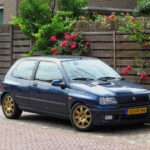
Photo: EA04LJJ / Wikimedia Commons — CC BY-SA 4.0. Original scene retained; resized for display.