UNUSUAL CARS MODEL GUIDE
The first-generation SEAT Toledo was the company’s first new model developed within the Volkswagen Group. The 2.0 GT 16V turned that practical five-door hatchback saloon into a credible performance car, using the 1,984 cc ABF twin-cam engine from the contemporary Volkswagen Golf GTI 16V. Tested in Britain in 1995 with 150 bhp, it combined an enormous boot, discreet styling and stronger handling than its family-car image suggested.
Featured image: 1995 SEAT Toledo GT front three-quarter view. Photograph by Juancar22, CC BY-SA 4.0, via Wikimedia Commons; locally hosted.
Why the first Toledo mattered
SEAT unveiled the Toledo in 1991 as its first creation with Volkswagen. It arrived as a large family hatchback with the visual formality of a saloon but a wide-opening tailgate and exceptional luggage space. That mixture gave it a distinct place between conventional hatchbacks and compact executive saloons.
The model also became one of the most visible symbols of modern Spain during the 1992 Barcelona Olympic Games. SEAT supplied official cars, built an experimental electric Toledo to lead the marathon and created the luxurious Toledo Podium for Spanish medal winners. More than one million Toledos were sold across the model line’s life, but the first-generation performance versions are now scarce in Britain.

The 2.0 GT 16V specification
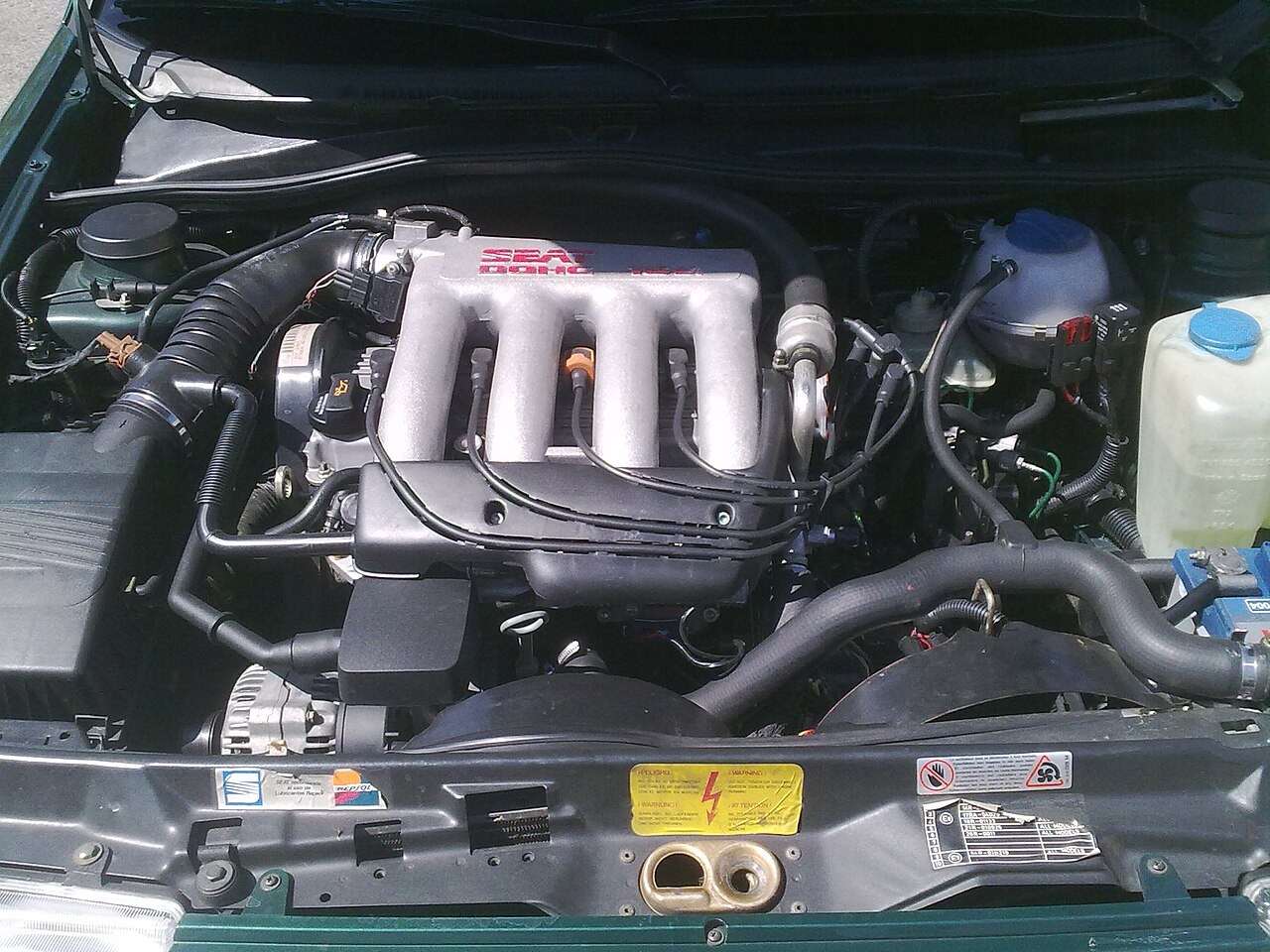
The sporting flagship appeared in Britain as the Toledo 2.0 GT 16V. Its 1,984 cc four-cylinder ABF engine used twin overhead camshafts, four valves per cylinder and electronic fuel injection. Autocar recorded 150 bhp at 6,000 rpm, 133 lb ft at 4,800 rpm, 0–60 mph in 8.3 seconds and a 132 mph maximum.
| Item | UK Toledo GT 16V |
|---|---|
| Engine | 1,984 cc naturally aspirated inline-four, 16 valves |
| Output | 150 bhp at 6,000 rpm |
| Torque | 133 lb ft at 4,800 rpm |
| Transmission | Five-speed manual, front-wheel drive |
| Contemporary UK test | 0–60 mph 8.3 sec; 132 mph maximum |
Badging varied by market and period, so advertisements may call the same basic high-output derivative GT, GTI or 2.0i 16V. For a UK car, the chassis number, engine code and period documentation are more reliable than a replacement badge.
Love cars you don’t see every day?
Get forgotten cars, surprising motoring stories and the most interesting finds from Unusual Cars by email.
Free to join. No spam. Unsubscribe whenever you like. See our privacy policy.
Chassis, brakes and driving character
Thicker anti-roll bars and sportier tyres reduced roll and sharpened turn-in compared with ordinary Toledos. The result was an unexpectedly agile large hatchback, although contemporary testing criticised the firm low-speed ride and obstructive gearshift. Strong in-gear performance was a particular virtue because the engine delivered its best work at higher revs.
On a test drive, the car should track straight, steer consistently and stop without ABS warning lights or pedal pulsation. Check front wishbone bushes, ball joints, top mounts, rear axle bushes, dampers and wheel bearings. Uneven tyre wear can indicate poor alignment, tired suspension or previous accident damage.

Body and corrosion inspection
Start with the shell. Inspect the sills and jacking points, floor seams, front chassis legs, suspension mountings, rear axle areas, wheelarches, windscreen surround, door bottoms and tailgate. Lift the boot carpet and check the spare-wheel well for water, collision repairs and corrosion hidden by underseal.
Panel gaps should be consistent and the long roofline should not show signs of poor structural repair. Toledo-specific lamps, bumpers, mouldings and tailgate trim are difficult to replace. A complete, honest car is usually a better purchase than a cosmetically shiny example with missing parts or freshly concealed rust.

Engine, transmission and electrical checks
Insist on a cold start. The ABF should build oil pressure promptly, idle cleanly and pull strongly once warm. Check timing-belt and tensioner history, coolant quality, radiator, fan operation, thermostat, water pump, breather system and oil leaks. Misfires can come from ignition components, vacuum leaks or neglected injection equipment rather than a single obvious cause.
The five-speed gearbox should select every ratio without baulking and remain quiet on acceleration and overrun. Check clutch take-up, driveshaft joints and engine mounts. Test the ABS, windows, central locking, heater fan, sunroof where fitted, instruments and warning lamps. Electrical faults are often repairable, but damaged GT-specific trim and switchgear may be harder to source.

Buying checklist
Prove the specification
Confirm the ABF engine, chassis identity, brakes, suspension and original trim rather than relying on GTI-style badges.
Inspect the shell before the drivetrain
Structural corrosion and poor repairs can cost more to correct than ordinary mechanical wear.
Value history and completeness
Period invoices, handbooks, keys, wheels and model-specific interior pieces materially improve a rare survivor.
Sources
- SEAT UK: 1990s history and Toledo launch
- Autocar archive: 1995 Toledo 2.0 GT 16V road test
- SEAT UK: Toledo Olympic and Podium heritage
Continue the SEAT story
Explore more overlooked Spanish performance, family and utility cars in the complete SEAT hub.
Frequently asked questions
Was the Toledo Mk1 2.0 GT 16V sold in Britain?
Yes. Autocar tested the UK-market Toledo 2.0 GT 16V in April 1995 at a price of £14,995.
Which engine does the Toledo GT 16V use?
It uses the Volkswagen Group 1,984 cc ABF four-cylinder engine with 16 valves and 150 bhp.
How fast is the Toledo GT 16V?
A contemporary UK test recorded 0–60 mph in 8.3 seconds and a 132 mph maximum.
Why is it sometimes called GTI or 2.0i 16V?
Names and badges varied by market; UK period material commonly used GT 16V, while other markets used GTI or 2.0i 16V descriptions.
What is the biggest buying risk?
Structural corrosion and incomplete model-specific trim are the most difficult faults to solve.