UNUSUAL CARS MODEL GUIDE
The Malaga was SEAT’s first modern compact saloon and, alongside the original Ibiza, one of the two cars that introduced the marque officially to Britain in September 1985. Its practical four-door body, huge boot and System Porsche petrol engines made rational sense, but low UK sales and severe attrition have turned it into one of the rarest surviving SEATs.
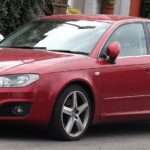
Featured image: SEAT Malaga front three-quarter view. Photograph by No machine-readable author provided. Randroide~commonswiki assumed (based on copyright claims)., CC BY-SA 3.0, via Wikimedia Commons; locally hosted.
The car that helped launch SEAT in Britain
SEAT began official UK exports in September 1985 with just two models: the Ibiza hatchback and the family-oriented Malaga saloon. The company recorded only 405 British sales in its first year, making any surviving right-hand-drive Malaga a significant part of SEAT’s UK history.
The Malaga belonged to SEAT’s first post-Fiat generation and shared engines and many components with contemporary small SEATs. Its separate boot created far more luggage space than the Ibiza, while the conservative profile targeted buyers who still preferred a traditional three-box saloon.

Engines and versions
| Version | Engine | Character |
|---|---|---|
| 1.2 | System Porsche carburettor petrol | Entry petrol model. |
| 1.5 | System Porsche carburettor petrol | Stronger everyday performance. |
| 1.5 Injection | Fuel-injected petrol in selected markets | Late sporting derivative. |
| 1.7 diesel | Naturally aspirated diesel in selected markets | Economy-focused version. |
UK equipment and trim changed over the model’s life, and continental cars are not reliable guides to British specification. Record the VIN, engine code, carburettor or injection type and gearbox details before ordering parts.

Love cars you don’t see every day?
Get forgotten cars, surprising motoring stories and the most interesting finds from Unusual Cars by email.
Free to join. No spam. Unsubscribe whenever you like. See our privacy policy.
Body and structural inspection
Inspect the sills, jacking points, floor seams, front suspension mountings, rear spring and axle areas, wheelarches, windscreen surround, door bottoms and boot floor. Water can collect beneath carpets and in the spare-wheel well. Old repairs need checking from both sides, not just from the painted surface.
Because replacement panels are scarce, corrosion that would be manageable on a common classic can make a Malaga economically impossible to restore. Good glass, lamps, bumpers, grille and mouldings add considerable value.

Engine and running gear
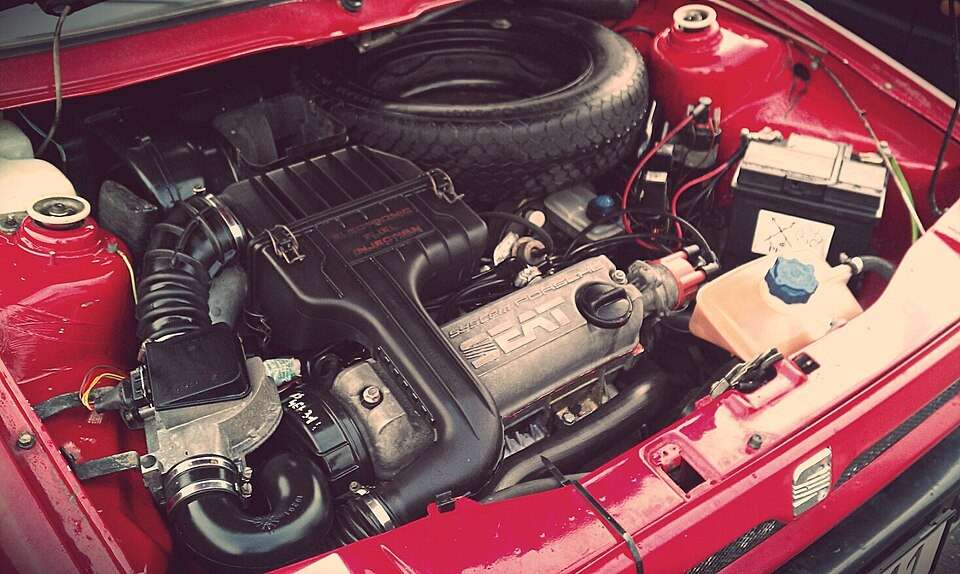
The System Porsche petrol engines are straightforward when maintained correctly. A cold engine should start cleanly, maintain stable oil pressure and warm without overheating. Check timing-belt history, water pump, radiator, hoses, carburettor condition or injection operation, and signs of oil-and-coolant contamination.
Listen for gearbox bearing noise and test all ratios. Inspect clutch and throttle cables, driveshaft boots, wheel bearings, brakes, steering joints and suspension bushes. Parts shared with other period SEATs can help, but compatibility should be confirmed rather than assumed.
Cabin, identity and rarity
The cabin is simple, but Malaga-specific dashboard pieces, seats, door cards and switchgear can be difficult to replace. Test the heater fan, wipers, lights, gauges, rear demister and every lock. Damp smells or stained trim warrant a careful leak investigation.
Official SEAT material identifies the Malaga as one of the company’s first two UK models. That provenance makes right-hand-drive documentation important. Preserve original handbooks, dealer material, registration records and period number plates where possible.

Buying checklist
Prove the car’s identity
Confirm the chassis, engine and UK registration history before valuing rarity.
Buy the most complete shell
Missing trim and serious corrosion are much harder to solve than ordinary servicing.
Preserve its historical evidence
Original handbooks, dealer records, registration documents and period trim help establish the story of a rare UK-market survivor.
Sources
- SEAT UK: first UK exports and Malaga history
- SEAT annual report: historical model timeline
- SEAT UK: history of the 1980s
Continue the SEAT story
Explore more overlooked Spanish performance and everyday cars in the complete SEAT hub.
Frequently asked questions
When did SEAT begin selling the Malaga in Britain?
The Malaga and Ibiza formed SEAT’s first official UK range from September 1985.
Which engines did the Malaga use?
The range included 1.2- and 1.5-litre System Porsche petrol engines, with fuel-injected and diesel derivatives in selected markets.
Why is the Malaga rare in Britain?
Initial SEAT sales were small and the inexpensive saloon suffered heavy attrition, leaving very few right-hand-drive survivors.
What is the main buying risk?
Structural corrosion and the scarcity of model-specific panels, lamps and trim.
Is the Malaga mechanically related to the first Ibiza?
The two cars share period SEAT engineering and engine families, but have distinct bodies and should not be treated as interchangeable for every part.