UNUSUAL CARS MODEL GUIDE
The Daihatsu Sportrak was a compact, short-wheelbase 4×4 with real low-range gearing and a removable rear roof rather than a road car dressed for the countryside. Sold in Britain from the early 1990s, it combined a lively 1.6-litre petrol engine with a narrow body and simple mechanical hardware. Good survivors are characterful; poor ones hide corrosion and years of off-road stress.
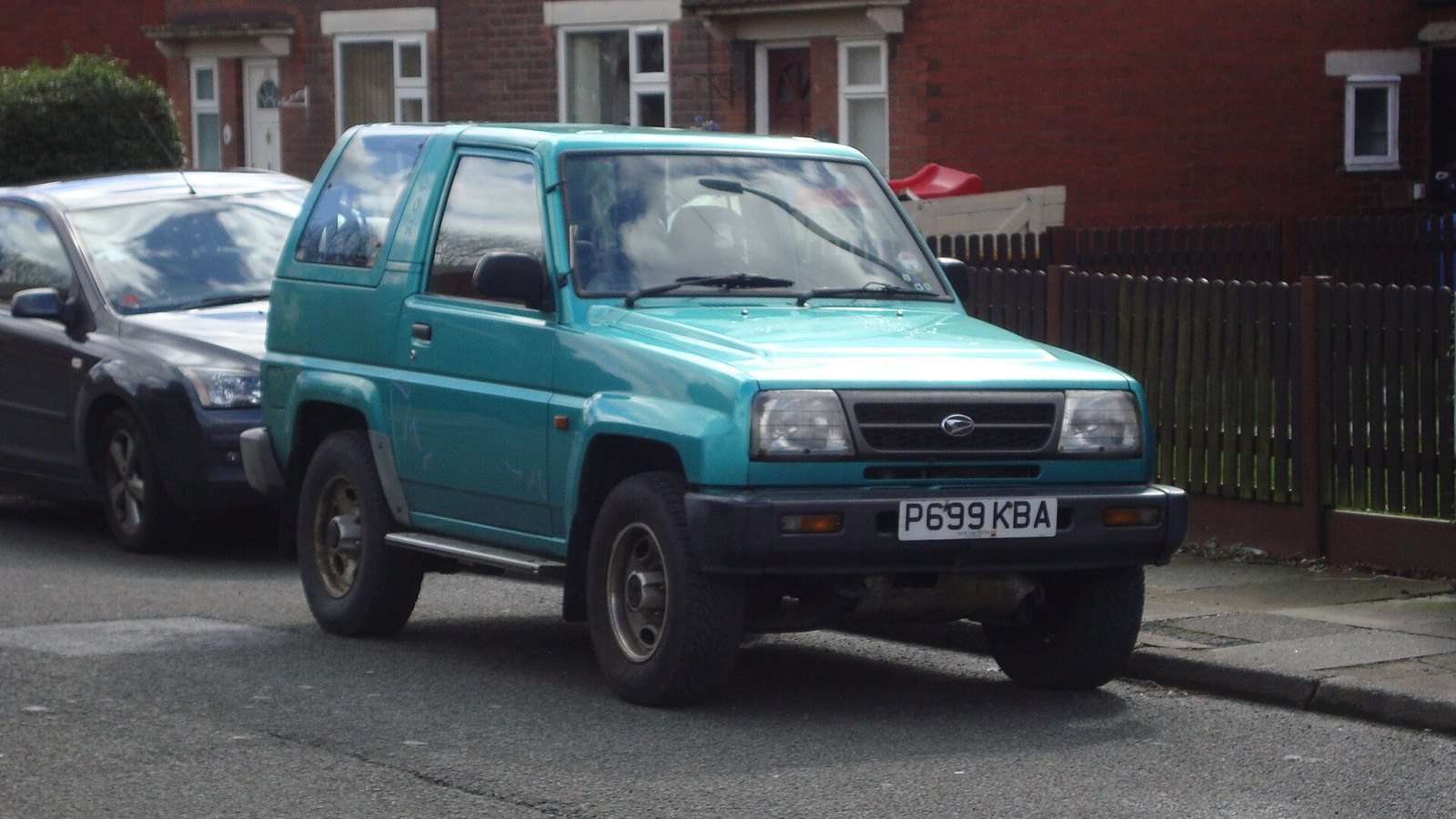
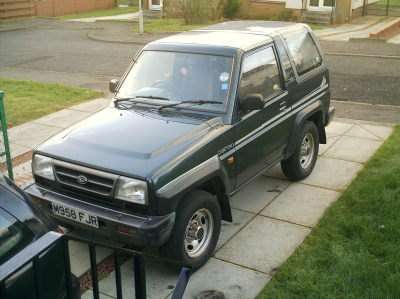
Featured image: 1996 Daihatsu Sportrak 1.6 Xi-SE Midori front three-quarter view. Photograph by Kieran White from Manchester, England, CC BY 2.0, via Wikimedia Commons; locally hosted.
A small 4×4 before the crossover era
Daihatsu launched the model internationally as the Feroza and sold it in Britain as the Sportrak. It sat below the larger Fourtrak and targeted drivers who wanted genuine off-road ability without the size or diesel engine of a working utility. A separate chassis, short wheelbase and part-time four-wheel drive gave it far more mechanical substance than a modern compact crossover.
British sales ran from 1989 into the late 1990s. Three-door bodies dominated, with a removable rear hardtop or soft-top arrangement depending on version. The cabin was compact and rear access limited, but the Sportrak’s size made it agile on narrow lanes and trails. Later ELXi and Xi-SE derivatives added equipment and cosmetic updates without changing the basic proposition.

Engine, transmission and model range
UK Sportraks use a 1,589cc four-cylinder petrol engine, usually with fuel injection on later cars, driving through a five-speed manual gearbox and two-speed transfer case. Normal road use is rear-wheel drive. Four-wheel drive should be selected only where the surface allows tyre slip, because there is no centre differential to absorb speed differences.
| Item | UK Sportrak |
|---|---|
| Engine | 1.6-litre four-cylinder petrol |
| Transmission | Five-speed manual |
| Four-wheel drive | Selectable part-time system with high and low ranges |
| Body | Short-wheelbase three-door with removable rear roof or soft top |
| Related export name | Feroza |
Advertisements may mix Sportrak, Feroza and Rocky names. Verify the UK identity, trim and registration rather than relying on an imported badge. Manual or automatic front hubs may be fitted, and their correct operating sequence should be understood before the test.
Love cars you don’t see every day?
Get forgotten cars, surprising motoring stories and the most interesting finds from Unusual Cars by email.
Free to join. No spam. Unsubscribe whenever you like. See our privacy policy.
Chassis and body corrosion
Inspect the full ladder chassis, outriggers, crossmembers, suspension mounts, steering-box area and body mounts. Mud collects around doubled metal and above fuel-tank or guard areas. Tap and probe suspicious seams rather than judging by fresh paint. Poorly plated repairs close to suspension or steering loads are a serious warning.
On the body, check sills, floors, inner and outer arches, bulkhead, windscreen surround, door bottoms and rear tub. Removeable-roof seals can leak into the cabin and corrode hidden seams. Lift carpets and inspect the boot floor. Off-road accessories may conceal cut panels or damaged mounts, so ask how and why each modification was fitted.

Engine and driveline checks
From cold, the engine should start promptly and idle without smoke or severe valvetrain noise. Check the timing-belt history, cooling system, radiator, fan, water pump and hoses. Overheating can damage the cylinder head and head gasket, while neglected oil changes accelerate wear.
Drive every gear and listen for bearing noise on acceleration and overrun. The clutch should not slip or judder. On a loose surface, check four-wheel drive and low range, then confirm they disengage. Inspect front hubs, universal joints, propshaft splines, transfer case, differentials and axle seals. Transmission wind-up on dry tarmac can disguise or cause faults, so do not test the system incorrectly.

Road manners, roof and ownership
A sound Sportrak feels compact and direct, but the short wheelbase and high body demand measured driving. Excessive wandering, steering free play, brake pull or violent bouncing points to worn components rather than normal character. Check springs, dampers, bushes, ball joints, wheel bearings, brake pipes and tyre age. Matching tyres matter to the driveline.
Cycle windows, locks and all instruments, then fit and remove the roof sections if the seller permits. Check catches, seals and drainage. Body panels, interior trim and original roof parts are less readily available than service items, so a complete car is preferable. The best examples retain standard suspension and sensible tyres rather than extreme lifts that compromise steering geometry.

Buying checklist
Make the chassis inspection decisive
Structural rust around mounts and crossmembers matters more than paint or mileage.
Test low range correctly
Use a loose surface and follow the hub and transfer-case procedure for that vehicle.
Prefer standard geometry
Large lifts and oversized tyres can overload steering, bearings and driveline components.
Sources
- RAC Drive: UK Sportrak model history
- AA: Sportrak and Fourtrak report
- Daihatsu Drivers Club UK: Sportrak specifications
Continue the Daihatsu story
Explore more inventive Japanese city cars, turbo hatchbacks and compact 4x4s in the complete Daihatsu hub.
Frequently asked questions
Was the Daihatsu Sportrak sold in Britain?
Yes. Daihatsu sold the compact three-door Sportrak in the UK from the end of the 1980s through the 1990s.
What is the Daihatsu Feroza?
Feroza was the name used for closely related versions in other markets; Britain generally used Sportrak.
Does the Sportrak have low-range gearing?
Yes. It has selectable part-time four-wheel drive with high and low transfer-case ranges.
What engine does the UK Sportrak use?
UK cars are principally associated with a 1.6-litre four-cylinder petrol engine and five-speed manual gearbox.
What should I inspect first?
Inspect the separate chassis, its suspension and body mounts, and the rust-prone body structure before mechanical or cosmetic details.