UNUSUAL CARS MODEL GUIDE
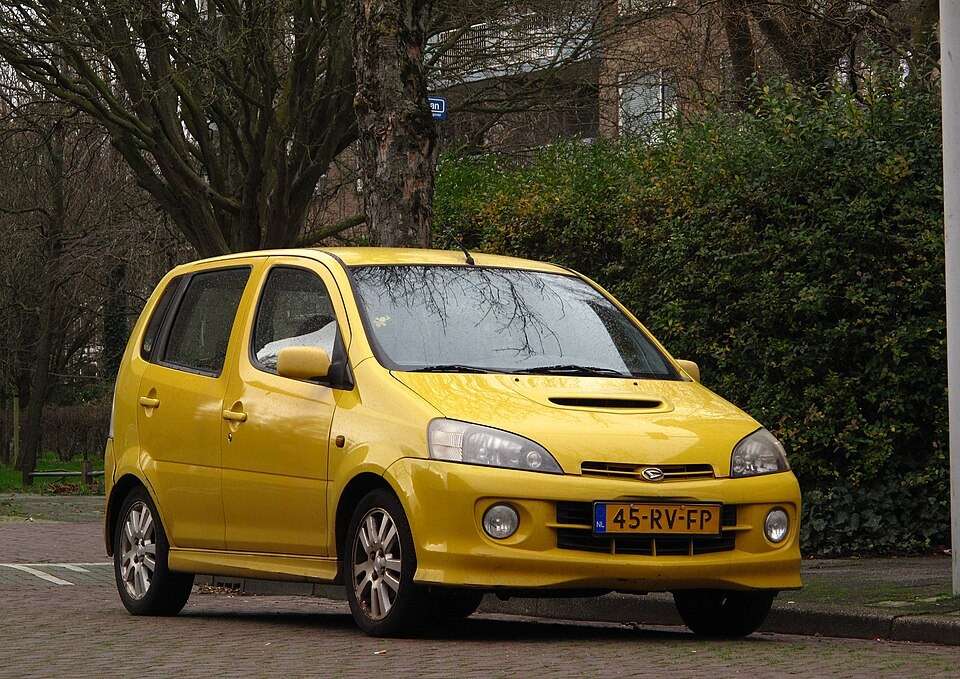
The Daihatsu YRV Turbo 130 hid a genuinely fast drivetrain inside one of the oddest small five-door bodies sold in Britain. Its 1.3-litre turbocharged engine produced approximately 127 bhp and 170 Nm, driving the front wheels through a four-speed Steershift automatic. With 0–60 mph performance around eight seconds, it was a practical micro-MPV-shaped alternative to conventional hot hatchbacks.
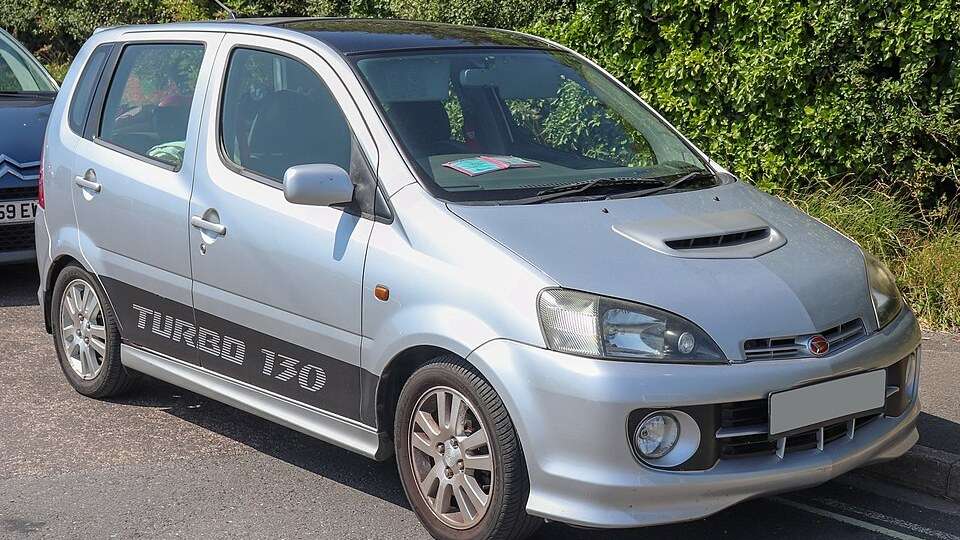
Featured image: 2004 Daihatsu YRV Turbo 130 automatic. Photograph by Vauxford, CC BY-SA 4.0, via Wikimedia Commons; locally hosted.
A performance version nobody expected
The ordinary YRV arrived in Britain in 2001 as a tall, light five-door positioned between a supermini and a miniature MPV. Its double-wedge window line, generous cabin and compact footprint were unconventional but practical. The Turbo 130 arrived in 2003 and changed the car’s character without changing its basic usefulness.
Daihatsu fitted a turbocharged 1,298cc engine with Dynamic Variable Valve Timing, producing about 127 bhp in contemporary UK testing. Auto Express recorded 0–60 mph in 8.1 seconds and 112 mph, with peak torque of 170 Nm at 2,800 rpm. At £10,995 when tested, it offered unusual straight-line speed for the money.
Engine, transmission and specification
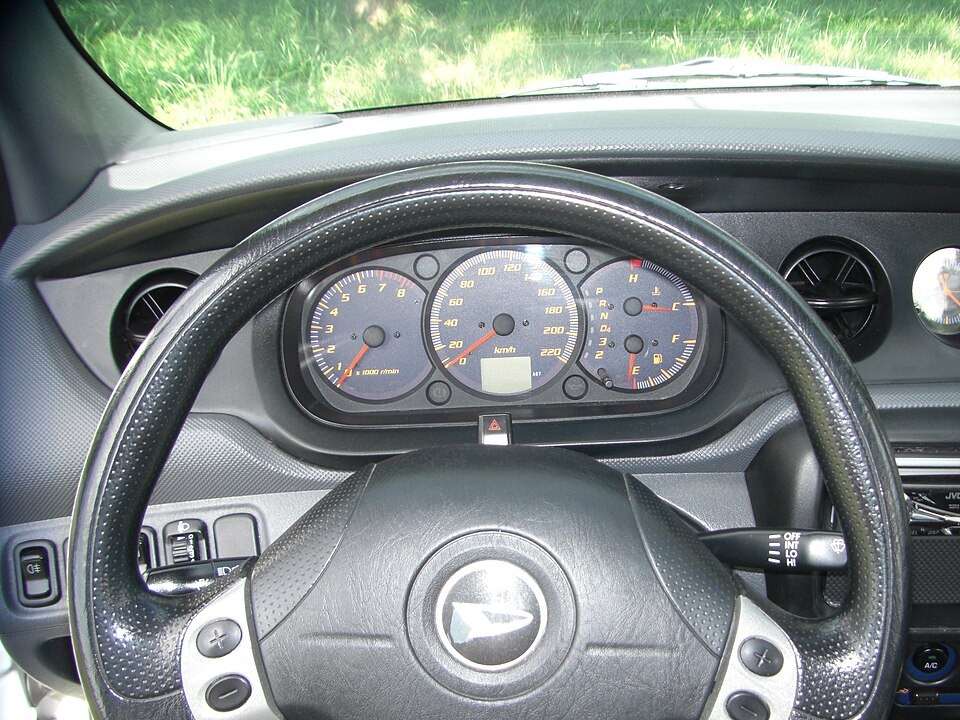
The K3-VET is a four-cylinder, sixteen-valve turbo engine related to Daihatsu and Toyota small-car units but equipped for substantially higher output. Drive reaches the front wheels through a four-speed automatic. Daihatsu’s Steershift controls allow manual changes from buttons on the steering wheel, while the selector can also hold ratios.
UK Turbo 130 equipment included model-specific bumpers, a large front intake, alloy wheels, twin exhaust outlets, side graphics, firmer suspension, anti-roll control and a well-equipped five-door cabin. Air conditioning, electric windows, ABS and electronic brake-force distribution helped distinguish it from cheaper small performance cars.
| Item | UK YRV Turbo 130 |
|---|---|
| Engine | 1,298cc turbocharged inline-four with DVVT |
| Output | Approximately 127 bhp |
| Torque | 170 Nm at 2,800 rpm |
| Transmission | Four-speed Steershift automatic, front-wheel drive |
| Period performance | 0–60 mph 8.1 sec; 112 mph maximum |
Love cars you don’t see every day?
Get forgotten cars, surprising motoring stories and the most interesting finds from Unusual Cars by email.
Free to join. No spam. Unsubscribe whenever you like. See our privacy policy.
Engine, turbo and cooling inspection
Begin with a genuinely cold engine. It should start promptly, idle evenly and reach temperature without coolant loss. Blue smoke, heavy oil consumption or an abnormal turbo whistle require investigation. Check the turbo oil feed, intake and intercooler hoses, vacuum lines, exhaust manifold and downpipe for leaks or cracking.
Service history is essential because clean oil protects both engine and turbocharger. Examine the radiator, expansion tank, fan, hoses and water pump, then scan the engine computer for stored and pending faults. Modified boost, induction or exhaust systems need invoices and evidence of correct fuelling rather than optimistic claims.

Automatic gearbox and road test
Check the automatic-fluid level and condition according to the correct procedure. From cold, engagement of Drive and Reverse should be prompt but not violent. Use every gear under light and full throttle, then test the steering-wheel buttons and selector override. Flare, shudder, delayed engagement or warning lights can mean more than a routine fluid change.
The Turbo 130 has strong mid-range acceleration but was not praised as the sharpest-handling hot hatch. Steering is light, the ride firm and the tall body can feel busy on poor roads. It should nevertheless track straight and remain controlled. Wheelspin and rapid front-tyre wear are common if driven hard, so inspect tyre quality, equal sizing, alignment and front suspension carefully.

Body, cabin and parts supply
Inspect the sills, floor, jacking points, front subframe, rear arches, suspension mounts and brake pipes. Compare panel gaps around the short nose and tall doors, looking for accident repairs after enthusiastic use. Check the panoramic roof where fitted, tailgate seals and carpets for leaks.
Test air conditioning, windows, locks, mirrors, instruments, shift lights, ABS and every steering-wheel control. Confirm that Turbo 130 graphics, bumpers, grille, wheels and exhaust finishers are present. Mechanical service parts can often be traced through Daihatsu or Toyota specialists, but Turbo-specific body and transmission components are scarce. A complete standard car with history is far easier to own than an incomplete project.
Buying checklist
Confirm the Turbo 130 identity
Check the K3-VET engine, Steershift transmission, body equipment and registration record.
Test the automatic thoroughly
Use every ratio, manual command and temperature condition; gearbox symptoms deserve specialist diagnosis.
Prioritise standard, complete cars
Rare Turbo-specific trim and drivetrain parts make poorly modified examples difficult to restore.
Sources
- Auto Express: 2003 UK YRV Turbo 130 road test
- RAC Drive: YRV UK used-car review
- AA: YRV 1.3 technical road test
- Daihatsu Drivers Club UK: Turbo ownership checks
Continue the Daihatsu story
Explore more inventive Japanese city cars, turbo hatchbacks and rugged 4x4s in the complete Daihatsu hub.
Frequently asked questions
Was the Daihatsu YRV Turbo 130 sold in the UK?
Yes. Daihatsu introduced the Turbo 130 through its British dealer network in 2003.
How much power does the YRV Turbo have?
Contemporary UK testing quoted approximately 127 bhp from its 1.3-litre turbo engine.
Is the YRV Turbo manual or automatic?
The UK Turbo 130 uses a four-speed automatic with Steershift manual controls on the steering wheel and selector.
How fast is the YRV Turbo 130?
Auto Express recorded 0–60 mph in 8.1 seconds and a maximum speed of 112 mph.
What should I check before buying one?
Check corrosion, turbo and cooling health, exhaust leaks, automatic gearbox operation, front tyres, accident damage and completeness of Turbo-specific parts.