UNUSUAL CARS MODEL GUIDE
The Porsche 911 Turbo of the 964 generation arrived for the 1991 model year with a 320 PS 3.3-litre air-cooled flat-six, rear-wheel drive and the wide Turbo body. Porsche introduced the substantially revised 360 PS Turbo 3.6 for 1993, while the lightweight 381 PS Turbo S became the rarest and most focused factory derivative.
Quick answer: the 964 Turbo combines the modernised chassis and cabin of the third-generation 911 with the single-turbo, rear-drive character of the earlier 930. The 3.6 is the most developed mainstream version; the Turbo S is a specialist rarity. Service history, accident repairs, corrosion, engine condition and originality determine whether any example is safe to buy.
How the 964 changed the 911
Porsche said that about 85 per cent of the 964 was new compared with its predecessor. The generation introduced power steering, ABS, improved heating and, on Carrera models, all-wheel drive and Tiptronic. The Turbo did not immediately receive the new normally aspirated 3.6-litre engine; instead it began with a development of the proven 3.3-litre turbocharged unit.

The body retained the recognisable fixed tea-tray rear spoiler but used the 964’s integrated bumpers and smoother surfacing. Wider rear arches, larger wheels, brakes and Turbo-specific suspension distinguished it from the Carrera range.
911 Turbo 3.3
The 3,299 cc flat-six produced 320 PS and 450 Nm. Porsche fitted a larger intercooler and revised injection, while a three-way metallic catalytic converter addressed stricter emissions requirements. A bypass tailpipe allowed wastegate gases to avoid unnecessary back pressure while still passing through its own catalyst and silencer.
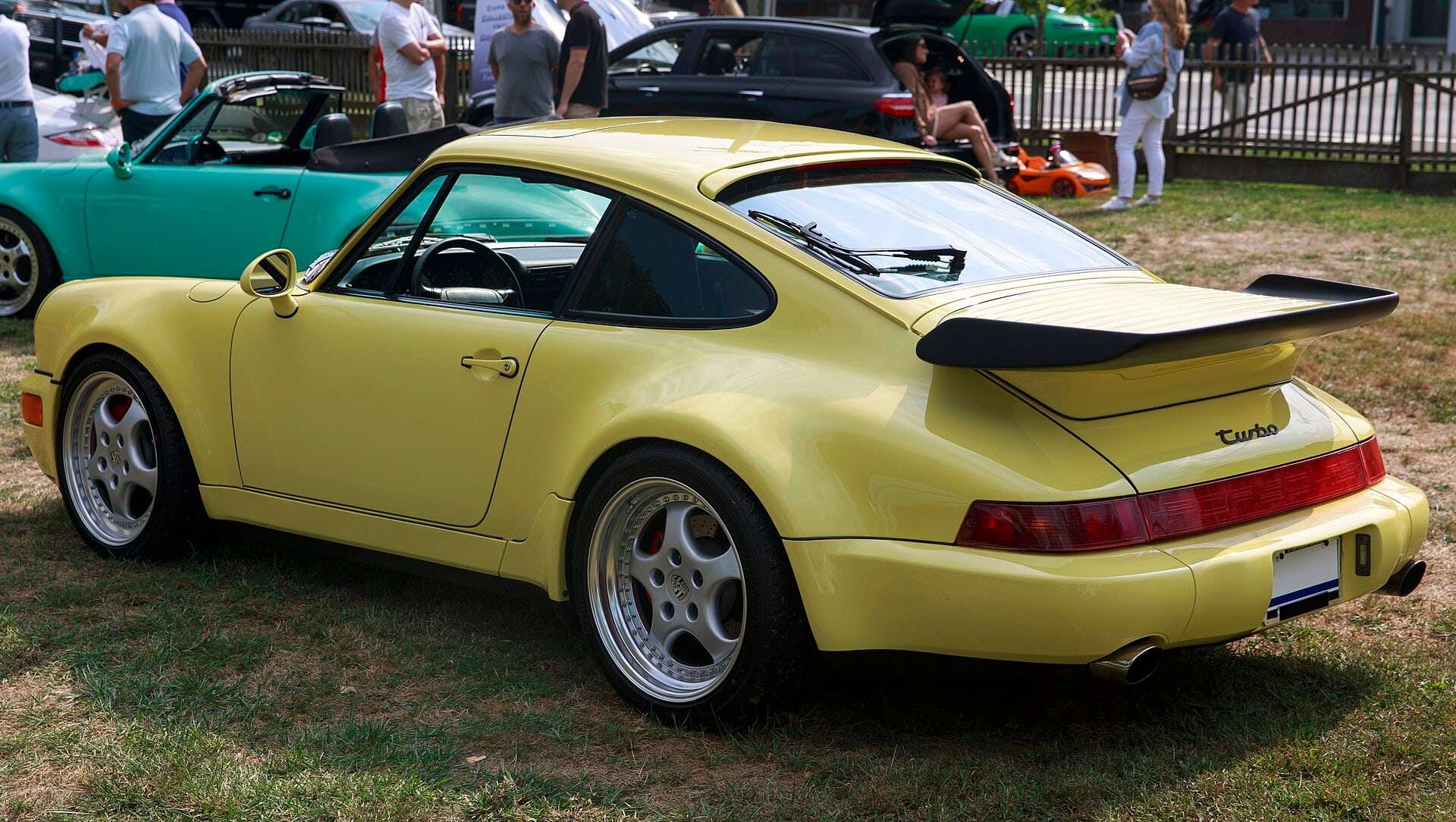
Power went through a five-speed manual gearbox to the rear wheels. Unlike the Carrera 4, the Turbo remained rear-wheel drive, preserving the traction demands and distinctive balance associated with the earlier 930.
911 Turbo 3.6
For the 1993 model year, Porsche introduced the 3,600 cc M64-based turbo engine with 360 PS and 520 Nm. The additional displacement improved low-speed response and allowed boost to build more progressively. Porsche quoted 0-100 km/h in 4.8 seconds for the Turbo 3.6 and a maximum speed around 280 km/h in period technical data.

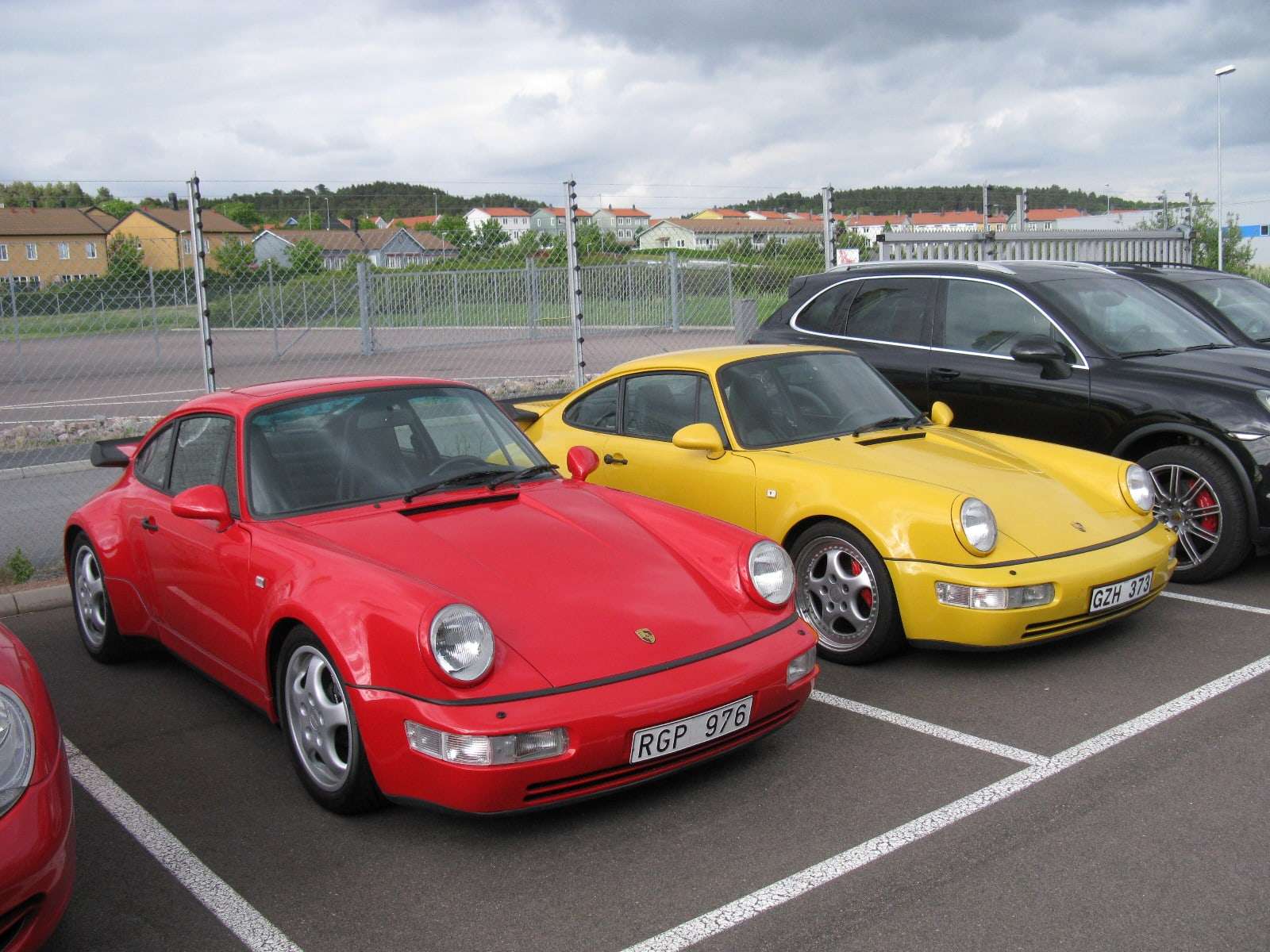
Red brake callipers, 18-inch split-rim Speedline wheels and a revised rear badge and centre section help identify the 3.6, but components are often changed. Engine type, chassis number, option codes and factory records provide stronger evidence than appearance.
964 Turbo versions compared
| Version | Power | Main distinction |
|---|---|---|
| 911 Turbo 3.3 | 320 PS | 1991-1992 model-year mainstream Turbo using a developed 930-derived engine. |
| 911 Turbo 3.3 with factory power kit | Up to 355 PS | Porsche Exclusive conversion; documentation and option records are essential. |
| 911 Turbo S Leichtbau | 381 PS | Lightweight road-homologated derivative; Porsche records only 86 examples. |
| 911 Turbo 3.6 | 360 PS | 1993 model-year car with the larger M64-based engine and stronger low-rev torque. |
Love cars you don’t see every day?
Get forgotten cars, surprising motoring stories and the most interesting finds from Unusual Cars by email.
Free to join. No spam. Unsubscribe whenever you like. See our privacy policy.
911 Turbo S Leichtbau
Porsche introduced the first series-produced 911 Turbo S in 1992. The Leichtbau removed equipment including power steering, air conditioning, radio, dual-mass flywheel and rear seats, and used lightweight body panels. Revised camshafts and higher boost lifted the 3.3-litre engine to 381 PS.
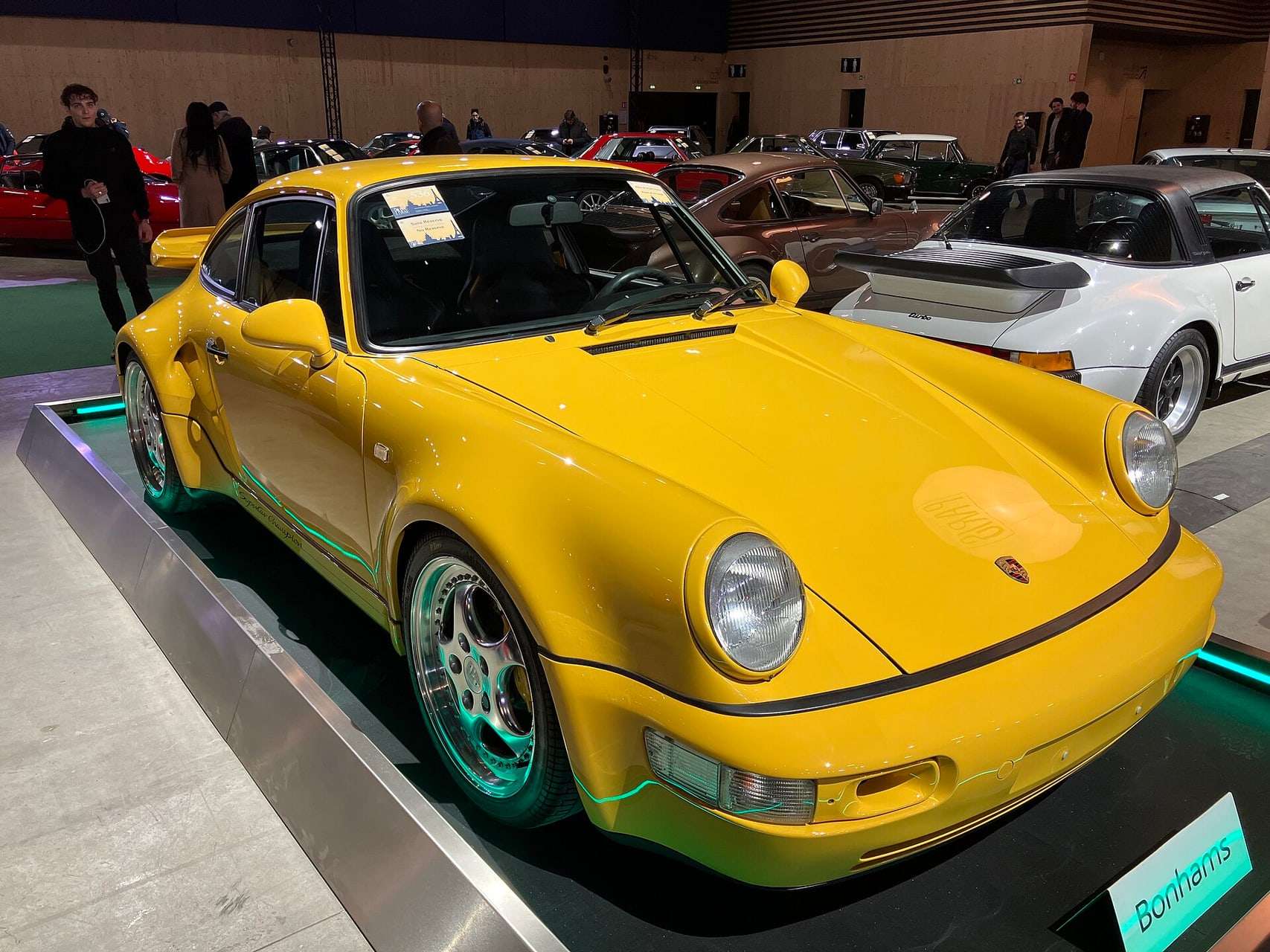
Porsche quotes 0-100 km/h in 4.6 seconds, a 290 km/h maximum speed and production of 86 cars. Because value depends heavily on identity and originality, any Turbo S claim needs confirmation from factory records and examination of the physical specification.

Porsche 964 Turbo buying guide
Start with provenance. Confirm the chassis and engine numbers, model year, option codes, original market and whether any claimed factory upgrade appears in recognised documentation. Turbo-look conversions, later wheels and non-standard engines can make a car appear more valuable than its identity supports.
Inspect the air-cooled flat-six for oil leaks, broken cylinder-head studs, worn valve guides, poor compression and evidence of overheating or overboost. The turbocharger, wastegate, intercooler plumbing, injection and ignition systems must operate correctly. Modified boost, aftermarket management and enlarged turbochargers require engineering records and conservative calibration.
Check the five-speed gearbox for synchromesh wear, the clutch for slip and judder, and the limited-slip differential where fitted. Brakes, dampers, bushes, steering, wheel condition and age-correct tyres all influence how the car behaves.
The galvanised shell still needs inspection around the windscreens, kidney bowls, sills, jacking points, suspension mounts, luggage compartment and any repaired accident damage. Measure the body and inspect panel gaps because a powerful rear-engined car can conceal expensive structural repair. Test the climate controls, sunroof, seats, instruments and every electrical function.
Why the 964 Turbo matters
The 964 Turbo is the final single-turbo, rear-wheel-drive 911 Turbo generation. It combines the dramatic boost and stance associated with the 930 with a more modern structure and cabin. The brief Turbo 3.6 production window and the extreme rarity of the Turbo S explain their status, but a sound 3.3 remains historically significant in its own right.
Sources and further reading
- Porsche Newsroom: the 911 Turbo generations
- Porsche Newsroom: type 964 history
- Porsche Newsroom: 964 Turbo 3.6 technical data
Continue the Porsche story
The 964 Turbo bridges Porsche’s early single-turbo era and the more sophisticated water-cooled cars that followed. Explore the Rare & Performance Porsche hub, then read the Porsche 959 guide and the Porsche 996 Turbo guide.
Frequently asked questions
How much power does a Porsche 964 Turbo have?
The 3.3-litre 964 Turbo produced 320 PS. The later Turbo 3.6 produced 360 PS, while the lightweight Turbo S reached 381 PS.
Is the Porsche 964 Turbo four-wheel drive?
No. The 964-generation Turbo remained rear-wheel drive, unlike the Carrera 4 and the later 993 Turbo.
What is the difference between the 964 Turbo 3.3 and 3.6?
The 3.6 uses a larger, more modern M64-based engine with 360 PS and stronger low-speed torque, together with visual and chassis-detail changes.
How many Porsche 964 Turbo S Leichtbau cars were made?
Porsche records 86 examples of the 381 PS 964-generation Turbo S.
What should be checked before buying a 964 Turbo?
Verify identity and factory specification, then commission specialist checks of the engine, turbo system, gearbox, accident repairs, corrosion, suspension, brakes and electrical equipment.