UNUSUAL CARS MODEL GUIDE
The Porsche 911 Turbo 930 was the first series-production turbocharged 911. Porsche began production in 1974 with a 3.0-litre, 260 PS coupé, then enlarged the engine to 3.3 litres for the 1978 model year, adding an intercooler and raising output to 300 PS. Its wide body, fixed rear spoiler and sudden delivery made it an icon, but the 930 is best understood as a rapidly evolving high-performance GT rather than a single unchanging model.
Quick answer: choose between the lighter, rarer 3.0 and the more developed 3.3; verify the exact model year and factory specification; and buy only after specialist checks of the engine, turbo system, gearbox, corrosion and accident repairs. Later open cars and factory Flatnose examples need particularly careful identity checks.
Why Porsche created the 911 Turbo
Porsche showed a turbocharged 911 prototype at Frankfurt in 1973, applying lessons from the 917 programme and turbocharged racing cars to a road-going flagship. Series production followed in 1974. The company initially imagined a limited run, but demand turned the Turbo into a permanent part of the 911 range.

The early car combined a 2,994 cc flat-six, a single KKK turbocharger and a four-speed manual gearbox. Porsche quoted 260 PS, 0–100 km/h in 5.4 seconds and a speed above 250 km/h. Wide rear arches, 917-derived wheel hubs and chassis ideas from the Carrera RSR separated it from an ordinary contemporary 911.
The 3.0-litre 930
Porsche built 2,850 examples of the 3.0 Turbo during its first three production years. The original car had no intercooler, and the boost arrived more abruptly than in the later model. Details changed during the short run, including wheels, brakes and instrumentation, so a correct restoration depends on the precise chassis and model year rather than a generic parts list.

The 3.0 established the Turbo formula: rear engine, rear-wheel drive, a large fixed tail, luxury equipment and performance derived from racing technology. It is also the version most vulnerable to inaccurate recreation because later components can be fitted and ordinary 911 shells can be given Turbo-style bodywork.
The 3.3-litre Turbo and intercooler
For the 1978 model year Porsche increased displacement to 3,299 cc and placed a charge-air cooler under a larger rear spoiler. Porsche describes this as a production-car first. Output rose to 300 PS and torque to 412 Nm, while 917-derived ventilated brakes helped contain a quoted 260 km/h maximum speed.

Development continued until 1989. Equipment, emissions hardware, trim and engine calibration differed by year and market. Most 930s retained the four-speed gearbox; only the final 1989 model-year cars received the five-speed G50 transmission, making an authentic G50 Turbo easy to date but also a target for misleading descriptions.

Porsche 930 versions compared
| Version | Factory specification | Main distinction |
|---|---|---|
| 911 Turbo 3.0 | 260 PS, four-speed manual | Original non-intercooled production Turbo; 2,850 built in the first three years. |
| 911 Turbo 3.3 | 300 PS, 412 Nm | Intercooled engine, larger tail and upgraded brakes from the 1978 model year. |
| Turbo Flatnose | Usually 3.3-litre; optional power upgrade available | Sonderwunsch body with pop-up lamps inspired by the 935; factory records are essential. |
| Turbo Targa and Cabriolet | 3.3-litre | Open versions unveiled in 1987 and produced in much smaller numbers than the coupé. |
| 1989 Turbo | 3.3-litre, five-speed G50 | Final model-year development with the sought-after five-speed gearbox. |
Love cars you don’t see every day?
Get forgotten cars, surprising motoring stories and the most interesting finds from Unusual Cars by email.
Free to join. No spam. Unsubscribe whenever you like. See our privacy policy.
Flatnose, Targa and Cabriolet
From 1983 the Sonderwunsch programme could supply a Slantnose or Flatnose body, using pop-up headlamps and front wings shaped to evoke the 935. Porsche also offered a 30 PS power increase that, combined with the aerodynamic body, gave a claimed 275 km/h potential maximum speed. Because conversions were common, appearance alone never proves factory origin.

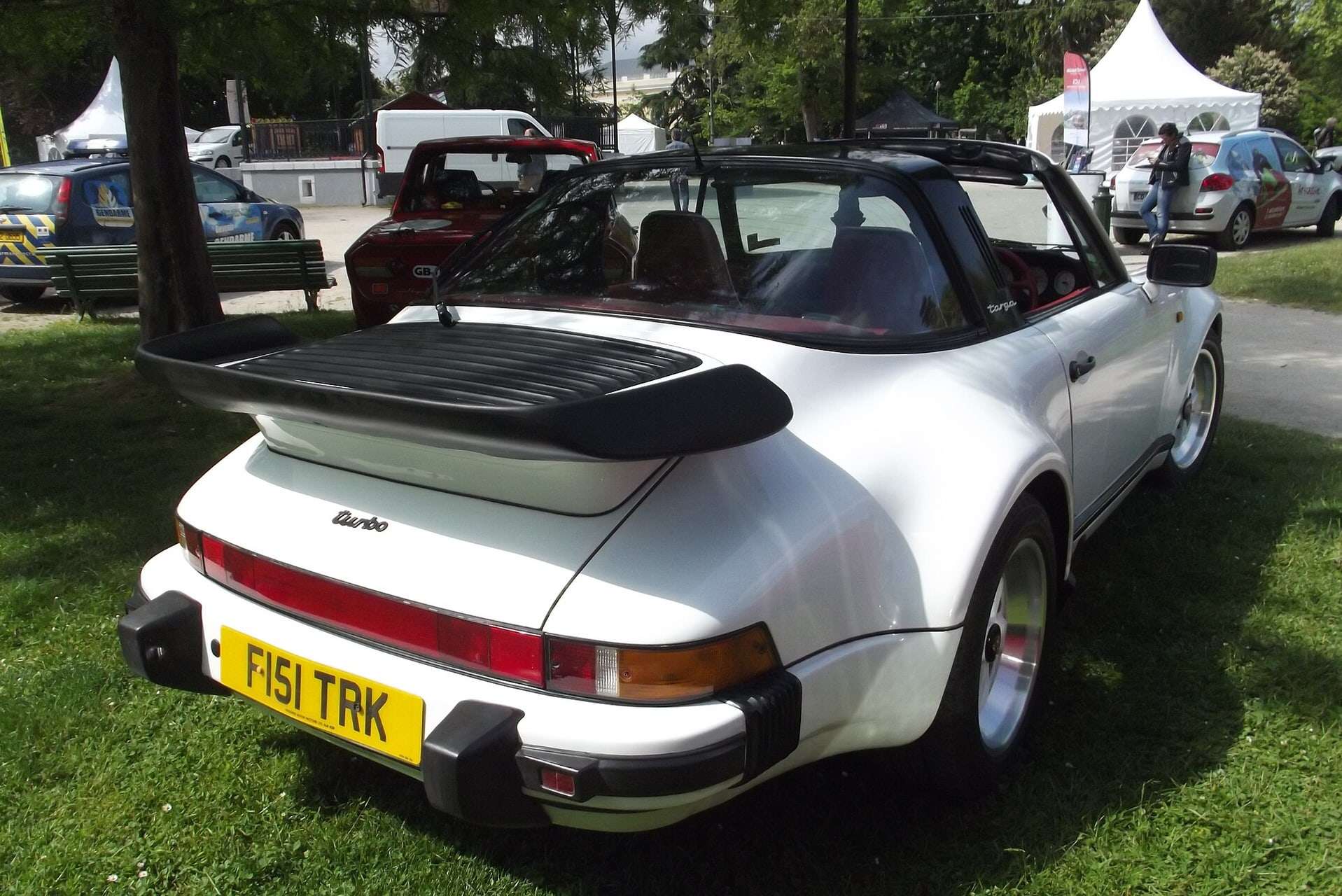
The first Turbo Cabriolet and Turbo Targa were presented in spring 1987. They broadened the 930 from an uncompromising coupé into a very expensive open flagship, without changing the need for respect for the rear-engined, boosted chassis. Roof seals, structural condition and evidence of accident damage deserve additional attention on an open car.
What a 930 is like to own
A healthy 930 feels compact by modern standards, with unassisted steering at lower speed, strong brakes and a distinct transition into boost. That transition is part of the car’s character, not a licence to describe every fault as turbo lag. Hesitation, unstable boost, smoke, overheating or poor warm running need diagnosis.
The engine should be checked for oil leaks, broken cylinder-head studs, compression and leak-down balance, turbocharger wear, wastegate operation and evidence of inappropriate boost modifications. A four-speed gearbox should select cleanly; a genuine 1989 five-speed car should be confirmed by its chassis and production records rather than the lever pattern alone.
Porsche 930 body and chassis checks
Although the shell was galvanised, corrosion and old repair work still matter. Inspect the sills, kidney bowls, torsion-bar areas, suspension mounts, windscreen surrounds, luggage compartment and the seams beneath wide arches. Uneven panel gaps, distorted mounting points and excessive filler may reveal a hard impact.
Check brakes, dampers, bushes, wheel bearings and tyre age as a complete system. Correct wheels are valuable and frequently substituted. Inside, verify seats, steering wheel, instruments, air conditioning, electric equipment and market-specific trim against period records.
Why the 930 matters
The 930 established the Turbo as Porsche’s road-car flagship and carried genuine racing technology into series production. Its development from 3.0 to intercooled 3.3, then into factory-personalised and open forms, explains why a broad label such as “930 Turbo” is not enough when valuing or restoring one.
Sources and further reading
Continue the Porsche story
The 930 began the road-going Turbo line and leads directly into Porsche’s later air-cooled flagships. Explore the Rare & Performance Porsche hub, then read the Porsche 964 Turbo guide and the Porsche 959 guide.
Frequently asked questions
What does 930 mean on a Porsche 911 Turbo?
930 was Porsche’s internal type number for the first-generation 911 Turbo, produced from 1974 until 1989.
What is the difference between a 3.0 and 3.3 Porsche 930?
The 3.0 has a 2,994 cc non-intercooled engine producing 260 PS. The 3.3 introduced for the 1978 model year has an intercooler, 300 PS, 412 Nm and larger brakes and rear spoiler.
Did every Porsche 930 have a four-speed gearbox?
No. Most did, but final 1989 model-year cars received the five-speed G50 transmission.
How can you tell if a 930 Flatnose is genuine?
Confirm the chassis, option and production records with Porsche documentation. Pop-up lamps and widened bodywork can be added to an ordinary Turbo or 911.
What should be checked before buying a Porsche 930?
Commission a marque specialist to verify identity and inspect the engine, turbo and wastegate, gearbox, corrosion, accident repairs, brakes, suspension, tyres and originality.