UNUSUAL CARS MODEL GUIDE
The Lotus Seven was the minimalist front-engined sports car produced by Lotus from 1957 until 1973. Across four factory series it combined a light tubular chassis, simple aluminium or glassfibre bodywork and a succession of Ford, BMC and Coventry Climax engines. Caterham continued the design after buying the rights, but a genuine Lotus-built Seven has its own identity, specification and history.
Quick answer: the Series 1 is the rarest and most delicate, the Series 2 established the familiar Seven shape, the Series 3 is the closest ancestor of the continuing Caterham design, and the wider glassfibre-bodied Series 4 is the most visually distinct. Chassis identity, engine provenance and the quality of old competition or restoration work matter more than cosmetic freshness.
Why Lotus created the Seven
Colin Chapman needed a simple road-and-club-racing car that could generate income alongside Lotus competition machinery. The Seven developed the principles of the earlier Lotus Six: very low mass, modest power, narrow tyres and carefully controlled suspension geometry. Many were supplied in component form, which reduced purchase-tax exposure and encouraged owners to assemble and modify their own cars.

That history makes surviving cars unusually varied. Period engine swaps, replacement frames and competition alterations may be legitimate, but every claim requires documentary support. A Seven-shaped car is not automatically a Lotus Seven.
Series 1 and Series 2
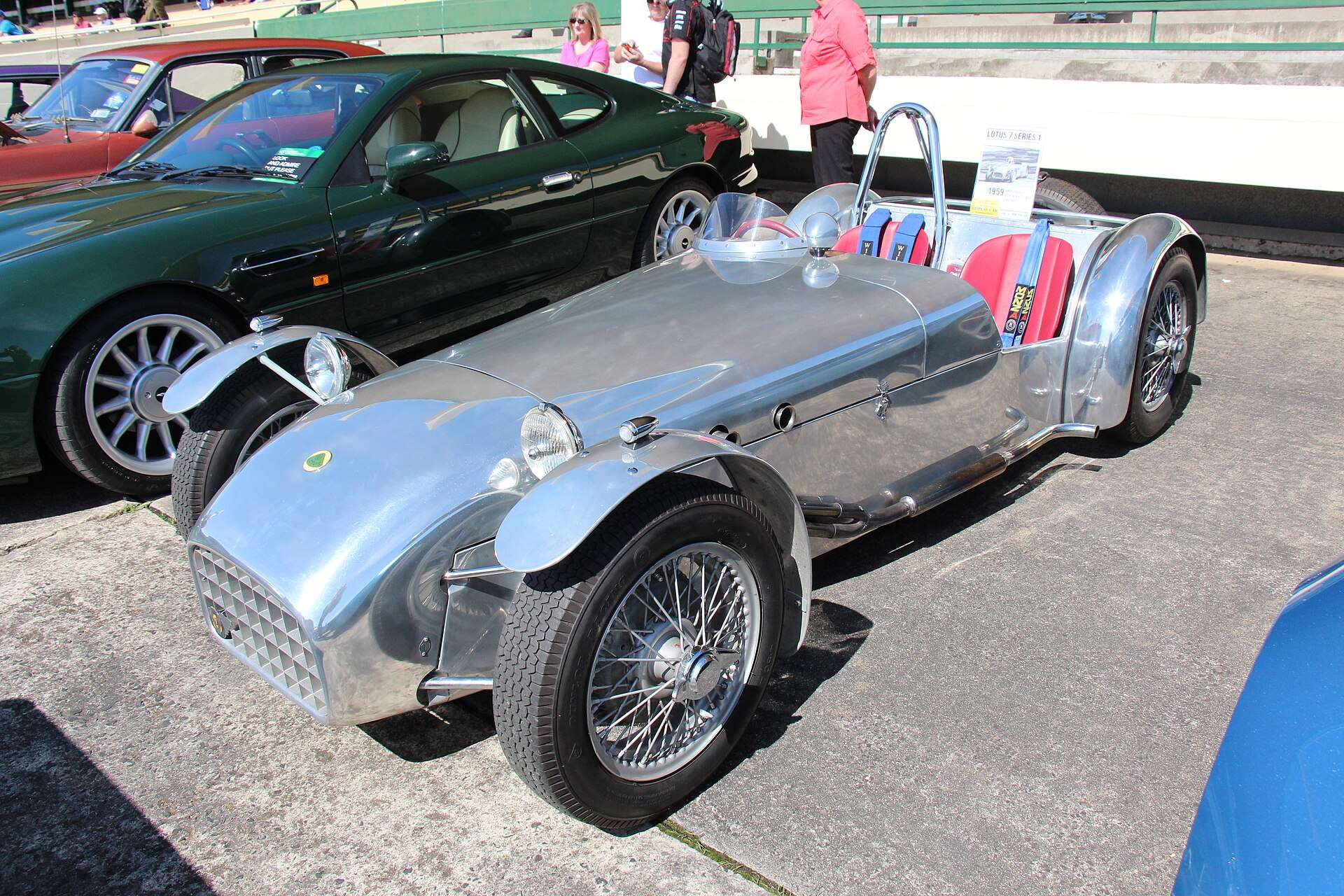
The 1957 Series 1 used a tubular spaceframe clothed mainly in aluminium, with Ford side-valve power in basic cars and Coventry Climax options for faster versions. The Series 2 arrived in 1960 with a simplified frame and revised bodywork intended to make production more economical. Ford engines became increasingly important, while BMC-powered American-market cars created another distinct branch.
Series 3 and Series 4
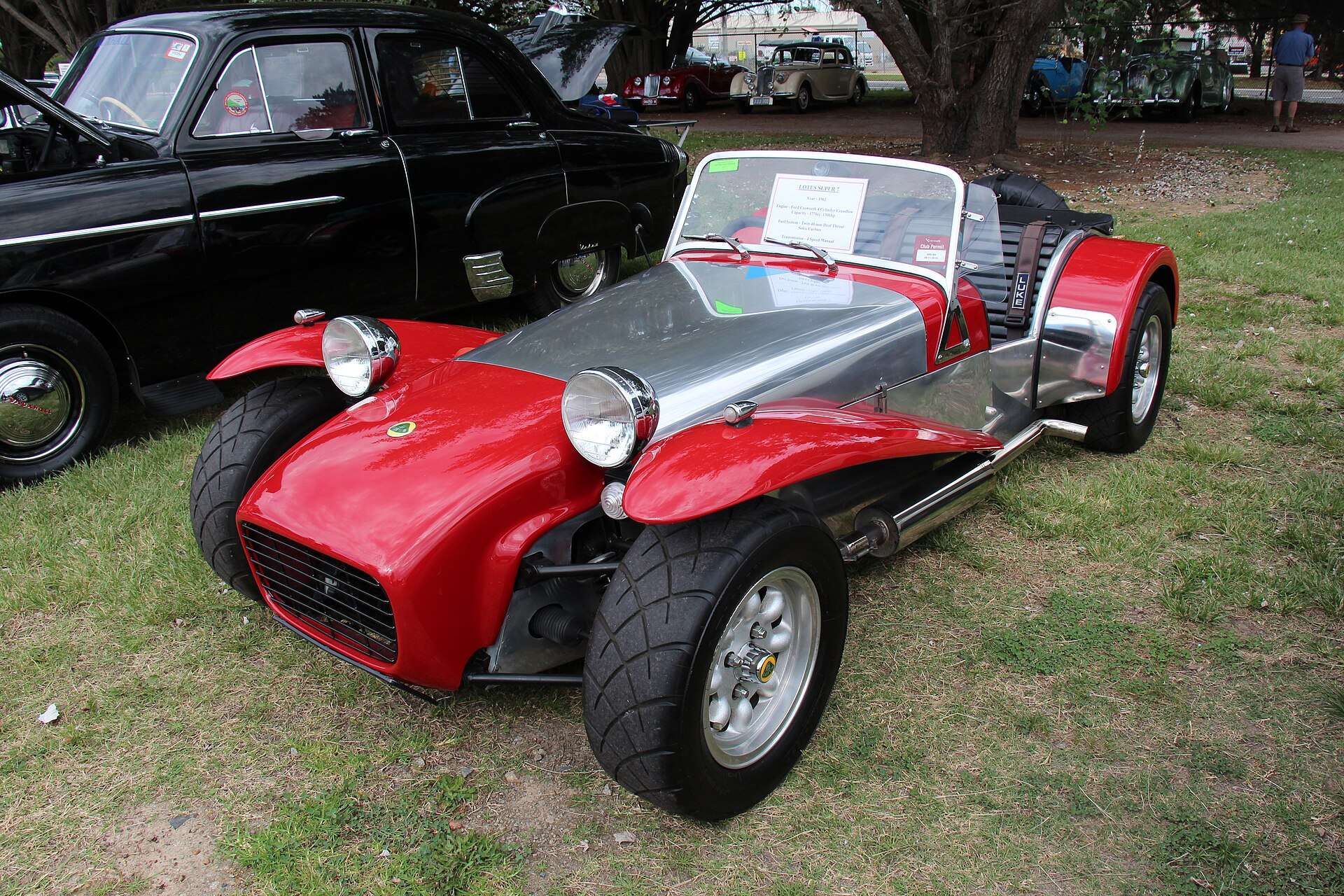
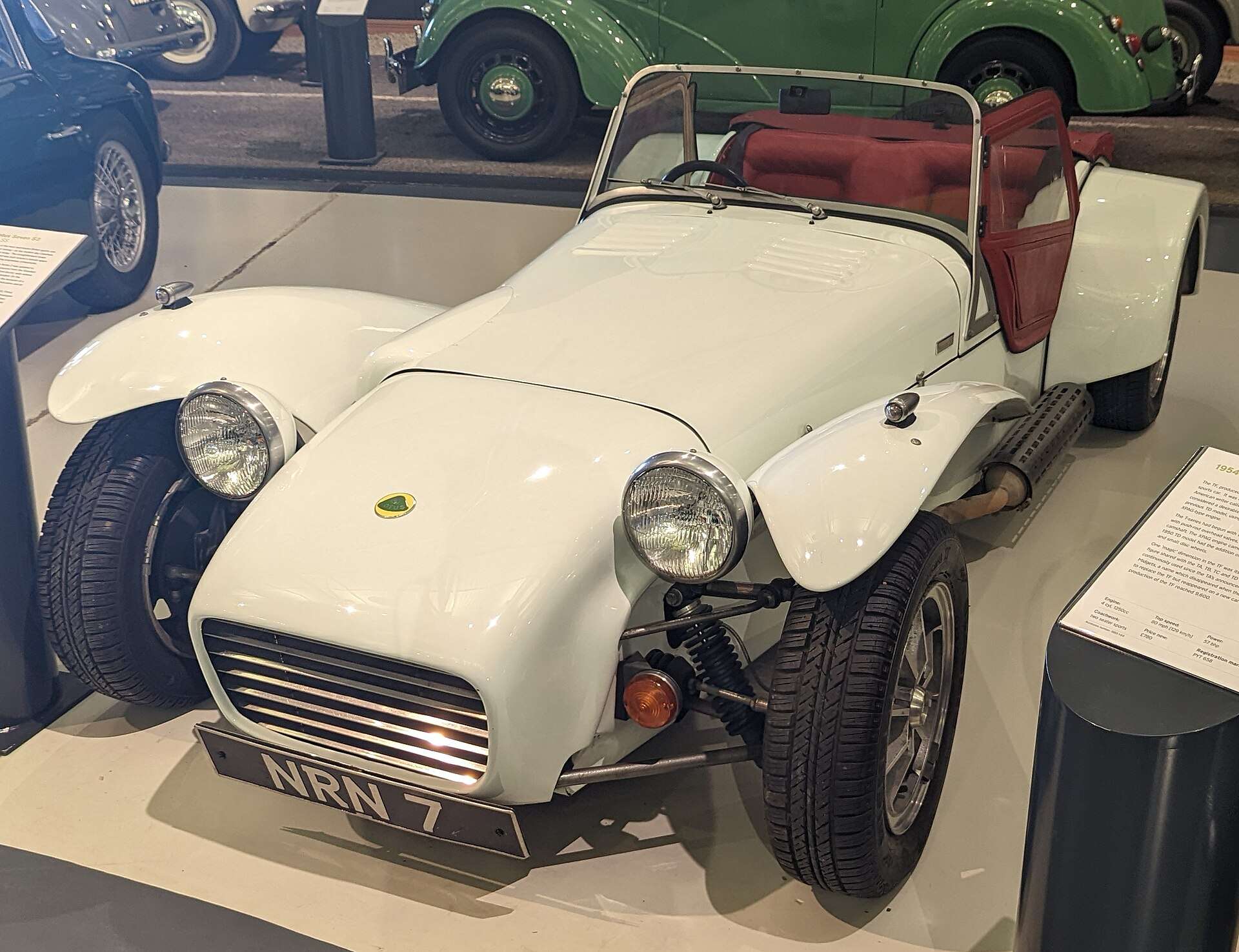
The Series 3 of 1968 refined the familiar cycle-wing shape and used a wider chassis. Twin Cam SS cars sit near the top of the Lotus-built hierarchy, but specification varied and later conversions are common. The Series 4 replaced the traditional aluminium-panelled appearance with a broader, more production-orientated glassfibre body and a different spaceframe.

| Series | Approximate period | Main distinction |
|---|---|---|
| S1 | 1957–60 | Earliest light car; aluminium bodywork and several Ford or Coventry Climax specifications. |
| S2 | 1960–68 | Simplified chassis and the classic Seven form; many engine and market variations. |
| S3 | 1968–69 | Wider developed chassis; basis of the design later continued by Caterham. |
| S4 | 1969–73 | Wider glassfibre body and revised chassis; mechanically familiar but visually separate. |
Love cars you don’t see every day?
Get forgotten cars, surprising motoring stories and the most interesting finds from Unusual Cars by email.
Free to join. No spam. Unsubscribe whenever you like. See our privacy policy.
Identity and chassis inspection
Begin with the frame number, Lotus plate, registration documents and continuous history. Replacement chassis were often fitted after corrosion, racing damage or decades of modification. That does not automatically make a car undesirable, but the evidence must explain when the frame changed and how the identity was retained.

Inspect every tube and suspension pick-up, especially lower rails, floor edges, front wishbone areas and the rear axle location. Look for crushed tubes, poor welds, distorted brackets and repairs hidden beneath fresh paint. Aluminium panels can crack around rivets and trap corrosion where they meet the steel frame.
Engine, gearbox and rear axle
A Seven may have a Ford side-valve, 105E-based unit, Cosworth-tuned engine, BMC A-series or Coventry Climax engine depending on period and market. Confirm the installed unit against the claimed model. Oil pressure, cooling, carburettor condition and evidence of careful competition maintenance matter more than a headline power figure.
Check gearbox selection, clutch action, propshaft joints and differential noise. Ratios and axle specifications were frequently altered for racing, so road usability should be tested rather than assumed.
Suspension, brakes and driving position
Worn trunnions, bushes, dampers, wheel bearings and steering joints quickly undermine the Seven’s precision. Inspect the rear axle location and confirm that both sides of the chassis sit square. Brakes should operate evenly without pulling, binding or fluid leaks.

Finally, make sure the driver fits. Pedal placement, steering-wheel clearance, seat mounting and weather equipment vary significantly. A genuine car that is physically uncomfortable will not become more usable through rarity alone.
Sources and further reading
- Lotus Cars: Seven history and factory specifications
- Hagerty UK: Lotus Seven buying guide
- Lotus Seven Register
Continue the Lotus story
The Seven established the purest expression of Chapman’s low-mass road-car thinking. Explore the Lotus hub and the original Elan guide and the Elite Type 14 guide.
Frequently asked questions
When did Lotus build the Seven?
Lotus produced the Seven from 1957 until 1973, after which Caterham acquired the rights to continue the design.
What is the difference between a Lotus Seven and a Caterham Seven?
A Lotus Seven was built or supplied by Lotus during the original production period; Caterham continued the authorised design after acquiring the rights.
Which Lotus Seven series is the rarest?
The early Series 1 is generally the rarest, although specification and documented competition history can matter as much as the series number.
Did every Lotus Seven use the same engine?
No. Factory and market specifications included several Ford units, Coventry Climax engines and BMC A-series power, with many cars subsequently modified.
What should be checked before buying a Lotus Seven?
Verify identity and frame history, then inspect chassis tubes, suspension pick-ups, body panels, engine, gearbox, axle, brakes, steering and the quality of previous competition or restoration work.