
UNUSUAL CARS MODEL GUIDE
The Mazda3 MPS is the turbocharged, front-wheel-drive flagship of the first two Mazda3 generations. Sold in Britain as the Mazda3 MPS, in North America as the Mazdaspeed3 and in Japan as the Mazdaspeed Axela, it paired a 2.3-litre direct-injection turbo engine with a six-speed manual gearbox and a limited-slip differential.
Quick answer: the Mazda3 MPS arrived in 2006 with 260PS in European specification. A second generation followed in 2009 with substantially different bodywork but the same basic 2.3 DISI Turbo, front-drive layout and six-speed manual formula. Both are fast, discreet hot hatchbacks whose condition and tuning history matter more than mileage alone.
How the Mazda3 MPS began
Mazda unveiled the first Mazda3 MPS at the 2006 Geneva Motor Show. It was the second European Mazda Performance Series model after the Mazda6 MPS, but it took a different route: five-door hatchback practicality, front-wheel drive and a mechanical limited-slip differential rather than four-wheel drive.
The car joined the refreshed first-generation Mazda3 range. Mazda’s Japanese launch material confirms the three names used around the world and identifies the 2.3-litre Direct Injection Spark Ignition turbo engine as the central change.

2.3 DISI Turbo engineering
The 2,261cc four-cylinder engine combines direct petrol injection, turbocharging and an intercooler. European cars were quoted at 260PS, with strong mid-range torque delivered through a six-speed manual transmission. Electronic torque management reduces the load delivered in the lower gears and responds to steering angle, while the limited-slip differential helps the inside front tyre contribute under acceleration.
This is not simply a remapped ordinary Mazda3. The MPS gained stronger driveline components, revised suspension, larger brakes, additional body reinforcement and model-specific cooling and exhaust hardware. It remained a front-wheel-drive car, so tyre condition, alignment and smooth boost control are fundamental to how it drives.

First and second generations compared
| Version | Period | Main distinction |
|---|---|---|
| BK Mazda3 MPS | 2006–2009 | Restrained first-generation body, bonnet bulge and roof spoiler; 2.3 DISI Turbo, six-speed manual and front LSD |
| BL Mazda3 MPS | 2009–2013 | Second-generation shell, prominent bonnet scoop and revised chassis, cooling, gearing and torque management |
| Mazdaspeed3 | North America | Market name for the same high-performance model, with local equipment and output conventions |
| Mazdaspeed Axela | Japan | Japanese-market name, with domestic grades and specifications |
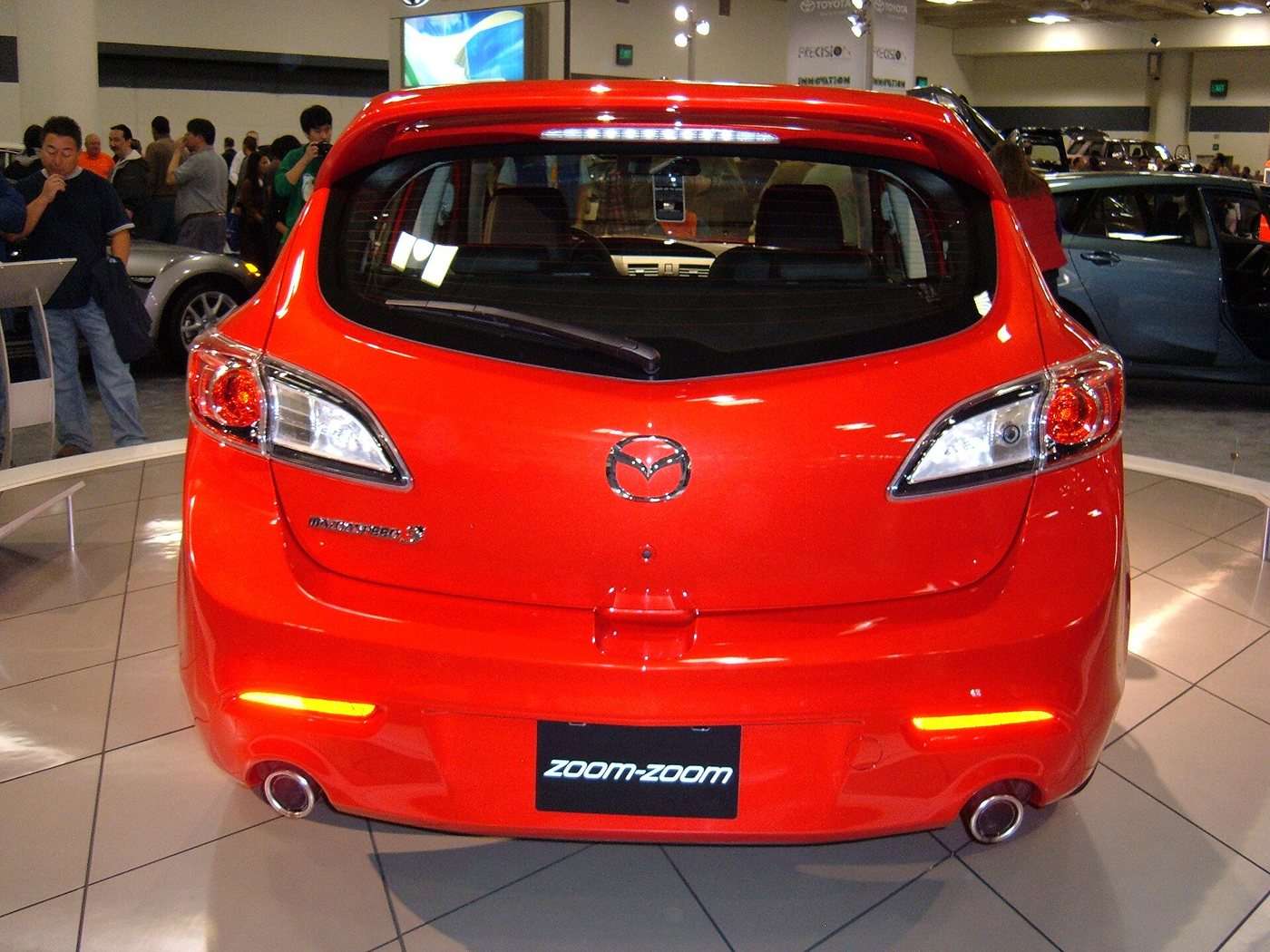
The 2009 replacement is visually bolder. Mazda added a functional bonnet scoop, revised the suspension and steering, and improved fuel economy and emissions to meet Euro Stage 5. The core engine and driven axle did not change, which makes the two generations closely related mechanically but quite different in appearance and cabin design.
Why it feels different from the Mazda6 MPS
The Mazda6 MPS uses an all-wheel-drive system and saloon body, while the Mazda3 sends its power through the front wheels of a shorter hatchback. The Mazda3 is lighter and more immediate, but its steering and front tyres must also manage substantial torque. Mazda’s control strategy helps, but worn tyres, poor geometry or aggressive aftermarket calibration can overwhelm the original balance.
The understated first generation has become particularly easy to overlook. Its discreet grille, modest spoiler and five-door profile hide performance that placed it among the quickest hot hatchbacks of its period.

Love cars you don’t see every day?
Get forgotten cars, surprising motoring stories and the most interesting finds from Unusual Cars by email.
Free to join. No spam. Unsubscribe whenever you like. See our privacy policy.
Mazda3 MPS buying guide
Timing chain and VVT noise
Listen from a genuinely cold start for prolonged chain rattle and check invoices for timing-chain and variable-valve-timing work. A brief noisy start should not be dismissed without diagnosis because the chain, guides and actuator work as one system.
Turbocharger, smoke and boost
Allow the engine to idle after a proper drive, then watch for blue smoke and check that boost builds smoothly. Inspect intercooler hoses, oil lines and the exhaust. A car with a larger intake or exhaust needs evidence that its fuelling and software were calibrated together.
Fuel system and modifications
Direct injection makes fuel pressure and injector condition important. Hesitation, misfires or inconsistent boost require proper logging rather than guesswork. Modified cars should have itemised invoices, dyno evidence and a clear explanation of high-pressure fuel-pump upgrades where relevant.
Gearbox, differential and clutch
Test every gear cold and warm, checking especially for a reluctant first-to-second shift. Listen for differential noise on tight turns, assess clutch slip under full torque and inspect driveshaft joints and engine mounts.
Rust, brakes and tyres
Inspect arches, sills, floors, subframes, suspension mounts and the underside behind plastic covers. All four tyres should be a matched quality set. Uneven wear, wandering or steering pull can indicate poor alignment, accident damage or tired suspension.

Why the Mazda3 MPS matters
The Mazda3 MPS is a useful reminder that Mazda’s performance catalogue was not limited to rotaries and roadsters. It applied direct injection, turbocharging and careful torque management to a practical hatchback while rivals were still deciding whether extreme front-wheel-drive performance was workable.
Research sources
- Mazda: 2006 Geneva Motor Show and Mazda3 MPS debut
- Mazda: Mazdaspeed Axela launch and international naming
- Mazda: second-generation Mazda3 MPS announcement
- PistonHeads: Mazda3 MPS powertrain buying guide
Continue the Mazda story
Explore the Rare & Performance Mazdas hub, then compare the Mazda6 MPS guide and the 323 GTX and GT-R guide.
Frequently asked questions
What does MPS mean on the Mazda3?
MPS means Mazda Performance Series, the European name used for Mazda’s high-performance models of this period.
Is a Mazdaspeed3 the same as a Mazda3 MPS?
Yes. Mazdaspeed3 is the North American name, while Mazda3 MPS was used in Europe and Mazdaspeed Axela in Japan.
Is the Mazda3 MPS four-wheel drive?
No. Both generations are front-wheel drive with a limited-slip differential and electronic torque management.
What engine is in the Mazda3 MPS?
It uses Mazda’s 2.3-litre MZR DISI Turbo four-cylinder engine with direct injection and a six-speed manual gearbox.
What should be checked before buying a Mazda3 MPS?
Check cold-start timing-chain noise, turbo smoke, fuel and boost behaviour, clutch and gearbox operation, rust, tyre wear and the quality of any modifications.