UNUSUAL CARS MODEL GUIDE
The Toyota MR2 AW11 was the compact mid-engined sports car that brought an exotic layout into ordinary-car territory. Launched in Japan in June 1984, it combined a light two-seat body with Corolla-derived engines, rear-wheel drive and genuinely practical luggage space. It also established the MR2 name long before the larger SW20 arrived.
Quick answer: most AW11s use Toyota’s 1.6-litre 4A-GE twin-cam engine and a five-speed manual gearbox. Later Japanese and North American cars could be ordered with a supercharged 4A-GZE. The best examples feel light, direct and usable, but corrosion, cooling-system neglect, worn suspension and poor repairs matter more than headline mileage.
Why Toyota created the first MR2
Toyota’s official history describes the MR2 as Japan’s first mass-produced compact passenger car with a mid-mounted engine. The original idea was not an uncompromising supercar. Toyota wanted a “sporty commuter”: a car with unusual balance and driver appeal that remained easy to enter, simple to use and practical enough for daily life.
The transverse engine and gearbox sat behind the seats, leaving storage space at both ends. A short 2,320mm wheelbase, low centre of gravity and modest mass made the car responsive without requiring extreme power. The concept worked: the MR2 received the 1984–85 Car of the Year Japan award.

AW10, AW11 and the 4A-GE engine
Japanese buyers initially had a 1.5-litre AW10 as well as the 1.6-litre AW11, but the AW11 became the internationally recognised version. Toyota’s Japanese specification listed the 1,587cc 4A-GELU at 130PS gross for a representative early G-Limited. Export outputs varied with market, emissions equipment and measurement standards, so apparently conflicting power figures are not necessarily errors.
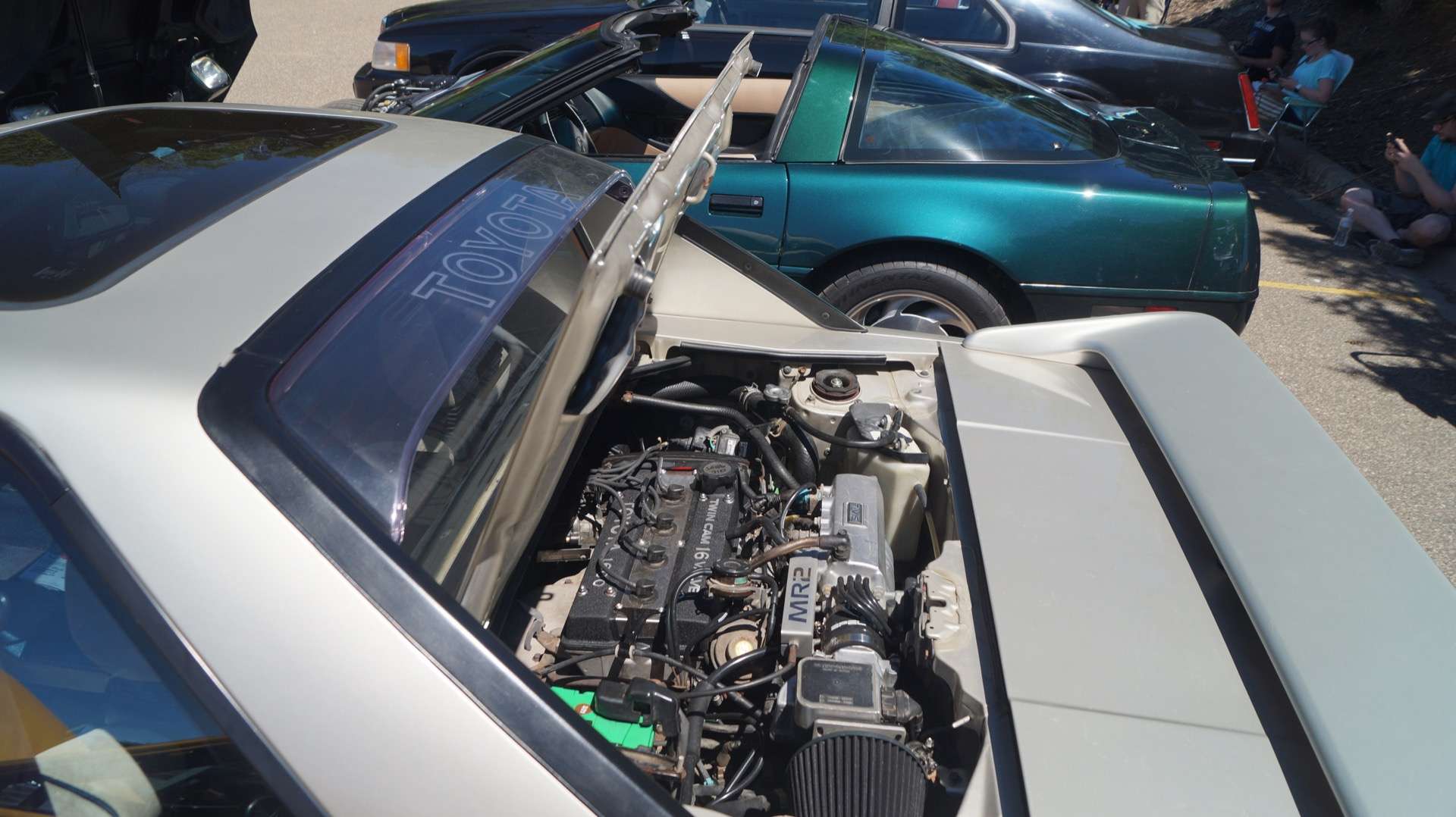
The 4A-GE is a twin-cam, 16-valve four-cylinder shared with sporting Corolla derivatives. In the MR2 it sits transversely behind the cabin. The five-speed manual best suits the car’s character, although an electronically controlled four-speed automatic was also available in some markets.
Mk1a and Mk1b differences
Owners commonly divide naturally aspirated cars into early Mk1a and later Mk1b groups. The dividing date varies by market and registration practice, but the significant 1986 model update brought larger brakes, revised suspension and driveline details, different exterior trim and a stronger C-series transaxle installation. Later cars also gained changes to the interior and body reinforcement.
These informal labels are useful when ordering parts, but a car should be identified from its chassis plate, build date and actual components. Four decades of repairs and modifications mean that wheels, lights, wings, bumpers and even powertrains may no longer match the original build.

The supercharged AW11
Toyota added a Roots-supercharged version in 1986. Its 4A-GZE engine used electronic fuel injection, an intercooler and stronger internal specification. Toyota quoted 145PS for the Japanese model. The supercharger was driven through an electromagnetic clutch so it could disengage when boost was not required.
Supercharged cars are desirable, but market matters. Toyota did not officially sell the supercharged AW11 in Britain, so UK examples are normally imports or conversions. The model plate, engine number, cooling layout, gearbox, wiring and import history should support any claim that a car is a genuine factory supercharged version.
Toyota MR2 AW11 specifications
| Item | Representative specification |
|---|---|
| Production generation | 1984–1989 |
| Layout | Transverse mid-engine, rear-wheel drive |
| AW11 engine | 1,587cc 4A-GE DOHC 16-valve four-cylinder |
| Supercharged engine | 1,587cc 4A-GZE with Roots supercharger |
| Gearboxes | Five-speed manual; automatic in selected markets |
| Wheelbase | 2,320mm |
| Representative early mass | Approximately 950kg for a Japanese 1600 G-Limited manual |
Why the AW11 still matters
The AW11 made its mechanical layout accessible. Contemporary mid-engined cars were usually expensive or compromised, while the Toyota combined everyday controls, predictable servicing and useful storage with a chassis unlike any normal hatchback or coupé. Its angular wedge, pop-up headlamps and compact proportions now define an entire 1980s design period.
It also created a clear lineage. The SW20 became faster and more mature, while the later MR-S returned to a lighter roadster formula. The AW11 remains the smallest and most delicate of the three.
Love cars you don’t see every day?
Get forgotten cars, surprising motoring stories and the most interesting finds from Unusual Cars by email.
Free to join. No spam. Unsubscribe whenever you like. See our privacy policy.
Toyota MR2 AW11 buying guide
Body and corrosion
Inspect the sills, floor, suspension mounting areas, rear arches, door bottoms, windscreen surround and luggage compartments. Remove trim where practical and look for repairs hidden beneath fresh underseal. Correct panels, lamps and seals can be harder to source than routine mechanical parts.
Cooling system
The long coolant pipes and mid-engined layout must be bled correctly. Check the pipes, radiator, hoses, pressure cap, fans and heater operation. Temperature instability, air in the system or improvised plumbing should be investigated before purchase.
Engine and gearbox
Start the engine from cold, listen for bearing or valvetrain noise and check for smoke, leaks and unstable idle. A manual gearbox should select all gears cleanly. On supercharged cars, confirm smooth boost delivery and inspect the additional intake, intercooler and control hardware.
Suspension, steering and tyres
Worn dampers, bushes and ball joints blunt the light chassis. Check for play, clunks, uneven tyre wear and poor geometry. Very large wheels, extreme lowering and mismatched tyres can make the car worse rather than better.
Originality and identity
Match the VIN and model plate to the documents. Establish whether the roof, engine, transmission and market specification are original. A well-engineered modified car can be enjoyable, but it should be described and valued honestly.

Frequently asked questions
What does AW11 mean?
AW11 is Toyota’s model code for the first-generation MR2 fitted with the 1.6-litre A-series engine. The related AW10 used a 1.5-litre engine in Japan.
Was the supercharged MR2 AW11 sold in the UK?
No. Toyota did not officially market the supercharged AW11 in Britain. UK examples are normally Japanese imports, cars imported from another market or conversions.
What engine is in the MR2 AW11?
Most use the naturally aspirated 1.6-litre 4A-GE twin-cam engine. Factory supercharged cars use the related 4A-GZE.
What is the difference between Mk1a and Mk1b?
They are enthusiast terms for early and later AW11s. Later cars received revisions to brakes, suspension, driveline, trim and body details, although exact change points vary by market.
What is the biggest AW11 buying risk?
Structural corrosion and poor repairs are the priorities. Cooling-system condition and undocumented modifications are also important because apparently small faults can be time-consuming to correct.
Research sources
- Toyota: first-generation MR2 history and specifications
- Toyota: MR2 launch and Car of the Year chronology
- Toyota: development context for the AW11
- Featured image: 1987 Toyota MR2 AW11 by SealyPhoto, CC BY-SA 4.0.
Continue the Toyota story
Explore the Rare & Performance Toyotas hub, compare the later MR2 SW20, or discover the lightweight rear-drive Toyota AE86.