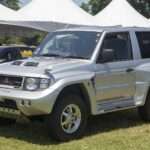
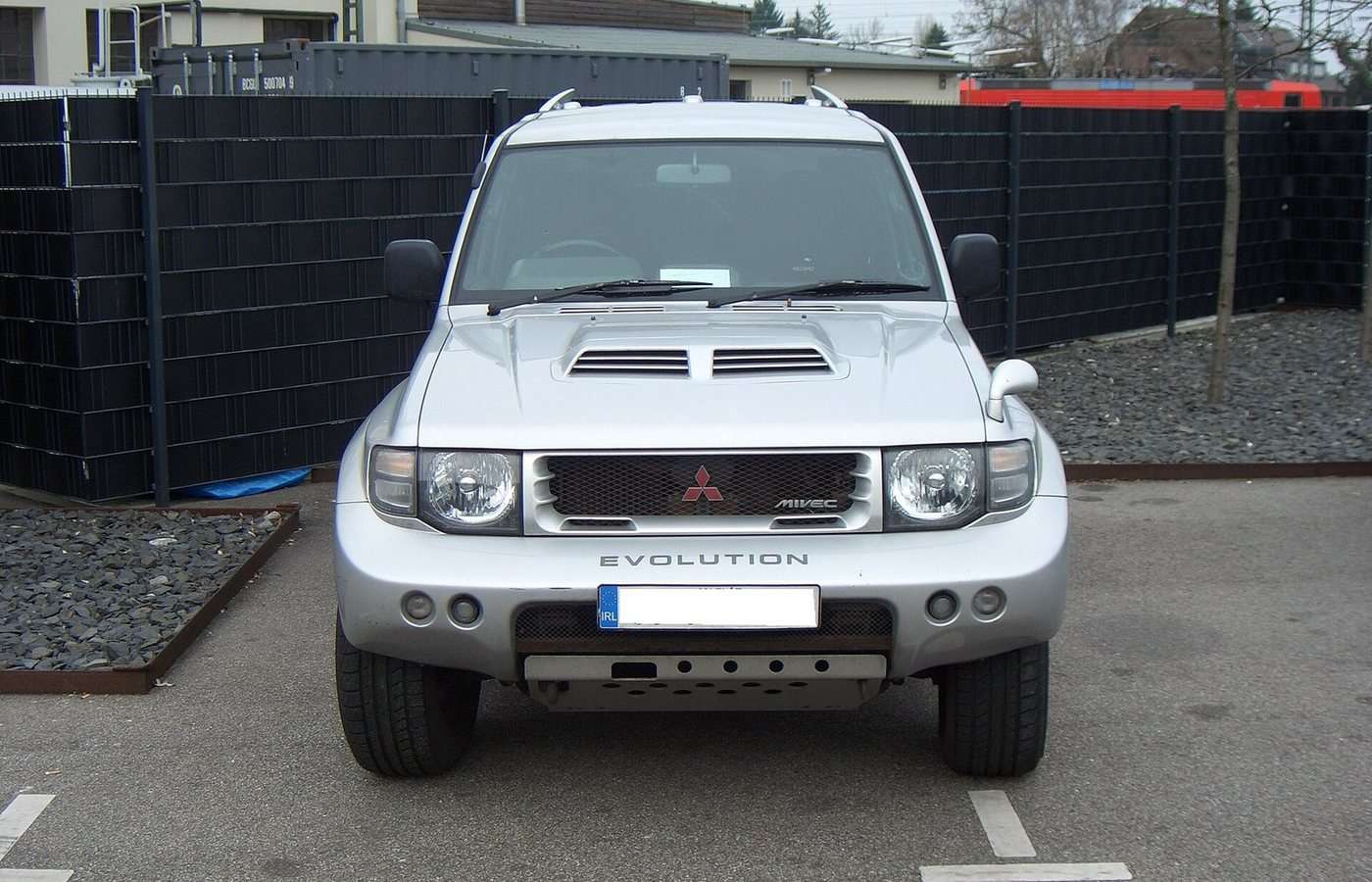
The Mitsubishi Pajero Evolution is one of the strangest factory homologation specials of the 1990s: a compact three-door off-roader developed so Mitsubishi could keep attacking the Dakar Rally under production-based rules. Its swollen bodywork was dramatic, but the important changes were underneath—an exclusive 3.5-litre MIVEC V6, a wider track and independent suspension at all four corners.
1. A Dakar rule change created it
During the mid-1990s, cross-country rally regulations shifted emphasis towards modified production vehicles. Mitsubishi needed a showroom model that could provide a stronger foundation for its T2 competition car, so it launched the Pajero Evolution in September 1997. It was not a marketing spin-off produced after a rally victory; the road car existed to make the racing programme possible.
2. Its V55W identity matters more than the body kit
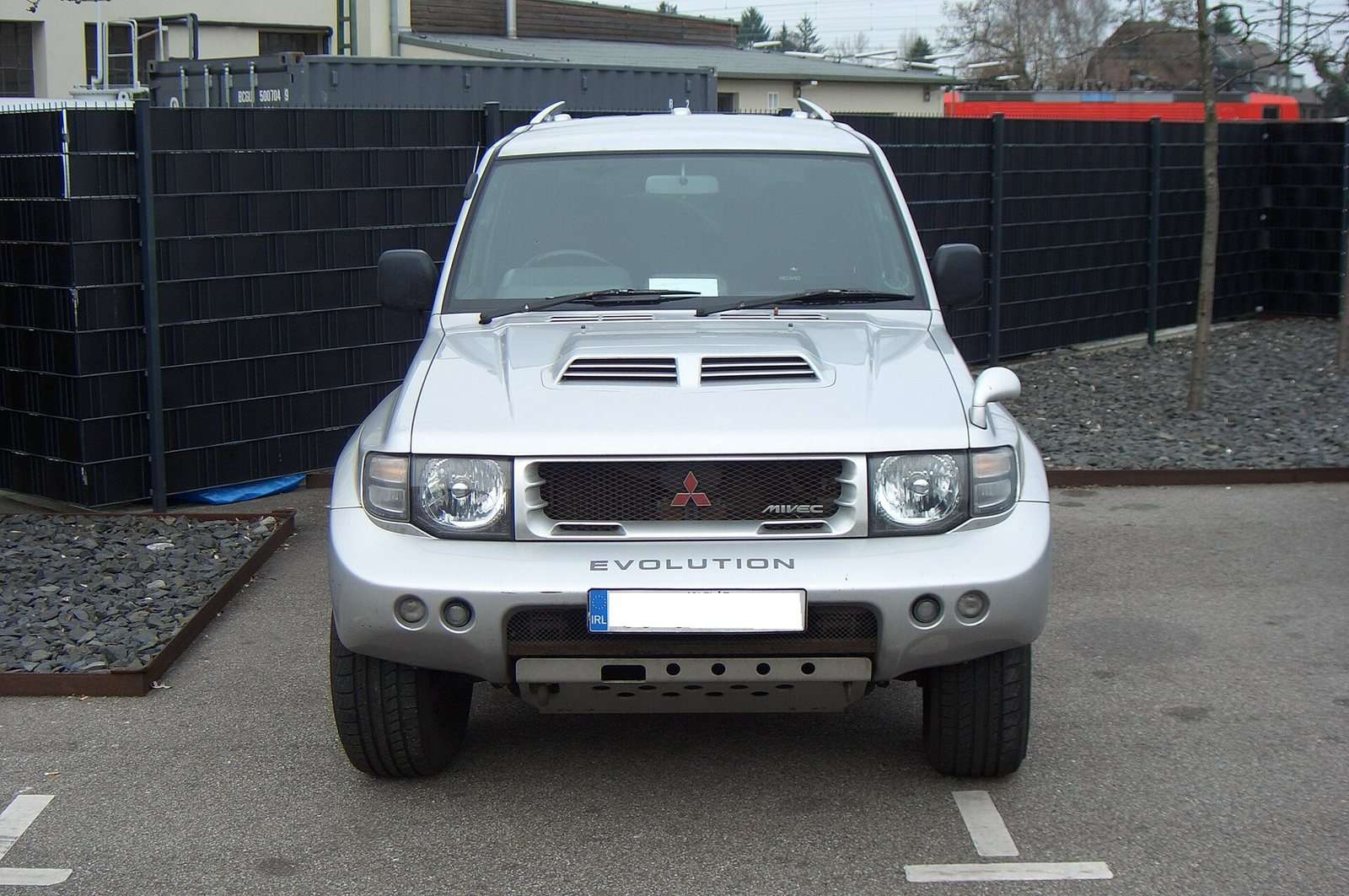
The Evolution belongs to Mitsubishi’s second-generation Pajero family, but carries the specific V55W model code. Its mechanical package includes a dedicated engine, widened suspension and a different rear layout. Ordinary short-wheelbase Pajeros have often acquired replica arches and spoilers, so bodywork alone cannot establish that a car is genuine.
3. The road engine combined MIVEC with direct injection
The 3,497cc 6G74 V6 used MIVEC variable valve timing and gasoline direct injection. Mitsubishi quoted 280PS for the Japanese-market road car—the familiar voluntary ceiling used by many Japanese manufacturers at the time. This was not simply the regular 3.5-litre Pajero engine with an aggressive air filter; it was a specialised high-performance specification.
4. Buyers could choose manual or automatic
Mitsubishi offered both a five-speed manual and a five-speed automatic. That surprises people who assume every homologation special must be manual-only. The automatic was not an imitation model: it received the same V55W identity, MIVEC engine and extraordinary chassis hardware, and surviving examples should be judged on condition and originality rather than transmission prejudice.
Love cars you don’t see every day?
Get forgotten cars, surprising motoring stories and the most interesting finds from Unusual Cars by email.
Free to join. No spam. Unsubscribe whenever you like. See our Privacy Policy.
5. Super Select could run in rear-wheel drive
The Super Select system was more versatile than a permanently locked four-wheel-drive arrangement. The driver could use rear-wheel drive on dry roads, select full-time four-wheel drive for mixed surfaces, or engage locked modes for more difficult terrain. Its breadth explains how the Pajero Evolution could feel entertaining on tarmac without surrendering the low-grip ability required by its purpose.
6. It replaced the ordinary Pajero’s live rear axle
One of the most important changes was all-round independent suspension. Mitsubishi widened the front and rear tracks, increased front wheel travel and fitted a double-wishbone independent rear system. That gave the competition engineers far greater control over wheel movement while also making the road car unusually agile for a tall, short-wheelbase four-wheel drive.
7. The exaggerated bodywork had a job to do
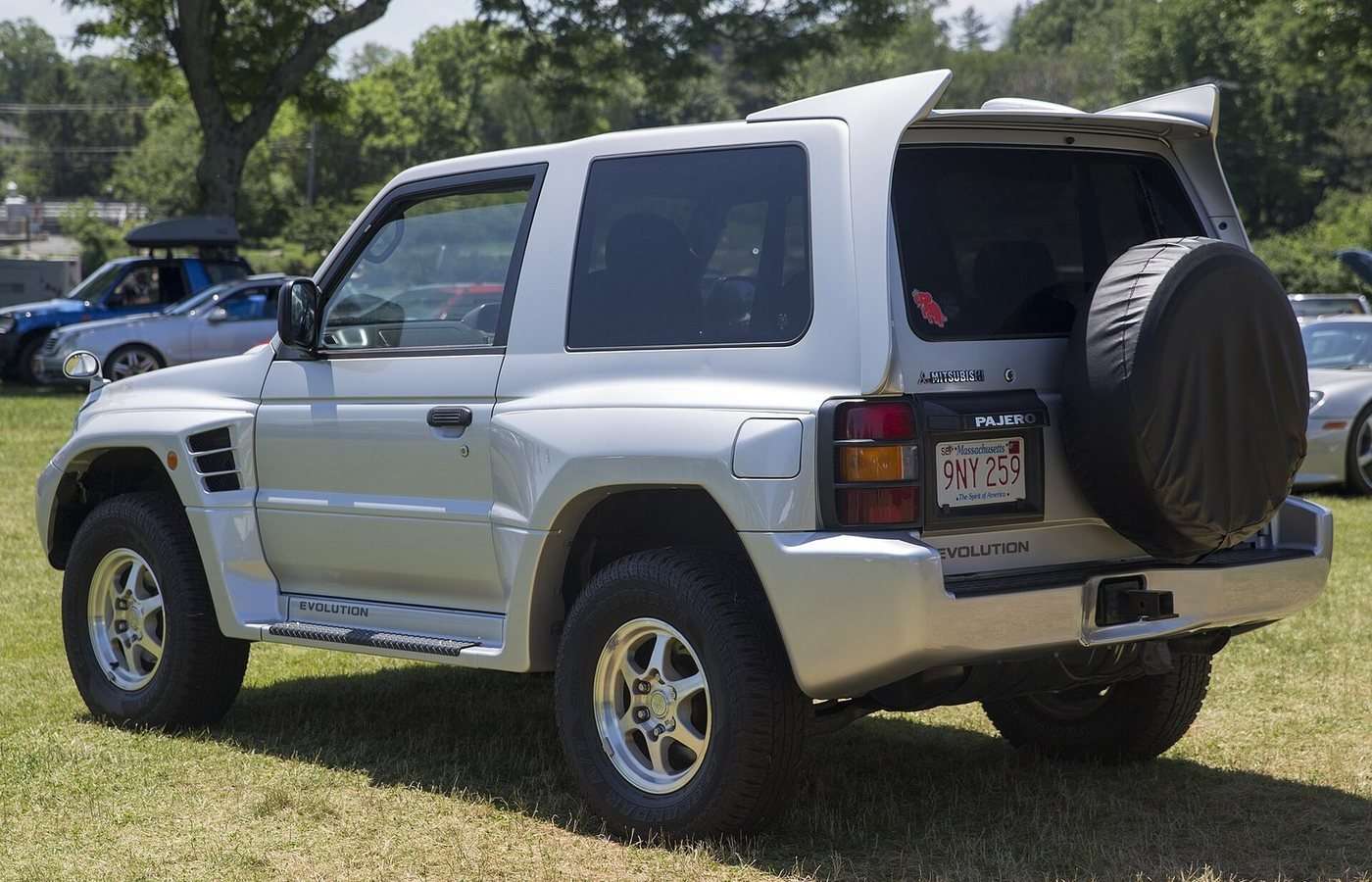
Those enormous overfenders covered the broader suspension and wheels. Mitsubishi also used an aluminium bonnet with a prominent scoop, revised bumpers and strengthened and lightened areas of the shell. The result resembles a competition vehicle because it was designed from the beginning around competition requirements, not styled to resemble one afterwards.
8. The Dakar car was not mechanically identical to the showroom car
The road-going V55W supplied the homologation basis, but Mitsubishi’s T2 machines were fully prepared rally cars. Official 1998 specifications list a 3,497cc MIVEC 6G74 restricted to 260PS by a 32mm air restrictor, together with far greater fuel capacity and competition equipment. Later prototype racers also used the Pajero Evolution name despite moving further away from the production V55W.
9. The Evolution helped Mitsubishi dominate the 1998 Dakar
Jean-Pierre Fontenay won the 1998 event, followed by Kenjiro Shinozuka and Bruno Saby in other Pajeros, while Hiroshi Masuoka’s Mitsubishi Challenger finished fourth. Mitsubishi therefore filled the first four positions for a second consecutive year, and its team cars won 15 of the rally’s 16 special stages. That is a far stronger legacy than simply saying the model “raced at Dakar”.

10. The famous 2,500 production figure is still an estimate
Approximately 2,500 road cars is the number most often quoted by specialists and auction references. Mitsubishi’s accessible heritage material confirms the September 1997 launch and homologation purpose but does not publish that exact total, so it is better described as a widely accepted estimate than a fully audited factory number. For an individual car, V55W chassis identity, Japanese paperwork and original Evolution-specific hardware are more useful than repeating an unqualified total.
The Pajero Evolution is special because its outrageous appearance accurately reflects its engineering. It is a true homologation model with a distinct engine, chassis and competition purpose—and one of the few cars able to combine genuine Dakar ancestry with the everyday usefulness of a compact SUV.
Love cars you don’t see every day?
Get forgotten cars, surprising motoring stories and the most interesting finds from Unusual Cars by email.
Free to join. No spam. Unsubscribe whenever you like. See our Privacy Policy.