Quick answer: the Alfa Romeo 8C Competizione was the limited-production supercar that re-established Alfa as a creator of truly exotic road cars. Its carbon-fibre body, 450PS 4.7-litre V8 and rear transaxle were wrapped in one of the most admired shapes of the 2000s; 500 coupés were followed by 500 Spiders.
From Frankfurt concept to production car
Alfa Romeo revealed the 8C Competizione concept at the 2003 Frankfurt Motor Show. The name was carefully chosen: “8C” recalled Vittorio Jano’s great eight-cylinder Alfas, while “Competizione” referenced the 6C 2500 Competizione associated with the 1950 Mille Miglia.
The reaction was strong enough to turn a statement of intent into a production programme. In early 2006 the project was industrialised, and the definitive car appeared at the Paris Motor Show. Alfa Romeo recorded around 1,400 orders within weeks, far more than the 500 numbered coupés it planned to build.
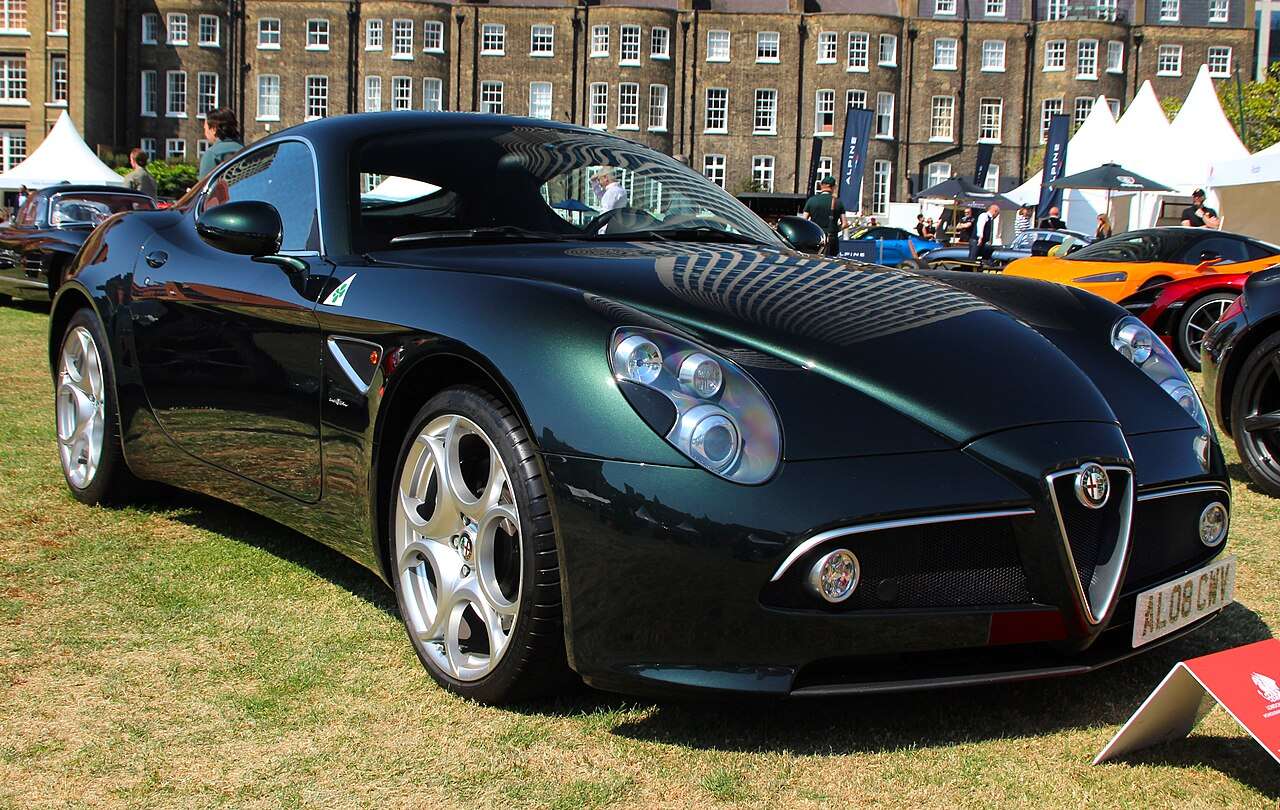
Carbon body, V8 power and a rear transaxle
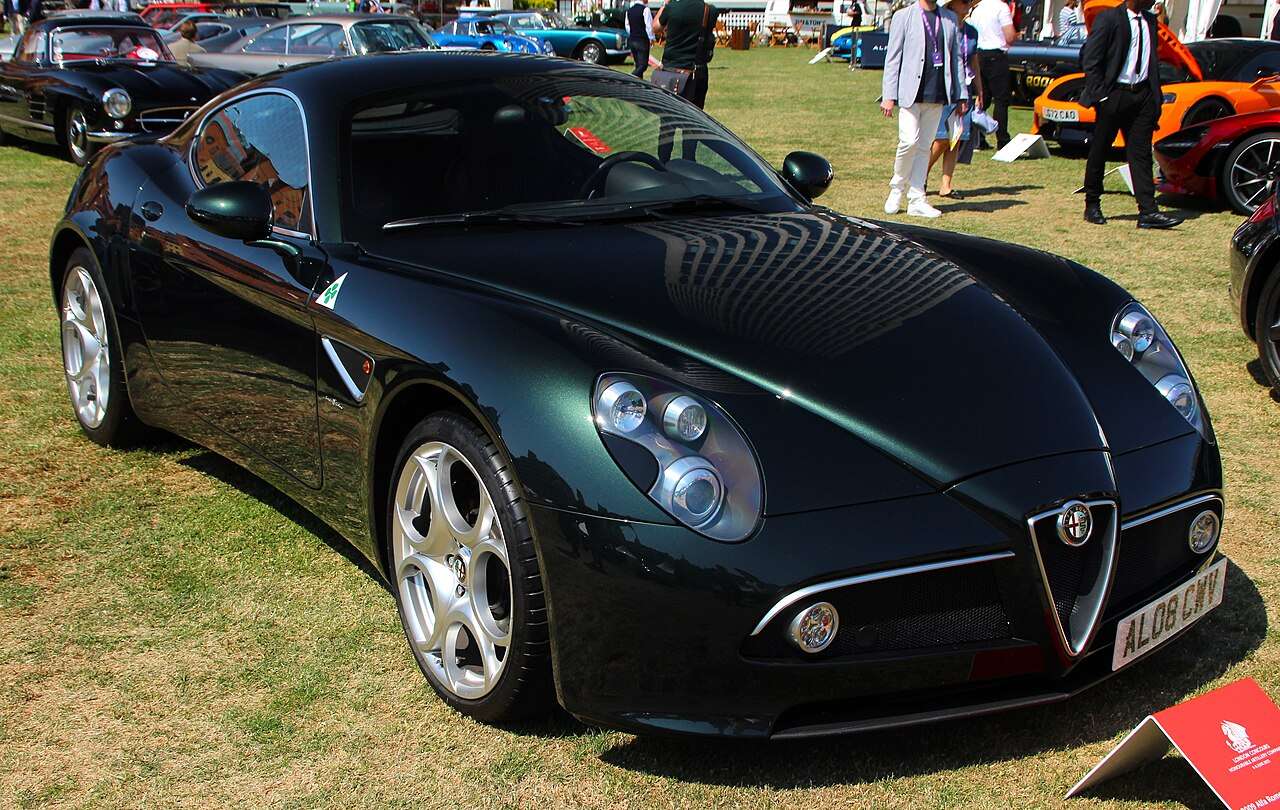
Beneath the sculpted carbon-fibre body was a front-mid-mounted 4.7-litre naturally aspirated V8 producing 450PS. A six-speed automated manual transmission sat at the rear in a transaxle layout, helping the car achieve balanced weight distribution.
The engine belonged to the same broad family used by Maserati, but the 8C was tuned and presented as an Alfa. Official figures quote 0–100km/h in 4.2 seconds. More important than the number was the combination of throttle response, exhaust note and the sense that the entire car had been designed around the engine.

Design that reset the Alfa Romeo brand
The 8C’s proportions referenced Alfa’s competition and coachbuilt past without copying a single historic model. Its long bonnet, compact cabin, pronounced rear haunches and circular lamps gave the car a presence that was recognisable before the badges were visible.
Alfa Romeo later described the 8C as both a return to its roots and a laboratory for the future. Its surface language influenced mainstream cars including the MiTo and Giulietta, while the later 4C pursued a related idea through extreme lightness rather than V8 power.
Love cars you don’t see every day?
Get forgotten cars, surprising motoring stories and the most interesting finds from Unusual Cars by email.
Free to join. No spam. Unsubscribe whenever you like. See our privacy policy.
The 8C Spider
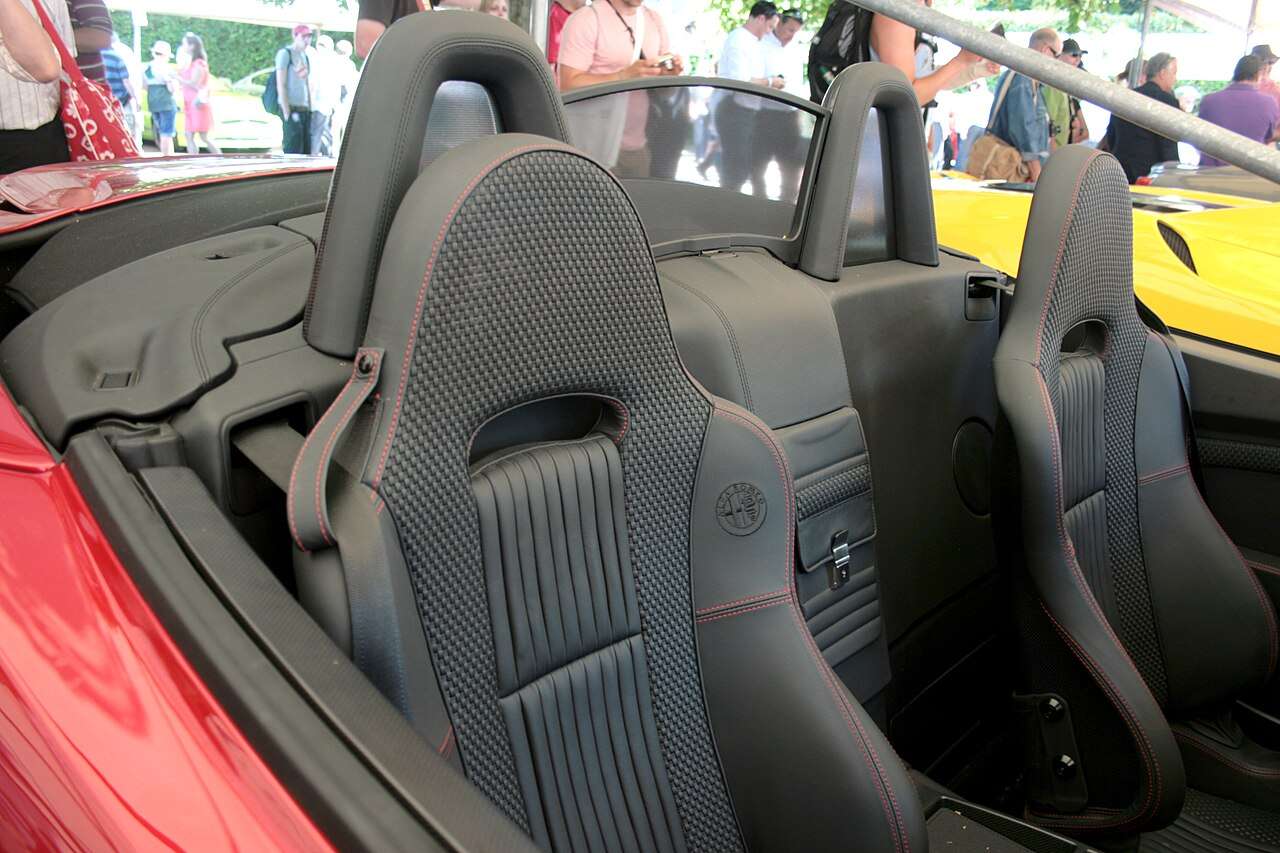
The open 8C Spider retained the coupé’s 4.7-litre V8 and rear transaxle but replaced the fixed roof with a fabric hood. It was not simply a styling exercise: open-air access to the engine note became a central part of its appeal.
Production was again limited to 500 numbered cars. That makes the complete modern 8C family a run of 1,000 road cars—500 coupés and 500 Spiders—built between the late 2000s and the start of the following decade.
Why the 8C matters beyond rarity
The 8C is significant because it changed expectations. Alfa Romeo had built fast front-wheel-drive saloons and coupés, but the 8C placed the marque back in the conversation about hand-finished, rear-wheel-drive exotic cars. It demonstrated that historical identity could be used as a design resource rather than a retro costume.
Its imperfections are part of the story. Contemporary assessments did not always regard its automated transmission or ultimate chassis polish as class-leading, yet the visual impact, engine and occasion were exceptional. The 8C was less a rational rival to a contemporary Porsche or Ferrari than an object that made Alfa Romeo feel culturally important again.
Frequently asked questions
How many Alfa Romeo 8C Competizione coupés were made?
Alfa Romeo produced 500 numbered 8C Competizione coupés. Demand exceeded the planned production before building began.
How many Alfa Romeo 8C Spiders were made?
A further 500 numbered 8C Spiders were produced, making 1,000 modern 8C road cars across both body styles.
What engine does the Alfa Romeo 8C use?
It uses a naturally aspirated 4.7-litre V8 producing 450PS, connected to a six-speed rear-mounted automated transmission.
Was the 8C based on a Maserati?
The 8C shared important powertrain and production relationships with Maserati, but its carbon body, tuning, design and Alfa Romeo identity made it a distinct model.
Continue the Alfa Romeo story
Browse the Alfa Romeo hub, then continue with the Alfa Romeo 147 GTA.
Research note: production numbers, launch chronology, power and performance were checked against Alfa Romeo/Stellantis press and heritage material. Both body styles were limited to 500 numbered examples.