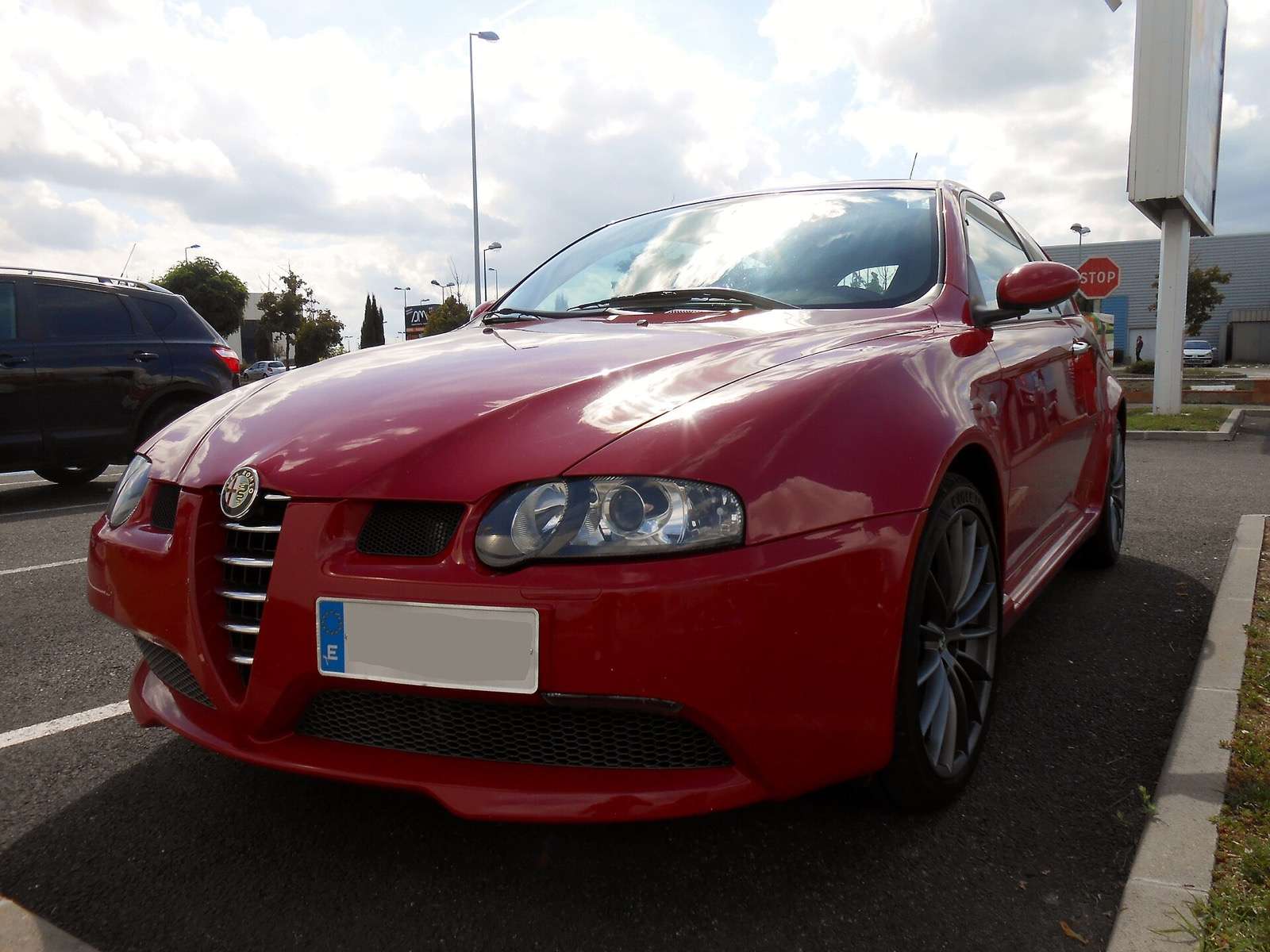
The Alfa Romeo 147 GTA was gloriously excessive by design. Into a compact three-door hatch Alfa installed the 3.2-litre, 24-valve Busso V6 from the 156 GTA, then widened the body, sharpened the steering and gave it a cabin rich in leather and deeply sculpted seats. It was not the tidiest solution to a hot-hatch problem, but it was one of the most memorable.
How the 147 became a GTA
The standard 147 arrived in 2000 and won the 2001 European Car of the Year award. Its sharp Walter de Silva-era styling gave Alfa a credible premium hatchback. The GTA, revealed in 2002, revived a badge first associated with lightweight Giulia competition cars, although this modern GTA pursued performance through power and equipment rather than weight reduction.
Under the bonnet was the all-alloy 3,179cc Busso V6 producing 250 bhp at 6,200rpm and 221 lb ft at 4,800rpm. A six-speed manual gearbox drove the front wheels. Alfa’s UK figures quoted 0–62 mph in 6.3 seconds and 153 mph, putting the car comfortably beyond most early-2000s hot hatches.

Chassis, steering and brakes
The 147 used double-wishbone front suspension and a MacPherson-strut arrangement at the rear. GTA tuning included firmer springs and dampers, a wider track and extremely quick steering requiring just 1.75 turns lock-to-lock. Early cars used 305mm front discs with Brembo four-piston calipers; later cars adopted 330mm discs after owners found the smaller setup could struggle under repeated hard use.
Putting 250 bhp through the front wheels without a standard limited-slip differential made the GTA demanding on broken or wet roads. Torque steer and inside-wheel spin are part of its reputation. Many owners fit a Q2-type helical differential, which can improve traction and also reduce stress associated with failure of the original open differential.

The last compact Busso flagship
The engine dominates the experience. Its polished intake runners, smooth delivery and rising note make ordinary journeys feel special. Unlike a turbocharged rival, the 147 GTA builds performance progressively and rewards revs. The cabin reinforced the sense of occasion with unique instruments, aluminium pedals and strongly bolstered seats.
Love cars you don’t see every day?
Get forgotten cars, surprising motoring stories and the most interesting finds from Unusual Cars by email.
Free to join. No spam. Unsubscribe whenever you like. See our privacy policy.
Why it became a modern classic
The 147 GTA was built in relatively small numbers between 2002 and 2005. It arrived before emissions pressure and platform rationalisation ended the Busso V6, and it represented an era when Alfa was willing to create a halo hatch with obvious compromises.
Those compromises now make good cars valuable. Buyers and restorers look closely at cambelt history, oil-cooler pipes, cooling, suspension wear, differential condition, brakes and corrosion beneath the floor. A properly maintained GTA is expensive to run but difficult to replace with anything modern.

Alfa Romeo 147 GTA FAQs
What engine does the 147 GTA use?
It uses a naturally aspirated 3.2-litre 24-valve Busso V6 producing 250 bhp and 221 lb ft in UK specification.
Is the 147 GTA front-wheel drive?
Yes. Power goes through a six-speed manual gearbox to the front wheels.
How fast is it?
Alfa Romeo quoted 0–62 mph in 6.3 seconds and a 153 mph top speed.
Did it have a limited-slip differential?
No mechanical limited-slip differential was fitted as standard. A Q2-style differential is a common specialist upgrade.
Why are some cars fitted with larger brakes?
Later cars received 330mm front discs in place of the original 305mm setup, and many early cars have been upgraded.
Research sources
Technical figures were checked against the official Alfa Romeo 147 GTA UK press release.
Continue the Alfa Romeo story
Explore the Rare & Performance Alfa Romeos hub, then compare the 916 GTV.