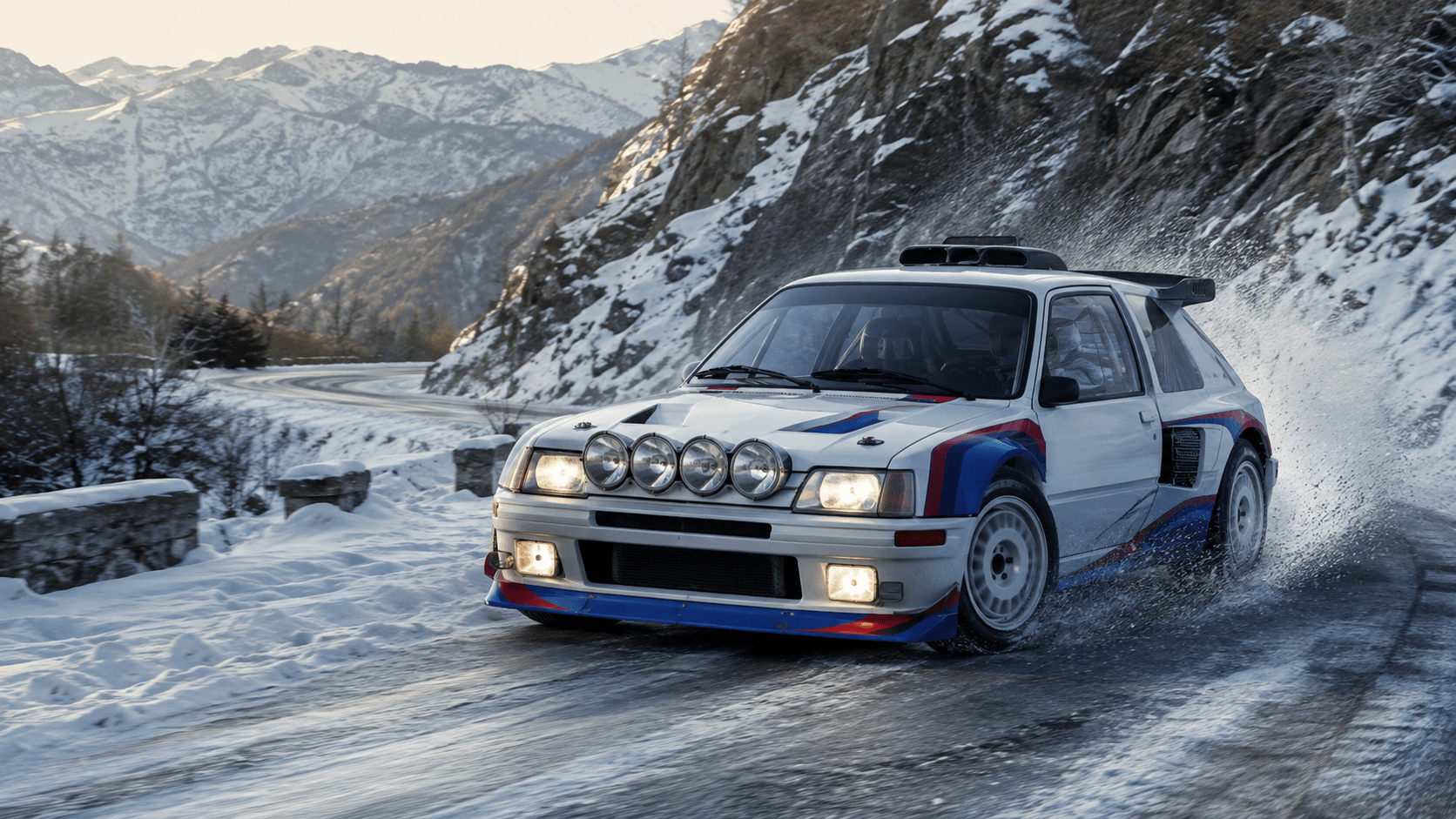
Peugeot 205 T16 guide
The history, specifications and road cars behind Peugeot’s mid-engined, four-wheel-drive world rally champion—plus the checks that matter when assessing an original car or recreation.
What is the Peugeot 205 T16?
The 205 T16 was created by Peugeot Talbot Sport under Jean Todt to take on the highest level of rallying. The project used the instantly recognisable shape and name of Peugeot’s new small hatchback, but rearranged everything important. Its engine sat transversely behind the cockpit, all four wheels were driven and the rear bodywork opened as a large clamshell to expose the powertrain.
This distinction is fundamental: a 205 GTI, Rallye or converted road shell is not mechanically close to a genuine T16. The shared family appearance was valuable marketing, while the competition car underneath was a specialist machine.
Homologation and the 200 road cars
Group B required manufacturers to produce 200 examples of a base model for homologation. The FIA Historic Database records the Peugeot 205 Turbo 16 as homologation B-262 from 2 April 1984. Peugeot’s own heritage material likewise describes 200 road-homologated cars.
The road version combined a mid-mounted 1.8-litre turbo engine, four-wheel drive and 16 valves. Peugeot currently quotes 147kW—approximately 200hp—for the road car, with a period Peugeot Talbot Sport kit capable of taking it to roughly 300hp. Works rally specifications were more powerful and developed rapidly.
How the 205 T16 differs from a 205 GTI
| 205 Turbo 16 | 205 GTI | |
|---|---|---|
| Engine position | Behind the occupants | Front |
| Driven wheels | Four-wheel drive | Front-wheel drive |
| Body and structure | Specialist homologation construction with rear clamshell | Production 205 bodyshell |
| Purpose | Homologate Peugeot’s Group B rally car | High-performance production hatchback |
| Production scale | Approximately 200 homologation road cars | Mass-production model |
Engine, transmission and construction
Turbocharged 16-valve engine
The 1,775cc four-cylinder engine used forced induction and a 16-valve head. Its competition output rose markedly across the programme.
Mid-engined packaging
Moving the engine behind the occupants concentrated the major masses inside the wheelbase and distinguished it from the ordinary 205.
Four-wheel drive
Power to both axles provided the traction increasingly essential at the front of Group B.
Serviceable body
The large rear section opened to give competition crews access to the engine and transmission.
205 T16, Evolution 1 and Evolution 2
| Version | Role | Key distinction |
|---|---|---|
| Road 205 T16 | Homologation production car | Road trim and approximately 200hp in standard form. |
| Competition / Evolution 1 | Early WRC programme | Developed suspension, drivetrain, body and engine specification around the homologated base. |
| Evolution 2 | Late Group B works car | More aggressive aerodynamics, reduced weight and considerably increased performance. |
| Grand Raid | Post-Group B rally-raid | Adapted for endurance and desert events rather than a normal WRC stage specification. |
Power figures for works cars require dates and context. Peugeot’s 2026 historical account describes initial competition output around 350–370hp and later Evolution 2 development reaching about 560hp. Cars, event configurations and measurement conventions varied, so one headline figure should not be applied to every T16.
World Rally Championship success
The T16 made its World Rally Championship debut on the 1984 Tour de Corse. Ari Vatanen demonstrated its pace and then won three rallies during Peugeot’s first partial season: Finland, Sanremo and the RAC Rally.
In 1985 Peugeot won the manufacturers’ championship and Timo Salonen took the drivers’ title. The team repeated both achievements in 1986, with Juha Kankkunen becoming drivers’ champion. That makes the 205 T16 one of the defining and most successful cars of the Group B period.
After Group B: Dakar and Pikes Peak
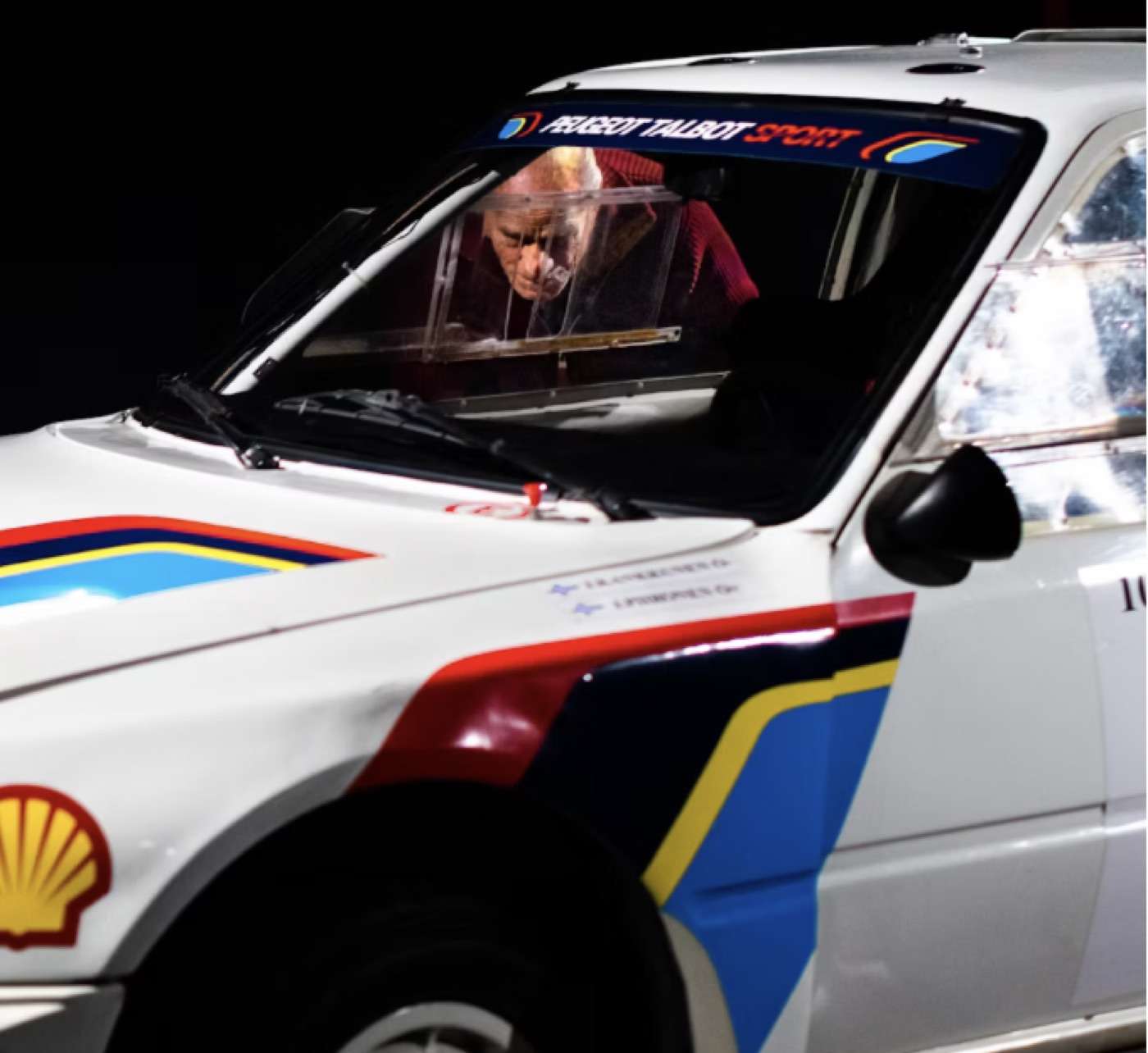
Ending Group B did not end the T16 story. Peugeot adapted the platform for rally raid, winning the Paris–Dakar in 1987 with Ari Vatanen and in 1988 with Juha Kankkunen. The longer-distance programme led into Peugeot’s later 405 T16 competition machinery. A specialised 205 T16 also contested Pikes Peak, extending the car’s legacy beyond conventional rally stages.
How to identify a genuine 205 T16
Begin with identity and documentary continuity, not paint colour. Check the chassis number and markings, Peugeot documentation, production information, ownership chronology and any competition records together. Establish whether the body, engine, transmission and suspension are original to the claimed specification or later replacements.
Road car
Confirm the production identity, original road specification, correct layout and history of any upgrades or colour changes.
Competition car
Match the alleged event history to entry lists, results, period photographs and preparation records.
Rebuilt car
Document replacement shells, accident repairs, recreated components and the point at which the current identity was established.
Buying and inspection checklist
Structure and body
Look for distortion, cracking, corrosion, accident repairs and poor bonding around suspension and drivetrain loads. Panel fit alone cannot confirm the condition of the structure beneath.
Engine and turbo system
Obtain the engine’s build specification and invoices. Check cold starting, oil pressure, dry-sump and lubrication equipment where fitted, turbo condition, fuel system, cooling and signs of detonation or overheating.
Four-wheel-drive transmission
Investigate noise, vibration, gear selection, differentials, shafts and oil leakage. Correct specialist components are scarce and expensive; a brief road test cannot substitute for inspection.
Suspension, brakes and safety equipment
Examine uprights, hubs, wishbones, dampers, steering and brakes for cracks, wear and inappropriate substitutions. Competition seats, harnesses, extinguishers and fuel cells have service lives and may need replacement before use.
Parts and specialist support
Before purchase, identify the people who can maintain the exact specification and establish which major spares accompany the car. A rare vehicle without documentation or support can be much more difficult to own than its appearance suggests.
Replicas and T16-style conversions
A T16-style road car may use an ordinary front-engined 205 donor, a wide-body kit or a more ambitious mid-engined conversion. Describe it by its actual construction. Buyers should examine the donor identity, chassis alterations, engine and drivetrain, build photographs, registration record and quality of cooling, fuel, suspension and brake engineering.
Replicas should not borrow the production history or championship identity of a genuine T16. Their value rests on build quality, driving experience, legal identity and documentation.
Frequently asked questions
Is a Peugeot 205 T16 the same as a 205 GTI?
No. The T16 is mid-engined and four-wheel drive; the production GTI is front-engined and front-wheel drive.
How many road-going 205 T16s were made?
The Group B homologation programme centred on 200 road cars. Exact claims about surviving or converted examples require careful sourcing.
What does T16 mean?
It refers to the turbocharged, 16-valve engine. Peugeot commonly used both “205 Turbo 16” and “205 T16”.
Which championships did it win?
Peugeot won the WRC manufacturers’ championship in 1985 and 1986; Timo Salonen and Juha Kankkunen won the respective drivers’ titles.
Research basis: Peugeot/Stellantis historical material and FIA homologation B-262. Specifications changed between road, works, Evolution and rally-raid cars; verify an individual example independently.