UNUSUAL CARS MODEL GUIDE
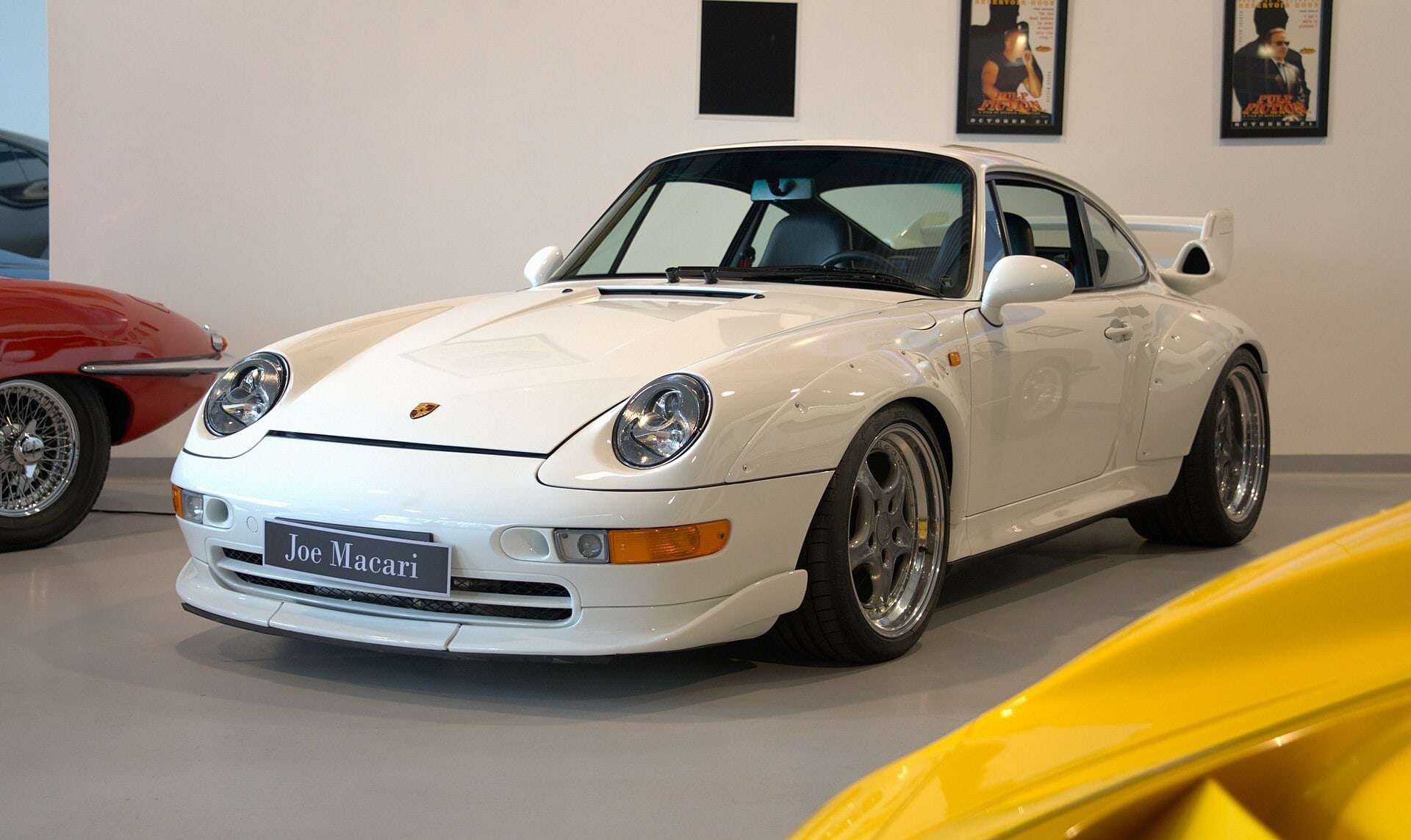
The Porsche 911 GT2 of the 993 generation was a rear-wheel-drive, lightweight development of the twin-turbo 993 Turbo, created to homologate Porsche’s competition car for GT2 racing. Launched in 1995 with 430 PS and upgraded to 450 PS for the 1998 model year, it was the first Porsche to carry the GT2 name and the final air-cooled member of the later GT road-car family.
Quick answer: the road GT2, Clubsport, GT2R and GT2 Evo are related but not interchangeable. Confirm the car’s M-code, chassis and factory records before valuing it, then commission specialists to inspect the air-cooled twin-turbo engine, six-speed gearbox, lightweight body parts, competition history and structural condition.
Why the 993 GT2 existed
GT racing rules made the four-wheel-drive 993 Turbo unsuitable as the straightforward basis of Porsche’s intended class contender. Porsche removed the driven front axle, reduced equipment and developed a rear-wheel-drive road model that could homologate the racing version. Development began in 1994 and the GT2 was presented in early 1995.
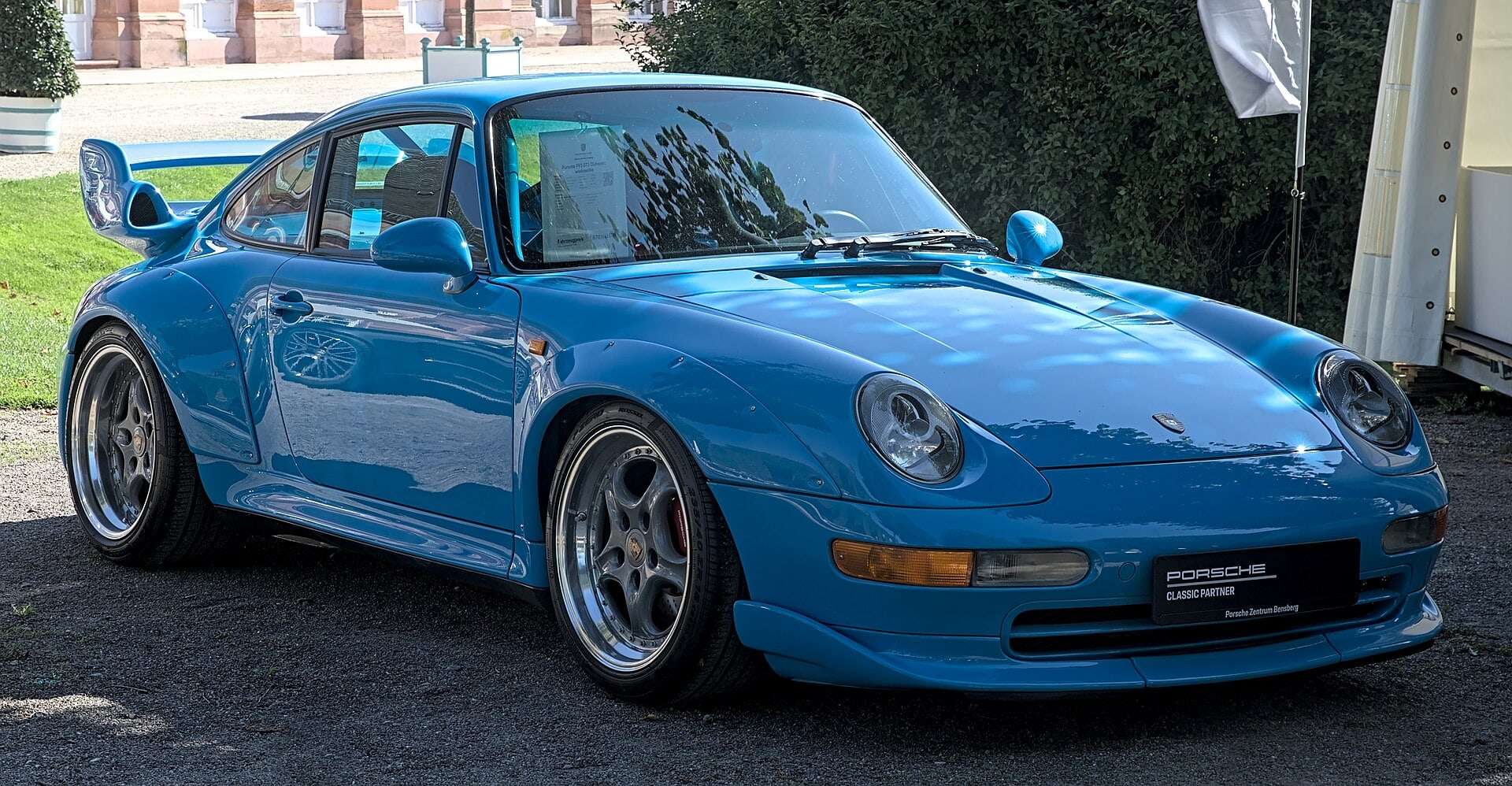
The concept combined the 993 Turbo’s 3.6-litre twin-turbo flat-six with lightweight aluminium doors and bonnet, thinner side and rear glass, no rear seats and no rear wiper. Porsche states that deleting the front drive and other measures removed 205 kg compared with the standard Turbo.
Engine, transmission and body
The M64/60 R engine displaced 3,600 cc and produced 430 PS at 5,750 rpm with 540 Nm at 4,500 rpm. A six-speed manual gearbox sent power only to the rear wheels. The body used bolt-on plastic wheel-arch extensions that could be replaced after circuit contact, while the large rear wing generated downforce and channelled air to the intercoolers and engine intake.
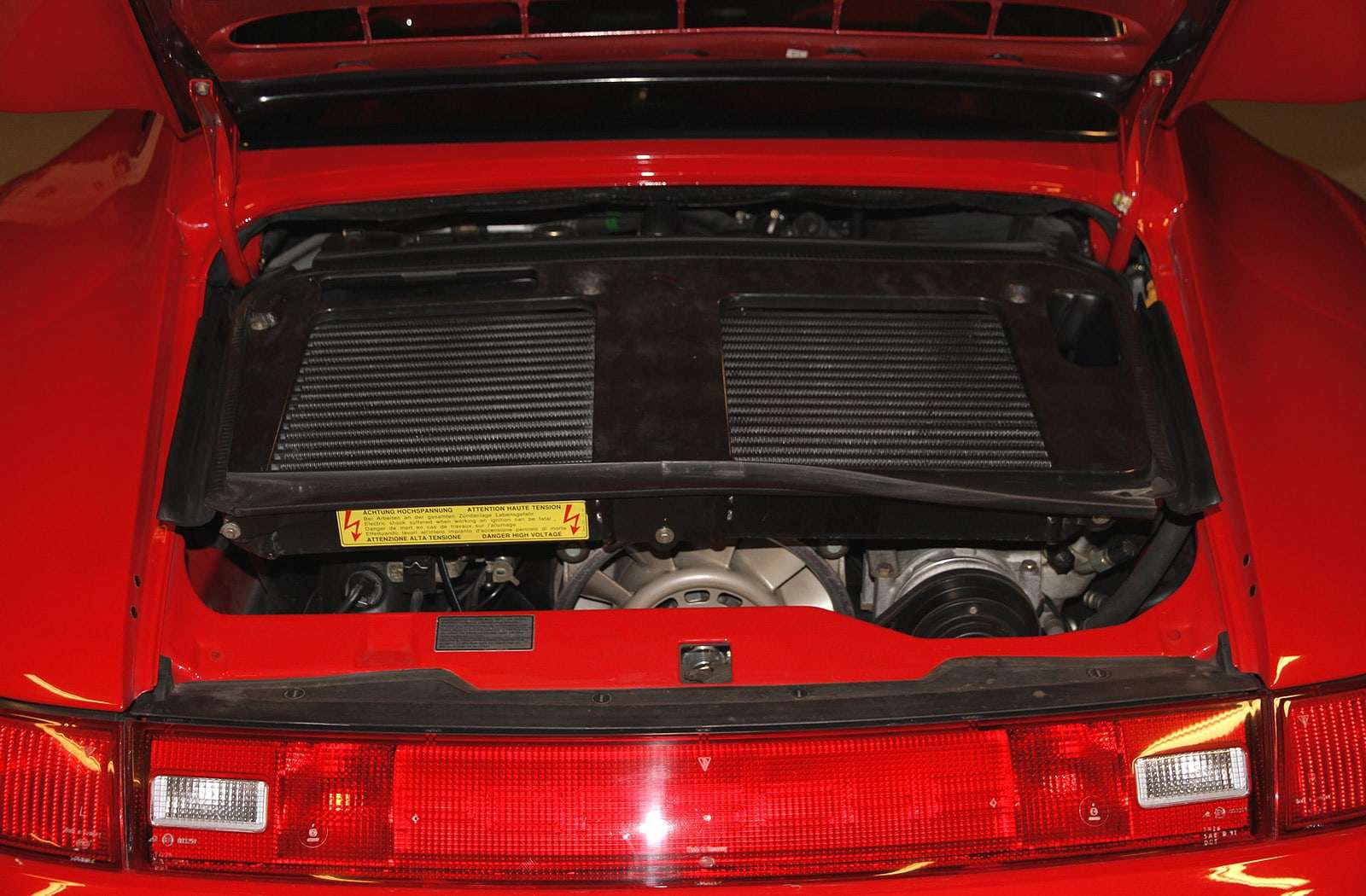
Porsche quoted 295 km/h for the 430 PS car. For the 1998 model year, power increased to 450 PS. The mechanical layout is central to the GT2’s identity: it is not simply a 993 Turbo with two driveshafts removed or a body kit added.
Road, Clubsport and race versions
Porsche divided the range into the road version M 002, reduced-equipment Clubsport M 003 and motorsport-prepared M 005. The Clubsport brought a more competition-oriented cabin and safety equipment, while the racing cars developed the platform for national and international GT competition.
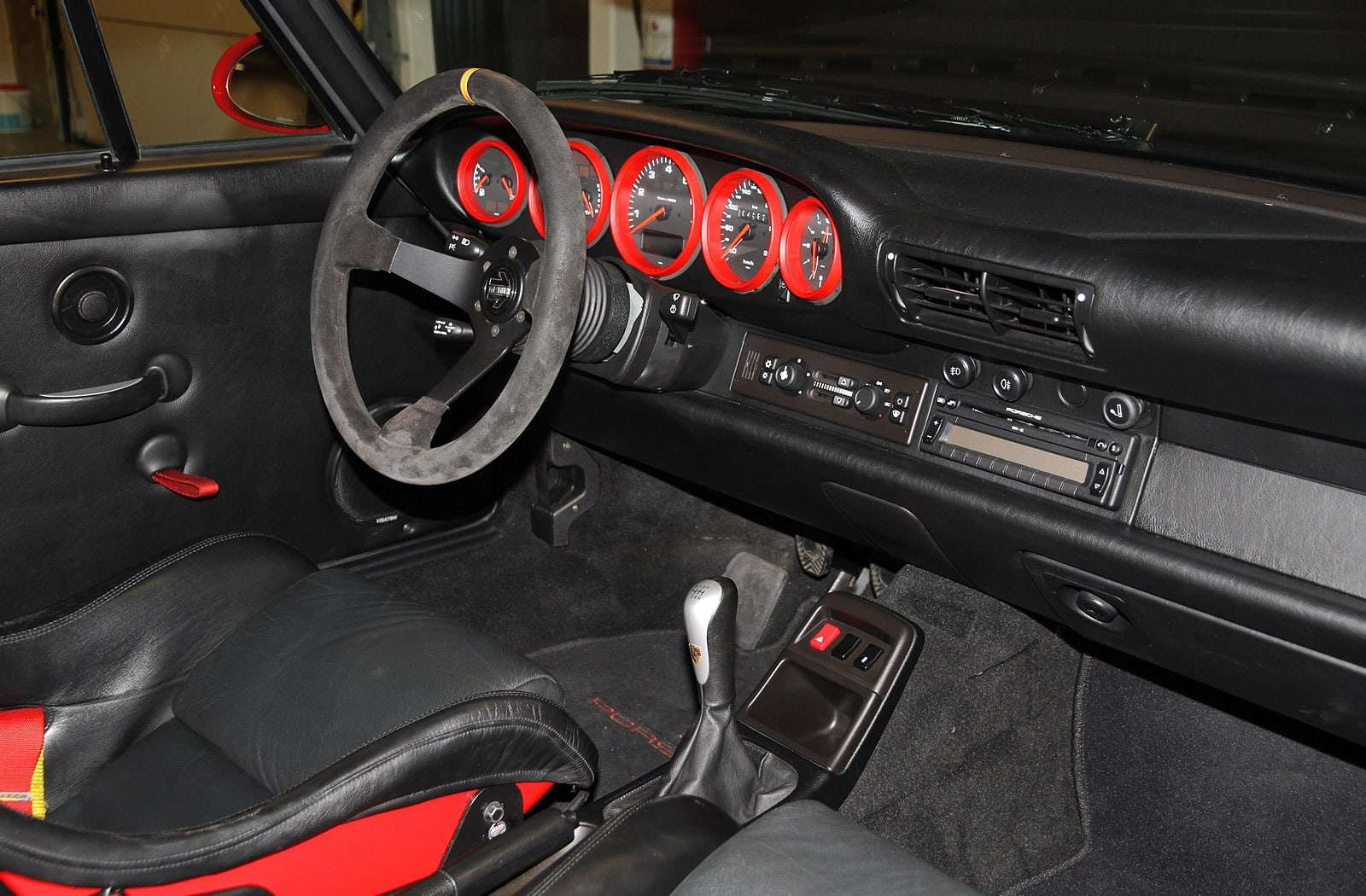
The GT2R used competition suspension, brakes, safety equipment and body details, and race cars evolved during their careers. A surviving GT2R therefore needs a chassis-specific history: events, entrants, updates, accidents, rebuilds and later road registration all matter more than a general model description.

993 GT2 versions compared
| Version | Purpose | Key distinction |
|---|---|---|
| M 002 road GT2 | Road and club use | 430 PS initially, rear-wheel drive, lightweight body and limited comfort equipment. |
| M 003 Clubsport | More focused road/track use | Reduced-equipment specification with factory competition-oriented cabin features. |
| M 005 GT2R | GT racing | Motorsport-prepared car with racing chassis, brakes, safety equipment and event history. |
| 1998 road GT2 | Final road evolution | Power increased to 450 PS; Porsche records 21 cars in the second series. |
| GT2 Evo | Higher-level competition | More extreme racing evolution; identity depends on its individual chassis and documentation. |
Love cars you don’t see every day?
Get forgotten cars, surprising motoring stories and the most interesting finds from Unusual Cars by email.
Free to join. No spam. Unsubscribe whenever you like. See our privacy policy.
Production and rarity
Porsche records 172 cars in the first production series and 21 in the second, 450 PS series. Those factory figures describe the GT2 range as presented by Porsche, while auction catalogues and marque histories may divide road, Clubsport and competition cars differently. Any advertised total should therefore state which variants it includes.

Rarity also makes reconstruction and misdescription a serious risk. A Turbo converted to rear-wheel drive, a competition-style replica and an original M 005 car may look similar in photographs but have entirely different identities and values.
The 993 GT2 in competition
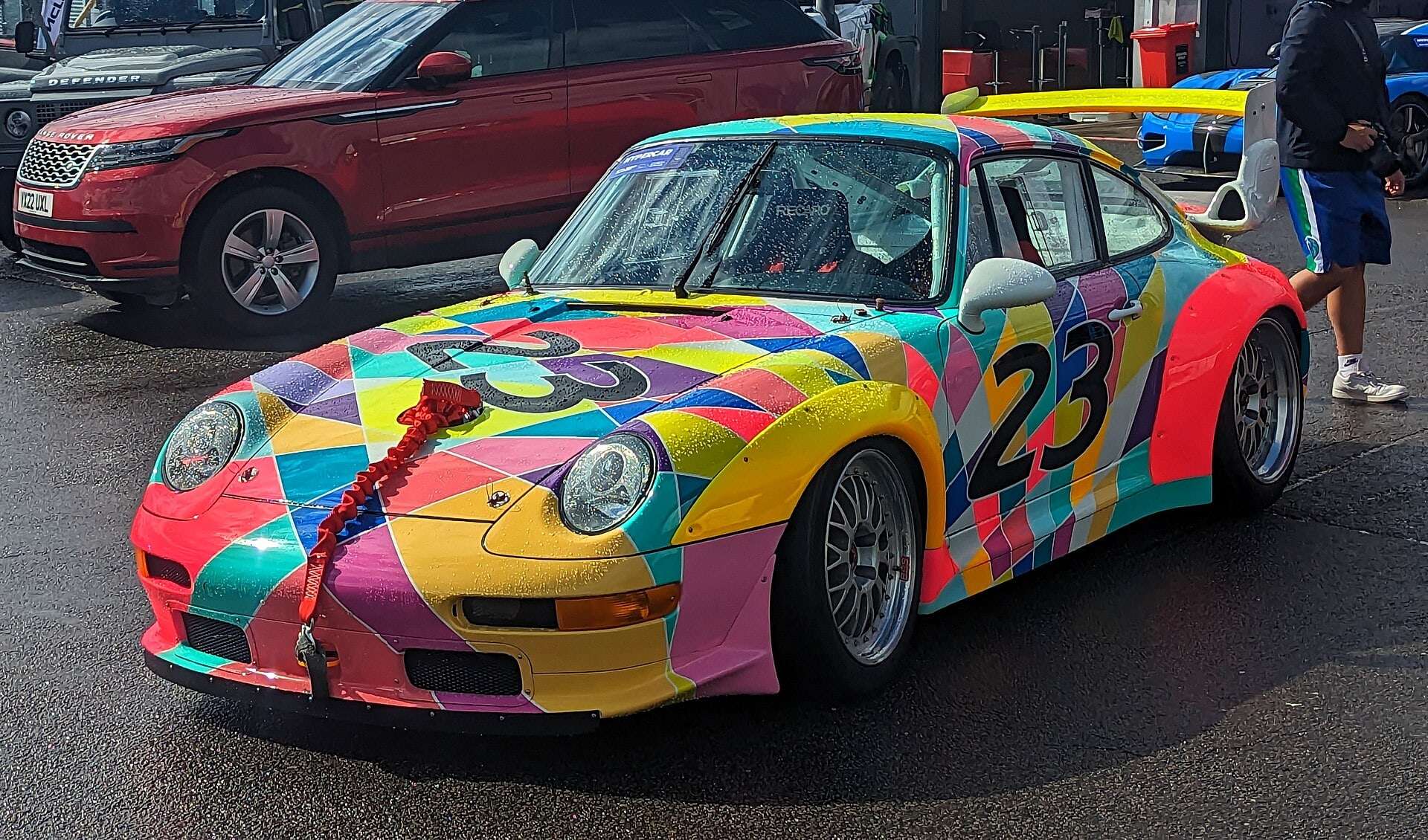
The GT2R became a familiar sight in BPR and later GT racing, where private teams used the 993 platform across endurance and sprint events. The GT2 Evo pushed the idea further as regulations and rivals developed. Period competition use is desirable when documented, but it also means repeated repairs and updates can be authentic parts of a car’s history rather than simple defects.
Porsche 993 GT2 buying guide
Identity is the first inspection. Match the chassis number, option codes, engine and gearbox numbers, body specification and Porsche records. For a race car, obtain period logbooks, entry lists, invoices, photographs and a continuous ownership trail. Treat a road registration as an administrative fact, not proof that the car began life as a road GT2.
The air-cooled engine needs compression and leak-down testing, oil-pressure and temperature checks, and inspection of turbochargers, intercoolers, wastegates, fuel delivery and engine management. Look for boost changes or later racing modifications and establish who engineered them. Check the six-speed gearbox, clutch and limited-slip differential under load.
Inspect the shell on a jig if history warrants it. Pay special attention to suspension pick-up points, front and rear structure, floors, cage mounts and seams hidden by the bolt-on arches. Aluminium panels, thin glass, wing, ducts, wheels and interior pieces are expensive and important to authenticity.
Why the 993 GT2 matters
The 993 GT2 created the road-going GT2 lineage by solving a racing problem: reduce mass, remove four-wheel drive and homologate a rear-drive twin-turbo 911. It was briefly Porsche’s fastest and most powerful road model, and it remains the only air-cooled generation to wear the GT2 badge.
Sources and further reading
Continue the Porsche story
The 993 GT2 transformed the final air-cooled Turbo into a rear-drive homologation special and founded Porsche’s GT2 road-car line. Explore the Rare & Performance Porsche hub, then read the Porsche 964 Turbo guide and the Porsche 996 GT3 guide.
Frequently asked questions
How much power does a Porsche 993 GT2 have?
The first road version produced 430 PS and 540 Nm. Porsche increased output to 450 PS for the 1998 model year.
Is the Porsche 993 GT2 four-wheel drive?
No. Porsche removed the 993 Turbo’s driven front axle, making the GT2 rear-wheel drive and substantially lighter.
How many Porsche 993 GT2 cars were built?
Porsche records 172 units in the first production series and 21 in the later 450 PS second series. Variant totals should be checked because some sources separate road and competition cars differently.
What is the difference between a 993 GT2 and GT2R?
The GT2 is the homologation road model; the GT2R is the motorsport-prepared racing derivative with competition chassis, brakes, safety equipment and a car-specific race history.
What should be checked before buying a 993 GT2 or GT2R?
Authenticate the chassis and specification, then inspect the twin-turbo engine, gearbox, limited-slip differential, lightweight parts, shell alignment, competition repairs and documentary history.