UNUSUAL CARS MODEL GUIDE
The Toyota Sera is a compact Japanese-market coupé whose glass canopy and forward-hinged butterfly doors made an everyday front-wheel-drive platform look like a concept car. Toyota launched the EXY10 Sera in March 1990 after previewing the idea with the AXV-II concept at the 1987 Tokyo Motor Show.
Quick answer: every Sera used a 1,496cc 5E-FHE twin-cam engine driving the front wheels through a five-speed manual or four-speed automatic transmission. It was never officially sold in Britain, but imports made it a familiar cult car. Toyota records 15,941 built before production ended in December 1995.
From AXV-II concept to production Sera
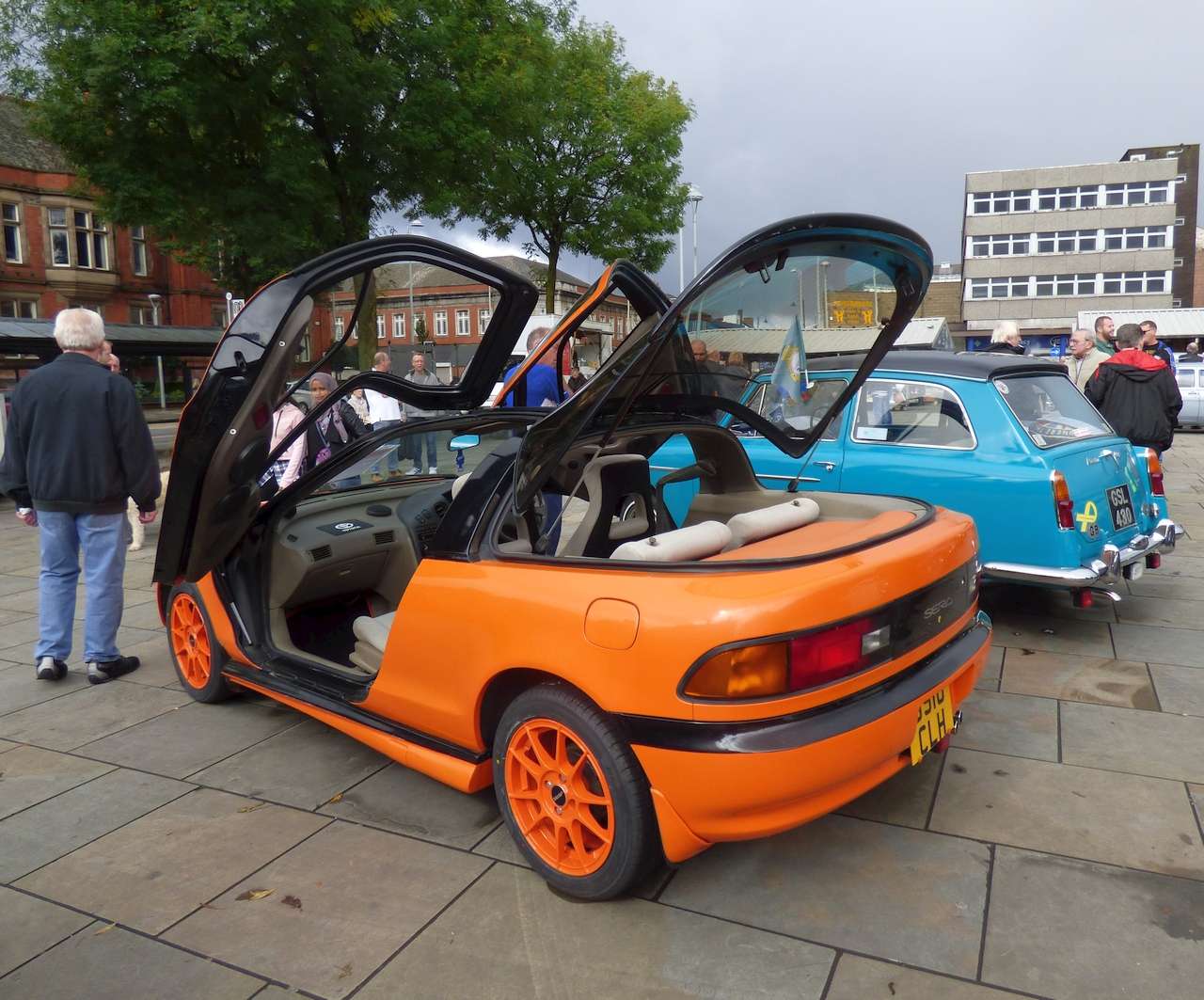
The remarkable part of the Sera story is how closely the production car retained the concept’s visual idea. The upper door glass curved into the roof, creating near-open-top visibility while retaining an enclosed cabin. Each door used one hinge near the centre of the roof and another at the base of the A-pillar, so it moved upward and forward rather than requiring the clearance of a conventional gullwing door.
Hydraulic dampers supported the large doors. Toyota even included temperature compensation so their operation remained more consistent in hot and cold weather. The mechanism was clever, but after three decades the condition of the dampers, hinges, seals and unique curved glass is central to any buying decision.

Starlet roots and 5E-FHE engineering
Beneath the theatrical body, the Sera was deliberately practical. Toyota used the Starlet platform and mounted a 1.5-litre inline-four transversely to drive the front wheels. The 5E-FHE was a 16-valve DOHC engine rated by Toyota at 110PS at 6,400rpm. A representative manual car weighed 890kg, so performance was lively rather than supercar-fast.
The official dimensions were 3,860mm long, 1,650mm wide and only 1,265mm high, with a 2,300mm wheelbase. Those compact measurements made the Sera easy to use in Japan while the low roof and wraparound glazing created the sense of something far more exotic.

What makes the doors different?
The Sera is often described as a gullwing car, including in period Toyota literature, but butterfly door is the more useful description. A classic gullwing pivots mainly from the roof; the Sera’s two-point mounting guides each door upward and forward. This reduces the space needed beside the car and allows a large opening.
It also means the door system is inseparable from the roof glass, body alignment and weather sealing. A weak strut may let a door sag, but stiff movement, poor alignment or water entry can have several causes. Replacement struts are possible; damaged curved glass and distorted hinge structures are much more serious.

Sera versions, options and production
The Sera did not follow a conventional succession of engines and performance derivatives. Cars are better understood through production phase, transmission, colour and options. Equipment could include four-wheel steering on some cars, sophisticated audio and the memorable Super Live Sound system with multiple speakers and an electrically operated rear sound stage.
Specifications changed during the production run, so a prospective buyer should inspect the actual car rather than assume an option from its registration year. Toyota’s production record gives a cumulative total of 15,941 cars when manufacture ended in December 1995. That makes it scarce, but not so rare that an incomplete or structurally doubtful example must be accepted.
| Item | Toyota specification |
|---|---|
| Model code | EXY10 |
| Engine | 1,496cc 5E-FHE inline-four, DOHC |
| Maximum output | 110PS at 6,400rpm |
| Drive | Front-wheel drive |
| Transmission | Five-speed manual or four-speed automatic |
| Representative kerb mass | 890kg |
| Production | 15,941 cars, ending December 1995 |
Why the Toyota Sera matters
Many concept-inspired cars are expensive, fragile or impractical. The Sera applied a show-car idea to familiar Toyota running gear and a genuinely compact footprint. That mixture influenced how enthusiasts remember it: not as the fastest Toyota of its era, but as evidence that a major manufacturer could build something playful and technically ambitious.
Its doors are also frequently mentioned in discussions of Gordon Murray’s inspiration for the McLaren F1 door arrangement. The cars are not mechanically related, but the Sera demonstrated how a door could open into the roof while moving forward and requiring relatively little side clearance.
Love cars you don’t see every day?
Get forgotten cars, surprising motoring stories and the most interesting finds from Unusual Cars by email.
Free to join. No spam. Unsubscribe whenever you like. See our privacy policy.
Toyota Sera buying guide
Doors, struts and hinges
Open each door repeatedly from inside and outside. It should rise smoothly, remain securely open and close without being forced. Compare the gaps on both sides and inspect the hinge mountings. Weak struts are a known age-related problem; distorted structure is a different and more serious fault.
Glass and weather sealing
Inspect every curved glass panel for chips, delamination and scratches. Check seals for shrinking or damage and look for water staining around the headlining, carpets and rear trim. Model-specific glass is difficult to replace, so a dry, complete shell deserves a premium.
Engine and cooling system
The 5E-FHE is related to wider Toyota small-car hardware, but maintenance still matters. Check for clean coolant, stable temperature, oil leaks, smoke and evidence of timing-belt servicing. The car should start cleanly from cold and idle consistently with the electrical load switched on.
Transmission, brakes and suspension
Manual cars should select every gear without bearing noise or synchromesh graunching. An automatic should engage promptly and change without flare. Inspect bushes, dampers, ball joints, tyres and brakes; age is now as relevant as mileage.
Interior and optional equipment
Test the instruments, windows, locks, mirrors, air conditioning and all audio equipment. Missing trim, rear parcel fittings and unique switchgear can be more difficult to solve than ordinary mechanical servicing.
Frequently asked questions
Was the Toyota Sera sold in the UK?
No. The Sera was built for the Japanese market. Cars in Britain arrived as private or commercial imports.
Is the Toyota Sera a gullwing car?
Its doors were called gullwing doors in period material, but butterfly doors is more precise: each door pivots from two points and moves upward and forward.
What engine does the Toyota Sera use?
Every production Sera used Toyota’s 1,496cc 5E-FHE DOHC 16-valve four-cylinder engine, officially rated at 110PS.
How many Toyota Seras were made?
Toyota’s production history records 15,941 cars before production ended in December 1995.
What should be checked first on a Sera?
Start with the unique doors, curved glass, hinge areas and weather seals. Mechanical faults can often be addressed with related Toyota knowledge, but damaged model-specific body and glass parts are harder to replace.
Research sources
- Toyota: Sera history and specifications
- Toyota: Sera production record
- Toyota: origin of the Sera name
- Toyota Owners Club: long-term Sera ownership advice
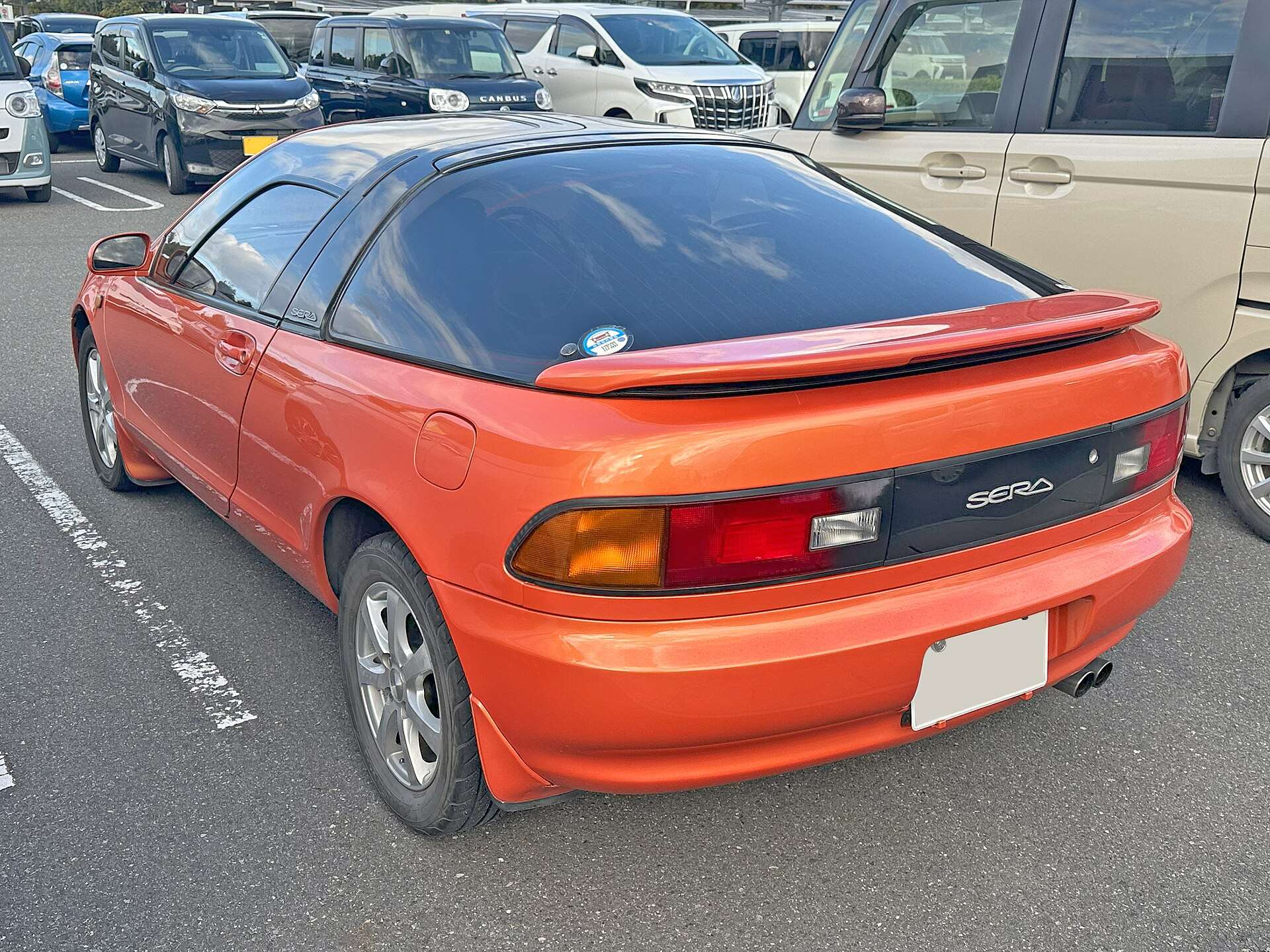
- Featured image: 1990 Toyota Sera by Calreyn88, CC BY-SA 4.0.
Continue the Toyota story
Explore the Rare & Performance Toyotas hub, discover Toyota’s mid-engined approach in the MR2 SW20 guide, or meet the lightweight rear-drive Toyota AE86.